Best Compact Vacuum Sealers for Small Kitchens
A food vacuum sealer can look like an obvious yes in a listing and a hard no in a small kitchen. The machine needs a home in a drawer or on a short counter, a supply of bags or rolls, and a cleanup you will finish after you pack leftovers. If those three things fail, the sealer becomes another rarely used object in the only cabinet that could have held containers. If you are choosing among the best compact vacuum sealers for small kitchens, the real question is not which model “wins.” It is whether a food bag sealer earns scarce space at all, and whether a handheld unit or a small countertop machine matches how you actually pack leftovers and freezer portions. This is a food vacuum sealer, not a vacuum cleaner, and it is not a robot or a handheld floor vac.
This article is how to choose a compact food sealer, not the leftover routine itself. Everyday leftover storage lives in How to Store Leftovers in a Small Kitchen. Batch cooking without taking over the board is How to Meal Prep in a Small Kitchen (Without Taking Over the Counter), and the containers that often do the same job are Best Meal Prep Containers for Apartments: What to Buy for a Tiny Fridge. Fridge and freezer layout are covered in How to Organize a Small Apartment Fridge and How to Organize a Small Kitchen Freezer. Using what you already bought is How to Reduce Food Waste in a Small Kitchen. Lids and containers have their own sorting plan in How to Organize Food Storage Containers and Lids in a Small Kitchen. Produce that is not being sealed belongs in How to Store Fresh Produce in a Small Kitchen. Chopping and blending tools are a different category: Best Compact Food Processors for Small Kitchens and Best Immersion Blenders for Small Kitchens. What follows is when a compact food vacuum sealer earns a drawer, and how to choose a type without inventing a ranked list.
When a sealer earns a drawer, and when clips or containers are enough
A compact vacuum sealer has a short list of jobs in a small kitchen. It removes air from a bag so leftovers or freezer portions take less space and are less likely to get freezer burn. It has to fit in a drawer or a cabinet you will actually open. And it has to leave a bag supply and a cleanup you will finish on a weeknight, not a machine that stays sticky on the only board.
Clips, zipper bags, and rigid containers already do a lot of this work. If you mostly pack a sandwich, some cut vegetables, or leftovers you will eat in a day or two, a reusable zipper bag or a container with a lid is usually enough. A sealer starts to earn space when you regularly freeze portions for later, when the freezer is so tight that bulky containers waste height, or when foods you already freeze get ice crystals and dry edges before you can use them. It is a tool for packing food you will store, not a reason to buy more food.
A sealed bag is also not a food-safety shortcut. Cool leftovers in the fridge first, then seal and freeze or refrigerate them. Do not leave cooked food out on the counter because it is “going in a bag.” A sealed bag does not make room-temperature food safe, and it does not extend time on the counter. Use the same ordinary habits you already use for leftovers: refrigerate promptly, label what you will not recognize later, and eat or freeze within a sensible window. This guide does not treat a sealer as a medical or diet device.

Handheld or a small countertop unit
A handheld sealer is usually the smaller footprint. Many are used with textured or valve bags, and they can live in a drawer with a slim stack of those bags. They are slower if you pack many portions at once, and they may not be the right match for every bag style. They can be a good fit if you seal a few leftover packs a week and do not want a long machine on the counter.
A small countertop sealer has a sealing strip you press a bag into, and it often works with rolls you cut to length as well as pre-made bags. It is typically faster for a batch of freezer portions, and it can seal a wider bag. It is also a longer, heavier object. In a small kitchen, that length has to fit in a drawer, or it will live on the only board. Measure the drawer or cabinet before you buy, including the height of any roll storage you would keep with the machine and the length of the cord. If the only place it fits is the middle of the counter, it is not compact in practice.
Neither type needs a brand ranking, a year label, or a test score to be chosen well. Match the machine to the bags you will actually store, the number of packs you seal in a week, and the space you can give it when it is not in use. If you already have containers that work, a handheld unit is the smaller yes. If you freeze a lot of portions and have a drawer that can take a slim countertop body, the larger machine can be worth the footprint. If you cannot answer those questions, stay with clips and containers.
Bags, rolls, and cleanup in a tight kitchen
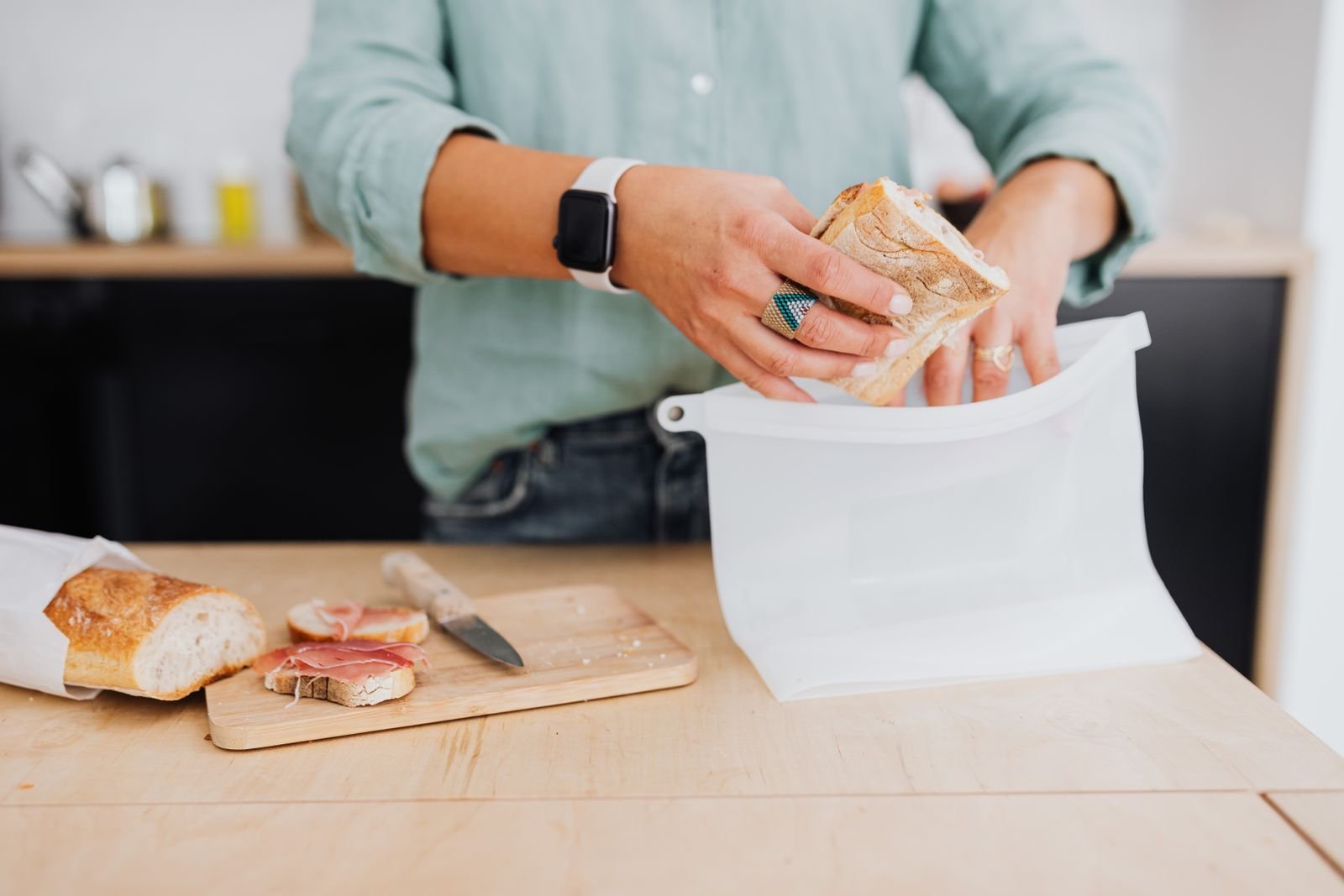
The bags are part of the footprint. Pre-cut bags are easier to grab, but they need a place to stand or lie flat. Rolls are more flexible for odd leftover shapes, and they need a spot for the roll plus the cut length while you work. In a small kitchen, pick one system and give it a bin or a drawer slot. A loose pile of bags in with the lids will be as messy as the lid pile you already have.
Cleanup should be short. After you seal, wipe the strip if food or moisture reached it, coil the cord, and put the machine away. Bags that will be reused, if your type allows it, should be washed and dried before they go back in the bin — a damp bag in a closed drawer is a smell problem. Do not try to seal a very wet or still-hot leftover; cool and drain first so the seal can form and so you are not putting warm food into a tight, sealed space on the counter.
Where the sealed food goes matters as much as the machine. Flat bags can stand or stack in a small freezer in a way that deep containers cannot. Leave a little space so air can move and so you can see labels. A tiny freezer still fills up if you seal more than you will eat. The sealer is useful when it helps you pack what you already planned to store, not when it encourages a backlog.

A compact sealer still has to live somewhere
When the sealer is not in use, it needs a home that does not block the board. A handheld unit and a short stack of bags can live in a drawer. A countertop unit should have a cabinet or a deep drawer that you can open without moving the trash can. Do not leave a long sealer out “because it looks tidy.” In a galley or a one-wall kitchen, that is how the only prep stretch disappears.
Cords and bag rolls should travel with the machine, not dangle into the walkway. If you only seal once a month, be honest about whether the drawer would be better used for containers you already own. A compact vacuum sealer earns its keep in a small kitchen when you use it often enough that the bags in the freezer turn over, the machine goes back in the drawer, and the cleanup is ordinary rather than a project you keep putting off. If that picture already feels like clutter, choose clips, zipper bags, or the containers you have, and spend the space on food you will actually eat.
Commercially vacuum-packed food from a shop can show you what a tight, flat pack looks like in a freezer. It is not a reason to buy a large commercial machine, and it is not a model ranking. The home version should stay small, and it should stay in the food-sealer lane — a bag sealer for leftovers, not a floor vacuum and not a restaurant chamber machine.

Practical takeaways
A compact food vacuum sealer earns a small kitchen only if the leftovers, the bags, and the drawer space all match how you actually cook.
- Start with clips, zipper bags, or containers if you mostly store food for a day or two.
- Choose a handheld sealer if you pack a few portions a week and want a drawer-sized tool; choose a small countertop unit only if you have a place to store the longer body and will use it often.
- Plan a home for the bags or rolls, and wipe the machine before it goes away.
- Cool leftovers before sealing, and do not treat a sealed bag as a reason to leave food out.
- Skip any model ranking, price, or “best for the year” claim; match footprint and bag storage to your freezer instead.
A small kitchen can handle a food sealer. It cannot handle a second, barely used machine on the only board, and it does not need a vacuum cleaner in this decision at all. Pick the smallest type that packs the leftovers you already make, or stay with the leftover containers that already work for you.
FAQ
Do I need a vacuum sealer if I already have leftover containers?
Not always. Containers and zipper bags are enough for food you will eat soon. A sealer is more useful if you regularly freeze portions and want flatter packs with less freezer burn in a tight freezer.
Is a handheld sealer enough for a small kitchen?
It can be, if you only seal a few bags at a time and can store the matching bags in a drawer. A compact countertop unit makes more sense if you batch a lot of freezer portions and have a drawer or cabinet that will actually take the longer machine.
Can I seal leftovers while they are still hot?
No. Cool leftovers in the fridge first, then seal. A sealed bag is not a reason to leave cooked food out on the counter, and moisture from hot food can also get in the way of a good seal.
Where should the bags live in a small kitchen?
Give bags or rolls their own bin or drawer slot near the machine, not a loose pile mixed with container lids. The bags are part of the footprint, so count them when you decide whether the sealer fits.
Is this the same thing as a compact vacuum cleaner?
No. This is a food vacuum sealer for bags of leftovers and freezer portions. It is not a vacuum cleaner, a handheld floor vac, or a robot vacuum.