

How to Clean an Area Rug in a Small Apartment
An area rug in an apartment collects everyday grit, crumbs, and the occasional spill, then sits on a pad over a floor you do not want to stain. In a small home there is usually no yard, no hose, and no good place to leave a dripping rug overnight. Cleaning it is not the same job as mopping the hard floor around it, or as treating a sofa cushion.
If you want to know how to clean an area rug in an apartment, start with a thorough vacuum, test any cleaner in a hidden corner, blot a spill instead of soaking the pile, and dry the rug fully so the pad and the floor underneath do not stay wet. If the pad is wet, or the floor under the rug stays dark or smells, lift the rug and pad to dry and protect the finish. Skip bleach on fibers you have not identified, and do not haul a soaked wool rug into the bathtub as the default. If the stain is large or oily, or the rug belongs to the landlord, a professional cleaner is often the safer call.
This is not a hard-floor guide. Hardwood, vinyl, and tile around the rug are already covered in How to Clean Floors in a Rental Apartment (Hardwood, Vinyl, and Tile). Sofa upholstery is in How to Remove Stains from a Sofa in a Rental Apartment. A whole-home reset is in How to Deep Clean a Rental Apartment Without Damaging Anything. Choosing a rug is in Best Area Rugs for Small Living Rooms: How to Choose Size and Material. Curtains are a different fabric job, in How to Wash Curtains in an Apartment Laundry Room. Cooking smells in the room are in How to Get Cooking Smells Out of a Small Apartment. Here you are only cleaning the rug and its pad.
Vacuum thoroughly before you add moisture
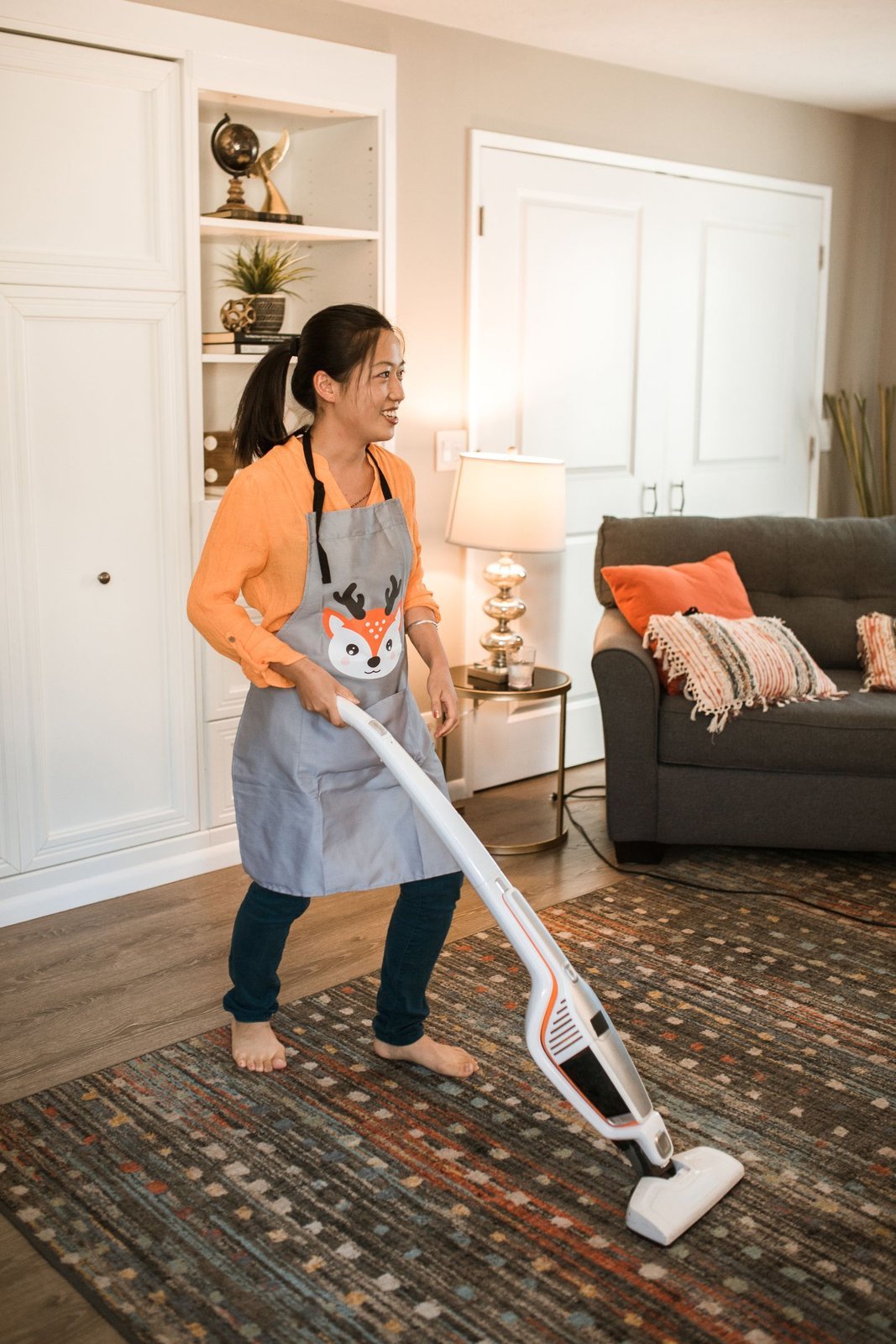
Most everyday dirt is dry grit, not a stain. Vacuum first, and more carefully than you think you need to. Work slowly in overlapping passes, including the edges and the corners that sit under sofa legs. If you can lift one edge at a time, vacuum the back as well as the face, and vacuum the pad if it is dusty and still dry. Do not shake a heavy rug over a rental balcony rail, or beat it against a wall.
Move a chair or the coffee table rather than vacuuming around a permanent shadow of crumbs. If you need to shift a sofa to reach the rug, drag it on pads or lift with help so you do not scrape the floor. How the room is arranged is already covered in How to Arrange Furniture in a Small Living Room. For this job, you only need enough access to clean the whole rug, not a new layout.
If the rug has a fringe, vacuum it gently with the beater bar off, or use a hose attachment, so the fringe does not catch and tear. Empty the vacuum if it is already full; a packed bin will blow grit back into the pile.

Spot-treat a spill without soaking the rug
When something lands on the rug, blot first. Use a clean, dry cloth or a stack of paper towels and press straight down. Do not rub, and do not pour a bowl of water onto the spot. Rubbing spreads the stain and can fuzz the pile. Soaking sends liquid into the pad and then into the floor.
Once the surface is no longer wet to the touch, look at the care label if the rug has one. If it names a fiber and a cleaner, follow that. If there is no label, or you do not know whether the rug is wool, cotton, synthetic, or a mix, treat it as unknown. Test any cleaner in a hidden corner or under a sofa leg first, wait until it dries, and look for a color change or stiff patch. If the test corner looks wrong, stop.
A modest, label-approved cleaner, or a small amount of mild dish soap in water for many synthetic rugs, is usually enough for a fresh food or drink spill after blotting. Apply it to the cloth, not in a puddle on the rug, and blot again. Rinse the same way: a barely damp cloth, then a dry one. Do not use bleach on unknown fibers. Bleach can strip color, weaken wool, and leave a worse mark than the spill.
Grease, oil, paint, and a large wine or coffee mark are harder. If the stain is small and fresh, keep blotting and use only a cleaner the label allows. If it is large, oily, already set, or you are working on a landlord’s rug, stop before you soak the pile and consider a professional cleaner. Guessing with a stronger product is how a small stain becomes a bald patch or a dye run.
Dry the rug fully in a tight room
Drying is the part a small apartment makes difficult, and it is the part that protects the floor. The rug should feel dry all the way through, not just on top, before you set furniture back and walk on it as normal. A damp pad trapped under a rug can darken wood, leave a mark on vinyl, or start to smell.
Do not make a soaked wool rug your default plan, and do not fill the bathtub with a heavy wet rug you then cannot lift or dry. If the care label clearly allows a gentle wash and the rug is small, light, and not wool or a landlord’s piece, you can wash it as the label says and dry it flat. Most apartment area rugs should stay on the floor for everyday cleaning: vacuum, blot, then dry in place with air moving over the surface.
To dry a spot or a slightly damp area:
- Blot until no more moisture transfers to a dry cloth.
- Lift the rug off the pad in that area, and lift the pad off the floor, so the finish can dry too.
- Use a fan in the room, and open a window if the weather is dry. You do not need a special machine for a small spot.
- Stay off the damp area until it is dry. Do not cover it with a towel and forget it; check the floor underneath.
If the pad is wet, or the floor under the rug stays dark or smells, take the rug and pad up and let both dry fully before they go back down. Stand the rug so air can reach both sides if you have the space, or drape it over clean, sturdy chair backs in a way that does not crease a wet wool pile. Protect the floor with a dry towel while you work, and put the rug back only when the pad, the backing, and the floor are dry to the touch.

When a professional cleaner is the safer call
Call a professional, or ask the landlord which cleaner they want, when:
- The rug belongs to the landlord, and the stain is more than a small, fresh spill you can blot.
- The stain is large, oily, or already set, or it is dye, paint, or something you cannot identify.
- The rug is wool, silk, viscose, or another delicate fiber, or it has a label that points you to professional cleaning.
- The pad or the floor is already wet, stained, or starting to smell, and you cannot get it dry in the room.
A professional visit is not a failure of a renter-safe plan. It is how you avoid a soaked rug, a dye run, or a damaged floor finish in a home with no yard. This is not a product ranking, or a claim that any one machine will fix every stain.
What not to do on an apartment rug
Do not flood the pile “to rinse it better.” Do not use bleach, oven cleaner, or a kitchen degreaser on unknown fibers. Do not put a wet rug over a radiator or a space heater to speed things up. Do not leave a damp pad down overnight because the room looks fine from above. And do not treat curtain-washing or a whole-apartment deep clean as a substitute for drying the rug.
Everyday dust on the hard floor around the rug can wait for the floor guide. The sofa is a different fabric. The rug needs its own vacuum, a careful blot, and a full dry-through.

An apartment rug-cleaning checklist
Use this for everyday dirt and the next spill:
- I have vacuumed the face thoroughly, including edges and corners, and the back or pad if they are dry and dusty.
- For a spill, I blotted first and did not rub or soak the pile.
- Any cleaner was tested in a hidden corner, and I am not using bleach on unknown fibers.
- The rug, the pad, and the floor underneath will dry fully; if the pad is wet or the floor stays dark or smells, I will lift them to dry and protect the finish.
- If the stain is large or oily, the fiber is delicate, or the rug is the landlord’s, I will stop and use a professional cleaner rather than filling the bathtub with a soaked wool rug.
How to clean the rug—and how to apply it
The calm way to clean an area rug in an apartment is to stay dry until you have to add moisture, then add as little as possible. Vacuum thoroughly, blot a spill, test a cleaner in a corner, and dry the rug, the pad, and the floor so nothing stays wet underneath. In a tight room with no yard and no hose, a soaked rug is not the default. A professional cleaner is the safer call when the stain is large or oily, the fiber is delicate, or the rug belongs to the landlord. The floor finish under the rug is part of the job. The rug is clean only when the pad and floor are dry too.
FAQ
How do you clean an area rug in an apartment without a yard?
Vacuum thoroughly first, including edges and corners. For a spill, blot, test any cleaner in a hidden corner, and use as little moisture as you can. Then dry the rug, the pad, and the floor underneath fully. Do not treat a soaked bathtub wash as the default, especially for wool.
Can I use bleach or a strong cleaner on an apartment rug?
Not on unknown fibers, and not as a first step. Bleach can strip color and damage wool. Test any cleaner in a hidden corner and follow the care label. If you do not know the fiber, stay with blotting and a mild, tested cleaner, or call a professional.
What if the rug pad or the floor underneath is wet?
Lift the rug and the pad and let both dry, along with the floor, before you put them back. A damp pad trapped under a rug can stain a finish or start to smell. If the floor is already dark or odorous and will not dry, tell the landlord and stop adding moisture.
When should I call a professional rug cleaner?
When the stain is large, oily, or set, when the rug is a delicate fiber, or when the rug belongs to the landlord and the spill is more than a small blot. A professional is also the safer call if you cannot dry the rug and pad in the room without soaking them.
Is cleaning the rug the same as cleaning the floor or the sofa?
No. The floor is the hard surface around and under the rug, and the sofa is upholstery. The rug and its pad need vacuuming, careful spotting, and a full dry so the floor finish stays protected.


