How to Remove Hard Water Stains in a Rental Bathroom
Hard water leaves a cloudy film, not just a splash mark. On a faucet it looks like a dull crust around the base and the aerator. On a shower door it dries into spots and a hazy sheet. On the tile immediately around a fixture, it sits as a pale ring that a quick wipe does not lift.
If you want to remove hard water stains in a rental bathroom, stay with a renter-safe method: test a hidden spot, use a soft cloth, use a plastic scraper if a crust needs a gentle lift, and follow a cleaner the label allows for that surface. White vinegar can help on some glass and chrome. Do not use vinegar on natural stone such as marble, or on a finish the label or the landlord warns against. Never mix bleach and vinegar, or bleach and ammonia. A badly etched finish or a fixture that is failing may be a landlord or maintenance issue, not a job for more scrubbing.
This is not a full shower clean, a grout project, or a mildew guide. Grout has its own method in How to Clean Grout in an Apartment Bathroom Without Harsh Overkill. Mildew is covered in How to Clean Bathroom Mildew in a Rental. A wider shower clean lives in How to Clean a Shower in a Rental Bathroom. Here you are only lifting mineral film on fixtures, shower doors, and the tile right around them.
Test a hidden spot, and follow the label
Before you treat a visible faucet or a whole glass door, test a small, hidden area: the back of a door at the hinge side, a tile behind the tap, or a discreet patch of chrome. Wait as the product label directs, rinse, and look for dulling, color change, or a rougher feel. If the test spot looks worse, stop and try a milder approach, or ask the landlord which product is allowed on that finish.
Read the label every time, including what surfaces are listed and what must not be mixed with the product. “Label-legal” means you are using the cleaner as directed on a surface the label includes, not inventing a stronger homemade blend. If the bottle says to ventilate, wear gloves, or rinse thoroughly, do that. If it says not to use the product on natural stone, plated finishes, or aluminum, believe it.
Do not mix cleaners. Never mix bleach and vinegar. Never mix bleach and ammonia. Those combinations are unsafe. If you already used one product, rinse it away completely and let the surface dry before you consider another, and only if the labels allow that sequence. When in doubt, use one product, rinse, and stop.
A plastic scraper, an old plastic gift card, or a non-scratch pad can help with a thick crust after the film has been softened. Do not use a metal blade, steel wool, or a gritty powder on chrome, glass, or a soft rental finish. You can scratch a coating that then looks permanently cloudy, and that kind of damage may come out of a deposit.

Faucets and the tile immediately around them
Start with the faucet and the small field of tile or enamel right around the base, where drips dry all day. Wet the area, then use a soft cloth with a little mild dish soap and warm water. Many light films come off with contact time and a steady wipe, not with force.
If a ring remains on chrome or stainless, a cleaner the label allows for that metal, or a white-vinegar method on compatible chrome, can help. For vinegar on chrome, dampen a cloth (do not soak unsealed parts or any stone nearby), hold it on the film for a short time, then wipe and rinse well with clean water. Dry the faucet so new spots do not form as the water evaporates. Stay off natural stone surrounds, off marble, and off any finish the label or the landlord has ruled out. If you are not sure whether the vanity top is stone, treat it as off-limits for vinegar and use only a stone-safe product the label allows, or clean only the metal and rinse carefully so runoff does not sit on the stone.
The aerator at the tip of a tap can collect mineral grit and change the way water comes out. If it unscrews by hand or with a gentle grip, you can soak the aerator in a small bowl of a label-allowed solution, rinse it, and put it back. If it is stiff, corroded, or you cannot tell how it comes off, leave it alone and mention it to the landlord. Forcing a stuck part is how a rental faucet starts to leak.
Use the plastic scraper only on a softened crust at the base of the tap or on a ceramic surface the test spot has cleared, and keep the angle shallow. Rinse and dry as you go. You are lifting film, not grinding the glaze. If the crust does not move after one careful pass, soak it again rather than switching to a sharper tool.
This small ring of tile around a fixture is not a stand-in for cleaning the whole wall or the baseboards. Those jobs are already in How to Clean Walls and Baseboards in a Rental Apartment. Keep this session on the faucet zone so you do not turn a mineral-film wipe into a full-room project.

Shower doors and glass
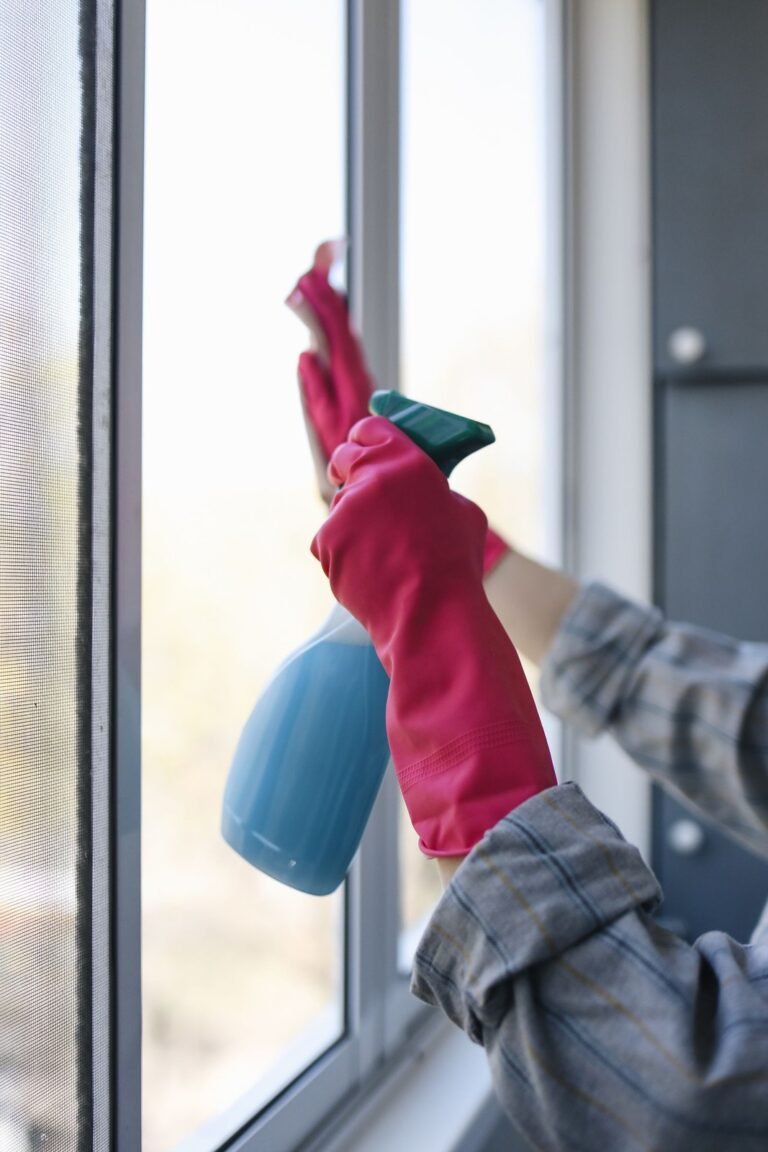
Shower glass shows mineral spots quickly because water dries in place. A soft cloth and a cleaner the label allows for glass will handle a light film. Work in sections, rinse, and dry the glass so you can see what is left. A squeegee you already own, used after a shower, cuts down on the next film; it is a habit, not a special tool you must buy to start. A dry cloth at the end of a shower does a similar job on a small screen if you do not have a squeegee.
White vinegar can help on some shower glass and on compatible chrome fittings, with the same limits as above: not on natural stone, not on a finish the label or the landlord warns against, and never mixed with bleach. If you use a vinegar solution on glass, keep it off a marble threshold, a stone bench, or a stone tile border. Apply it to the glass, give it brief contact time, wipe with a soft cloth, rinse thoroughly, and dry. If the door has an untreated metal frame you cannot identify, test that frame first or clean only the glass.
Do not use an abrasive powder or a rough pad on glass hoping to “cut through” the haze. Fine scratches catch more film and can look like permanent clouding. If the glass still looks etched after a careful, label-legal clean—if the dullness is in the surface, not sitting on it—that may be etching or a failing coating, and it is fair to ask the landlord or maintenance to look at it. This is not a professional descaling or refinishing job, and you should not try to polish or resurface rental glass or fixtures.
Windows are a different task, already covered in How to Clean Windows in a Rental Apartment. Use this section for the shower door and the glass screen, not for every pane in the apartment.

When to stop, and a renter checklist
Stop and contact the landlord or building maintenance if a faucet is loose, dripping from the body, or crumbling at the finish, if glass looks scratched or etched after a gentle clean, or if a cleaner you tested in a hidden spot changed the color of the surface. You are responsible for ordinary cleaning, not for repairing a failing fixture or refinishing a damaged coating.
If you are doing a wider seasonal clean, keep this mineral-film work as one short pass and put the rest of the apartment on its own plan, as in How to Deep Clean a Rental Apartment. Mixing every bathroom job into one afternoon is how grout, mildew, and fixture film all get the same harsh product, which is not safer and not kinder to rental finishes. Finish the fixtures, rinse, and put the cleaner away before you start a different task.
Use this checklist before you start:
- I have identified the surfaces: chrome or similar metal, shower glass, and only the tile immediately around the fixtures—not stone I cannot confirm, and not a finish the landlord has restricted.
- I tested a hidden spot and followed the cleaner’s label, including rinse and ventilation directions.
- I will not mix bleach and vinegar, or bleach and ammonia, and I will not invent a stronger blend than the label allows.
- I am using a soft cloth, and a plastic scraper only on a softened crust, never a metal blade or steel wool on chrome or glass.
- If vinegar is used, it is only on compatible glass or chrome, kept off natural stone such as marble and off any warned finish, and it is rinsed and dried thoroughly.
- A loose, leaking, or badly etched fixture is on the landlord list, not on a second, harder scrub.
How to choose—and how to apply it
The calm way to remove hard water stains in a rental bathroom is to treat mineral film as a surface-specific job. Test a hidden spot, use a soft cloth and a cleaner the label allows, and keep vinegar, if you use it at all, to compatible glass and chrome. Stay off natural stone and off any finish you have been told not to treat that way. Dry fixtures and glass so the next drip does not set as quickly. If the finish is already etched or the fixture is failing, stop and ask the landlord. You need a careful lift of film, not a harsher product and not a refinishing project.
FAQ
How do you remove hard water stains in a rental bathroom without damaging the finish?
Test a hidden spot first. Use a soft cloth, a cleaner the label allows for that surface, and a plastic scraper only after a crust has softened. Rinse and dry. Skip metal blades and abrasive pads on chrome and glass, and do not use vinegar on natural stone such as marble or on a finish the label or the landlord warns against.
Can I use white vinegar on shower doors and faucets?
Vinegar can help on some glass and on compatible chrome if you test first, keep contact time short, rinse well, and dry. Do not use it on natural stone, including marble, or on a finish the label or the landlord says to avoid. Never mix vinegar with bleach.
What should I do about a cloudy ring at the base of the tap?
Clean the faucet and the tile immediately around it with a soft cloth and a label-legal product. A plastic scraper can help on a softened crust. If the ring looks like damaged plating or the tap is loose or leaking, treat it as a maintenance issue rather than scrubbing harder.
Why shouldn’t I mix bleach with vinegar or ammonia?
Those mixtures are unsafe. Use one cleaner at a time, rinse thoroughly, and follow the label. If you are unsure what was used on a surface already, rinse it with water and stop rather than adding a second product.
When should I contact the landlord instead of keeping on cleaning?
Ask for help if a fixture is failing, loose, or leaking, if glass or plating looks etched or scratched after a gentle, label-legal clean, or if a hidden-spot test changes the finish. Ordinary mineral film is a cleaning job. Damage and repairs are not.