Best Compact Irons for Small Apartments
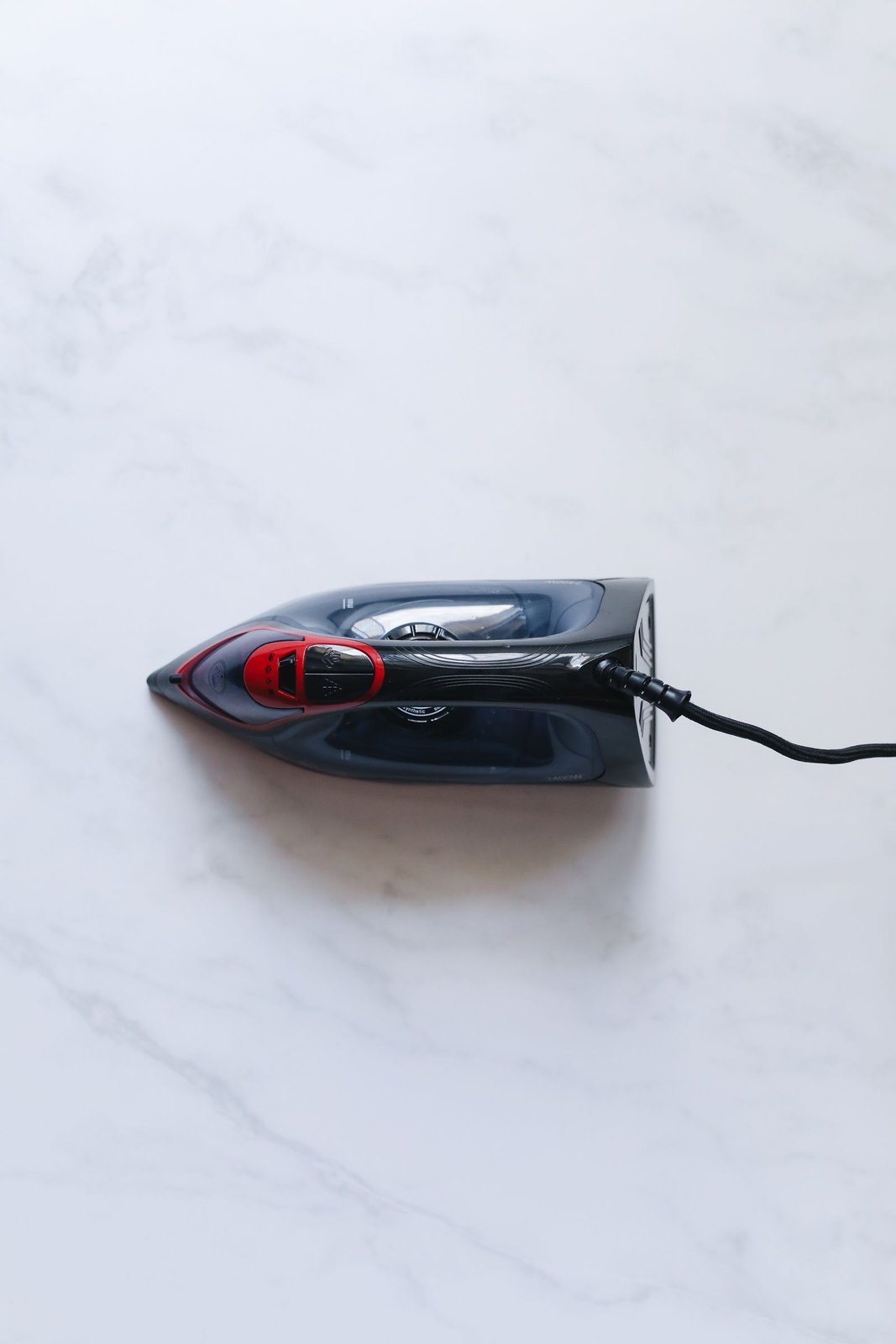
A small apartment does not owe closet space to every laundry gadget. A garment steamer can take wrinkles out of many knits and hanging shirts. It is not always enough. If you need a sharp crease, a flat collar, a pressed seam, a patch that has to sit smooth, or a waistband that will not puff, you still want an iron. The best compact irons for small apartments are the ones that do that work, store safely, and unplug before they go away — not the ones that look impressive in a showroom.
This article is about the compact or travel iron, and when it still earns a slice of closet space. It is not a steamer buying guide. Best Garment Steamers for Small Apartments is steam. It is not a storage rewrite for every small appliance, and it is not the weekly laundry system. How to Store Small Appliances in a Small Kitchen and Apartment Laundry Routine: A Simple System That Fits Shared Machines cover those. Here you are only deciding whether a compact iron belongs in the home, and how to use it without scorching a table or leaving it hot on a bed.
When a steamer is not enough
A steamer is at its best on hanging fabric and on pieces that should stay soft. An iron is at its best when you need pressure and a flat, dry finish. Crisp cotton shirts, linen that has to lie flat, trouser creases, plackets, cuffs, and the area around a button all respond better to a soleplate than to a wand of steam. Patches, waistbands, and hems also need that pressure so the fabric does not bubble.
You do not need both tools for every household. If you almost never wear a collared shirt, and most of your laundry is knits you hang, a steamer may be enough. If you regularly press work shirts, or you mend and patch, a compact iron is the more honest second — or first — tool. Some people keep a steamer for hanging knits and a small iron for the shirts that have to look sharp; that split only makes sense if both tools have a real home. Wash-day context still matters. A winter coat or a set of curtains may need a wash plan first, and then only light pressing if the care label allows it. How to Wash a Winter Coat in an Apartment Laundry Room and How to Wash Curtains in an Apartment Laundry Room are those wash guides, not an ironing method.
There is no ranked list in this guide, and no test scores or model ladder. “Best” means a compact iron that matches how you press, where you will store it, and how safely you can set it down in a tight room.

Size, weight, and how the iron will be stored
Measure the shelf or closet gap before you shop, including the height of the iron standing on its heel and the bulge of a water tank. A travel iron is usually shorter and lighter, which helps in a suitcase and in a shallow cabinet. A compact household iron is often a little more stable on the board and may hold more water, at the cost of height. Neither style is automatically better; the one that fits the gap and stands without tipping is the one that will get used. Fold-flat or pivoting handles exist on some travel designs; they only help if the iron is fully cool and empty when you fold it, and if the latch feels solid.
Store the iron upright on its heel in a spot that will not get knocked, or in a box or sleeve once it is cold and dry. Do not park it on the kitchen counter as a permanent object. How to Keep Small Kitchen Counters Clear is the wider counter habit. A closet shelf, a high laundry cupboard, or a bin with the ironing mat can all work. Unplug the iron and let it cool completely before it goes back in the closet. A hot soleplate against a box, a bedspread, or a plastic bin is a fire and melt risk, not a storage shortcut.
If you also keep a drying rack, do not treat the iron as part of the rack’s job. The rack is for wet fabric. Best Clothes Drying Racks for Small Apartments is that tool. Press clothes after they are dry, or slightly damp only if the iron and the care label are meant for that, not while they drip.
Ironing without a full board
A full ironing board is useful, and many fold thin enough for a closet. It is not mandatory. A padded ironing mat that unrolls on a table can work for shirts and trousers if the table is stable and heat-resistant enough for the task. A thick, dry towel on a table is a backup, not a perfect board: it can leave a texture on the fabric, and it does not protect a finished table the way a purpose-made mat does.
Know what will mark a table. A hot soleplate, a burst of steam, or a damp towel can leave a ring, a dull patch, or a warp on wood, veneer, or a laminate that is not meant for heat. Do not iron on an antique finish, a thin folding tray, or the edge of a crowded table where the iron can slide off. If you use the dining table, protect it with a proper mat, work in the center, and keep mugs, laptops, and paper off the surface. Never leave a hot iron on a bedspread, on the floor, or on the edge of that table, even “for a second.”
A hanging door board or a sleeve board can help with sleeves and small pieces if you have a stable door and a lease that allows the hook or over-the-door style you choose. They are extras, not a reason to skip a safe, flat surface. If the only table in the room is already the desk or the dining surface, do the pressing, then clear the mat so the table can go back to its other job.
Auto-shutoff, cable length, and a stable stance
In a small room, auto-shutoff is one of the most useful features an iron can have, because a knock or a distracted moment is more likely when the board shares space with a bed or a table. Look for a clear setting and a shutoff that engages both when the iron is left soleplate-down and when it sits on its heel, if the product offers both. Auto-shutoff is a backup, not permission to walk away. Stay with the iron while it is hot, and unplug it when you are done.
Cable length matters more in an apartment than it does in a large laundry room. Measure the path from a real outlet to the place you will press. A short travel cord may need a surge-protected extension that is rated for the appliance and kept out of the walkway; do not run a thin, undersized cord, and do not stretch a cable across a doorway. A retractable or wrap-around cord helps storage only if you wrap it after the iron is cool.
The iron should stand stably on its heel on the board or mat. If a compact or travel model feels tippy, it does not belong on the edge of a table. Set it in the center, on a dry pad, with the cord trailing away from your hand and away from the floor path.

Water, steam, and hard-water care
If you use steam, follow the maker’s guidance on water. Many irons want tap water, some prefer mixed or distilled, and some tell you not to use 100 percent distilled. Hard water can leave mineral scale that spits brown flecks or weakens steam. Empty the tank after you finish, especially on a travel iron that may sit for weeks. Use the self-clean or flush function the manual describes, on a heat-safe surface, not over a bedspread or a wood table.
If the iron starts to spit, smell, or leak, stop and check the manual before the next shirt. Do not fill it at the kitchen sink and then set a wet iron on a counter you are trying to keep clear. Fill it, close the tank, and take it to the board. For dry pressing, you can skip the tank altogether on many models, which is tidier in a hard-water building.
When the session is over, unplug the iron, let it cool on its heel on the board or mat, empty the tank, and only then put it in the closet. Do not wrap the cord around a body that is still warm, and do not slide a hot iron into a fabric sleeve. That last sequence is the habit that makes a compact iron safe enough to keep.

Practical takeaways
- Choose a compact or travel iron for work that a steamer cannot do well: crisp cotton, seams, collars, patches, and waistbands.
- There is no ranked model list here. Match size and storage to the shelf or closet you actually have.
- Unplug the iron and let it cool completely before it goes back in the closet.
- Never leave a hot iron on a bedspread, the floor, or the edge of a crowded table.
- If you iron on a table, use a proper mat and protect the finish; a towel is a backup and can mark both fabric and wood.
- Prefer auto-shutoff, and measure cable length to a real outlet.
- Empty the tank after use and follow the manual for hard-water care.
The system is working when you can press a shirt on a stable surface, set the iron on its heel, unplug it, and put a cold, dry tool back in its home. Once a compact iron earns that slice of closet space, it should stay a tool, not a hazard on the bed.
FAQ
Do I still need a compact iron if I already have a garment steamer?
Only if you regularly need pressure and a flat finish — crisp cotton, seams, collars, patches, or waistbands. If you mostly refresh hanging knits, the steamer may be enough. This guide does not rank one brand against another; it asks whether the iron’s job still exists in your wardrobe.
Can I iron on a table instead of a full board?
Yes, if the table is stable and you use a heat-safe ironing mat, working in the center, not on the edge. A thick towel is a backup and can leave marks on fabric or on a wood finish. Do not iron on a delicate tabletop, and never leave a hot iron on the table when you step away.
What should I look for in a compact or travel iron?
A soleplate and steam setting that match the fabrics you actually press, a size that stores upright or fold-flat in your real closet gap, a stable heel rest, auto-shutoff, and a cord that reaches a real outlet without crossing a doorway. Skip feature lists that come with invented scores or a ranked “top ten.”
How do I deal with hard water in a small apartment?
Follow the iron’s manual on water type, empty the tank after each session, and use the self-clean or flush step it describes. Scale can spit mineral flecks onto a shirt. If the iron leaks or smells, stop and check the instructions before you keep pressing.
Where should I store the iron in a small apartment?
On a closet shelf or in a bin, only after it is unplugged, cool, and empty. Do not leave it on the kitchen counter, on a bedspread, or in a packed box while it is still hot. Keep it with the mat or the folded board so the whole setup has one home.