How to Store Small Appliances in a Small Kitchen
A tight kitchen collects machines faster than it collects worktop. Learning how to store small appliances in a small kitchen is a plan for the toaster, kettle, air fryer, blender, and other tools that otherwise live on the counter: what deserves a permanent spot, what can live in a cabinet or on a cart, how to leave safe clearance for heat and cords, and how to put things away without a scavenger hunt.
This is not the daily habit of what stays out. That habit, including a one-tool-out rule, is in How to Keep Small Kitchen Counters Clear. Buying a cart or a set of organizers is covered in Best Kitchen Carts for Small Apartments and Best Kitchen Organizers for Small Apartments: How to Choose What Actually Fits. A coffee corner has its own setup in How to Set Up a Coffee Station in a Small Kitchen. This article is only where the appliances go when they are not in use — a vertical stand, an appliance garage if a renter can use one, or a cart as overflow.
Measure the cabinet, the cart, or the shelf first
Do not “just tuck it away” until you have measured the opening, the depth, and the path in and out. A machine that scrapes a shelf or sits with its plug pinched is wedged, not stored.
- Measure the interior width, depth, and height of the cabinet, cart shelf, or vertical gap, then measure the appliance, including the handle, the latch, and the cord block.
- Leave space around vents so air can move once it is parked.
- Check the door swing. A front-opening air fryer or toaster oven needs a clear arc; a lid that lifts needs headroom.
- Note the outlet you will use. A cord should reach without stretching across a burner, a sink, or a walkway, and it should not be trapped under a closed door.
Cabinets that already have a simple order are easier to measure. How to Organize Kitchen Cabinets in a Small Kitchen can help you see whether a shelf is truly free. A deep drawer can hold a slim appliance or a coiled cord only if it closes without crushing a plug, as in How to Organize Kitchen Drawers in a Small Kitchen.
What deserves a permanent spot, and what can live away
Not every machine has earned a place on the worktop. The tool you use every day can have a fixed, clear rectangle. The tool you use a few times a week belongs in a nearby cabinet, on a stand, or on a cart. The tool you use rarely should be stored fully, or reconsidered.
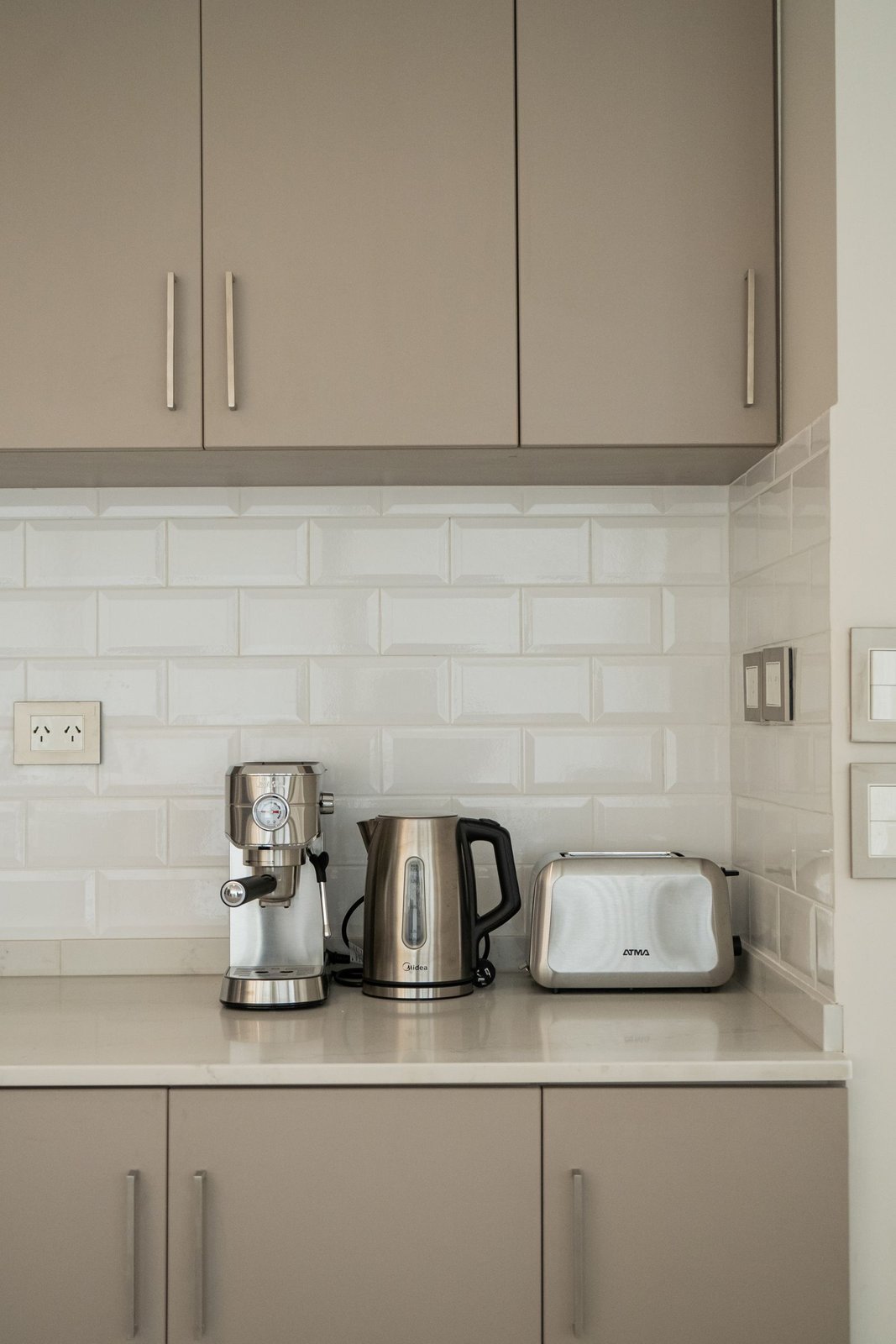
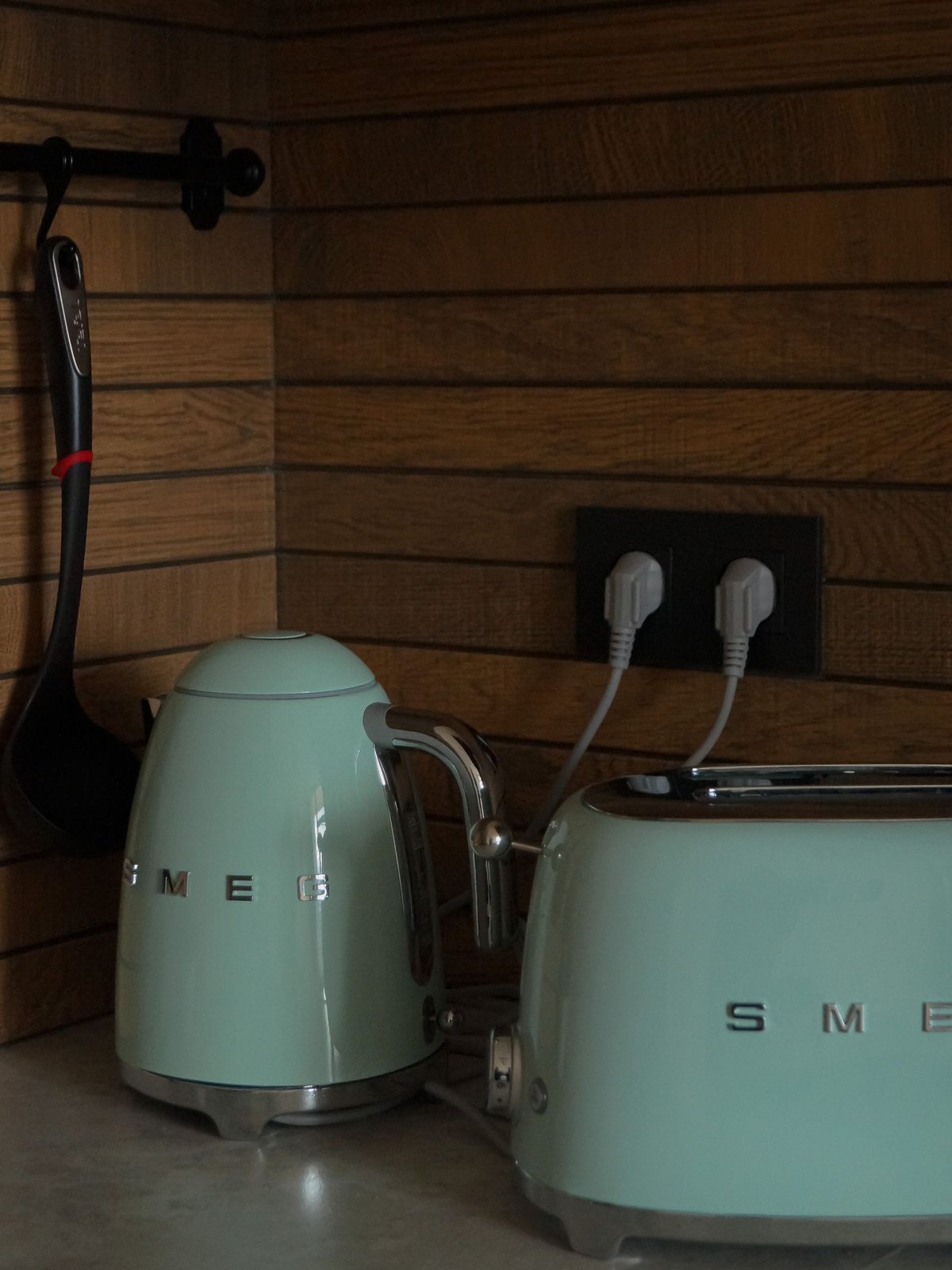
A kettle often earns a permanent spot because you use it several times a day. Guidance for choosing one that fits is in Best Electric Kettle for Apartments: How to Choose for Small Counters. A pop-up toaster can stay out if breakfast is a daily habit and the body still leaves landing space; Best Compact Toasters for Small Kitchens is the buying question, not the storage plan. A toaster oven is larger and hotter, so it should stay out only if you use it that often. Best Toaster Ovens for Apartments: Compact Picks That Earn the Space covers size and clearance, not where the oven lives between meals.
An air fryer is bulky, vents heat, and is often used a few times a week, not at every meal. Once it is cool, a measured cabinet or a cart is usually the better home. Best Air Fryer for Small Kitchens: How to Choose Without Wasting Counter Space is how to choose a compact unit; this article is where that unit goes when dinner is over. A blender usually belongs off the worktop unless you use it daily. Store the jug with the base so you are not hunting a blade in another cabinet. A machine you have not used in months does not need a counter spot; storing it well is still right, but donating it may be calmer.
Cabinets, vertical stands, and an appliance garage
A lower cabinet close to the outlet is often the most honest home for a cool air fryer or blender. Put the heaviest machine on the lowest sturdy shelf you can reach, and keep the cord loosely coiled at the side, not stuffed under the body. Do not store a still-hot appliance in a closed cabinet. Heat that has nowhere to go can damage finishes or, in a bad case, become a fire risk. Park it on a heat-safe mat until it is merely warm, then put it away.
A vertical stand can hold a toaster or a kettle above the worktop, but only if the stand is stable, the shelf is deep enough, and the machine cannot tip when you pull the plug. Measure the stand the same way you measure a cabinet. Do not stack a second heavy appliance on a toaster oven or an air fryer.
An appliance garage — a countertop cabinet with a lift-up or tambour door — can hide a kettle and a toaster if the lease, the existing cabinets, and the outlet allow it. Many rentals will not, and you should not drill into a worktop or a backsplash without permission. If you can use one, measure the interior, keep the door from hitting the faucet, and still let machines cool before you close the door.
A cart as overflow, not as a second junk counter
When the cabinets are full, a slim cart can hold appliances you use often enough to keep but not often enough to leave out. The cart has to fit the gap, stay stable when you roll it, and leave a walkway. Choose the cart with the buying guide above; this section is how to use one as a home for machines.
- Give each appliance a shelf of its own, or at most two light items on a shelf that can take the weight.
- Keep the heaviest machine on the bottom shelf, so the cart does not feel top-heavy when you move it.
- Coil cords so they cannot catch a wheel or drag on the floor.
- Roll the cart to the outlet when you cook, then roll it back. Do not leave a hot appliance on a cart and then push that cart into a tight gap.
A cart that becomes a parking lot for dishes and boxes is no longer storage.
Heat, cords, and the clearance you actually need
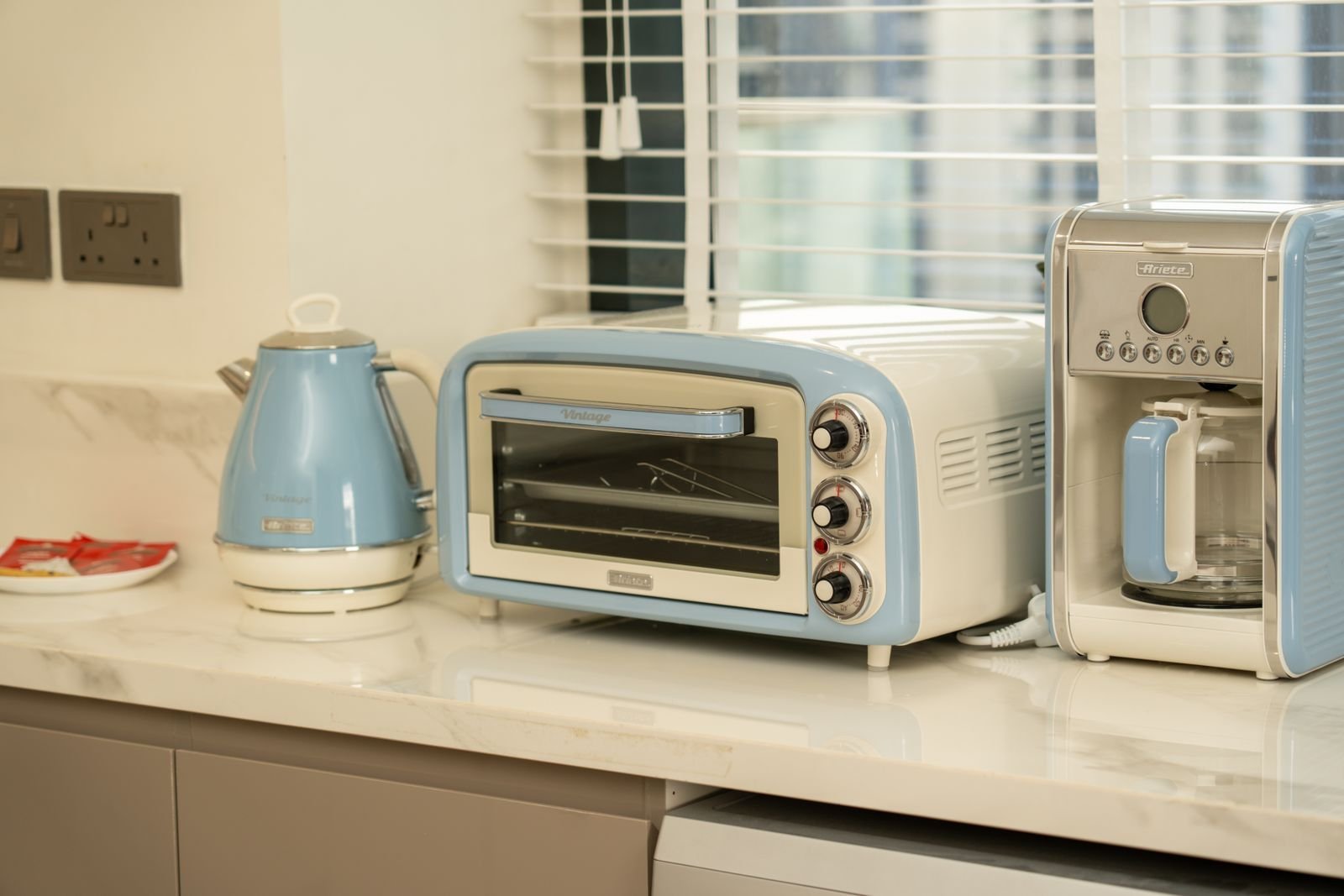
Follow the maker’s clearance notes when they exist. As a working rule: leave the sides and back of a toaster oven or air fryer open while it is on, do not run it under a low shelf that traps exhaust, and do not store it until it has cooled. Do not drape a towel over a warm machine, and do not push a warm body flush against a wall or into a closed cupboard.
Cords need a home that does not trap heat or pinch a plug. A loose coil, a hook on the side of a stand, or a wide clip on the back of a cart is enough. Do not wrap a cord tightly around a warm machine, run it under a cutting board, or force a plug into a gap where a door will crush it. If a cord is frayed, or a plug is loose or discolored, stop using the appliance and follow the maker’s guidance. This is not a repair manual.
Outlets in a small kitchen are often scarce. Do not daisy-chain power strips in a way the building or the maker warns against, and do not hide a strip behind a closed appliance garage where heat can build. Unplug machines before you store them if you are comfortable doing so.

Put things away without a scavenger hunt
Storage only works if you can get the machine back out when you start a meal. A useful home is nearby and consistent.
- Store the appliance you use weekly in the cabinet or cart closest to the outlet, not in a hall closet.
- Keep attachments with the machine: the blender jug with the base, the air-fryer basket with the body, the kettle lid with the kettle.
- Label a deep shelf if more than one person cooks, so a roommate is not stacking pans on it.
- After you use a machine, cool it, wipe crumbs or oil, then return it to the same place.
If getting the air fryer out requires unloading a column of bowls, the storage plan is the problem. Move the bowls, or give the air fryer a different shelf.
Practical takeaways
- I measured the cabinet, cart, or shelf, and the appliance, before I decided anything could be tucked away.
- The daily kettle or toaster can have a clear permanent rectangle; occasional machines live in a cabinet, on a stand, or a cart.
- I do not store a still-hot appliance in a closed cabinet, and I do not bury a cord in a way that traps heat or pinches a plug.
- An appliance garage is only an option if the lease and the worktop allow it, and the door still stays open until the machine is cool.
- A cart is overflow storage I can roll to the outlet, not a second cluttered counter.
- Attachments stay with the machine, in a home I can reach without unloading the rest of the kitchen.
How to store small appliances in a small kitchen—and how to apply it
The calm way to store small appliances in a small kitchen is to give each machine a measured home and to respect heat and cords. Keep the one or two tools you use every day in a clear spot, park the rest in a cabinet, on a stand, or on a cart once they are cool, and put them back in the same place so the next meal is not a search. A tight rental kitchen can hold a toaster, a kettle, an air fryer, and a blender; it cannot hold all of them on the worktop.
FAQ
How do you store small appliances in a small kitchen?
Give the machine you use every day a clear, permanent rectangle, and store the others in a measured cabinet, on a vertical stand, or on a cart once they are cool. Leave clearance for vents and cords, and do not put a still-hot appliance into a closed cabinet.
Can I keep my toaster and kettle on the counter?
Yes, if you actually use them daily and they leave enough landing space to cook. If the worktop is already crowded, store the less-used machine and keep only one tool out at a time.
Is it safe to put an air fryer in a cabinet?
After it has cooled, and if the cabinet is large enough for the body, the handle, and the cord without pinching a plug or blocking vents. Do not store it hot, and do not run it inside a closed cabinet.
What is an appliance garage, and can a renter use one?
It is a countertop cabinet, often with a lift-up or sliding door, that hides machines while they are off. Use one only if the lease and the existing worktop allow it. Do not drill without permission, and still let appliances cool before you close the door.
Where should I put cords?
Coil them loosely at the side of the machine, on a hook, or on the cart, so they cannot trap heat or get crushed by a door. Unplug the appliance before you store it if you can do that safely. Replace a damaged cord rather than wrapping it tighter.