How to Organize Kitchen Cabinets in a Small Kitchen
A small kitchen cabinet does not fail because it is slightly shallow. It fails because everything is in every cupboard: everyday plates behind serving bowls, glasses on a high shelf you need a stool for, and a heavy stack that you cannot lift without moving three other things.
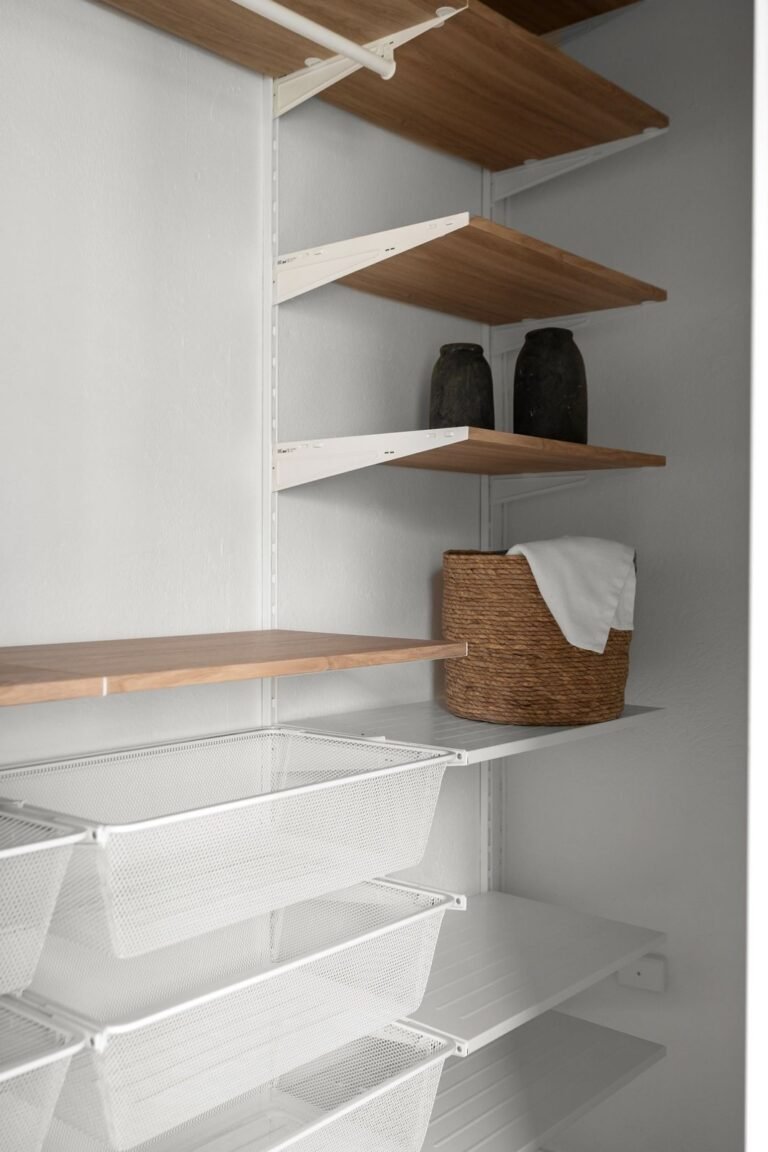
If you want to organize kitchen cabinets in a small kitchen, treat the shelves as zones rather than as open storage. Put the plates and glasses you use every day at a comfortable height, keep heavy items low, use risers and vertical stacks where they help you see what you own, and leave a little space so a door can open without a cascade. Do it with adjustments that do not require drilling.
This is a plan for the cabinet shelves themselves, not for the rest of the kitchen. Drawers, pots and pans, a pantry or a cabinet that acts like one, and spices already have their own guides: How to Organize Kitchen Drawers in a Small Kitchen, How to Organize Pots and Pans in a Small Kitchen, How to Organize a Tiny Apartment Pantry, and Best Spice Storage Ideas for Small Kitchens. The worktop habit is in How to Keep Small Kitchen Counters Clear. Under-sink storage, a kitchen cart, and a buying guide for organizers live in Under Sink Storage Ideas for Tiny Bathrooms and Kitchens, Best Kitchen Carts for Small Apartments, and Best Kitchen Organizers for Small Apartments. Point to those systems instead of restating them here.
Zone the shelves by how you use them
Start with what you reach for most days, not with what looks tidy in a photo. The best shelf is the one you can use with both feet on the floor and without moving a pile first.
A practical zone plan looks like this:
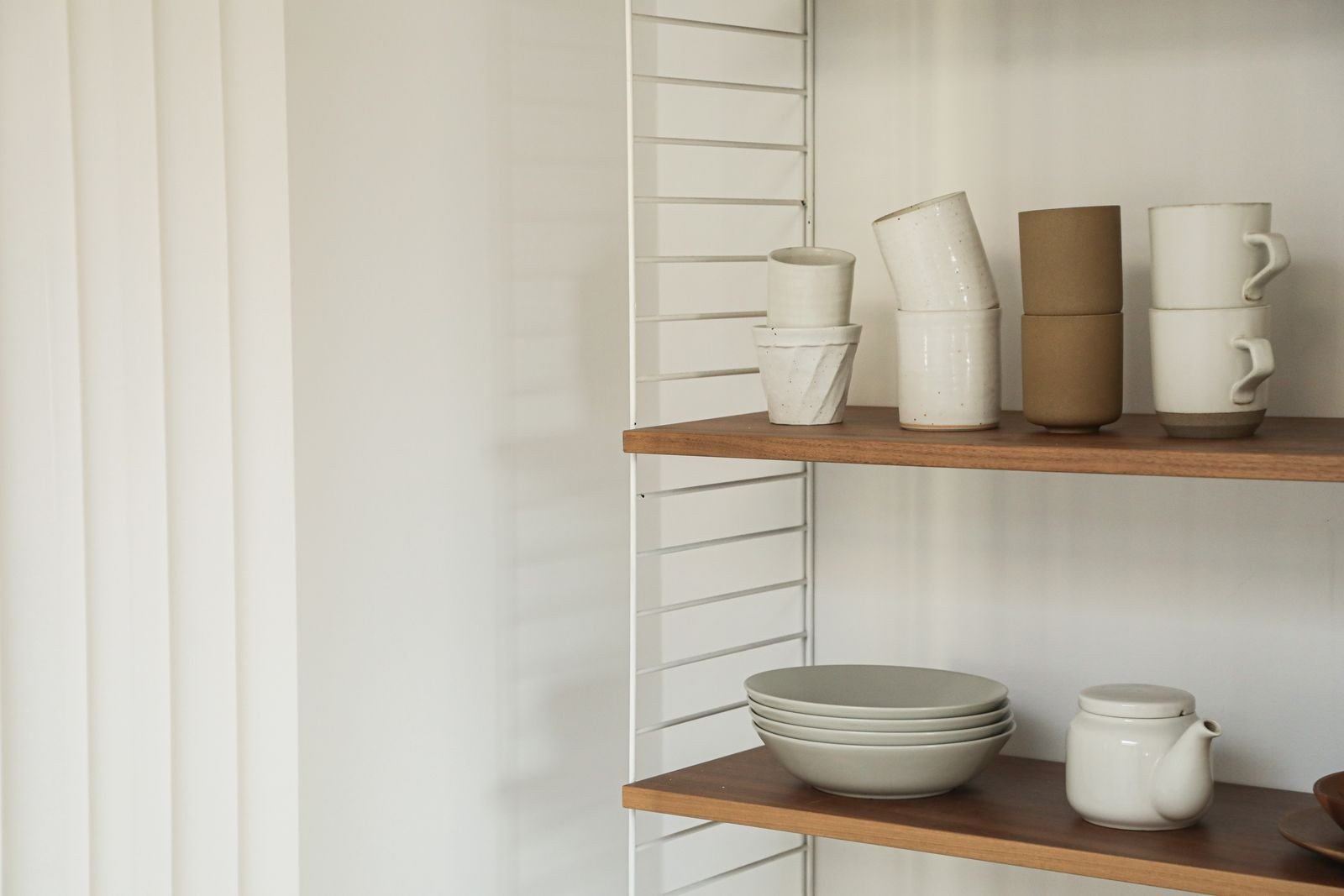
- Everyday plates, bowls, and glasses at a comfortable height. That is usually a shelf between roughly waist and shoulder height, in the cupboard closest to the sink or the table. If you have to stretch, squat, or stand on a toe to get a daily water glass, the zone is in the wrong place—even if the cupboard looks orderly with the door closed.
- Heavy items on a low shelf. Stacks of dinner plates, a mixing bowl set, a Dutch oven if it lives in a cabinet rather than with the pans, and any small appliance that is stored in a cupboard should sit where you can lift them without pulling from overhead. A heavy stack on a high shelf is how things drop, and how a renter ends up with a chipped plate and a scuffed floor.
- Less-used pieces higher or farther back. Serving platters, seasonal mugs, the tall vase, and the extra set of glasses you use twice a year can take the top shelf or the deeper back of a lower cupboard. They should not occupy the front of the daily zone.
- Like with like, in the cupboard where you use them. Glasses near the sink or the fridge, plates near where you plate food, and food-storage lids with their containers if those containers live in a cabinet. Do not split a daily set across three cupboards just to fill empty corners.
If a cabinet is already doing another job—spices, a pantry run of tins and dry goods, or the pots-and-pans stack—leave that job there and use the guides above. This article is for the dish and glass shelves, and for any mixed cupboard that has drifted into a jumble.
Use shelf risers and vertical stacks
Empty vertical space is the usual waste in a small cabinet. A single layer of plates on a tall shelf leaves a gap you cannot use, so the next person who needs a home for mugs starts a wobbly second pile on top of the plates.
Two tools usually help, without a renovation:
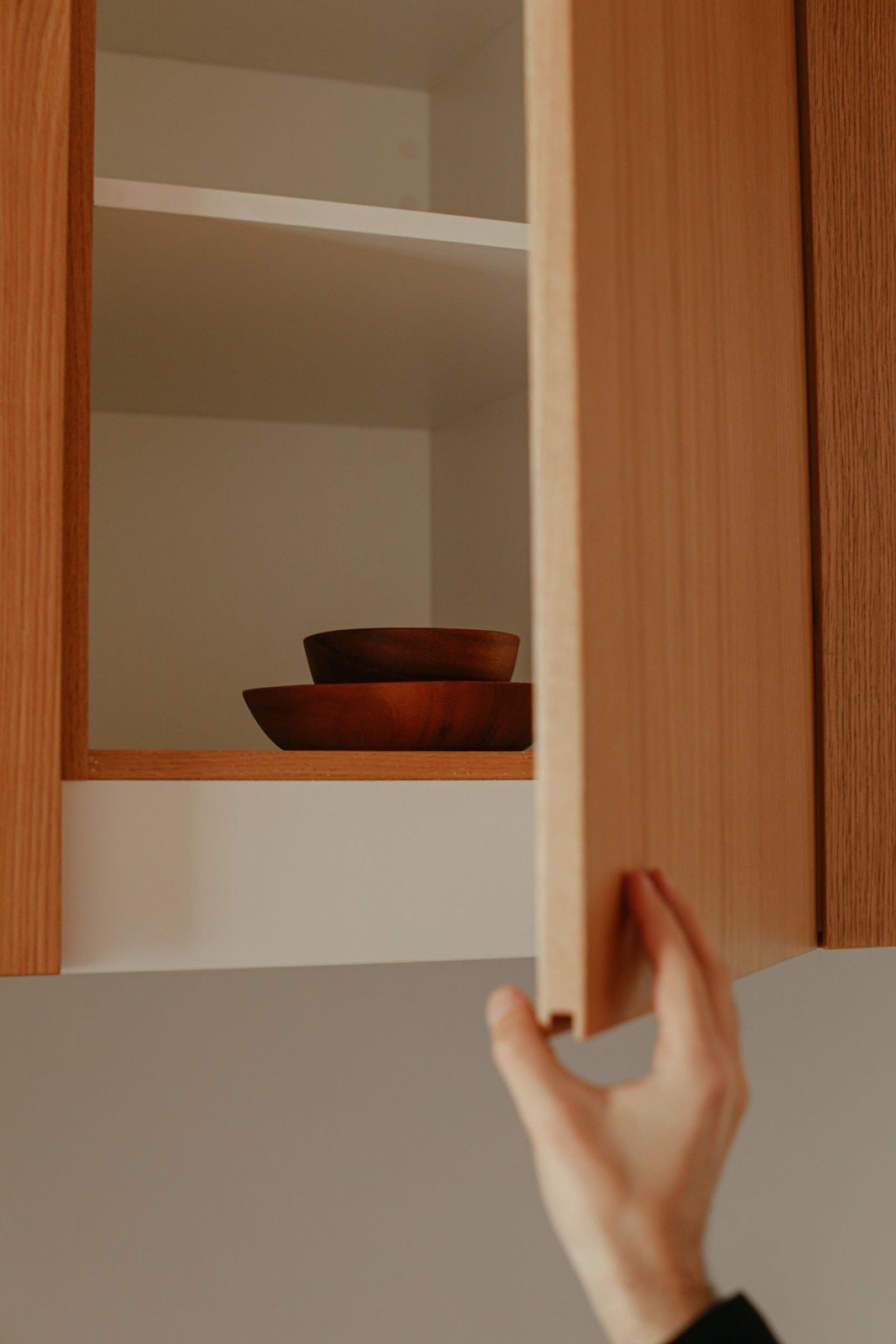
- A shelf riser, or a small freestanding shelf, under the existing shelf. This creates a second level for bowls, mugs, or smaller plates so you can reach the back row without unstacking the front. Choose a riser that sits stably and leaves enough clearance for the items below and above. If it rocks, or if the top stack hits the shelf above, it is the wrong height.
- Vertical stacks that stay short enough to lift. Matching plates in one pile, bowls in another, and saucers or side plates in a third is easier than a mixed tower. Keep the stack short enough that you can lift the top few items, or slide out a mid-stack plate, without tilting the whole pile into the door.
What does not help is stacking to the underside of the next shelf, or leaning glasses in a way you cannot separate with one hand. If you need a stool or both hands to get a daily bowl, the stack is too ambitious for the cupboard.
Risers, shelf inserts, and simple trays are the kind of tool the kitchen-organizer buying guide can help you choose if you do not already have something that fits. Measure the shelf width, depth, and the clear height before you add anything. Do not buy a set of organizers first and then try to invent a zone around them.
Leave a little breathing room
A cabinet that is full to the door looks organized until you need one glass. Then everything has to come out, and the counter becomes the sorting table.
Leave a little unused space on purpose:
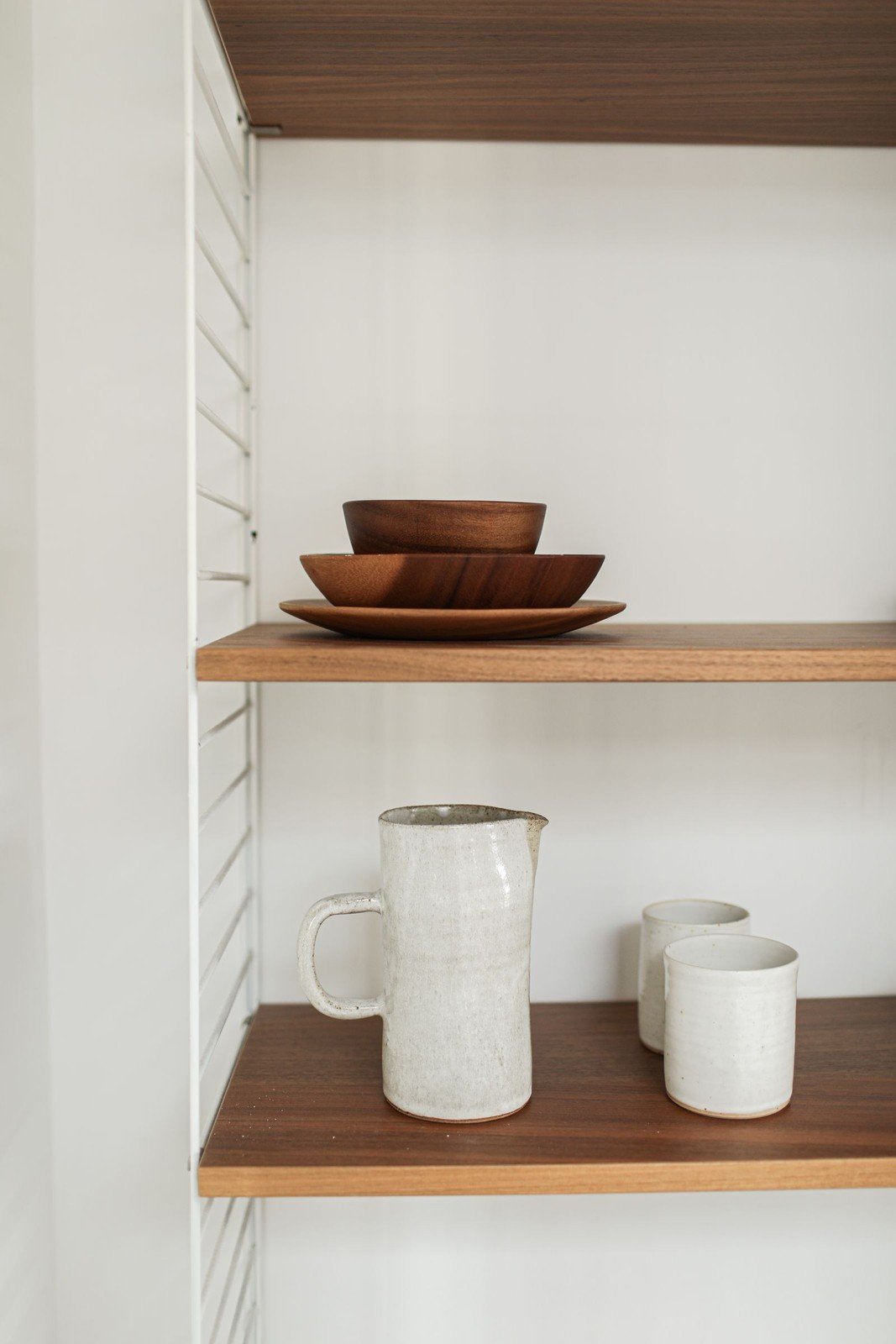
- A hand’s width, where you can, at the front or the side of a daily shelf. You should be able to take a plate or a glass without knocking its neighbor.
- Room for the door and any hinges. In a tight galley, a door that cannot close because a stack sits too far forward is a daily annoyance, and it is how items get chipped.
- One empty zone for overflow you have not processed yet. A short stretch of a lower shelf can hold a mug you just washed or a container that is going back, as long as it does not become a permanent dump.
Breathing room also means editing. If you have eight mugs and use three, the extras do not belong in the daily zone. The same is true of duplicated plates, souvenir glasses, and lids with no container. Keep what you use in a normal week, plus a small margin for a guest if that is realistic. The rest can go to a higher, less-used shelf—or out of the kitchen.
This is also how you keep items from migrating onto the counter. When the daily cupboard is easy to use, plates and glasses have a home to return to. When it is packed, the worktop becomes the extra shelf, a problem covered in the counter-clearing guide.
Renter-safe adjustments that do not require drilling
You can improve a small cabinet without adding hardware to the walls or the cupboard boxes. Stay with changes you can reverse when you move out, and do not treat the landlord’s cabinets as a renovation project.
Safer adjustments usually include:
- Freestanding risers, shelf inserts, and non-slip liners. These sit on the existing shelf. If you use a liner, choose one that does not trap moisture and that you can lift out to clean. Check the lease if you are unsure about adhesives; some liners stick more than they claim, so a smooth, removable mat is the calmer default.
- Existing adjustable shelf pins, if the cabinet already has them. Moving a shelf to a different set of factory holes is often allowed because you are using the cabinet as designed. Do not drill new pin holes, and do not force a shelf into a slot that no longer supports it securely.
- A simple tray or bin on a shelf for small stacks of saucers, lids that belong with cabinet containers, or a group of glasses that otherwise slide. The tray comes out as one unit. It should not be so tight that you have to pry it free.
Avoid drilling for hooks, stems, or extra shelves inside the box, and do not add a new cabinet or a permanent organizer that screws into the frame. If a door is loose, a hinge is failing, or a shelf is already damaged, that is a maintenance issue for the landlord, not a DIY repair you invent. Under-sink space and a cart that lives outside the cabinets are separate systems; use those guides rather than hanging more items on the cupboard doors.
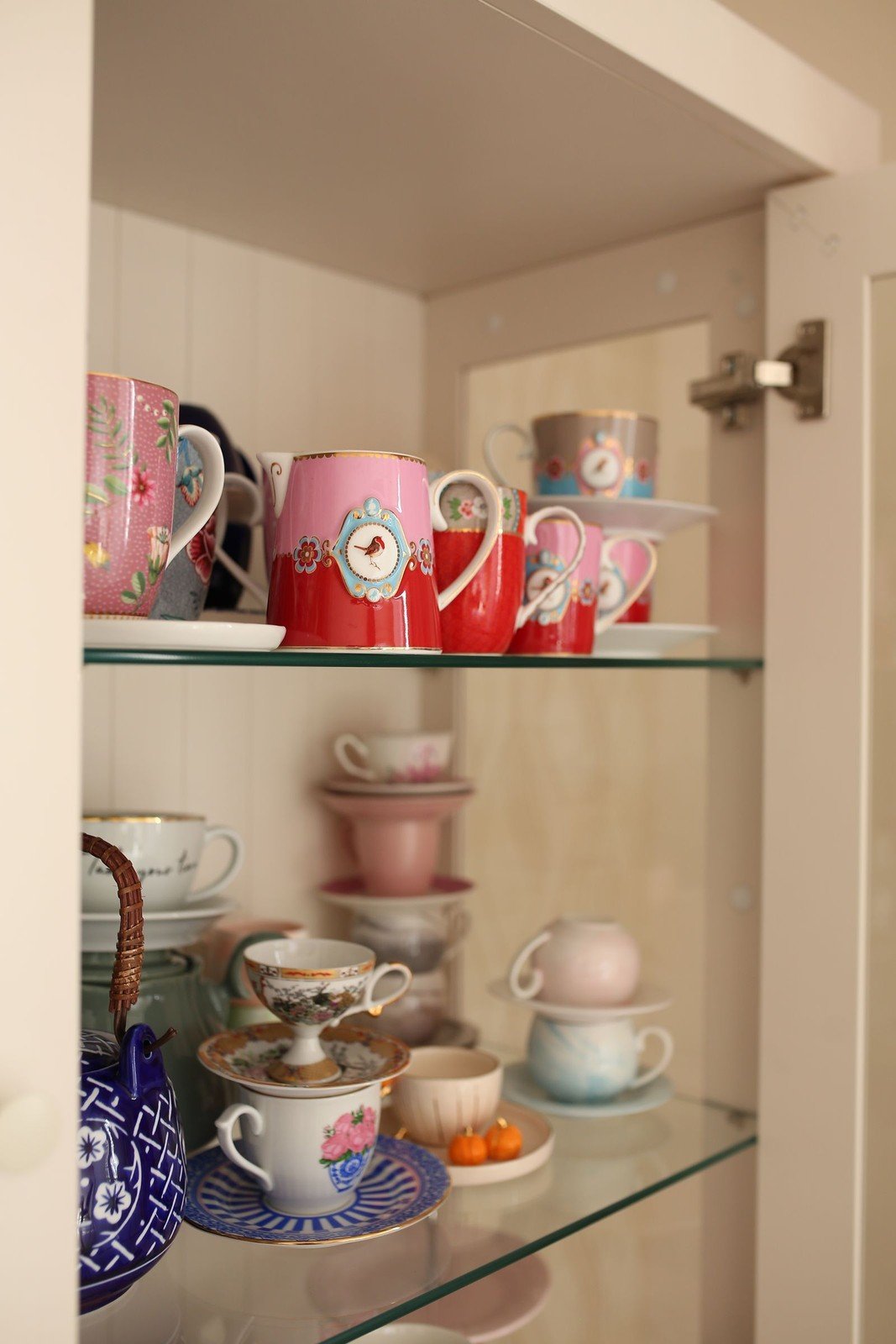
Glasses and cups should still be reachable after any insert goes in. An arrangement in a glass-front cupboard is only useful if the daily pieces come out cleanly.
A practical small-kitchen cabinet checklist
Before you call the cabinets finished, confirm:
- Everyday plates, bowls, and glasses sit at a comfortable height, close to where I use them.
- Heavy stacks and heavier vessels are on a low shelf, not overhead.
- Less-used pieces are higher or farther back, not in the front of the daily zone.
- Risers or short vertical stacks let me reach a piece without unstacking the whole shelf.
- There is a little breathing room, and the doors close without hitting a pile.
- Any add-on is freestanding or uses existing shelf holes—no new drilling, and no renovation.
How to choose—and how to apply it
The calm way to organize kitchen cabinets in a small kitchen is to give the shelves a zone plan and then stop before the cupboard is packed to the door. Put daily plates and glasses where your hands already go, keep heavy items low, and use a riser or a short stack only where it helps you see and lift what you own. Leave a little air so the door can close, and stay with renter-safe inserts that do not need a drill. You do not need new cabinets or a ranked set of products. You need a daily zone you can use with both feet on the floor, a low home for heavy stacks, and enough empty space that taking one glass does not empty the shelf.
FAQ
How do I organize kitchen cabinets in a small kitchen without buying a new cupboard?
Set zones on the shelves you already have. Put everyday plates and glasses at a comfortable height, keep heavy items on a low shelf, and move less-used pieces up or back. Add a freestanding riser or a short vertical stack if it helps you reach the back, and leave enough space that the door can close.
Where should everyday plates and glasses go?
On a shelf you can reach easily, usually between waist and shoulder height, in the cupboard closest to the sink, the fridge, or the table. If you need a stool or a stretch for a daily glass, move that zone down or closer, and put occasional pieces on the higher shelf instead.
Do I need shelf risers to organize a small cabinet?
Not always. A riser helps when a tall shelf holds only one layer and the back row is hidden. It is less useful if the stack would then hit the shelf above, or if the riser rocks. Measure the clear height first, and keep daily stacks short enough to lift.
What can I change in a rental cabinet without drilling?
Freestanding risers, removable liners or mats, trays, and—if the cabinet already has them—existing adjustable shelf pins. Do not drill new holes, screw organizers into the box, or add permanent hardware. If a hinge or a shelf is already damaged, talk to the landlord rather than inventing a repair.
Should spices, pots, or pantry food live in these cabinets too?
Only if a cupboard is already dedicated to that job. This guide is for the dish and glass shelves. Spices, pots and pans, and a pantry or a cabinet that acts like one have their own systems; mixing all of them into the daily plate cupboard is usually how the jumble starts.