
How to Set Up a Drop Zone in a Small Apartment Without an Entryway
Many small apartments have no true entryway. The door opens straight into the living room, or into a short hall that is really just a passage beside the sofa. Bags land on a chair, shoes fan out into the walkway, and mail colonizes the kitchen counter. An apartment drop zone with no entryway is a small, intentional landing spot for the things you put down as you come in—not a second closet, and not a renovation.
This is different from a full entryway setup. If you do have a foyer or a defined hall you can furnish as its own room, use Entryway Storage for Small Apartments. This guide is for the more common case: the door opens into the room you already live in. Shoe storage in more depth is covered in How to Organize Shoes in a Small Apartment. If a door back is the only unused vertical surface, Over-the-Door Storage Ideas for Small Apartments can help—provided the door still opens fully and the rack is allowed.
Claim a small landing spot, not the whole wall
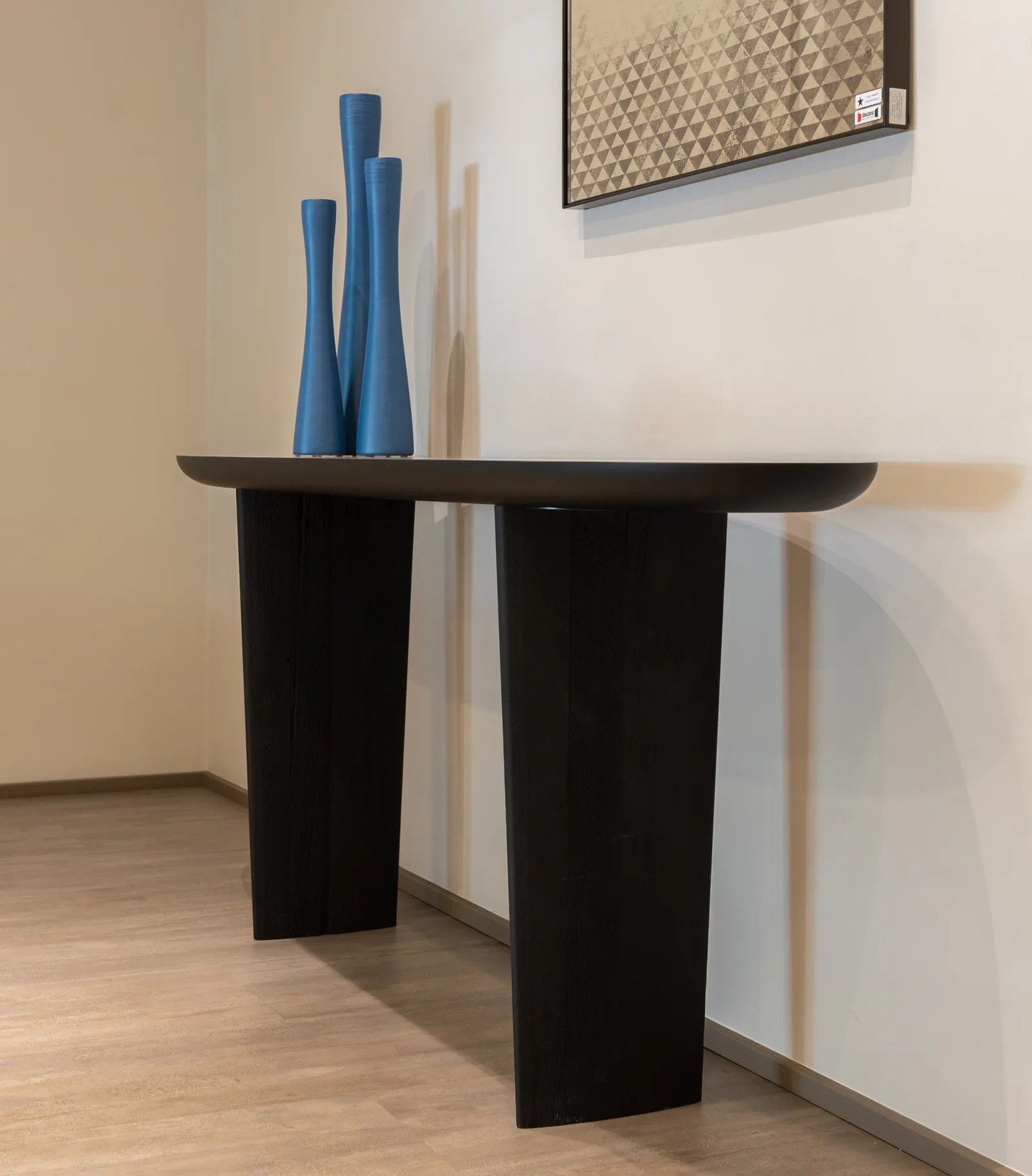
Measure the swing of the door and the first two steps you take inside. The drop zone has to live beside that path, not in it. A slim console, a narrow wall-mounted shelf, or even a sturdy stool can be enough if it does not block the door, a radiator, or a vent.
What belongs in the zone:
- Keys, a card wallet, and sunglasses in one tray or a small dish
- The bag you use most days, on a hook, not on the floor
- Today’s mail, in a shallow tray or a single upright file, not a growing pile
- The shoes you wear most often, on a low rack or a mat, in a contained sit
What does not:
- Out-of-season coats, guest overflow, and the recycling
- Delivery boxes, laundry, and anything that is “just for a minute”
- A second dumping ground on the nearest armchair or the kitchen worktop
If the door opens against a wall, that wall is usually the right place. If it opens into a room with a sofa immediately ahead, try the wall beside the hinge side, or a very slim console that sits behind the door once it is closed. Do not place a table where the door will hit it, and do not block a heating vent or a fire-exit path. In a rental, choose furniture you can move when you leave, and fixings you are allowed to use.
A drop zone should read as one narrow column: surface, hooks, and shoes stacked in the same width. If the setup spreads along an entire wall, it has stopped being a landing spot and started being clutter with furniture under it.
In a studio, the same rule holds, only more tightly. The door may open a few feet from the bed or the dining table. In that case, a wall-mounted shelf or a console no deeper than a handspan is often calmer than a bench you will walk around every time you come home. Leave enough room to open the door with a bag in your hand, and do not use the landing spot as overflow storage for the rest of the room.
A slim console, a tray, and wall hooks
A slim console or a narrow shelf gives you a landing surface without pretending you have a hall. Look for a depth that still leaves a clear walkway—often something closer to a console than to a desk. In a rental, a freestanding table is usually easier than drilling a heavy rail you cannot make good later. A lease-safe, weight-rated shelf can work on a solid wall if your agreement allows it; if you cannot make a secure, permitted fixing, stay with a small table.
On that surface, one tray does more than a scatter of bowls. Keys, coins, and a lip balm stay in the tray; mail gets a separate shallow tray or a standing file so paper does not swallow the keys. If the console has a single drawer, that drawer is for outgoing post, a spare key, and the things you need as you leave—not for junk you do not want to sort.

Hooks take bags and a daily coat off the chair. A short row of hooks, a small hook rail, or a few over-the-door hooks on a nearby closet door can work if they are rated for the weight and allowed by your lease. Hang the bag you actually use, not every tote you own. A packed row of coats will creep into the walkway and make the room feel like a cloakroom.

Keep the styling simple. A small lamp or a plant is fine if it still leaves room for the tray. The console is a landing spot, not a display cabinet. If you find yourself dusting objects that get in the way of your keys, the surface is doing the wrong job.
If you work from home and the front door is also the edge of the living room, be honest about mixed use. A drop zone can hold a laptop bag on a hook, but it should not become a desk. Chargers, post, and work papers need a different home once you have taken off your shoes, or the landing spot will always look mid-task.
A shoe sit that does not spread into the room
Shoes are the usual reason a no-entryway drop zone fails. A pair or two by the door is handy; a week of footwear is a trip hazard.
Give shoes a contained sit: a low, narrow rack, a shallow tray or mat you can wipe, or a low bench with a shelf underneath if you have the width and you will actually sit to put shoes on. The sit should be no wider than the console or the hook run above it, so the zone reads as one column, not a drift across the rug.
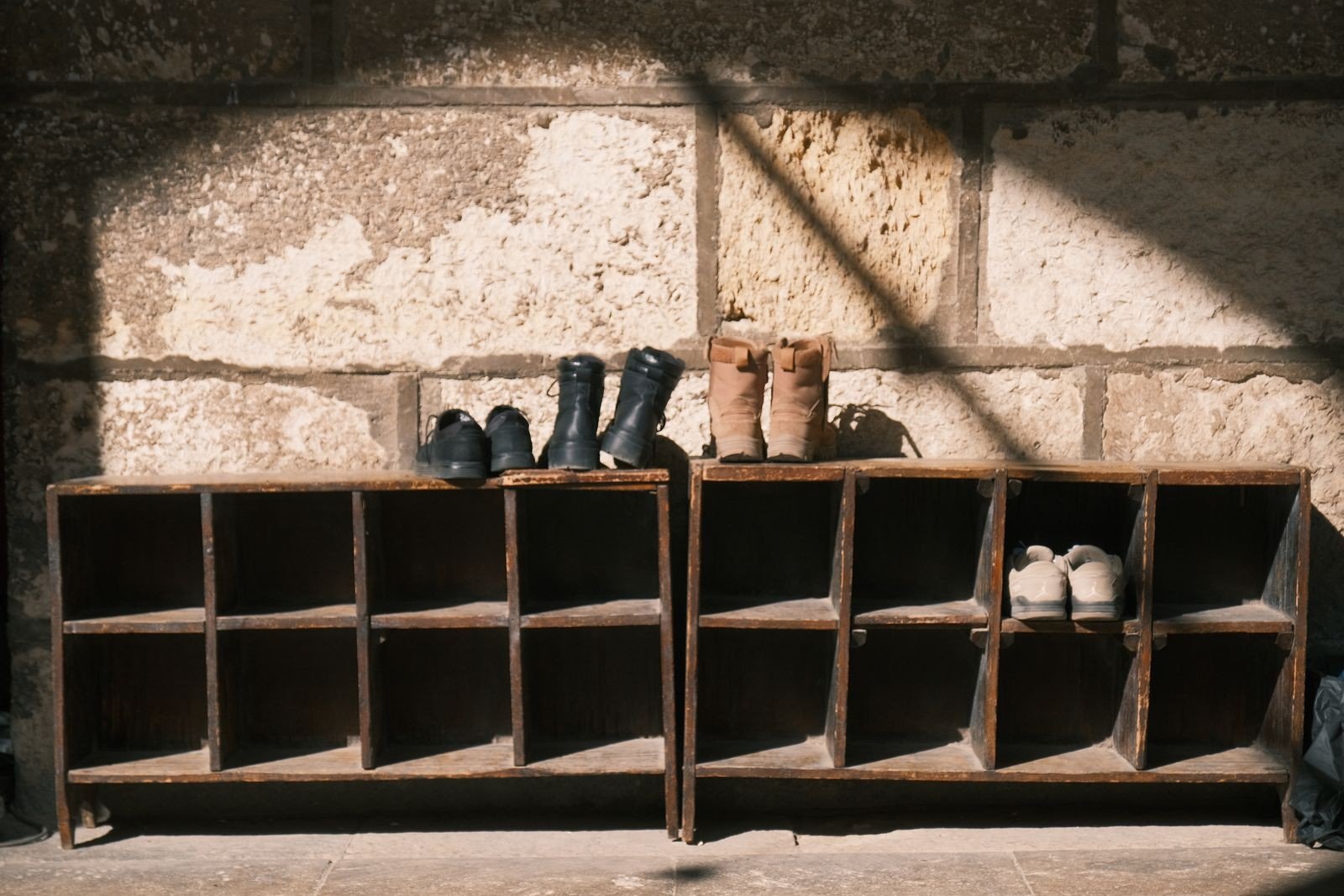
Keep only the shoes you wear this week in that sit. Everything else belongs in a closet, under the bed, or in the system you already use for shoes. The shoe-organization guide is the place for that overflow, not this strip of floor.
Wipe the mat, and do not let wet shoes sit on bare wood or a light-colored carpet if they will mark it. If you share the apartment, agree a number of pairs per person so the sit does not quietly expand. A drop zone cannot solve a whole household’s footwear; it can only hold what you need as you walk in and out.
What not to pile—and how to reset the zone
A drop zone stays useful only if it is emptied as often as it is used. Mail is the usual creep. Open it, recycle the envelopes, and move anything that needs a reply to a desk or a folder. Do not let a console become the household archive, and do not start a second pile on the kitchen worktop “just until you deal with it.”

A short daily reset:
- Keys back in the tray, bag on its hook
- Shoes in the sit, not kicked under the sofa
- Mail sorted, or at least stacked in its tray, not spread on the kitchen counter
- Anything that does not belong here—mugs, laundry, tools—returned to its real home
Once a week, clear the tray completely and wipe the console. If an object has lived there for a week and is not keys, a bag, mail, or shoes, it needs a different home.
If the door wall cannot take hooks, consider the back of a nearby closet door rather than a tall rack that narrows the walkway. Over-the-door storage can hold a bag or a light jacket; it should not become a second overflowing closet that slams into the wall or the frame.
The renter-friendly rule of thumb is simple: nothing here should require a renovation, a built-in bench, or a hole you cannot fill. A slim table, a tray, a few solid hooks, and a shoe sit are enough. If a hook pulls out of crumbling plaster, take it down and use a freestanding option or a nearby closet door rather than hanging a heavy bag from a weak fixing.
Shared hallways and building rules still apply. Do not move the drop zone into a common corridor, and do not leave shoes where they block a neighbor’s path or a fire-exit route. The system has to live inside your own door.
A practical no-entryway drop-zone checklist
Before you call the landing spot finished, confirm:
- I measured the door swing and left a clear path into the room.
- The zone is one narrow column—surface, hooks, and shoes—not a spread along the wall.
- Keys live in a tray, and mail has its own shallow tray or file.
- A daily bag and at most one everyday coat have a hook, and the hook is lease-safe and weight-rated.
- Everyday shoes have a contained sit; overflow shoes have a home elsewhere.
- The console does not block a vent, a radiator, or the door.
- I have a short daily reset, and a weekly wipe of the tray and surface.
- Nothing in this setup required a renovation or a fixing I cannot reverse.
How to choose—and how to apply it
The calm way to set up an apartment drop zone with no entryway is to claim a narrow landing spot beside the door, not to invent a foyer. A slim console or shelf, one tray for keys, a separate place for mail, a short run of hooks, and a contained shoe sit will do the job if you keep the path clear. What you refuse to pile matters as much as what you buy. You do not need built-ins. You need a place to put things down that is easier than the nearest chair, and a reset short enough to do when you walk in.
FAQ
How do I set up an apartment drop zone if I have no entryway at all?
Use the wall or the slim stretch beside the door swing, not the middle of the room. A narrow console or shelf, a tray for keys, a hook for your daily bag, and a small shoe sit are enough. Keep the zone in one column so it does not eat the living room.
What if the front door opens directly into the living room?
Place the drop zone on the hinge-side wall or behind the open door, so the table never sits in the swing. Keep the furniture slim, leave a clear path to the sofa, and do not let shoes or bags spill onto the rug. The living room can host a landing spot; it should not become a cloakroom.
Can I use over-the-door hooks instead of a console?
Hooks can hold a bag or a light jacket, especially on a nearby closet door, if they are allowed and the door still opens fully. They do not replace a tray for keys and mail. Many people use both: a slim surface for small items, and a hook or an over-the-door rack for the bag.
How many pairs of shoes should stay by the door?
Only the pairs you wear in the current week, and only as many as the rack or mat can hold without spilling into the walkway. A household rule—two pairs per person, for example—helps. The rest belong in a closet or in your main shoe-storage system.
Where should mail go so it does not pile up on the kitchen counter?
Give mail its own shallow tray or standing file on the drop-zone surface, then sort it the same day if you can. Recycle the envelopes, and move anything that needs a reply to a desk or a folder. If the tray is full, the counter is not the overflow; the archive needs to be cleared.


