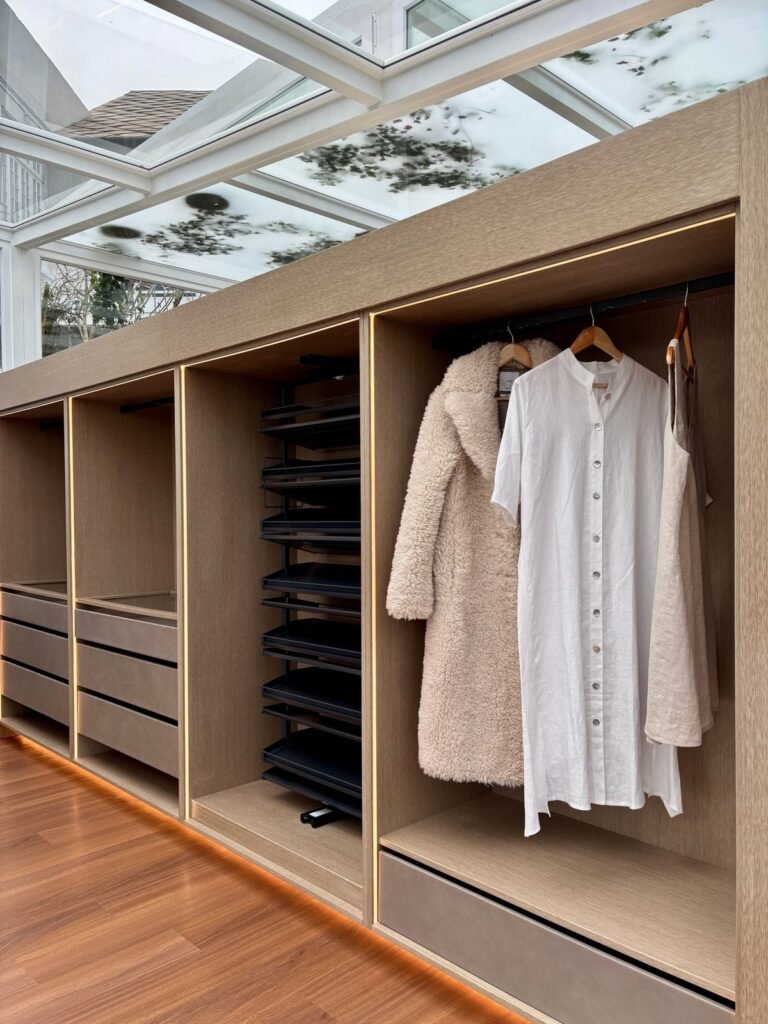
How to Organize a Laundry Closet or Washer-Dryer Nook in a Small Apartment
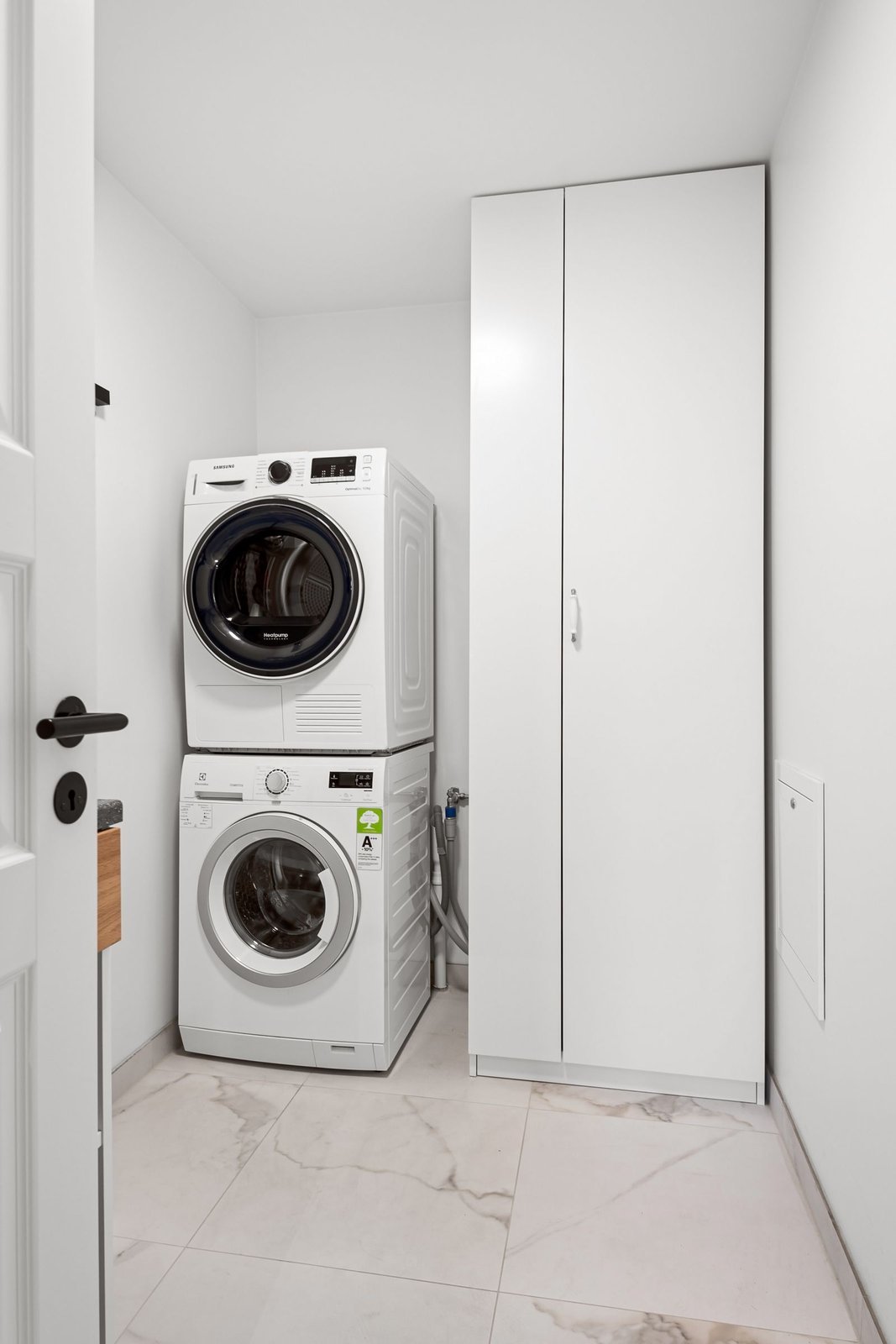
A laundry closet in a small apartment is often just wide enough for a stacked washer and dryer, or for a single in-unit machine and a sliver of shelf. In a building with shared machines, the “nook” may be even smaller: a hall closet or a corner that holds a basket, detergent, and nothing else. In every version, the space fails the same way. Bottles collect on the machine, a hamper blocks the door, lint has no home, and the closet becomes a junk cupboard that will not close. If you want to organize a laundry closet or washer-dryer nook in a small apartment, the job is to give the supplies, the hamper, and the lint a place that leaves the machines usable and the door able to shut.
This article is the closet or nook itself, not the weekly wash system. The schedule and the trip to a shared machine live in Apartment Laundry Routine: A Simple System That Fits Shared Machines and in How Often to Wash Sheets and Towels: A Practical Laundry Schedule for Small Homes. Drying without a dryer, and the rack that does that job, are covered in How to Dry Clothes in a Small Apartment Without a Dryer and Best Clothes Drying Racks for Small Apartments. Choosing a hamper that fits a tight home is Best Laundry Hampers for Small Apartments. Cleaning bottles that do not belong in this closet have a better home in How to Organize Cleaning Supplies in a Small Apartment. Extra towels and sheets belong in How to Organize a Small Linen Closet. Off-season clothes should not migrate here either; that plan is How to Store Off-Season Clothes in a Small Apartment. A vacuum, mop, or broom needs its own narrow home in How to Store a Vacuum, Mop, and Broom in a Small Apartment, and a general hall closet is How to Organize a Hall Closet in a Small Apartment. What follows is how to set up the laundry closet or nook so the machine can be used and the door can close.
Start with the machines, then give supplies a shelf or a caddy
Stand in front of the nook the way you actually use it. Open the washer door, pull the detergent drawer, and, if you have a dryer, open that door too. Notice what you bump. The first rule is clearance: nothing stored in the closet should block a door, a lint screen, a drain hose, or the space you need to load a basket. If a stacked unit already fills the width, storage has to go above, beside, or in a slim caddy you can lift out, not in front of the machines.
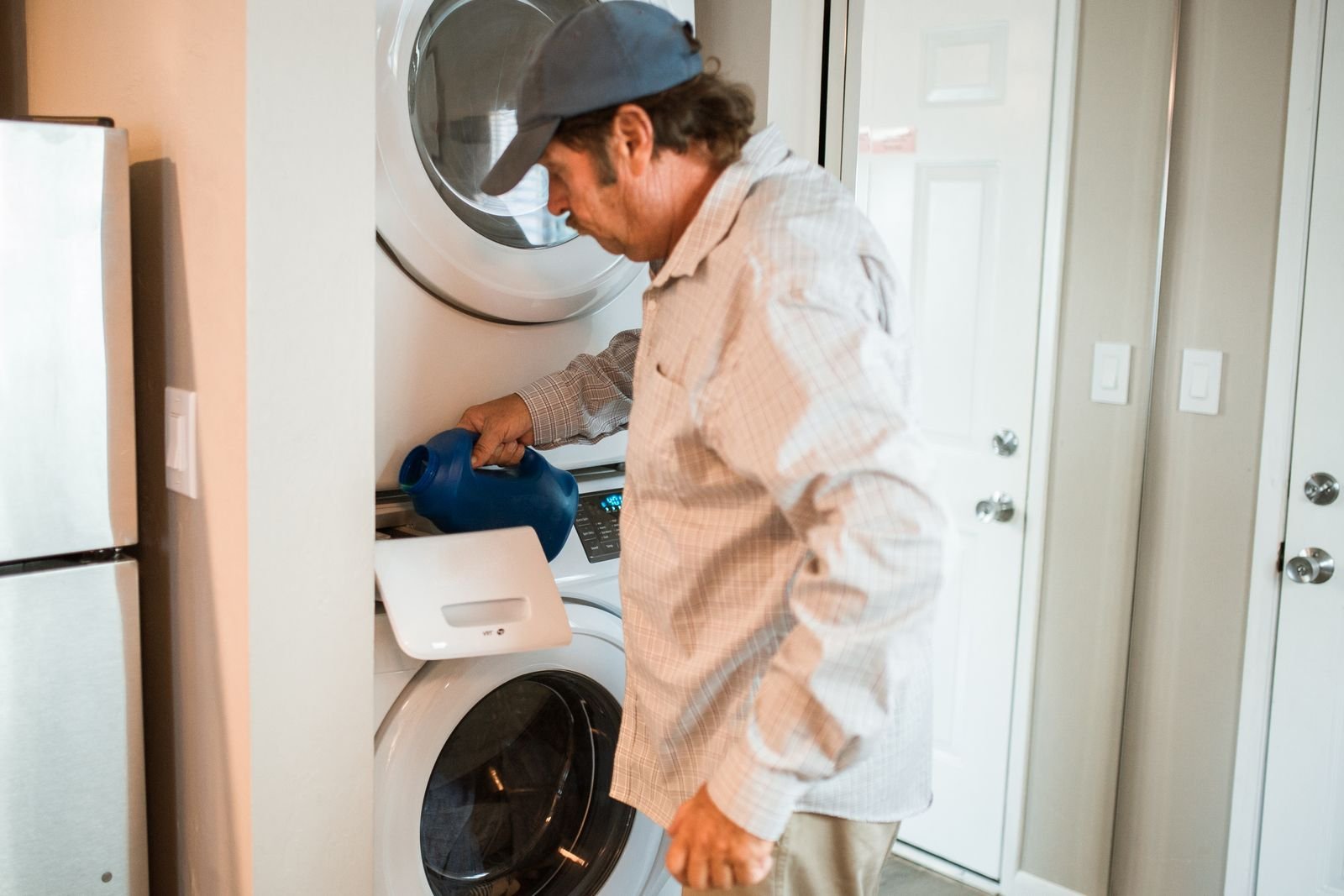
Give detergent, softener, stain treatment, and dryer sheets one contained home. A small caddy on a shelf, or a bin that sits on the machine only while you wash and then returns to the shelf, is easier than a row of bottles on the dryer. Bottles on the machine slide, drip, and get knocked when you open the door. If the closet has no shelf, a tension shelf, a slim over-the-door caddy, or a narrow standing rack that sits beside the stack can work — as long as it does not pinch hoses or block ventilation. Do not add a shelf by drilling into a plumbing wall, and do not run new electrical or plumbing to “improve” the nook. Use the connections that are already there.
Keep only the supplies you use for laundry in this closet. A second set of all-purpose cleaners, extra paper goods, and tools belong elsewhere. The nook is too small to be the overflow cupboard for the whole apartment. If you have a full laundry room instead of a closet, the same rule still helps: one zone for detergent, one clear path to the machines, and no pile of unrelated storage on the lids.
Fit a hamper, a hook, and a short rod without blocking the door
The hamper has to fit the nook you have, not the one in the product photo. Measure the floor that remains after the machines, including the swing of the closet door and the space you need to stand. A slim rectangular hamper, a bag that hangs on the door, or a collapsible bin you can lift out during a wash is usually better than a round basket that sits in the walkway. If the closet is only a basket zone for shared-building laundry, the hamper is the main object, and it still needs a defined corner so it does not drift into the hall.
A hook or a short rod is for a few hanging items, not for a wardrobe. Use it for a damp shirt that cannot go in the dryer, a mesh bag of delicates, or the empty hamper bag while you wash. A full drying rack inside a closet that also has to close is a poor fit; the rack belongs in another room or in a plan for drying without a dryer. If you add a rod, keep it short, high enough to clear the machines, and mounted in a renter-safe way: a tension rod if the closet sides will hold it, or over-the-door hooks if a rod would need a risky install.
The door has to close. That is the test at the end of every setup. If the hamper, the caddy, or a hanging shirt keeps the door ajar, the closet will collect more clutter, and a stacked unit will not get the airflow or the visual calm you wanted. Edit the contents until the door shuts easily. In a nook without a door, the test is whether the aisle past the machines stays clear.
Give lint and overflow a small, obvious home
Lint has to go somewhere that is not the floor or the back of the shelf. Keep a small bin, a bag, or a lidded cup on the supply shelf, and empty it when you clean the lint screen. If you have a dryer, make the lint screen easy to reach; do not store a box in front of it. If you do not have a dryer, you still need a place for tissues, dryer sheets, and the odd bit of lint from a machine in the building. A tiny bin is enough. Do not let lint collect in a corner where it can sit against a warm vent.
Overflow is the other quiet problem. Extra detergent bottles, a second hamper, and off-season bedding will fill a nook faster than the weekly wash will empty it. Keep only the open bottle and one backup, if you have room. Spare bedding belongs with the linens, not on top of the dryer. If a garment needs to dry, take it out of the closet. A closed, damp closet is a poor drying room, and hanging wet clothes over the machines can leave moisture where you do not want it.
If the washer sits in a kitchen run or a bathroom, treat the surrounding counter the same way: one caddy for laundry supplies, a hamper that can be moved when you cook or bathe, and no loose powder on the food-prep surface. The machine may share a room, but the supplies should still be contained.
Keep the closet from becoming a junk cupboard
The last step is a rule, not a product. This closet is for laundry. If you cannot name why an object is there — detergent, a hamper, lint, a few hangers — it should leave. Flashlights, tools, gift wrap, and vacuum parts will make the door stop closing and will hide the lint bin. If you need a general utility cupboard, use a hall closet or a different shelf, and keep this nook narrow on purpose.
Do a short check when a load is finished: bottles back in the caddy, lint emptied, hamper in its spot, nothing on the floor in front of the doors, and the closet door shut. That check takes less than a minute and is what keeps a stacked alcove from sliding back into a catch-all. If something new has appeared in the nook, take it out before the next wash. If you share the apartment, agree on the rule out loud. A roommate who sets a backpack in the nook because it is “empty” will block the next load.
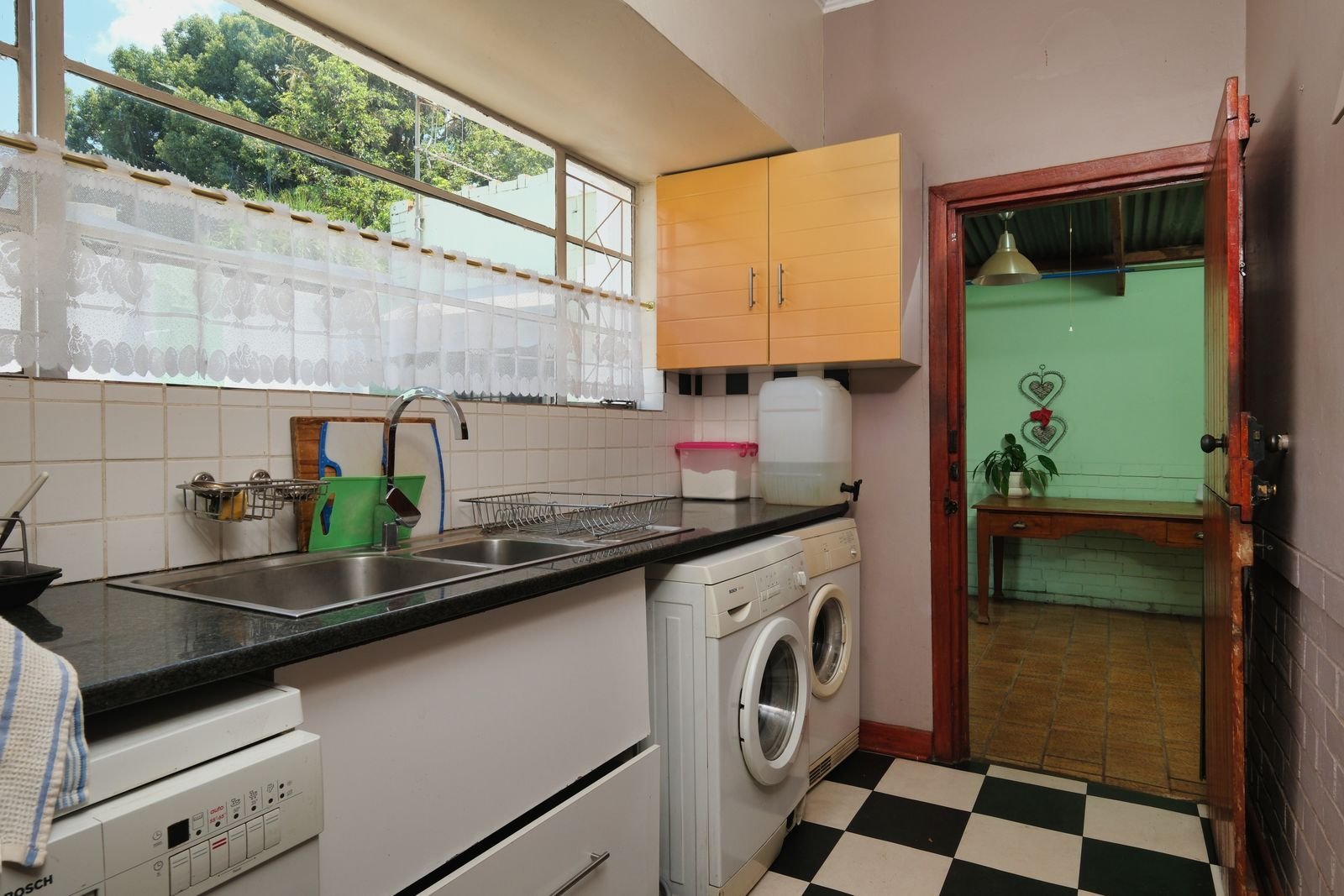
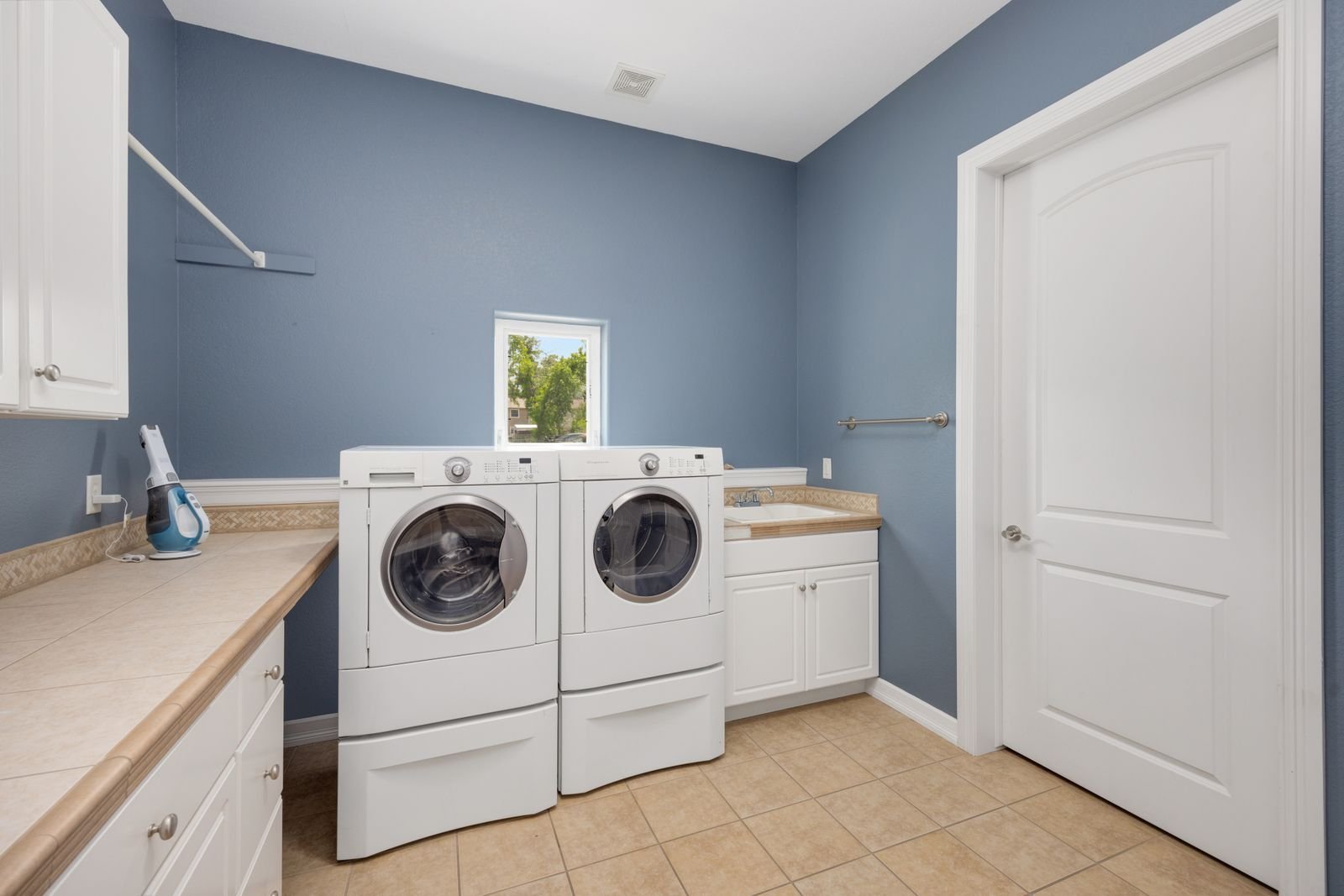
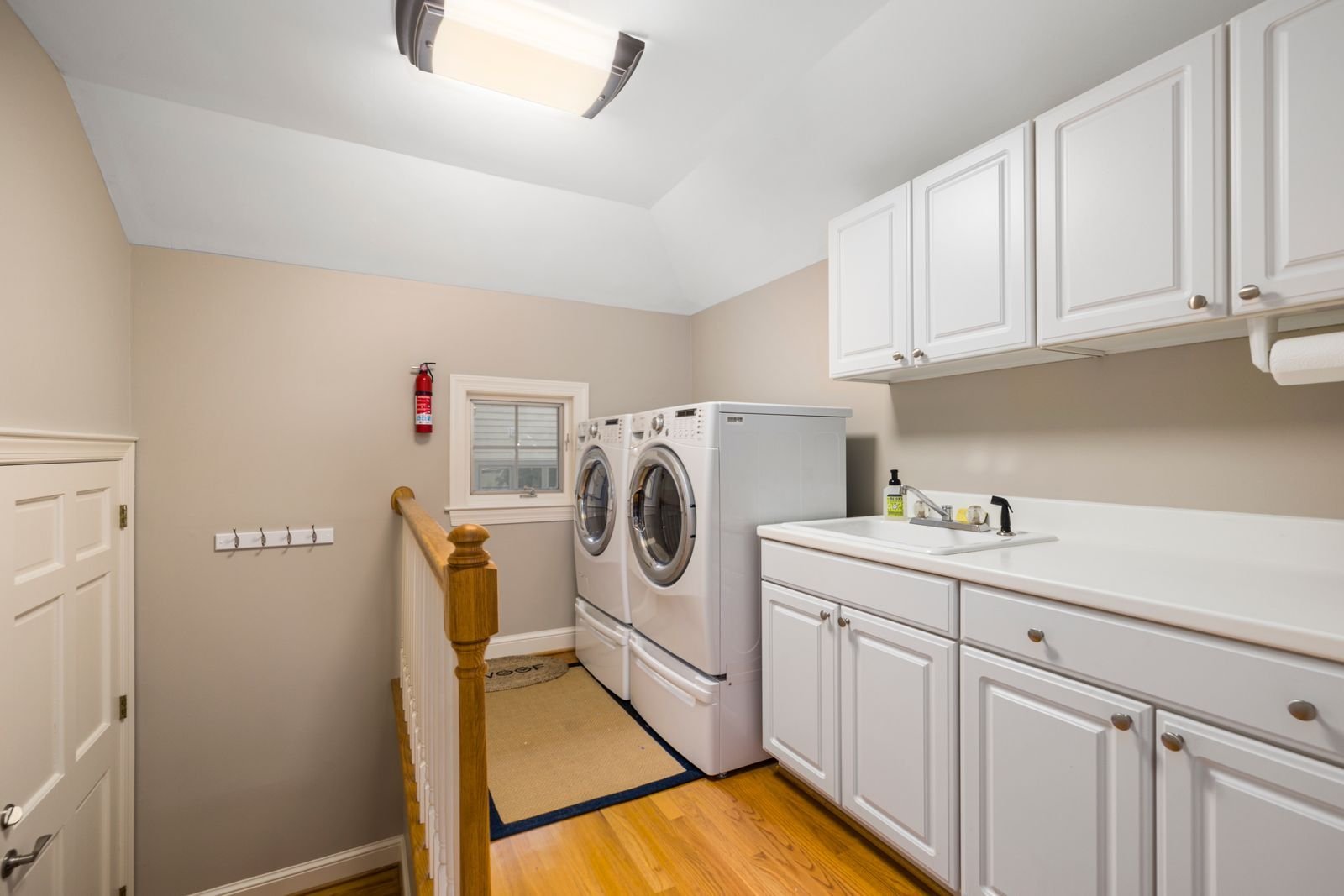
Some apartments have a real laundry room rather than a closet, with room for a sink, upper cabinets, and hooks. The same organizing idea still applies: cabinets hold supplies, hooks hold a few items, the floor in front of the machines stays clear, and the room is not a second attic. The difference is only scale. In a closet, the same choices have to be smaller and more strict, because one extra bottle is enough to keep the door from closing.
Practical takeaways
A laundry closet or washer-dryer nook works when the machines stay reachable, the supplies stay contained, and the door can close.
- Store detergent in a caddy or on a shelf, not in a loose row on top of the machine.
- Choose a hamper that fits the remaining floor or hangs on the door, and add only a short rod or a hook for a few items.
- Keep a small lint bin where you will actually empty the screen, and do not block vents or hoses.
- Keep this closet for laundry only; move cleaners, off-season clothes, and tools to their own homes.
- Do not add electrical or plumbing work to “fix” a rental nook; organize around the connections that are already there.
A small apartment will not give you a wide laundry room, and it does not need to. It needs a nook that can take a load, hold the bottles you actually use, and still shut when you are done.
FAQ
What if my laundry “closet” is just a stacked unit in a hallway with no door?
Treat the alcove like a closet anyway. Keep supplies in a caddy you can lift, park the hamper so it does not sit in the walkway, and leave clearance for the machine doors. The test is whether someone can pass without stepping around bottles.
Where should I put the hamper if the closet is already full of machines?
Use a slim hamper that sits beside the stack, a hanging bag on the door, or a collapsible bin that lives in the bedroom and comes to the nook only on wash day. A hamper that blocks the washer door is not a solution.
Can I store cleaning supplies in the same closet?
Only a little, and only if they fit in the same caddy without crowding the detergent or blocking the machines. A full set of household cleaners belongs in a cleaning-supply home, not in a nook that is already tight.
Is it safe to add a shelf above a stacked washer and dryer?
Only if you can do it without a risky install and without blocking vents, hoses, or the space you need to open the doors. A tension shelf or a freestanding caddy is a safer renter option than drilling into a plumbing wall. Do not change the electrical or plumbing.
How do I keep the closet from turning into overflow storage?
Give it a short list of what is allowed: laundry supplies, a hamper, lint, and a few hangers. Everything else leaves. Check that the door still closes after each load.