How to Set Up a Coffee Station in a Small Kitchen
In a small kitchen, coffee things have a habit of colonizing the only stretch of counter you also need for chopping and plating. The kettle stays out, the mugs wander, a bag of beans or a box of tea sits in a puddle of drips, and breakfast prep has nowhere to land.
If you want a coffee station in a small kitchen, think of it as a tiny dedicated zone, not a second worktop. A tray or a slim corner holds the kettle or one compact machine, a couple of mugs, spoons, and the coffee or tea you use today. Everything else goes in a cabinet. Wipe the drips so the station does not become a sticky clutter pile. You do not need new plumbing, a renovation, or a cafe-style setup.
This is not a buying guide for machines or kettles, and it is not a lesson in keeping the whole counter clear. Choosing a compact brewer is already covered in Best Compact Coffee Makers for Small Kitchens. Choosing a kettle is in Best Electric Kettle for Apartments: How to Choose for Small Counters. The everyday habit of protecting the worktop lives in How to Keep Small Kitchen Counters Clear. Here you are only giving coffee and tea a home that stays small.
A tray or a slim corner, not the whole counter
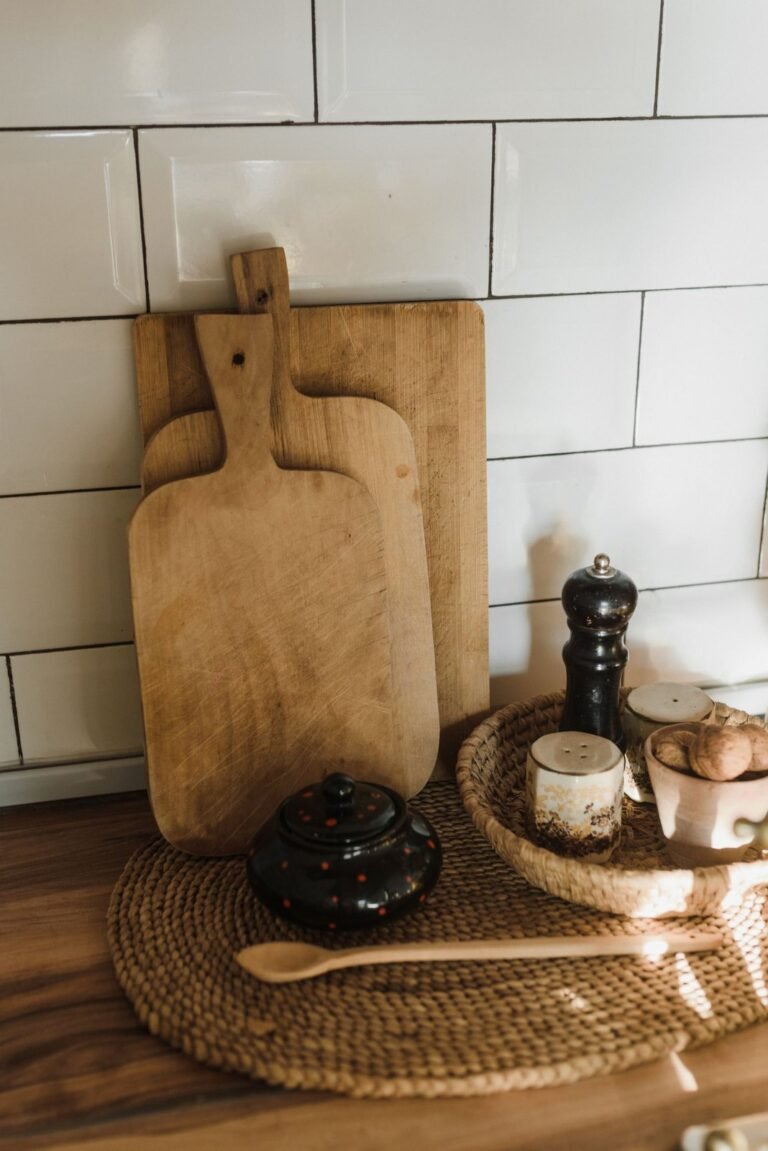
The station should have a boundary you can see. A tray is the simplest one. It holds the machine or kettle, the mugs you actually use, a small spoon or scoop, and the daily coffee or tea, and you can lift the whole group when you need the worktop for dinner. A cutting board used as a tray works if it is stable and you already own it. You do not need a custom insert or a built-in nook.
If you do not want a tray, pick a slim corner that is not your only prep stretch: the far end of a run, a short return beside the fridge, or a sliver that is awkward for a chopping board anyway. Measure that footprint before you decide what lives there. If the zone eats the rectangle you use to slice vegetables, it is too big.
Leave a little air around the kettle or machine so you can pick it up and wipe under it. A station packed tight is how crumbs and drips stay hidden. Keep the path to the sink and the stove clear. You are setting up coffee, not blocking the kitchen.
A tray or a corner also stops the station from spreading. When coffee things can sit anywhere, they will. When they have one pad of counter, the rest of the worktop can go back to cooking. If a guest mug, a vitamin bottle, or the post starts landing on the same tray, move those items to the homes they already have. The station is easier to keep small when it is only for coffee and tea.

What lives on the station, and what stays in a cabinet
The test is daily use. If you reach for it every morning, it may earn a place on the tray. If you use it once a week, it belongs in a cabinet.
A practical on-station list is short:
- The kettle, or one compact coffee machine, not both unless the corner is genuinely wide enough and you still have a prep stretch left.
- One or two mugs, not the whole collection.
- A spoon, a scoop, or a small stirrer.
- Today’s coffee or tea: a small canister, a day’s worth of pods, or a tin you will actually empty, not a bulk bag.
Backups go away. Spare mugs, extra filters, the backup bag of beans, the rarely used teapot, and the tall stack of guest cups belong in a cabinet or in the cupboard that already acts as a pantry. How to arrange that cupboard is covered in How to Organize a Tiny Apartment Pantry (or a Cabinet That Acts Like One). Loose spoons and scoops can live in a drawer if the tray is already full; that drawer system is in How to Organize Kitchen Drawers in a Small Kitchen. The station itself should not become a second pantry.
If you also cook for one or two in the same kitchen, protect the prep zone first. Everyday cooking already has a plan in How to Cook for One or Two in a Small Kitchen. Coffee should wait its turn when you need the board.
A good check at the end of the week: if the tray holds more than you used, move the extras back to the cabinet. A station that looks styled but is crowded will still steal the counter. If you make tea only now and then, the tea can live in the cabinet and come out for that day, rather than claiming a permanent corner beside the coffee.

A kettle or a compact machine, not a second appliance pile
You need hot water or a brewer, not a row of gadgets. In a tight kitchen, choose one heat source for coffee and tea and let the other stay in a cabinet unless you use both every day and still have prep space.
A kettle is often the calmer choice if you drink tea as well as coffee, or if you already brew in a small pour-over, a press, or a simple drip cone. It also leaves the station easier to wipe. A compact coffee machine can earn the same corner if that is how you actually drink coffee most mornings. The buying decisions belong in the coffee-maker and kettle guides already linked above. This setup question is only: which one stays out?
Do not add a grinder, a scale, a second kettle, and a machine to the same tiny zone “just in case.” If you grind beans, do it and put the grinder away, or give it a cabinet slot beside the backup coffee. A scale can live in the same cabinet and come out only when you want it. No new plumbing, no permanent hookup, and no drilling a hole in a rental counter. Use the outlet you already have, and do not run a trailing lead across a walkway.
If the machine you own is simply too large for the corner, do not invent a renovation to make it fit. Store it and use a kettle, or keep the machine out and accept that the station is that appliance plus almost nothing else. The point is a usable kitchen, not a complete cafe kit on the worktop.
Wipe drips so the station does not become a sticky pile
Coffee and tea leave marks. A ring of dried splash under the kettle, a tacky tray, and a sticky canister base will collect crumbs until the station looks like clutter even when it is organized.
Keep a cloth or a dish towel within reach and wipe the tray, the counter edge, and the base of the kettle or machine after you pour. You do not need a special cleaner for everyday drips; a damp cloth is enough for a fresh splash. Dry the tray so water does not sit under a mug. Choosing and rotating those cloths is already covered in Best Dish Towels and Kitchen Cloths: What to Buy and How Many You Need. The station habit is simply to use one before the mess sets.
Empty the drip tray if your machine has one, and do not leave a used filter or a wet press sitting on the only tray overnight. Wash the mug you just used, or park it in the sink, rather than lining the station with yesterday’s cups. Once a week, lift the tray or the appliance and wipe the counter underneath. That is when sugar grit and a dull film usually show up.
If a spill has already dried into a sticky patch, wash the tray in the sink and dry it before you set the station back up. Do not scrub a delicate counter with something abrasive, and follow any care notes from your landlord or the product label if you need a cleaner for a stubborn ring. You are wiping a small zone, not refinishing the worktop. The aim is a clean station you still want to use, not a project that takes over the evening.

A coffee-station checklist for a small kitchen
Use this when you set the zone up, and again if it starts to spread:
- The station sits on a tray or in a slim corner that is not my only prep stretch, and the path to the sink and stove stays clear.
- Only a kettle or one compact machine lives out, plus one or two mugs, a spoon, and today’s coffee or tea.
- Spare mugs, backup coffee or tea, filters, and rarely used tools are in a cabinet or a drawer, not on the tray.
- I can lift or wipe under the appliance, and I wipe drips after I pour so the tray does not get sticky.
- Nothing on the station needs new plumbing, new outlets, or a change to the rental kitchen.

How to choose—and how to apply it
The calm way to set up a coffee station in a small kitchen is to give coffee a visible boundary and then defend the rest of the counter. Use a tray or a slim corner, keep only the kettle or one compact machine out with the mugs and daily coffee or tea, and put the rest in a cabinet. Wipe the tray when you finish pouring. If the zone starts to sprawl, it is not a sign that you need more counter; it is a sign that something should go back on a shelf. You need a small, liftable home for the morning routine, not a cafe built on the only worktop.
FAQ
How do you set up a coffee station in a small kitchen without losing prep space?
Put the station on a tray or in a slim corner that is not the stretch you use as a cutting-board zone. Keep only the kettle or one compact machine, a couple of mugs, a spoon, and today’s coffee or tea on that footprint. Store backups in a cabinet, and lift or wipe the tray when you need the worktop for cooking.
Should I keep both a kettle and a coffee machine on the counter?
Only if the corner is wide enough and you still have a clear prep stretch. In most tight kitchens, one heat source stays out and the other lives in a cabinet unless you use both every day. The station should not become a row of appliances.
What should I store in a cabinet instead of on the station?
Spare mugs, extra filters, backup bags of coffee or boxes of tea, a rarely used teapot or press, and any grinder or gadget you do not use every morning. The tray is for daily use, not for overflow storage.
How often should I clean a small coffee station?
Wipe drips and the base of the kettle or machine after you pour, and empty a drip tray or a wet filter the same day. Once a week, lift the tray or the appliance and wipe the counter underneath. Wash the tray if it has become sticky.
Can I set this up in a rental kitchen?
Yes. Use a tray or an existing corner, the outlet you already have, and the kettle or compact machine you already own or can store without a hookup. Do not add plumbing, drill the counter, or build a cabinet. If an appliance does not fit the footprint, store it and simplify the station.