
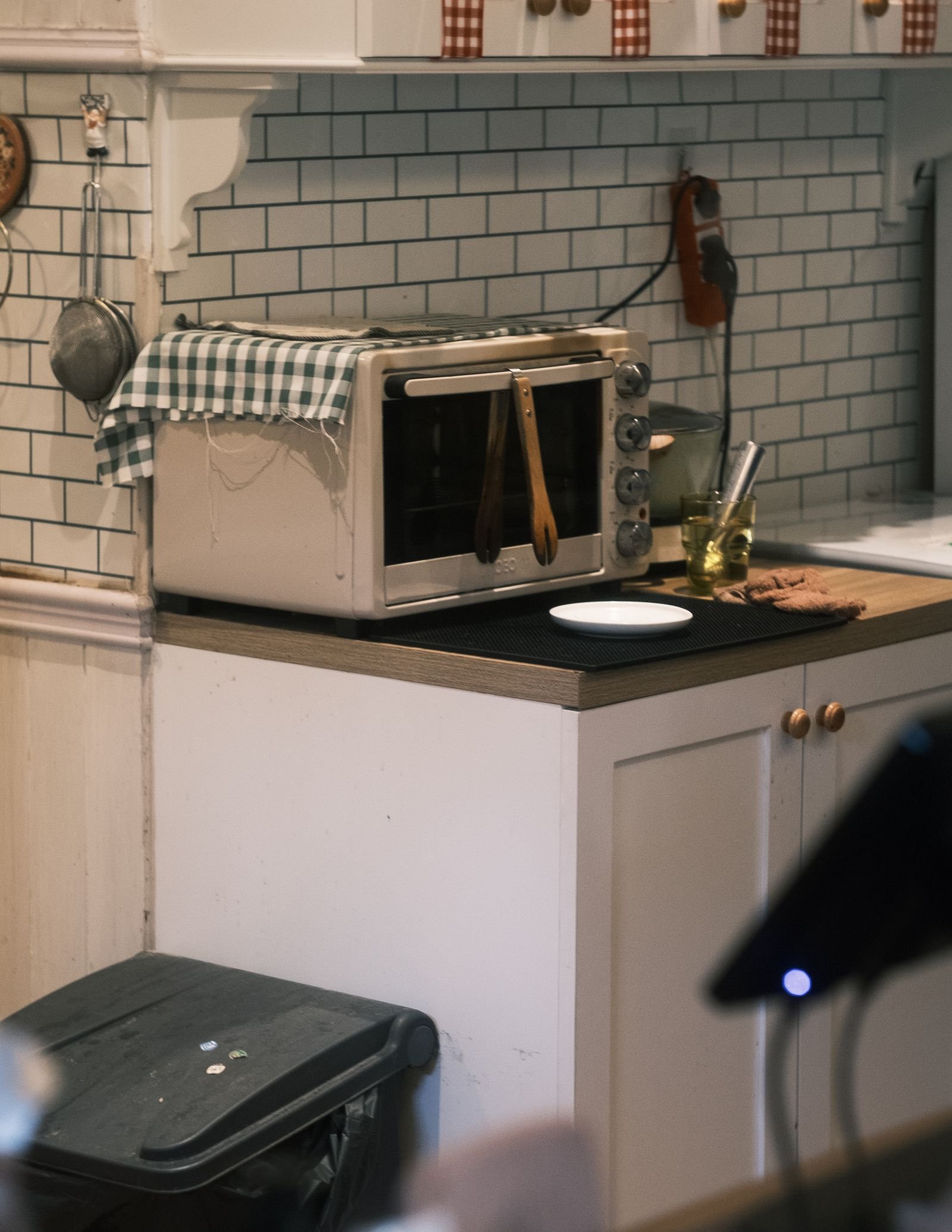
Best Toaster Ovens for Apartments: Compact Picks That Earn the Space
A toaster oven is one of the few small appliances that can replace a surprising amount of “I do not want to heat the whole oven” cooking—if it fits. In an apartment, the “best toaster ovens for apartments” are not the ones with the longest feature list. They are the models whose outside dimensions leave you a landing zone, whose inside tray fits the toast, sheet-pan vegetables, or leftover pizza you actually make, and whose vents have the clearance the manual requires.
There are no brand medals in this guide. “Best” means matching exterior size, interior capacity, functions, and cleaning habits to a compact US or UK kitchen. Some rentals have a full oven you simply hate to preheat; others have a cooktop only. Either way, a toaster oven is furniture the moment you plug it in. Treat the purchase like you would treat a small piece of cabinetry.
Measure the slot—not just the box on the website
Note the width, depth, and height of the empty counter rectangle—including space you still need for a cutting board or kettle. Many manuals ask for several inches of open air above the unit; a toaster oven shoved tight under an upper cabinet is a common rental mistake. The back often needs space from the splashback as well.
Check the listed interior tray or rack size and whether a standard piece of toast, a 9-inch pizza, or a small baking pan will sit flat without touching the walls. The cord should reach a wall outlet without a web of extension cords across a wet zone. If one outlet already serves a kettle and a microwave, plan a rotation rather than daisy-chaining heat appliances.
Write down the exterior maximum you can accept, then shop for interiors that still fit a meal for one or two. A wide but shallow oven can be easier to live with than a deep cube that eats the whole worktop.

What you are really buying: toast, leftovers, or a second oven
Name the job before you compare feature lists.
If you mostly make toast and bagels, a slot toaster is smaller and faster. Choose a toaster oven instead if you also want melts, leftover crisping, or an open sandwich that would not fit a slot.
The apartment sweet spot is leftovers, nachos, and small sheet-pan dinners: pizza with a crisper base, a tray of vegetables, a couple of baked potatoes—without heating a full cavity. If you bake for one or two, look at interior height for a small casserole or loaf tin. Ignore “six-slice” marketing language and trust tray measurements.
A toaster oven can replace a rarely used full oven for many weeknights, but not for a turkey or a huge tray bake. If your main goal is circulating hot air for fries, compare this purchase with a compact air fryer rather than assuming you need both. HomeRivr’s air fryer guide for small kitchens covers basket-style trade-offs.
Toaster oven vs air fryer vs slot toaster vs full oven
Versus a slot toaster, the toaster oven wins on versatility and loses on space and speed for two plain slices. Keep a simple toaster if bread is a daily ritual and you do not want to preheat a cavity.
Versus a full oven, the toaster oven preheats faster, throws off less heat in summer, and suits small portions. The full oven still wins for large trays, multiple racks, and anything that barely fits the door.
Versus a basket air fryer, the fryer often excels at food you shake; the toaster oven excels at food that sits on a tray—toast, open melts, a personal pizza, a row of cookies. Combo air-fry toaster ovens exist and should be measured as larger boxes. Buying both a basket fryer and a large toaster oven is how apartment counters disappear.
Versus a microwave, the jobs differ: steam-fast reheats versus browning. If you already own a microwave and a full oven, be sure the third heat appliance has a weekly job.
Features that matter in a small kitchen
Convection (a fan) can speed cooking and brown vegetables or leftovers more evenly. It can also make lightweight foil shift if you do not follow the manual. If you mostly toast bread, convection is optional.
Controls should be obvious in a shared kitchen. Simple temperature and time dials are easy to live with; digital presets help only if they match how you cook.
An interior light and window are nice so you are not opening the door every thirty seconds, but they are not essential if the size is right. A removable crumb tray you can slide out without moving the whole oven matters more in a tight space, as do two rack positions and a tray you can clean without steel wool on nonstick coatings.
Some exteriors get hot enough that you should not park a plastic utensil crock against them. Leave a heat-safe gap, especially beside an electric kettle. Fans hum, and a first empty run-in can smell faintly—use the oven empty per the manual with a window cracked before you cook food.
Capacity without collecting extra appliances
For one person, an interior that handles four slices of bread or a small personal pizza is usually enough. For two people who roast vegetables a few nights a week, look at a slightly wider tray so food sits in a single layer (crowded trays steam).
Avoid “family 12-slice” exteriors unless you measured a true landing strip. A large countertop oven can be louder, heavier, and hotter than the weeknight cooking it replaces.
Think about storage of accessories: extra air-fry baskets, crumb trays, and pans need a home. If drawers are already full, see kitchen organizers for small apartments before you buy a bundle of add-ons you will store on top of the oven (which can block vents).
Safety and renter common sense
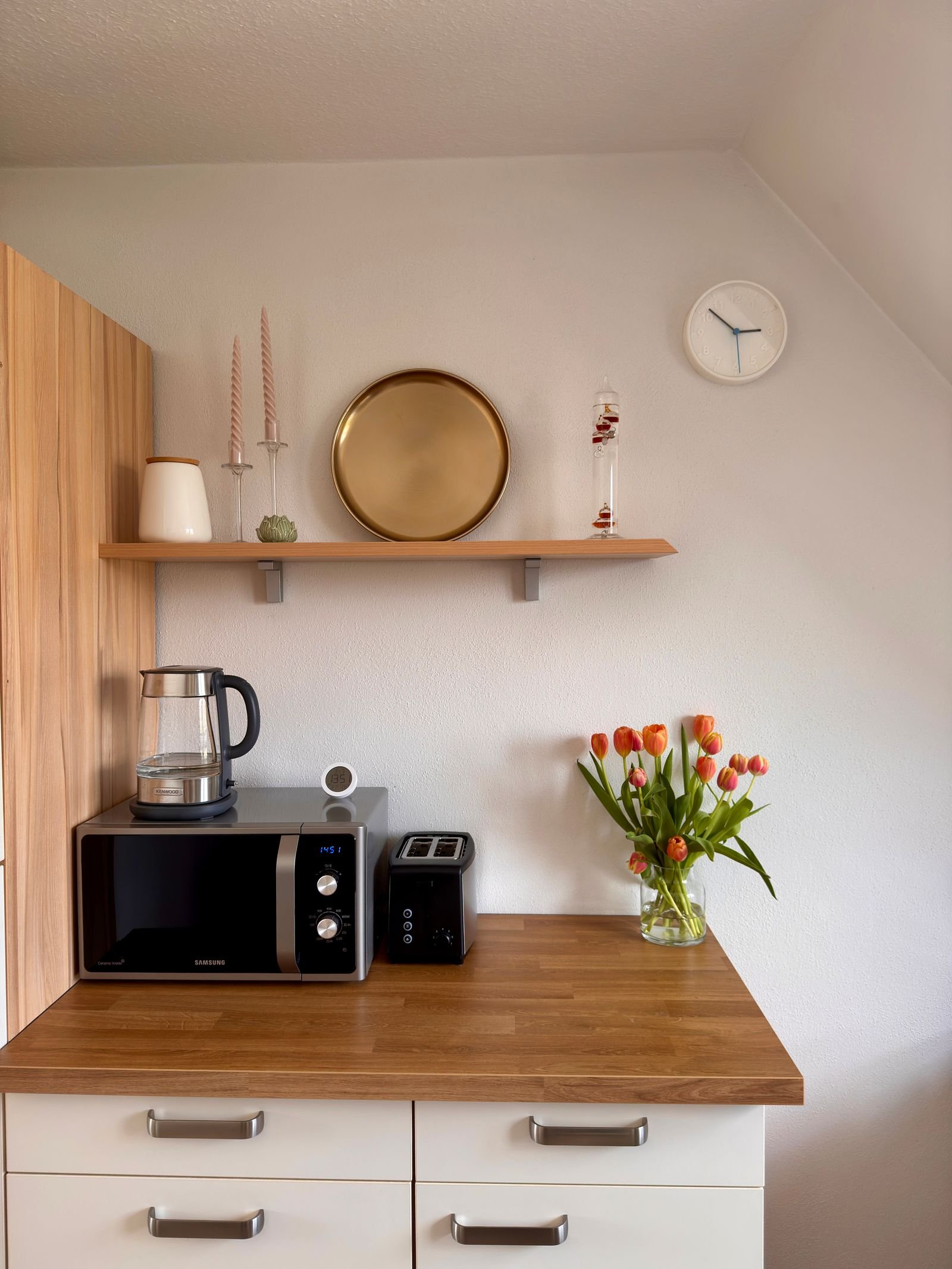
Give the unit the clearances in its manual—above, behind, and beside. Upper cabinets, tea towels, and paper towels should not drape over the top. Sit it on a stable, heat-resistant counter, not on a plastic cutting board or tablecloth. If you cannot meet the listed gap under a cabinet, keep the oven on an open stretch of counter instead.
Empty the crumb tray; built-up crumbs are a fire and smoke source. Use oven mitts—racks sit closer to elements than in a full oven. Do not run the oven with the door open as a “broiler shortcut” unless the manufacturer explicitly allows a mode. In older buildings, stagger heat appliances rather than forcing several onto one struggling circuit with cheap extension leads.
This is ordinary appliance safety, not a fire-code inspection. Stop using a damaged plug or cord.
How it fits an apartment cooking rhythm
A toaster oven pairs well with batch cooking: roast a tray of vegetables while a grain simmers on the hob, then pack leftovers into the containers you already use. Meal prep containers sized for a small fridge make more sense if the oven’s tray produces two modest portions instead of a feast you cannot store.
In a galley kitchen, treat the toaster oven like a temporary island: if you need the counter to chop, give the oven a dedicated end of the run rather than the center. Some people keep it on a sturdy rolling cart; only do that if the cart is rated for the weight and heat, and the oven cannot slide when you open the door.
Summer cooking is a quiet advantage. Heating a full oven can warm a studio uncomfortably; a smaller cavity is often easier to live with when the windows are already doing their best.
A practical buying checklist
Before you buy, confirm:
- I measured width, depth, height, and required clearances, including under-cabinet space.
- Interior tray size fits the toast, pizza, or pan I care about.
- I know whether I need toast-only versatility, leftover crisping, or small-batch baking.
- I compared this purchase with a slot toaster and with a compact air fryer so I am not doubling up blindly.
- Convection, presets, and accessories are features I will use, not decorations.
- The crumb tray slides out without dragging the oven forward each time.
- The cord reaches a suitable wall outlet without crossing the sink.
- I have a plan for heat gaps beside other appliances and for storing extra trays.
How to choose—and how to apply it
The best toaster oven for an apartment is the smallest one that cooks the meals you repeat each week and still leaves you a place to set a plate. Measure the counter and the cabinet gap, choose interior tray size over marketing slice counts, and be honest about whether a slot toaster or an air fryer already covers the job. Leave the clearances the manual asks for, empty the crumb tray, and keep the top of the oven clear.
A compact oven that you use three nights a week earns its footprint. A larger one that forces you to prep in the living room does not.
FAQ
Is a toaster oven worth it if my apartment already has an oven?
Yes if you often cook for one or two and dislike preheating a full cavity, especially in warm months. It is less worthwhile if you mostly boil, microwave, or cook large tray meals.
What size toaster oven is best for one or two people?
Look for a tray that fits four slices of bread or a small pizza in a single layer, then verify the exterior still leaves counter space and ventilation gaps. Skip extra-wide “family” boxes unless you measured for them.
Should I buy a toaster oven with air-fry mode?
Only if you will use circulating heat often and you can accept a larger footprint. If you already own a basket air fryer you like, a simpler toaster oven may be enough.
Can I put a toaster oven under a cabinet?
Only if the manufacturer’s overhead clearance is met. Many rentals cannot provide that gap. In that case, place the oven on an open stretch of counter instead.
How do I keep a toaster oven from smoking?
Empty the crumb tray, avoid extra-fatty spills, and do not line the oven in ways the manual forbids. A little odor on the first empty run-in is common; ongoing smoke is a cue to stop and check crumbs, residue, and food placement.




8 Comments