How to Organize a Bathroom Vanity in a Small Apartment
A small apartment vanity is easy to ignore until every morning starts with a hunt. A serum bottle rolls into the soap dish. A toothbrush leans in a wet cup. A hair tool cools on the one clear inch of counter, with its cord trailing toward the sink. If you want to organize a bathroom vanity in a small apartment, the job is not to renovate the room. It is to make the counter and the drawers you already have usable for the things you use every day.
This article is about that surface and those drawers. It is not the recessed box on the wall; How to Organize a Medicine Cabinet in a Small Bathroom is that cabinet. It is not the plumbing cave under the sink. Under Sink Storage Ideas for Tiny Bathrooms and Kitchens covers pipes and backup bottles. The whole room has its own guide in How to Organize a Small Bathroom (Renter-Friendly, No Reno). Here you are only putting the vanity back to work.
Work with the vanity you already have
Most rentals give you one shallow cabinet, one or two drawers, and a short stretch of counter around a sink. The way you organize a bathroom vanity in a small apartment has to match that shape. A method copied from a wide double vanity in a catalog will not fit a narrow sink with a single drawer.
Start by clearing the counter completely, then putting back only what you use in the morning or at night. Everything else can live in a drawer, on a tray that you can lift, or somewhere that is not the sink edge. If an item has not been opened in months, it does not need a front-row home on a tiny vanity.
Do not treat a full cabinet replacement as the default fix. In a rental, you are organizing the vanity that came with the lease. A renter-friendly organizer that sits inside a drawer or on the counter is enough. You do not need to drill into tile to make this work.

Zones and a daily tray
A small vanity works better in zones than as one mixed pile. Give the counter a short daily zone, and give the drawers the backup zone.
A tray is the simplest daily zone. Put the items you actually reach for every day on it: a moisturizer, a toothbrush and a small tube of paste, a lip balm, maybe one bottle of scent if you use it here. When you wipe the sink, you lift the tray instead of shuffling six bottles around a wet edge. Keep the tray smaller than the counter so you still have a place to set a glass or rest a hand.
Drawers are for the next layer: makeup you use a few times a week, extra skincare, hair ties, and a clean backup toothbrush. A shallow drawer organizer, or even a few small boxes that already fit, keeps those items from becoming a single jumble. You do not need a custom insert. You need to see a mascara without emptying the drawer.
If you have no drawer at all, a second small tray or a lidded box that lives on one end of the vanity can act as the backup zone. Choose a box with a lid you will actually close, so steam from a shower does not sit on cardboard or loose cotton pads. Do not let backup bottles colonize the whole counter. And do not send overflow to the linen closet as a permanent “I’ll sort it later” pile. How to Organize a Small Linen Closet is for towels and backup linens, not as a second messy vanity.
Stand at the sink and test the zones once. If you cannot reach the toothbrush without moving the tray, the tray is in the wrong place. If a drawer has to be fully dumped to find a hair tie, the drawer is not organized yet. Adjust the layout until a weekday morning takes one motion, not a search.
Hair tools without a burned bag or a cord in the sink
A hair dryer, a curling tool, or a straightener needs a home that is not a fabric bag and not the sink edge. These tools get hot, and their cords are long enough to trail into standing water if you leave them to “just cool for a minute.”
Let a hot tool cool on a heat-safe surface: a ceramic dish, a silicone mat, or a clear section of the counter away from the basin. Do not set it on a makeup pouch, a towel, or a plastic bag. Once it is cool, store it in a drawer if it will lie flat, in a wide bin under the vanity if that space is already organized for tools, or in a standing caddy that does not block the faucet.
Coil the cord loosely so it does not drape into the sink or across a GFCI outlet. Do not drape a cord over the tap as a storage habit. And do not add a cheap plug splitter at a bathroom GFCI to make two heat tools run at once. If the outlet arrangement is a problem, that is a conversation with the landlord, not a job for a bargain adapter. You should not do electrical work in a rental bathroom yourself, even if the outlet looks easy to reach.
Cleaning products do not belong in the same open caddy as a hair tool you will grab with a wet hand. How to Organize Cleaning Supplies in a Small Apartment is the wider supply system. Here you only need the tool to have a dry, stable home.
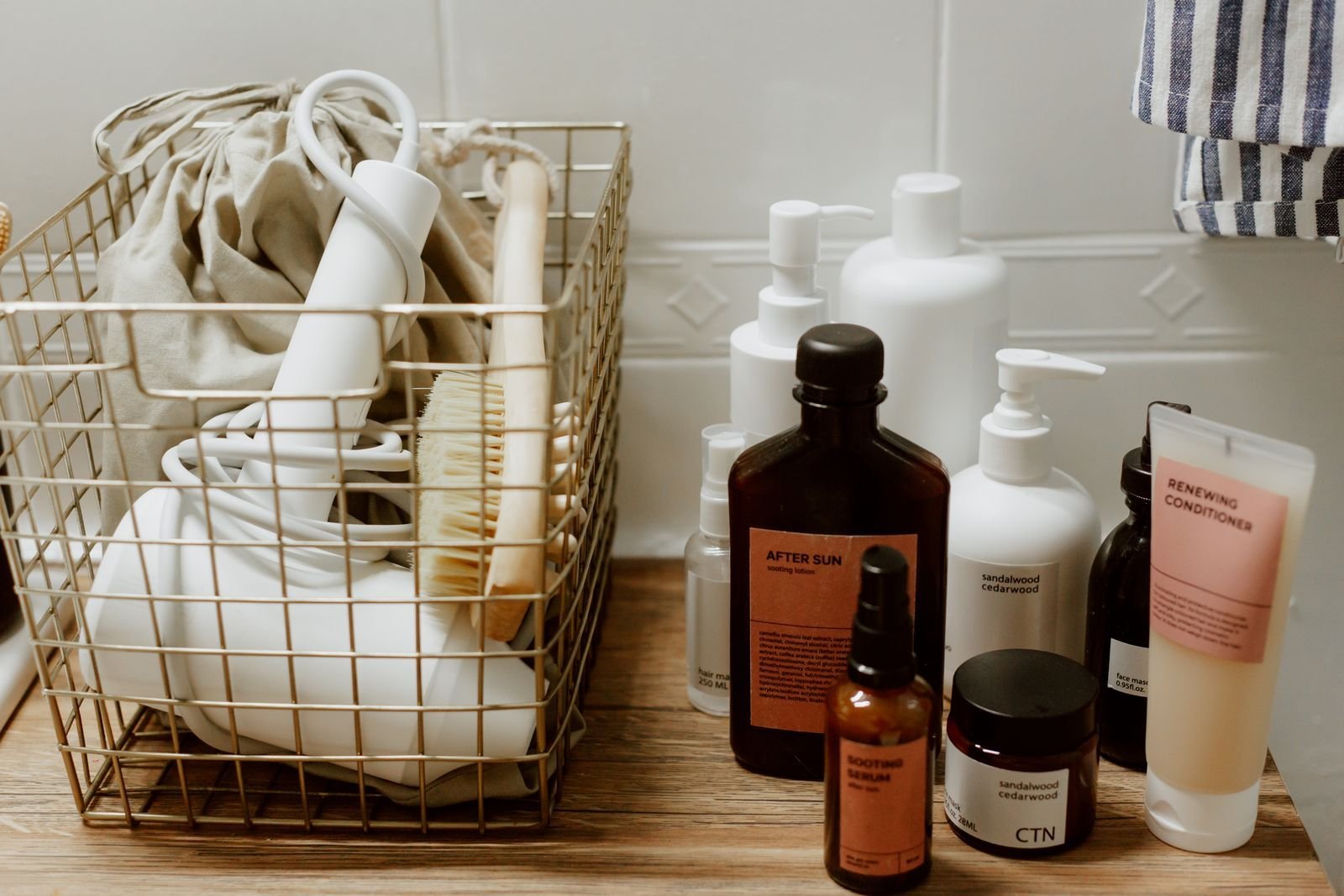
What does not belong on a steamy counter
A bathroom vanity sits in humid air. That is a poor default home for some everyday items, even if they seem small enough to leave by the sink.
Do not store medicines on a steamy sink edge as the default. Heat and moisture are hard on many pills and liquids, and a wet counter is a bad place for a bottle you need to keep clean. If you have a medicine cabinet, use it. If you do not, a dry drawer in the bedroom or a high, dry shelf is a better everyday home than the sink rim.
Backup skincare, extra cotton pads, and anything in cardboard also fare poorly if they live in an open pile next to a frequently used tap. Put those in a closed drawer or a lidded box. The daily tray can hold what you use; it should not become a warehouse.
Cords and chargers are another common overflow. A phone charger that lives on the vanity will pick up water and will compete with a hair tool for the only outlet. Do not make the bathroom the charging station for the whole apartment. How to Organize Cables and Chargers in a Small Apartment is the whole-home cord system. On this vanity, keep only the hair-tool cord that belongs here, and keep it dry.
Wipe the counter when you finish. An organized vanity still fails if a paste smear and a puddle sit under the tray until the weekend. A quick dry cloth after you brush your teeth is usually enough; you do not need a full deep clean every night.

Sharing a small vanity, and renter-friendly organizers
Two people can share a small vanity if each person has a clear daily zone. Two small trays work better than one mixed pile. One drawer, or one side of a divided drawer, per person keeps makeup and skincare from blending into a hunt. Agree on the shared middle: soap, a hand towel, and the clear space in front of the faucet.
If one person uses a hair tool every morning, give that tool a cooling spot that does not block the other person’s tray. A shared vanity fails when the first person to finish leaves a hot tool across the only sink.
Keep the organizers renter-friendly. A tension-fit drawer divider, a small tray, a standing cup for brushes, and a bin that sits on a shelf are enough. Do not drill into tile, and do not glue a heavy rack to a landlord’s mirror as a casual fix. If you need more storage, use a freestanding unit that will come with you, or look at the space under the sink only after you have already edited the counter. The under-sink guide is there for that cave; this article stays on the vanity itself.
Edit often. A tiny vanity cannot hold every sample and every old bottle. When a product is empty or you have stopped using it, take it off the tray the same day. A quarterly look through the drawers is enough: keep what you still reach for, and let the rest go. Organizing is easier when the number of items is honest, and a small apartment vanity stays usable only if it is not asked to store a full extra shelf of product.

Practical takeaways
- Organize the vanity you have — a short counter and whatever drawers came with the lease — instead of copying a wide double vanity or defaulting to a remodel.
- Keep a small daily tray for the items you use every morning, and put backup bottles in a drawer or a lidded box, not in a pile around the sink.
- Let hair tools cool on a heat-safe surface away from the basin, then store them so the cord cannot trail into the sink.
- Do not store medicines on a steamy sink edge as the default, and do not add a cheap plug splitter at a bathroom GFCI.
- If two people share the vanity, give each person a tray or a drawer zone, and keep the space in front of the faucet clear.
FAQ
How do I organize a bathroom vanity in a small apartment if I have almost no counter?
Keep only a short daily tray on the surface — toothbrush, one moisturizer, maybe soap — and move everything else into a drawer or a lidded box. If you have no drawer, a small box at one end of the vanity is better than a ring of bottles around the basin. Wipe the tray and lift it when you clean the sink.
Where should I put a hair dryer or a curling tool?
Let it cool on a heat-safe dish or a clear, dry section of counter away from the water, then store it in a drawer, a wide bin, or a standing caddy that does not block the faucet. Do not leave a hot tool on a bag or a towel, and do not let the cord hang into the sink.
Can I keep medicines on the vanity?
It is a poor default. A steamy sink edge is a hard place for many medicines. Use a medicine cabinet if you have one, or a dry drawer or shelf away from the tap. Daily vitamins you take at the sink can live in a small, dry container, but do not leave loose pills on a wet rim.
How can two people share a tiny vanity without a fight?
Give each person a tray or a clearly divided drawer, and treat the space in front of the faucet as shared and clear. Park a hair tool in a cooling spot that does not block the other person’s zone. Edit products that are not in daily use so the counter stays honest.
Do I need to drill into tile to organize a bathroom vanity?
No. A tray, a standing cup, a tension-fit drawer divider, and a bin that sits in a drawer or on the counter are enough for most rentals. Save drilling, glue-on racks, and any electrical changes for a conversation with the landlord, not as the first organizing step.