How to Organize Paperwork in a Small Apartment
Paperwork in a small apartment rarely fails because you lack a desk. It fails because mail lands on the nearest surface and stays there. Bills mix with flyers, the lease is in a bag you cannot find, and the booklet that came with the boiler or the washing machine has no home at all.
If you want to organize paperwork in a small apartment, keep the system small on purpose. Give incoming mail one tray. Keep the papers you still need in a slim file box or a short run of hanging folders. Sort the tray once a week. Recycle or shred what you do not need to keep. Give the lease, warranties, and appliance booklets a single, obvious place.
This is a paper-and-mail habit, not an entry makeover and not a built-in office. Keys, bags, and everyday drop clutter belong in How to Set Up a Drop Zone in a Small Apartment Without an Entryway and Entryway Storage for Small Apartments: A Calm Setup That Actually Fits. Those guides can sit beside this one; they do not replace a place for paper.
One incoming tray, not every surface
The first decision is where mail is allowed to land. If the answer is “the kitchen counter, the sofa, and the bed,” you do not have a system.
Choose one incoming tray, basket, or shallow box, and put it where you actually set the post down—usually near the door or on a shelf you pass when you come in. It should be large enough for a few days of envelopes and not so large that it becomes a second junk drawer. A tray you already own is enough. You do not need a labeled mail station or a wall-mounted sorter that means drilling into a rental wall.
The rule is simple: unopened mail and loose papers go in the tray, not on the worktop and not in a kitchen drawer that is meant for tools. If the tray is already full, that is a signal to sort, not a reason to start a second pile on the table.
This tray is only for paper. It is not the drop zone for keys, sunglasses, or grocery receipts that should be thrown away at the door. Mixing those things with bills is how a slim system turns into a catch-all. Keep the entry landing for belongings; keep the tray for mail.

A slim file box or hanging folders
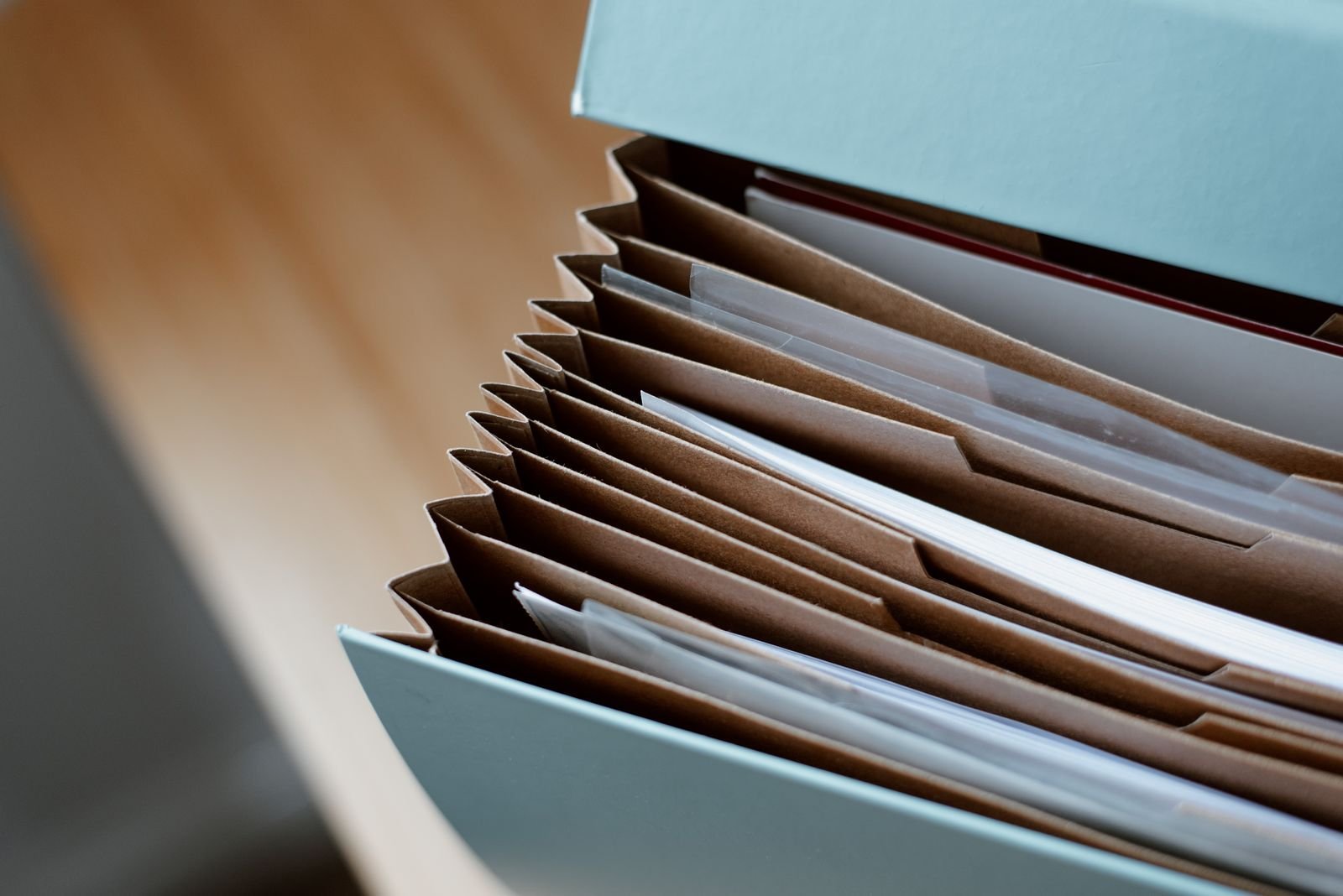
Once a letter has been opened and you still need the paper, it needs a home that is not the tray. In a small apartment, that home should be one slim file box, a portable hanging-file tote, or a short set of hanging folders in a cabinet you already have. A four-drawer filing cabinet is usually more furniture than the room can spare, and a built-in office is not an option in most rentals.
Keep the categories few. Most households do well with a handful of folders, not a library of labels. A practical split is:
- Household and building: the lease, any building notices you still need, and similar papers that prove where you live and what you agreed to.
- Warranties and manuals: appliance booklets, guarantee slips, and the one-page guides that came with a vacuum or a kettle.
- To handle: a short-term folder for a bill you have not paid, a form you still need to return, or a letter you have not answered.
- Reference you still use: anything you genuinely look up, such as a current insurance card or a building-access note.
You do not need a folder for every company that has ever written to you. If a category never gets opened, empty it at the next sort.
Stand the box or tote somewhere you will actually open it: a closet shelf, a low cabinet, or a space beside the desk if you have one. Under the bed is usually a poor home for papers you may need on short notice; that zone is already doing other work in Under-Bed Storage Ideas for Small Apartments. A linen closet can hold a slim box if the shelf is dry and easy to reach, but it should not become a mixed stack of towels and envelopes. Towel and sheet storage stays in How to Organize a Small Linen Closet.
A weekly sort so the tray does not overflow
The tray only works if it is emptied on a schedule. Once a week is enough for most households—on a quiet evening, or on the day you already deal with household tasks. Open everything in the tray. Then make one of four decisions for each piece:
- Act now or this week: pay, reply, or file the item in the “to handle” folder if it still needs an action you cannot finish in the moment.
- File: it belongs in the slim box because you still need the paper.
- Recycle: it is a flyer, a catalogue, or a letter with no personal information you need to protect.
- Shred: it shows account numbers, copies of ID, or other personal details you would not want in a shared recycling bin.
Do not create a fifth pile called “later” on the table. That pile is how the counter becomes the filing system again. If you cannot decide in a few seconds, put the item in “to handle” and give yourself a date in the same week to look at it, then close the tray.
The weekly sort is also the moment to look at the “to handle” folder. If something has sat there through two sorts and you no longer need the paper, recycle or shred it.
What to recycle or shred
Most of what arrives is not worth keeping. Marketing mail, menus, and expired offers can usually go straight into the recycling if your building accepts paper. Remove plastic windows or cardstock that your local rules do not allow, and follow the guidance your building or council already provides.
Shred papers that would be awkward if a stranger could read them: anything with a full account number, a password, or a copy of an identity document. If you do not own a shredder, a sealed bag taken to a shredding drop-off, or tearing documents into small pieces before recycling where that is accepted, is enough for ordinary household mail. You do not need a machine on the kitchen counter if you only shred a few pages a month.
This guide does not tell you how long to keep bank statements, tax papers, medical records, or legal correspondence. Retention rules vary, and inventing a number would be guesswork. If you are unsure whether a document still matters, check the agency, landlord, or professional who asked for it rather than following a made-up timeline. Until you know, keep that item in the file box instead of throwing it away in a hurry—and do not let “I might need this someday” become a reason to keep every flyer.

A home for the lease, warranties, and appliance booklets
The papers you most hate to lose should not be buried in the incoming tray. Give them a permanent folder or envelope inside the same slim box, and make that folder obvious—a labeled sleeve is enough.
The lease and any building papers you still rely on belong together. If you also keep a digital copy, that is fine; this system is for the paper you still have. Do not store the only copy in a random cookbook or a suitcase.
Warranties and appliance booklets do well in one folder or a large envelope, grouped by room if you have several, or simply kept together if you only have a few. When something beeps, leaks, or needs a filter, you should be able to find the booklet without emptying a kitchen drawer. Tool and utensil drawers are not a filing cabinet; that setup lives in How to Organize Kitchen Drawers in a Small Kitchen.
If a manual is bulky and you already have a reliable digital version from the manufacturer, you can recycle the paper booklet. If you are not sure you can find that version later, keep the thin booklet. The aim is a folder you can lift with one hand, not a stack of unread catalogues.

When you move, this same box should be easy to pick up. If you cannot lift it, you are keeping more paper than you use, and the next weekly sort should go through the folders again.
A paperwork checklist for a small apartment
Use this once, then again each week:
- Incoming mail has one tray, and paper is not allowed to start a second pile on the counter or the sofa.
- Papers I still need live in one slim file box or a short set of hanging folders, with only a few categories.
- I sort the tray weekly: act, file, recycle, or shred. There is no “later” stack on the table.
- Flyers and empty marketing mail are recycled; papers with personal details are shredded or otherwise destroyed before they leave the apartment.
- The lease, warranties, and appliance booklets have a labeled home in the same box, not in a kitchen drawer or a mixed closet pile.
- I do not invent a legal or tax timeline for how long to keep a document. If I am unsure, I check the official source and keep the paper until I know.
How to choose—and how to apply it
The calm way to organize paperwork in a small apartment is to stop letting mail choose its own surface. One incoming tray catches what arrives. A slim file box or a few hanging folders hold the papers you still need. A weekly sort empties the tray and decides what to recycle or shred. The lease, warranties, and appliance booklets live in a labeled folder you can find without unpacking the room. You do not need a built-in office, a retention calendar, or a new piece of furniture. You need one landing place, one small archive, and a sort short enough that the tray is empty again by the end of the evening.
FAQ
How do I organize paperwork in a small apartment without a home office?
Use one incoming tray for mail and one slim file box or a short set of hanging folders for the papers you still need. Sort the tray once a week, recycle or shred what you do not keep, and give the lease, warranties, and appliance booklets a labeled folder in the same box. You do not need a desk or a built-in office for this system to work.
Where should mail go when I walk in the door?
Put unopened mail in one tray or basket, not on the kitchen counter or the sofa. Keep that tray for paper only. Keys, bags, and everyday drop items can have their own landing; mixing them with bills is how the system spreads across the apartment.
What kind of file box works in a tight space?
A slim file box, a portable hanging-file tote, or a few hanging folders in a cabinet you already have is usually enough. Keep the categories few so you will actually open the box. A large filing cabinet is more furniture than most small apartments need, and under-the-bed storage is a poor home for papers you may need quickly.
Should I shred everything I am not filing?
No. Recycle ordinary flyers and mail that do not carry personal details, following your building’s paper rules. Shred or otherwise destroy papers that show account numbers, copies of ID, or other information you would not want in a shared bin. You do not need a shredder on the counter if you only have a few sensitive pages.
How long should I keep my lease, bills, or tax papers?
This guide does not set a retention period. Rules vary, and a made-up timeline would not be reliable. Keep the lease and any papers you still use in the file box, and if you are unsure about a tax, legal, or official document, check the agency, landlord, or professional who asked for it before you throw it away.