How to Store Oversized Holiday Cookware in a Small Kitchen
A turkey roaster, a tall stockpot, a Dutch oven, and an oversized baking dish do not behave like the rest of the kitchen. They are heavy, they are awkward to nest, and they do not slide into the slim slot you may already use for trays. If you need to store oversized holiday cookware in a small kitchen, the skill is to give those pieces one reachable home after the meal, and between holidays, so they do not live on the stove or at the edge of a hallway until January.
This is not a magazine pantry and it is not a shopping list. “Good enough” looks like this: the big pieces are in one place you can actually lift them into, and the counters are clear. You do not need a new cabinet. You need a zone that can take the weight.
Why oversized pieces need their own home
Flat storage and platter storage solve different problems. How to Store Cutting Boards, Baking Sheets, and Trays in a Small Kitchen is about vertical slots for thin items. How to Store Serving Platters and Extra Holiday Dishes in a Small Kitchen is about table platters and bowls. A roaster and a stockpot will not file in either of those stacks, and if you force them, something chips, warps, or ends up on the hob “just for tonight.”
The same is true of leftover containers. How to Store Leftovers in a Small Kitchen is about food, not about where the empty roaster goes once it is clean. Keep those jobs separate: wash the pan, dry it, then put it in the heavy-piece zone, not on the stove while you decide later.
Buying guides will not store the pot you already own. Best Cookware Sets for Small Kitchens and Best Roasting Pans for Small Apartment Ovens can help if you are replacing a pan that does not fit your oven. This page assumes the oversized piece is staying, and the job is to give it a home. Best Insulated Casserole Carriers for Holiday Dishes is about transporting a hot dish, not about year-round storage in a small kitchen.
Pick one heavy-piece zone
The most useful home is one low, sturdy shelf. Low matters because you should not lift a loaded roaster or a cast-iron pot down from a high cupboard, especially in a tight galley. Sturdy matters because a tall stockpot is a tip hazard on a thin wire rack. A solid cabinet shelf, a low shelf in a pantry cupboard, or a short run of open shelving that is actually anchored and rated for weight will beat a decorative stand.
Choose one zone, not “wherever it fits tonight.” When the roaster, the pot, and the big baking dish live in the same place, you can find them, and you can keep the stove clear. If the zone only holds two of the three, store the piece you use least often in a harder-to-reach but still safe spot—still low, still sturdy—and keep the everyday heavy pot in the prime position.
Measure before you commit a shelf. Check the height of the pot with its lid, the width of the roaster including handles, and the depth of the cabinet. A pan that only fits if you leave the cabinet door ajar is not stored; it is parked. If a lid makes the stack too tall, store the lid beside the pot, on a narrow lid rack, or just in front of the pot on the same shelf.
Under-sink cabinets are usually the wrong home for this category. They are often damp, full of cleaners, and fitted with plumbing that steals depth. Under Sink Storage Ideas for Tiny Bathrooms and Kitchens is useful for bottles and bins, not for a turkey pan.
What to put on the shelf, and how to stack
Keep the heaviest piece on the bottom if you nest at all. A Dutch oven or a stockpot can hold a smaller pot only if the smaller piece is fully supported and you can still lift the stack safely. Do not put a warped roaster under light pans. The warp makes the stack uneven, and the lighter lids or sheet pans can slide. If a roaster no longer sits flat, store it alone, on its own footprint, rather than turning it into a base.
Lids belong with their pots, or on a dedicated lid rack next to the zone. A lid that roams into a random drawer is how you end up leaving the pot on the stove because the lid is missing. If you have room, store the lid upside down on the pot so the stack is lower and more stable, as long as that is kind to the finish. If you do not, stand lids in a narrow file beside the pots, like a short run of tray storage, but only for lids, not for mixing the roaster into the baking-sheet slot.
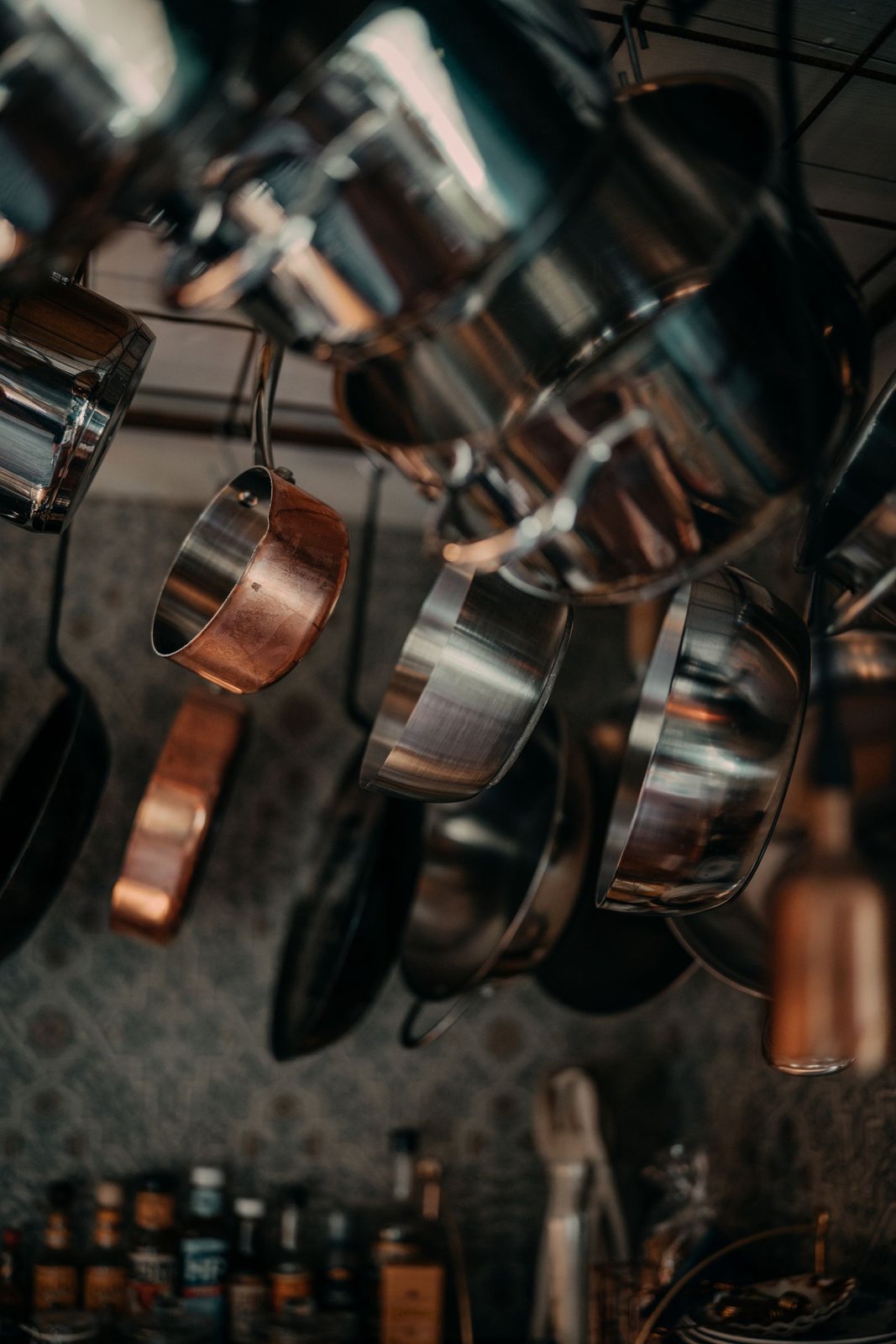
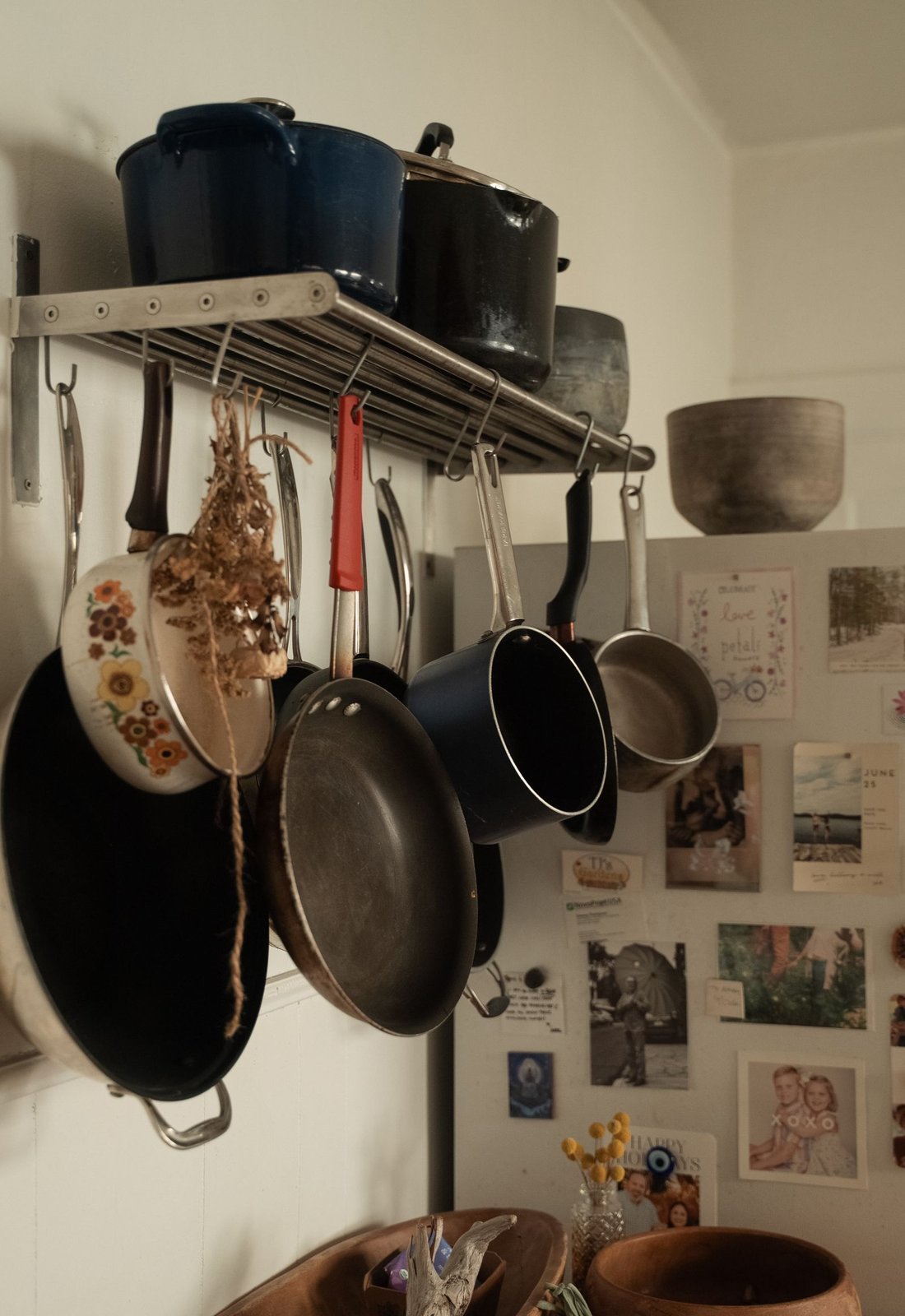
A wall rack can be part of the zone if it is securely mounted and you are allowed to install it, or if it is already there. Hang the lighter pans if you must, and keep the heaviest pot on a shelf rather than hanging from a hook that was meant for a skillet. In a rental, prefer a freestanding low shelf or an existing cabinet over new wall hardware. The photo of hanging pots is useful as a picture of a dedicated cookware zone, not as a demand that you drill into a rental wall.
The oven is storage only when it is off and fully cool
Apartment kitchens sometimes have no spare cabinet at all. The oven can hold a roaster or a baking dish between uses, but only as a cool, empty box. That means the oven is off, it has cooled completely, and you will remember to take the pan out before you preheat. Put a note on the oven handle if you or a housemate might turn it on without looking inside.
Never store cookware in an oven you might switch on in a hurry, and never use a still-hot oven as a cupboard. Do not store anything on the stovetop as a default home. The hob is for cooking. A pot that lives there makes the next meal harder and is easier to knock.
If you use the oven as the overflow home, keep only the pieces you will actually need to see before you cook. A roaster that you use twice a year can live there if you have a reminder system. A stockpot you use often should still have a cabinet or low-shelf home so you are not unloading the oven every week.
Do not store a greasy pan, and do not overload a weak rack
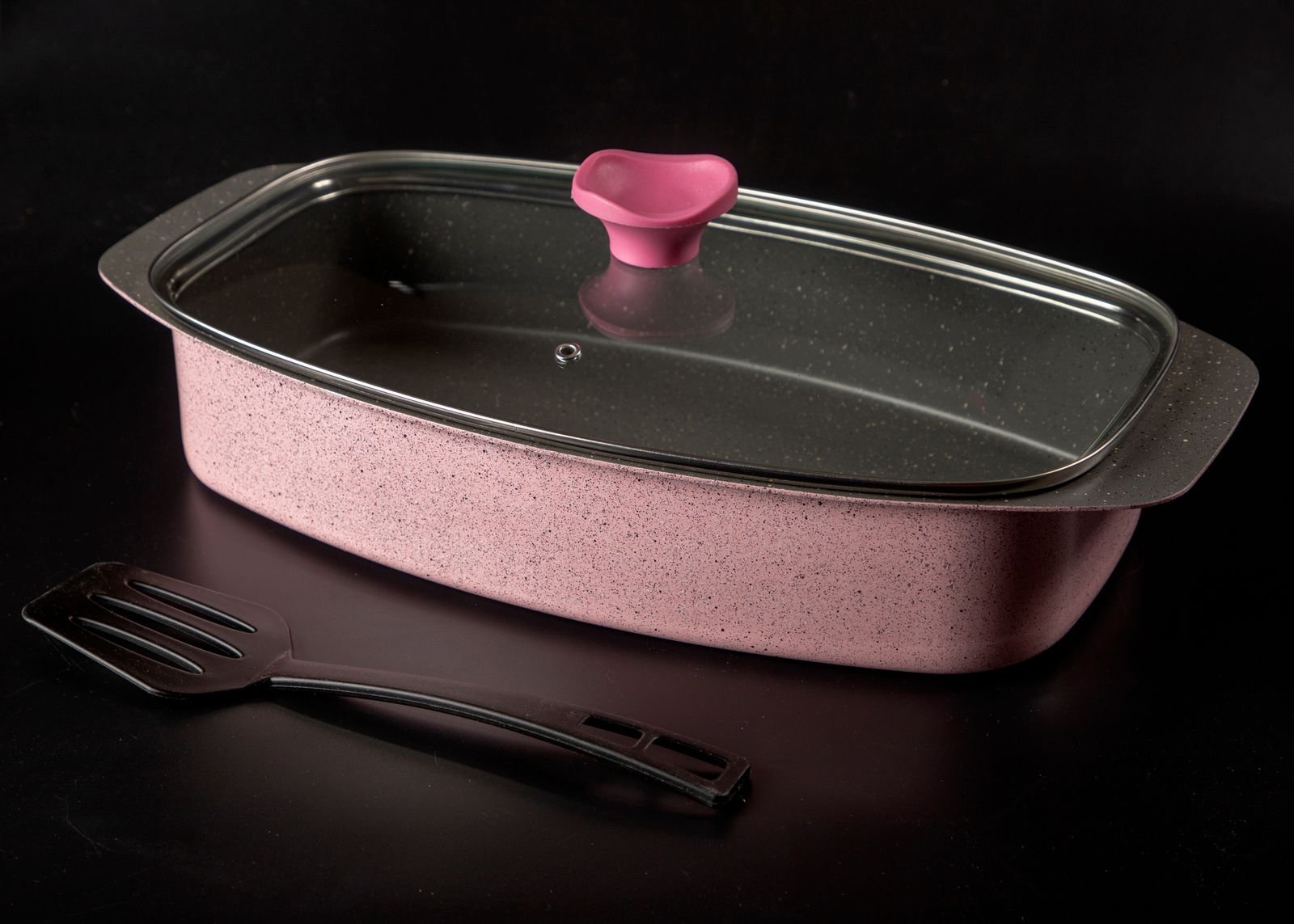
A still-greasy roaster will smell, attract a mess, and make everything it touches harder to clean later. Wash and dry the pan first, then put it away. If the pan barely fits the sink, that is a washing problem, not a reason to slide it onto a shelf “for tomorrow.” This article will not walk through the wash; it only requires that the piece be clean and dry before it enters the zone.
Skip flimsy wire racks for heavy cookware, even if they look tidy. A tall pot has a high center of gravity. If the rack flexes or the stand is narrow, it can tip when you pull a neighboring item. Use a low, solid shelf, and leave a little clearance so you can get two hands on the handles.
Do not store a heavy pot on a chair, a laundry hamper, or the hallway floor. That is how oversized cookware becomes a trip hazard and never finds a real home. If the kitchen truly cannot take the piece, a sturdy, low spot in a coat closet or on a bedroom dresser is a better temporary overflow than a traffic path, as long as the pot is clean, dry, and stable. Bring it back to the kitchen zone when you can make space.
A practical setup for a holiday week, then for the rest of the year
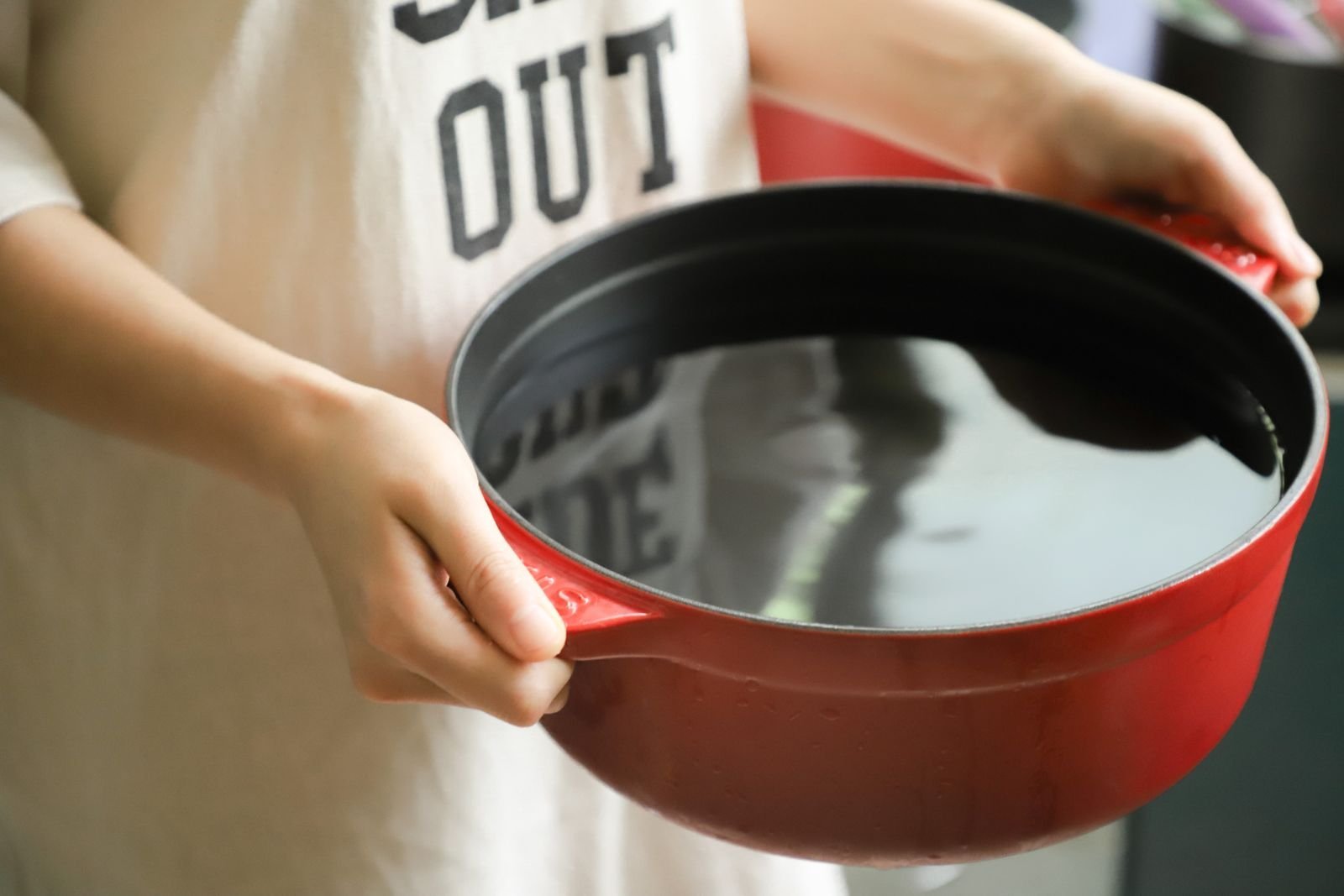
During the cooking days, it is fine if the roaster rests on a cool burner or a padded counter for a short stretch between washing and putting away. The goal is that it does not stay there. When the meal is over and the pan is clean, return it to the heavy-piece zone the same day if you can. That one habit is what keeps a small kitchen from feeling like a cookware shop through the following week.
For the rest of the year, keep the same zone. If you only make a large pot of soup once in a while, the stockpot can stay in that low cupboard with the roaster. You will always know where it is. If you buy a new oversized piece, measure the zone first, including handles and the lid. A beautiful pan that cannot live anywhere except the stove is not a small-kitchen win.
You do not need to display every pot. A closed cabinet is often calmer in a studio or a galley. If you do use open shelves, keep only the pieces that can sit stably, and do not stack higher than you can lift down safely with two hands.
How to apply it
Choose one low, sturdy shelf or cabinet as the heavy-piece zone. Store the roaster, stockpot, Dutch oven, or oversized baking dish there, with lids on or beside their pots. Use the oven only when it is off and fully cool, and keep the stove clear. Do not park a still-greasy pan, and do not set a heavy pot on a flimsy rack. If you can reach the big pieces and the counters stay clear, you have stored oversized holiday cookware in a small kitchen well enough.
FAQ
Where is the best place to store a turkey roaster in a small kitchen?
A low, sturdy cabinet or shelf is usually best, because you can use two hands and the rack will not tip. Measure the pan with its handles and lid before you commit the space.
Can I store pots in the oven?
Yes, but only when the oven is off and has cooled completely. Take the cookware out before you preheat, and leave a reminder on the door if someone else might turn the oven on.
Should I stack a roaster under other pans?
Not if the roaster is warped, and not if the stack feels uneven. Keep the heaviest piece on the bottom, or give the roaster its own footprint so lighter pans cannot slide.
What should I do with the lids?
Store each lid with its pot, or stand lids in a narrow rack beside the heavy-piece zone. A missing lid is one of the reasons oversized pots end up living on the stove.
Is the space under the sink a good home for a stockpot?
Usually no. That cabinet is often damp and interrupted by plumbing. Use a dry, low, sturdy shelf in the kitchen, or a stable overflow spot that is not in a walkway.