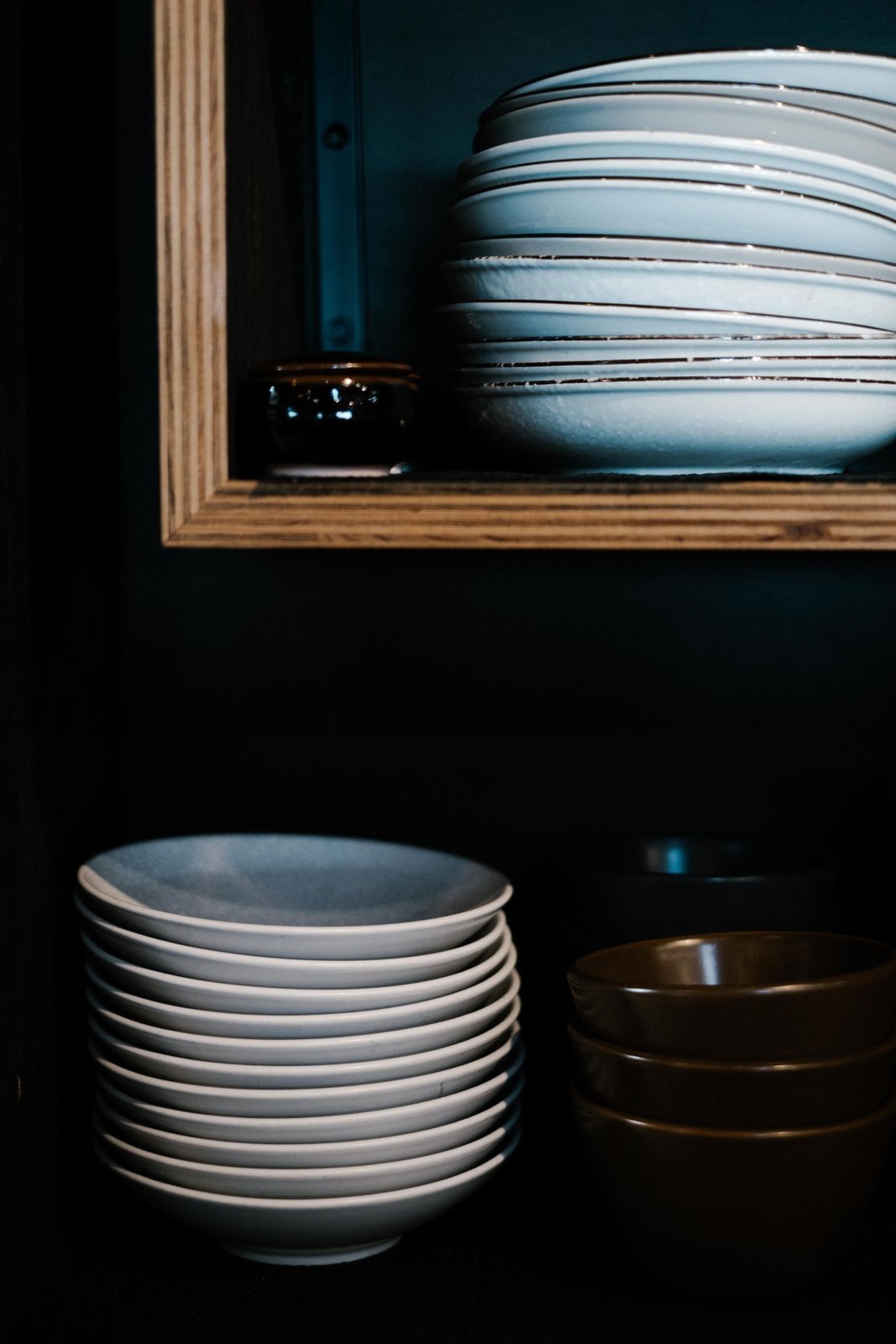
How to Store Serving Platters and Extra Holiday Dishes in a Small Kitchen
Serving platters are a different storage problem from everyday plates. They are wide, often irregular, and used rarely, so they either crowd the working stack you reach every night or they disappear into a packed cabinet and chip when you tug them sideways. To store serving platters and extra holiday dishes in a small kitchen is to give those pieces a home that does not sit on the daily plates, and to be honest about how many oversized dishes a studio or galley can actually keep.
This is not a guide to everyday prep tools. Baking sheets, trays, and boards have their own habits and their own article: How to Store Cutting Boards, Baking Sheets, and Trays in a Small Kitchen. It is also not a full cabinet rewrite; for the broader cabinet plan, see How to Organize Kitchen Cabinets in a Small Kitchen. Here the job is narrower: the turkey platter, the cake stand, the extra dinner plates that come out for a holiday meal, and the odd serving bowl that does not nest with anything you use on a Tuesday.
Sort what is everyday and what is holiday-only
Take five minutes before you buy another organizer and make three piles, even if you do it on the counter and put things back the same day.
- Everyday: the plates, bowls, and one or two serving pieces you use each week. These stay in the easiest cabinet, at a height you can reach with one hand.
- Holiday or guest dishes: the extra dinner plates, the formal platter, the cake stand, the gravy boat you use a few times a year.
- Leave or let go: a cracked platter, a third cake stand, or an inherited tray that does not fit any cabinet and has not been used in two seasons. A small kitchen cannot store every piece you are given, and a platter that never leaves the cabinet is only taking space from the dishes you use.
Everyday dinnerware should stay compact and easy to grab. If the daily set itself is oversized or you have more place settings than you can seat, How to Choose Everyday Dinnerware for a Small Kitchen (Without Overbuying) is the buying-and-editing guide. This article assumes you already have a working everyday stack and need a place for the overflow that appears around a holiday meal.
Do not mix food-storage containers into the same decision. Lids and leftover boxes are a different, more frequent problem, covered in How to Organize Food Storage Containers and Lids in a Small Kitchen and How to Store Leftovers in a Small Kitchen. Platters are serving pieces. They should not live under a pile of plastic lids.
File platters vertically whenever you can
A wide platter stored in a flat stack is hard to remove without sliding it across other dishes. A vertical slot lets you lift one piece at a time, the same way a tray file holds a baking sheet.
Useful homes include:
- A narrow plate rack or a sturdy wire divider in a cabinet
- The unused vertical gap beside a stack of sheet pans, if the platter actually fits and will not tip
- A cutting-board file that is deep enough for a serving platter—only if the platter is dry and you are not forcing it against wood boards
- A low, open shelf where one platter can stand on edge, padded so it does not chip
Measure the platter’s longest edge and its thickness before you buy a rack. Many “plate organizers” are sized for everyday dinner plates, not for a 16- or 18-inch oval. If a rack is too shallow, the platter will lean and chip the rim. Test the fit with the actual platter, not with a dinner plate, and leave a little play so you can lift it out without scraping the cabinet frame.
Put a thin towel, a felt separator, or a piece of shelf liner between platters that must sit together. Glazed rims scratch each other in a tight cabinet. If two platters only barely fit, store one of them somewhere else rather than wedging both in. A single well-padded platter is easier to live with than a tight stack you are afraid to touch.

Give cake stands and odd shapes their own spot
Cake stands, tiered servers, and pedestal dishes do not stack like plates. The foot on a cake stand will mark the platter beneath it, and a tall stand wastes a whole shelf if you leave it assembled in a short cabinet.
Options that work in a small kitchen:
- Store the plate and the foot separately if the stand unscrews, with a label or a small bag so the parts stay together
- Give one stand a single high-shelf “parking space” where nothing is stacked on it
- Keep the stand you actually use, and let the second one go if it only comes out because you feel guilty
A cake stand you use twice a year does not need to live next to the everyday bowls. It can live with the holiday-only bin, as long as you can still find it the week you need it. Write “cake stand” on the bin, not a vague “holiday kitchen,” so you are not unpacking decorations to reach a serving piece.
Use a high cabinet, a labeled bin, or an under-bed box for rare pieces
The best home for dishes you use twice a year is often not the prime cabinet at eye level. That space should stay clear for daily plates and the one serving bowl you use on weeknights. Holiday-only pieces can go:
- On a high shelf you reach with a sturdy step, not a chair on a rug
- In a labeled lidded bin in a closet, a pantry cabinet, or the top of a wardrobe
- In an under-bed box if the dishes are well padded and the box is not so heavy you cannot slide it out
Padding matters more than the container. Wrap rims, do not overpack, and keep the bin light enough to lift or slide without dropping it. If a box takes two people to move, it is too heavy for apartment storage, even if it fits under the bed. Under-Bed Storage Ideas for Small Apartments is useful for the box-and-clearance side of this, as long as you treat ceramics carefully. Best Vacuum Storage Bags for Small Apartments are for textiles—blankets, tablecloths, off-season bedding—not for platters or plates. Do not vacuum-pack dishes.
Keep holiday decorations in their own boxes, not mixed with serving pieces. A tangled string of lights on a platter is a good way to chip both. Decoration storage is a separate plan: How to Store Holiday Decorations in a Small Apartment.
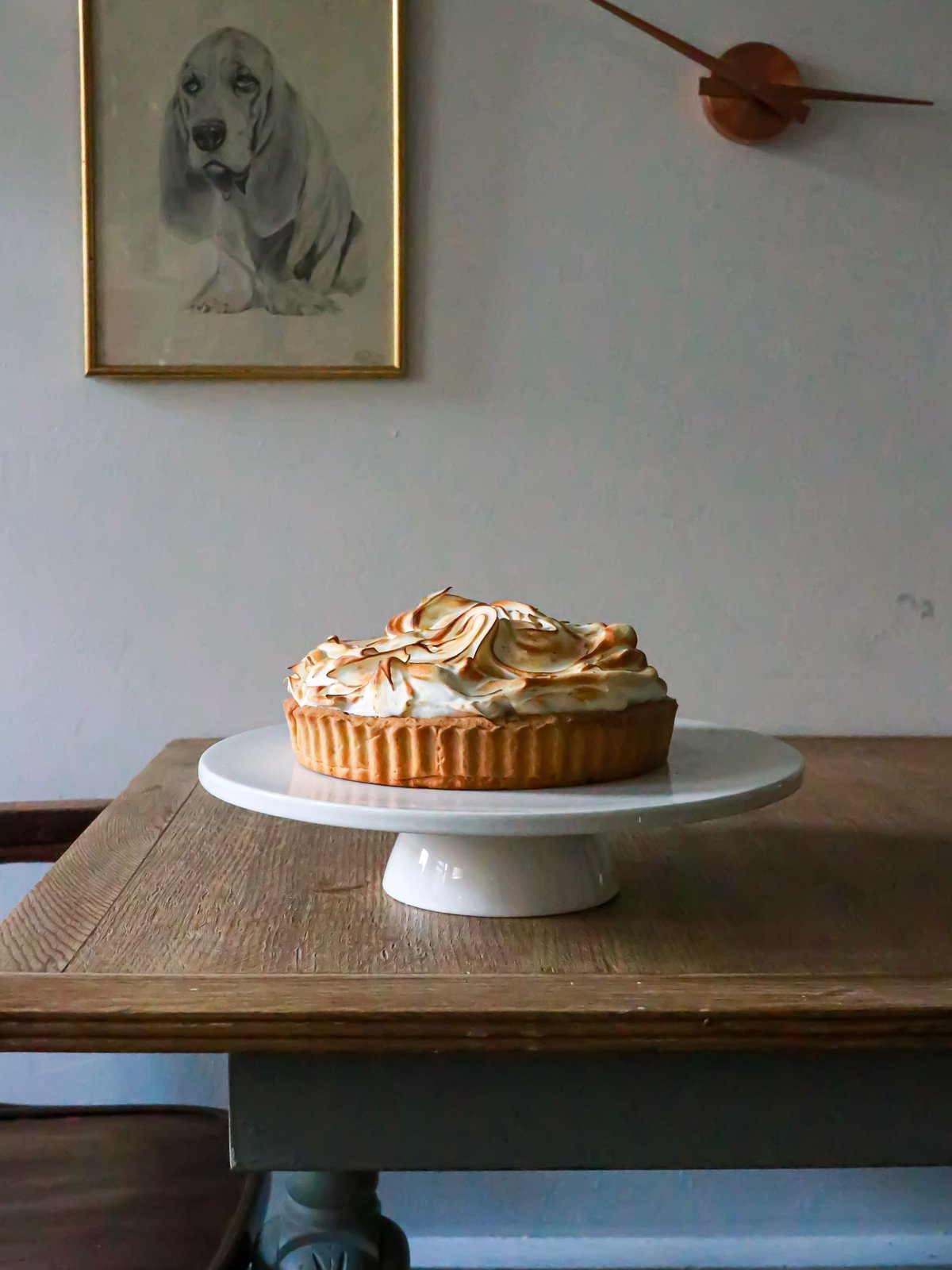
Keep the counters and the everyday cabinets clear
The point of this system is not a prettier cabinet photo. It is that you can still reach a weeknight plate without moving a turkey platter. If serving pieces start to colonize the counter, they have lost their home. How to Keep Small Kitchen Counters Clear is the daily habit; this article is what you do with the bulky pieces so that habit is possible.
Do not store platters in the same zone as small appliances unless the appliance shelf is truly unused. A platter tucked behind a mixer will not come out safely, and the mixer will not come out either. Appliance parking is its own puzzle, covered in How to Store Small Appliances in a Small Kitchen.
Glassware and mugs also compete for the same upper cabinets. If extra holiday wine glasses are crowding the everyday mugs, file the glasses with the holiday-only bin or a high shelf rather than stacking them over the daily cups. How to Store Glassware and Mugs in a Small Kitchen covers that stack; do not solve it by burying platters under stemware.
A slim organizer can help if you are filing plates vertically, but you do not need a new product for every shape. Best Kitchen Organizers for Small Apartments: How to Choose What Actually Fits is the place to compare racks and dividers that match a measured cabinet, not a guess.
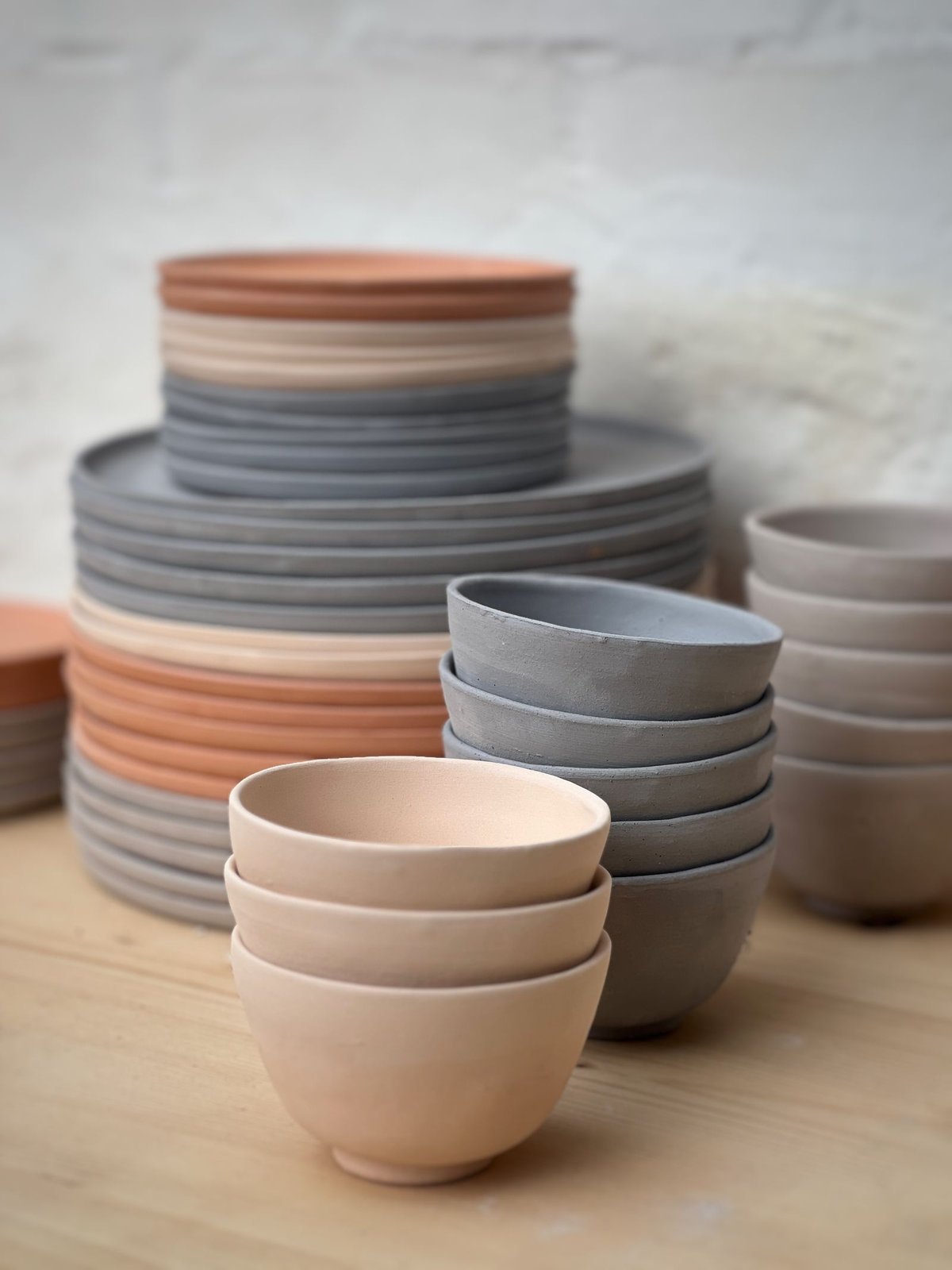
A cart can be storage and a serving surface
If you do not have a spare cabinet, a cart that can live in a closet, a hallway, or beside the fridge can hold the holiday-only bin and roll out when you set the table. Between gatherings it should not become a second counter of clutter. If the cart is always full, you have not actually stored the dishes; you have only moved the pile. See Best Kitchen Carts for Small Apartments for a compact cart that can disappear when the meal is over.
A cart is also a good place to stage platters the day you need them, so you are not unloading a high cabinet while the oven is already on. Load the cart, park it out of the cook’s path, and put the pieces away again after they are washed and fully dry. Damp platters in a closed bin will smell musty and can mark each other.
What good enough looks like
Good enough is not a butler’s pantry. It is an everyday stack you can reach without unstacking a cake stand, a holiday platter you can find in one labeled place, and no oversized dish living permanently on the counter. If a studio cannot keep every inherited platter, keep the one you will actually use and thank the rest by passing them on.
When the meal is over, wash the serving pieces, dry them completely, replace the felt or towel, and put them back in the holiday home the same day if you can. A platter left on the counter “for tomorrow” becomes the new everyday clutter. The test is the next weeknight: if you can still get a regular plate without a scavenger hunt, you have stored the holiday dishes well enough. That is the standard worth keeping—not a pantry that looks staged, just a kitchen that still works after the guests go home.
FAQ
Where should I store a large serving platter in a small kitchen?
A vertical rack, a deep tray file, or a high shelf is usually safer than laying the platter on top of everyday plates. Measure the longest edge first, and put a towel or felt against anything it might scratch.
Can I store extra holiday dishes under the bed?
Yes if they are well padded, the box is not too heavy to slide, and you will still remember they are there. Under-bed storage is a better home for twice-a-year dishes than for the plates you use each week.
Should holiday platters stay in the same cabinet as everyday dishes?
Only if there is a clearly separate zone, such as a high shelf or a vertical file, that does not block the daily stack. If the platter has to move every time you grab a weeknight plate, it needs a different home.
How do I keep serving dishes from chipping in a tight cabinet?
Do not wedge them sideways in a full stack. File them vertically or stack only a few with a soft separator between rims, and avoid parking a cake-stand foot on a glazed platter.
What if I do not have room for every inherited platter?
Keep the pieces you will actually use and let the rest go. A small kitchen cannot store every tray you are given, and a platter you never reach is not earning its space.