How to Store Glassware and Mugs in a Small Kitchen
Everyday glasses, a few wine stems, and a mug for every mood can quietly take over a small kitchen. One shelf becomes a double stack. Another holds cups you never reach because the front row hides them. A mug tree appears on the only clear stretch of counter, and a cabinet door starts to sag under hooks it was never meant to carry. If you want to store glassware and mugs in a small kitchen, the job is not a bigger cupboard. It is a short, stable home for what you actually drink from, and a safer place for the pieces you use less often.
This article is about those glasses and mugs as a storage problem. It is not a plan for tall travel drinkware; How to Store Water Bottles, Tumblers, and Travel Mugs in a Small Kitchen covers bottles and tumblers, which need a different height and a different kind of rack. It is not a dinnerware edit; How to Choose Everyday Dinnerware for a Small Kitchen (Without Overbuying) is about plates and bowls. A drying rack is for wet dishes after you wash, and that choice lives in Best Dish Drying Racks for Small Kitchens: What Fits a Tight Sink. General cabinet Tetris, a clear counter, and a shopping list are separate jobs, in How to Organize Kitchen Cabinets in a Small Kitchen, How to Keep Small Kitchen Counters Clear, and How to Stock a Small Kitchen Without Overbuying. A coffee corner is the brew setup, even if a mug sits beside the kettle; How to Set Up a Coffee Station in a Small Kitchen is that station, not this shelf.
Start with the glasses and mugs you already have
Take every drinking glass, wine stem, and mug out of the cupboard and off the hooks. Set them on a towel on the counter or on Small Kitchen Dining Table Ideas That Actually Fit if the counter is already full, and group like with like: everyday tumblers or short glasses, stemware, and mugs.
You do not need a matching set of twelve if you How to Cook for One or Two in a Small Kitchen most nights. A practical everyday count for one or two people is often four everyday glasses and two to four mugs, plus whatever stemware you truly use. Keep a couple of extras if you How to Host a Dinner in a Small Apartment now and then, and store those extras behind or above the daily row, not in a second random pile.
Let go of the chipped mug that cuts a lip, the glass with a hairline crack, and the novelty cup you have not used in a year. A cracked glass is not a spare. It is a cut waiting to happen. If a piece is stained but sound, decide whether you will actually reach for it; a mug you never drink from is still taking a shelf.
Cupboard rows that you can see and lift
The calmest way to store glassware and mugs in a small kitchen is still a dedicated shelf, or two, inside a cupboard you can open without a stretch. Everyday glasses go in a single row, rims up or down according to how stable they feel on that shelf, with a little space so you can lift one without knocking the next. A second row is fine if the shelf is deep and you can still see what sits at the back. A third row that you have to unstack to reach breakfast is how glasses chip.
Stemware needs more height and more caution. Store wine glasses upright, or upside down on a clean, even shelf if that is more stable in your cupboard, but do not nest stems in a wobbly tower. A felt pad or a thin non-slip liner on a slick rental shelf stops a base from sliding when you close the door. Do not stack a heavy mug on top of a wine glass, and do not press a stem into a gap where the door will catch it.
Mugs can share a shelf if you leave handle space. Nesting two identical mugs can work when the fit is snug and the handles do not twist. Nesting a tall mug inside a shorter one, or stacking three or four, is how the bottom piece cracks. If the cupboard is short, put everyday mugs on an easy middle shelf and send the rarely used ones higher, not into a dangerous stack at eye level.
Measure the shelf height before you buy a stemware row or a mug riser. A riser that leaves a glass half-hanging over the edge is worse than no riser. How to Organize Kitchen Drawers in a Small Kitchen can hold coasters or a corkscrew, but a deep drawer is usually a poor home for stemware, which tips and knocks. A pantry cabinet is for dry goods; How to Organize a Tiny Apartment Pantry (or a Cabinet That Acts Like One) is not a substitute for a glass shelf.

Under-shelf hooks, a mug tree, and what should stay off the counter
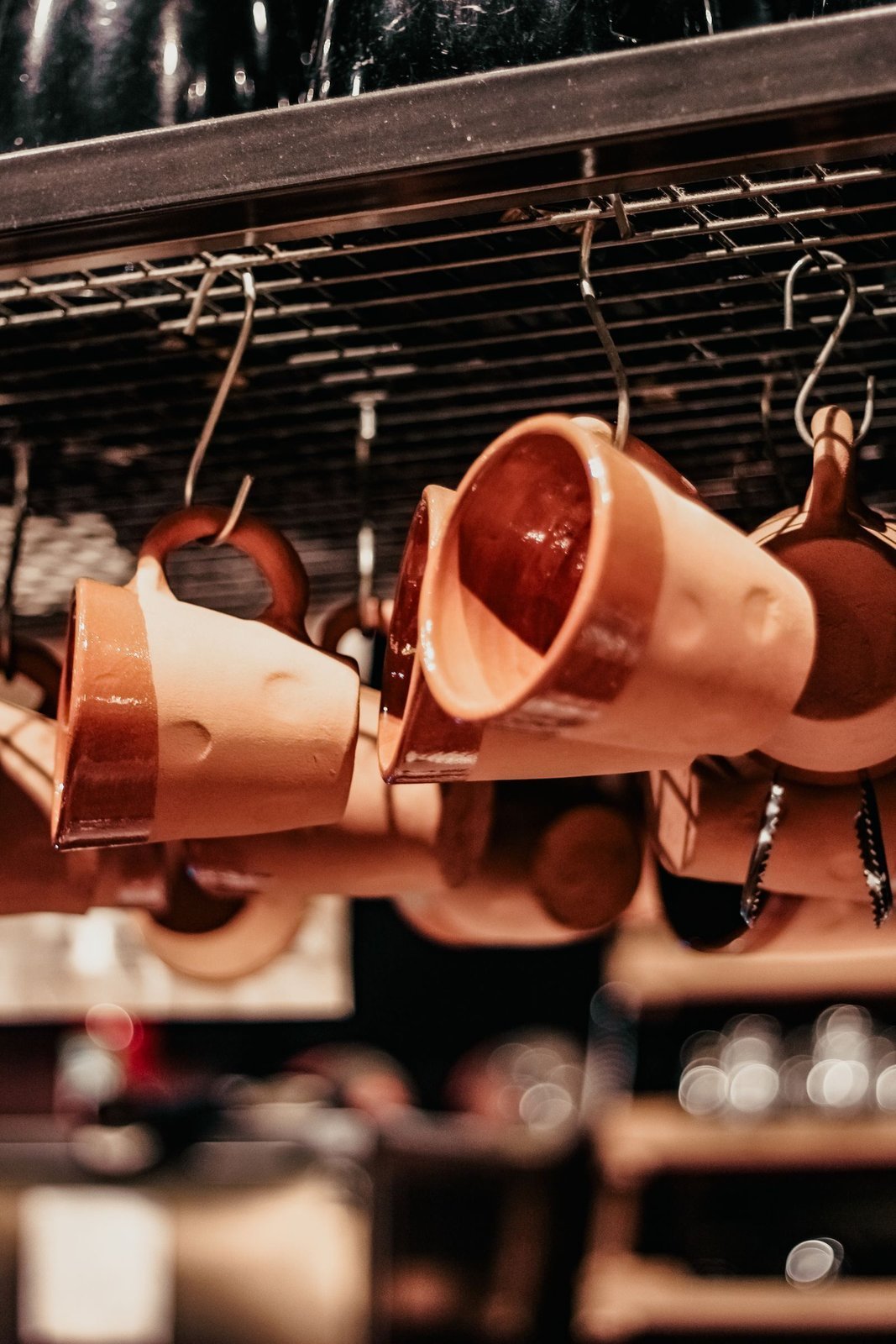
Hooks under a sturdy shelf can free a whole mug row if the shelf is solid, the hooks are rated for the weight, and the mugs are not heavy stoneware hanging from a weak particle-board edge. Under-shelf hooks work best for everyday mugs you reach often, with the handles facing the same way so they do not tangle. They are a poor fit for stemware, for a mug that is still wet, and for a shelf that already flexes when you set a plate on it.
A mug tree earns a place only if you have a patch of counter that is not already promised to a board, a kettle, or a drying rack, and only if the tree is stable when it is fully loaded. On a crowded worktop, a mug tree is clutter with a pretty shape. If the tree wobbles, or if a loaded hook sits where a sleeve will catch it, put the mugs back on a shelf.
What you keep out should be the one or two pieces you use every morning, sitting on a saucer or a small tray, not a display of ten. The rest belong in the cupboard. A damp mug should go on the drying rack first, then into its home once it is dry. Trapping a wet mug on a hook inside a closed cabinet is a good way to keep a stale smell on the shelf.
Renter realities: pads, doors, and what not to hang
A rental cabinet is often a thin door, a particle-board shelf, and hinges that already work harder than they should. Do not hang heavy mugs or glasses on a weak rental cabinet door. Over-the-door hooks that look tidy in a photo can twist a door, leave screw marks, or pull a cheap hinge out of alignment. If you are not allowed to add hardware, skip the door hooks and use the shelf, a liner, and a free-standing mug tree only if the counter can take it.
Felt pads under a glass or a small liner on the shelf protect both the piece and the cabinet finish. They also quiet the rattle when someone walks past. If a shelf is rough or damp, fix the moisture first; do not store stemware where it will sit in a wet cupboard.
When you put glasses away, set them down; do not slide a whole row. A hairline chip on the rim is easier to miss than a broken bowl, and it is just as unsafe. If you need to move a lot of glass at once, use a tray, and keep the tray off the very edge of a small counter.

A simple home for each type
Give each type one official home, and stop parking overflow on the drainboard.
- Everyday glasses: one easy cupboard shelf, a single or double row you can see, with a liner if the shelf is slick.
- Stemware: a taller shelf or an upright row, never an unstable stack, and never hanging from a weak door.
- Everyday mugs: a middle shelf, under-shelf hooks on a solid shelf, or a stable mug tree if the counter is truly free.
- Occasional pieces: a higher shelf, still in a single stable row, not a packed corner you forget until a glass falls.
If you only have one cupboard, put everyday glasses and mugs on the best shelf and let stemware have the next-best height. Do not mix heavy mugs and thin stems in the same tight cluster. After you put a piece away, close the door slowly once to check that nothing catches, rattles, or sits too close to the hinge. A glass that looks fine on an open shelf can still chip when the door swings shut in a tight rental cabinet.

Practical takeaways
Store what you drink from so you can see it, lift it with one hand, and close the door without a rattle.
- Sort first. Keep the glasses and mugs you use, and let go of cracked, chipped, or forgotten pieces.
- Give everyday glasses a visible cupboard row, and give stemware height and stability, not a stacked pile.
- Use under-shelf hooks only on a solid shelf, and use a mug tree only if the counter can spare the space.
- Add felt pads or a thin liner on a slick rental shelf, and do not hang heavy glass or mugs on a weak cabinet door.
- Keep one or two daily mugs within easy reach, and store the rest. A wet mug goes on the drying rack first.
A small kitchen does not need more mugs. It needs a short row you can trust, a hook that can actually hold the weight, and the habit of putting a dry glass back in its place.
FAQ
How many glasses and mugs do I need in a small kitchen?
For one or two people, four everyday glasses and two to four mugs is usually enough, plus the stemware you actually use. Keep a couple of extras if you host now and then, and store those behind the daily row. More pieces only help if you have a stable shelf for them.
Is it safe to stack glasses or mugs?
Two identical mugs can nest if the fit is snug and the handles do not twist. Do not stack stemware in a tower, and do not rest a heavy mug on a thin glass. If a stack wobbles or you have to unstack three pieces to get the one you want, use a single row instead.
Should I hang mugs under a shelf or on the cabinet door?
Under-shelf hooks can work on a solid shelf for everyday mugs that are not too heavy. Do not hang heavy mugs or glasses on a weak rental cabinet door, and do not hang stemware from a hook that was meant for a tea towel.
Where should wine glasses go in a small cupboard?
On a shelf tall enough for the stem, standing in a stable row, upright or upside down if that is more secure on that surface. Use a felt pad or liner on a slick shelf. A door rack or an unstable pile is a poor home for stemware in a rental kitchen.
Can I leave a mug tree on a small kitchen counter?
Only if the tree is stable when it is fully loaded and the counter is not already crowded. If the tree wobbles, catches a sleeve, or sits in your only prep space, put the mugs on a cupboard shelf instead.