How to Compost in a Small Apartment Kitchen
A small apartment kitchen still produces scraps: peels, coffee grounds, vegetable ends, a leftover you will not eat. With a short counter and no yard, those scraps have nowhere obvious to go except the trash. Learning how to compost in a small apartment kitchen is less about starting a garden pile and more about a tight indoor plan: a lidded bin that fits, a clear list of what belongs in it, a cadence for emptying it, and a realistic way to get the organics out of the building.
This is not a guide to wasting less food in the first place. Using what you buy, before it spoils, is in How to Reduce Food Waste in a Small Kitchen. Leftovers you still plan to eat are in How to Store Leftovers in a Small Kitchen. What to keep on hand is in How to Stock a Small Kitchen Without Overbuying. Pantry and fridge order are in How to Organize a Tiny Apartment Pantry (or a Cabinet That Acts Like One) and How to Organize a Small Apartment Fridge. The everyday trash can is in Best Kitchen Trash Cans for Small Apartments. Counter space is in How to Keep Small Kitchen Counters Clear, and a shared kitchen is in How to Share a Small Kitchen with a Roommate. Those guides can support this plan. This article is only about the scraps you cannot eat.
Check the building before you start a bin
An indoor compost setup only works if the organics have a practical place to go after they leave your counter. Some buildings collect food scraps, some cities have a drop-off, and some chutes forbid organics. Check the lease, the house rules, and any local collection page before you start filling a caddy.
A practical pre-check looks like this:
- Read the lease or house rules for trash, pests, and anything that mentions organics, compost, or food waste.
- Ask the landlord or manager whether a collection bin exists before you assume the chute is an option.
- Look up a drop-off only if one actually serves your area.
- If you share the kitchen, agree the plan first, as in How to Share a Small Kitchen with a Roommate. A bin no one else will empty becomes a smell problem.
If there is no collection, no drop-off you can realistically reach, and no approved place in the building, a regular trash bag is sometimes the more honest option. A caddy with nowhere to go will sit, smell, and attract pests on a short counter. The ordinary can in Best Kitchen Trash Cans for Small Apartments is the fallback when compost is not actually available.
Do not dump unfinished compost in a park, on a planting strip, or down a chute that forbids it.
A tight lidded bin on a short counter
You need a small, tight-lidded container, not an open pail. In a rental kitchen, that usually means a compact caddy on the counter, under the sink, or in a cabinet, which you can carry out when it is time to empty it. This is not a ranked list of bins. Choose a lid that closes fully, a size you will actually empty, and a footprint that does not steal the worktop.
A practical bin check:
- Prefer a tight lid over a pretty open crock. An open pail is a smell and pest problem in a small kitchen, especially in warm weather.
- Measure the sliver of counter or the under-sink gap you can spare.
- If the bin will live on the counter, give it a fixed home and keep the rest of the worktop usable, as in How to Keep Small Kitchen Counters Clear.
- A liner can make emptying easier, as long as you still wash the bin and you do not treat a leaking bag as a plan.
You do not need a large outdoor tumbler in a studio. A small indoor caddy plus a real drop-off or collection is the apartment version of the habit. This guide will not promise that any bin is odorless in a day, and it will not invent a compost-science timeline for how fast scraps “become soil.” The job of the indoor bin is to hold the right scraps, closed, until you can take them out.

What actually belongs in it — and what to keep out
Food-waste reduction is keeping more of what you buy. This bin is for scraps you cannot eat: peels, cores, coffee grounds, tea leaves if your collection allows them, and vegetable trimmings. If a leftover is still food you would eat, store it to eat, as in How to Store Leftovers in a Small Kitchen, rather than moving it into the caddy out of habit.
Keep these out of an open pail, and be cautious with a lidded caddy unless your collection program clearly accepts them:
- Meat, bones, and fish scraps.
- Dairy, including cheese rinds and creamy leftovers.
- Oily or greasy leftovers, and cooking oil.
- Anything that is already moldy, smells off, or would be unsafe to eat.
Meat, dairy, and oily leftovers in an open pail are a smell and pest problem in a small kitchen. A tight lid helps, but it does not make those scraps a good default in a tight rental. If your official collection accepts them, follow that list. If you have no confirmed program, leave those items out and use the trash.
Food that is moldy or unsafe to eat should be thrown out, not forced into a struggling bin. Composting is not a way to “save” food you would not serve. How to Reduce Food Waste in a Small Kitchen is the habit of using food while it is still good.
This article will not invent an accepted-materials chart, a safety timeline, or a zero-waste guarantee. Follow the rules of the collection or drop-off you actually use, and when you are unsure, keep the doubtful item out.

Empty it on a cadence so it does not sit and smell
The bin will smell if scraps sit too long, if the lid stays open, or if you add food that does not belong. There is no odorless-in-a-day promise here. Empty the caddy often enough that you are not negotiating with a warm, full container on a short counter.
A cadence that works in a small kitchen is simple:
- Empty the bin on a set rhythm you can keep, such as every day or every other day, and sooner in hot weather.
- Close the lid every time you add scraps. A lid left ajar is close to an open pail.
- When you empty it, wash the bin and the lid with hot soapy water, rinse, and dry it before it goes back.
- Do not let a full caddy wait for a “perfect” drop-off day if the room is already starting to smell. If you cannot take it out, use the trash for that batch.
If you share the kitchen, decide who empties it, and do not hide a full bin in a cabinet as if that solves the smell. A cabinet can concentrate odor. How to Share a Small Kitchen with a Roommate is the shared-habit side of that problem.

Drop-off, collection, and what not to do
The indoor bin is only the first step. The scraps still have to leave the apartment. The realistic options are a building organics cart, a municipal collection if your address is included, or a drop-off you can actually reach. If none of those exist, use the trash rather than inventing a destination.
A realistic take-out plan:
- Use the building’s organics collection exactly as posted: the right bag or container, the right room or curb spot, and the right day if there is one.
- If you rely on a drop-off, pick a site you can reach with a closed, leak-resistant container.
- Keep the path to the door clear when you carry the bin out. A dripping container over a rental hallway is a mess you will have to clean.
- Never put unfinished compost down a chute that forbids it, and never dump it in a park, on a trail, or in a planter that is not yours.
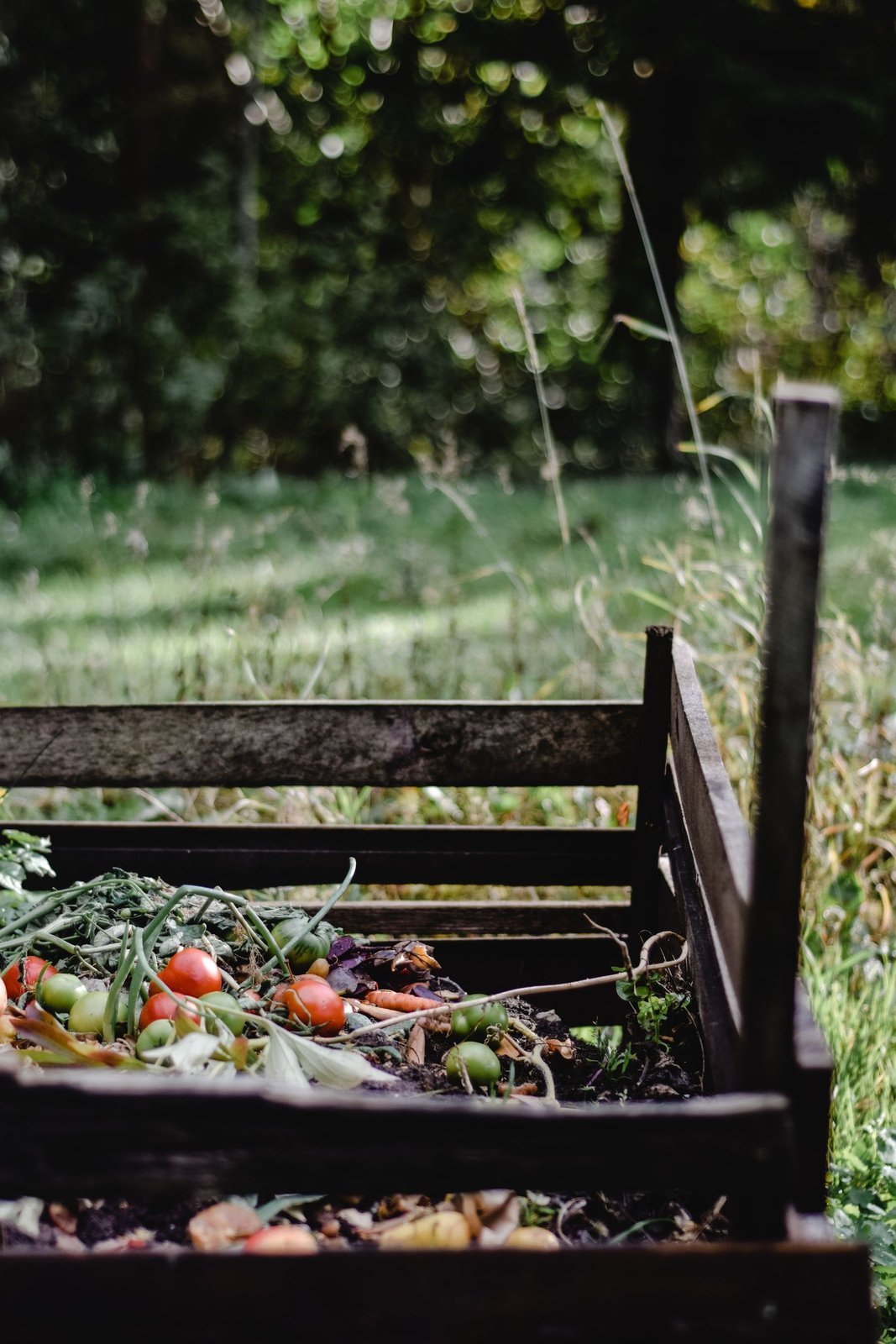
A wooden garden pile is what some houses have, and what most apartments do not. It is not a setup you can copy in a park, and it is not a reason to skip the building rules. If you have a balcony and a method your building allows, keep it contained and still follow the lease. This guide will not walk you through an outdoor pile or promise that scraps will “finish” on a timeline. When the destination is unclear, the scraps go in the trash.
Practical takeaways
- I checked the lease or building rules, and I know whether collection or a drop-off actually exists, before I started a bin.
- The caddy is small, tight-lidded, and parked in a fixed spot that does not take over the counter.
- The bin holds scraps I cannot eat, not leftovers I still planned to serve, and not meat, dairy, or oily food in an open pail.
- Moldy or unsafe food goes in the trash, not into a struggling caddy.
- I empty and wash the bin on a cadence I can keep.
- I do not dump unfinished compost in a park or down a chute that forbids it. If there is no honest destination, I use a regular trash bag.
How to compost in a small apartment kitchen—and how to apply it
The calm way to compost in a small apartment kitchen is to treat scraps as a closed, temporary hold, not as a garden project you do not have room for. Check the building first, use a tight lidded bin for the scraps you cannot eat, keep problem foods out of an open pail, empty the bin often, and take the organics only to a collection or drop-off that actually exists. A tight rental kitchen uses a small container with a real destination, and the trash when that destination is not there.
FAQ
How do you compost in a small apartment kitchen?
Use a tight lidded bin for scraps you cannot eat, empty it on a regular cadence, and take the organics to a building collection or a drop-off you can actually reach. Check the lease first. If there is no honest place for the scraps to go, a regular trash bag is sometimes the better option.
What should I keep out of a kitchen compost caddy?
Keep meat, dairy, and oily leftovers out of an open pail, and be cautious with a lidded caddy unless your collection program accepts them. Those foods are a smell and pest problem in a small kitchen. Follow the accepted list of the program you use, and when you are unsure, leave the item out.
What if my building has no organics collection?
Look for a municipal or community drop-off you can realistically reach. If there is none, use the trash. Do not dump unfinished compost in a park, on a planting strip, or down a chute that forbids it.
Can I put moldy food in the compost bin instead of throwing it out?
No. Food that is moldy or unsafe to eat should be thrown out, not forced into a struggling bin. Composting is not a way to save food you would not eat, and this guide does not invent timelines for when food becomes “safe” again.
Do I need a yard or a large outdoor tumbler?
No. In a small apartment, the useful setup is a compact indoor caddy plus a real collection or drop-off. A yard pile is not something most rentals have, and it is not something you should invent in a public place.