How to Share One Bathroom With Overnight Holiday Guests in a Small Apartment
The hard part of a holiday stay in a small apartment is rarely the towels themselves. It is the traffic. Several people need one shower, one sink, and a little dignity, the night of the visit and the morning after. If you need to share one bathroom with overnight holiday guests in a small apartment, the skill is a simple plan for scheduling, privacy, and hook space so no one is knocking, waiting in a towel, or hunting for something to dry off with.
This is not a renovation and it is not a decorating project. “Good enough” looks like this: guests can wash up without a traffic jam or a scavenger hunt for a clean towel. You do not need a second bathroom. You need a hook, a caddy, a basket of extras, and a clear rule about the closed door.
What this plan is not
A kit of toiletries is useful, but it is not the whole system. How to Put Together an Overnight Guest Kit for a Small Apartment is what goes in the basket. This page is about how people move through the room. After guests leave, How to Wash Guest Towels and Extra Bedding After Overnight Visitors is the laundry job. Do those later; tonight is about access and privacy.
Everyday renter organization is also a different article. How to Organize a Small Bathroom (Renter-Friendly, No Reno), How to Organize a Bathroom Vanity in a Small Apartment, and How to Organize a Medicine Cabinet in a Small Bathroom will help you tidy the room in general. Use them if the vanity is already a jumble. The guest-night problem is still traffic, not a new drawer system.
Where people sleep matters, but it does not solve the shower queue. How to Set Up a Guest Bed in a Small Apartment and How to Make a Sofa Bed Comfortable for Holiday Guests are the sleeping side. How to Reset a Small Living Room After a Holiday Gathering is the morning-after living room, not the bathroom plan. How to Store Towels in a Small Apartment Without a Linen Closet is useful if you need a home for the extra set once it is dry.
Do not make “just shower at the gym” the main advice. Some guests will not have that option, and it is not a plan for the night they arrive. A hook and a turn order will do more.
Give each guest a towel home and a caddy
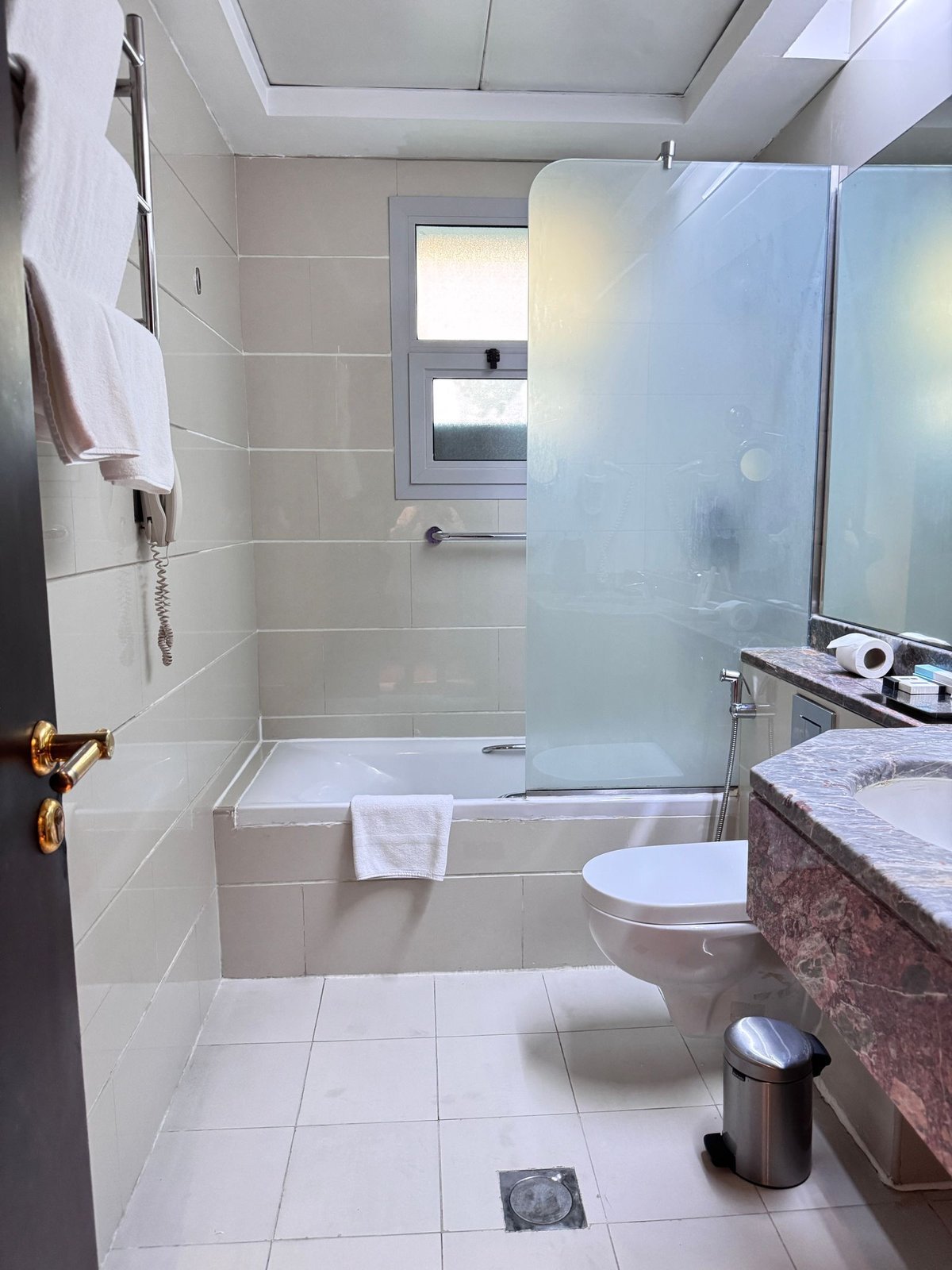
In a one-bathroom apartment, hanging space is the first bottleneck. Put a hook, an over-the-door hook, or a clear spot on an existing rail that is reserved for a guest towel. Tell people which hook is theirs so their towel is not left on the bed, the sofa, or the only remaining peg you use for a robe. If you cannot add hardware, a sturdy over-the-door hook is usually enough and is kinder to a rental wall.
A caddy guests can carry in and out keeps their soap, toothbrush, and shampoo from colonizing your sink. A small basket, a toiletry bag, or a simple plastic caddy all work. They take it in for a shower and take it back to the sleeping space when they are done, so the basin stays usable for the next person. You do not need a built-in shower organizer, and you should not start a bathroom renovation to create one.
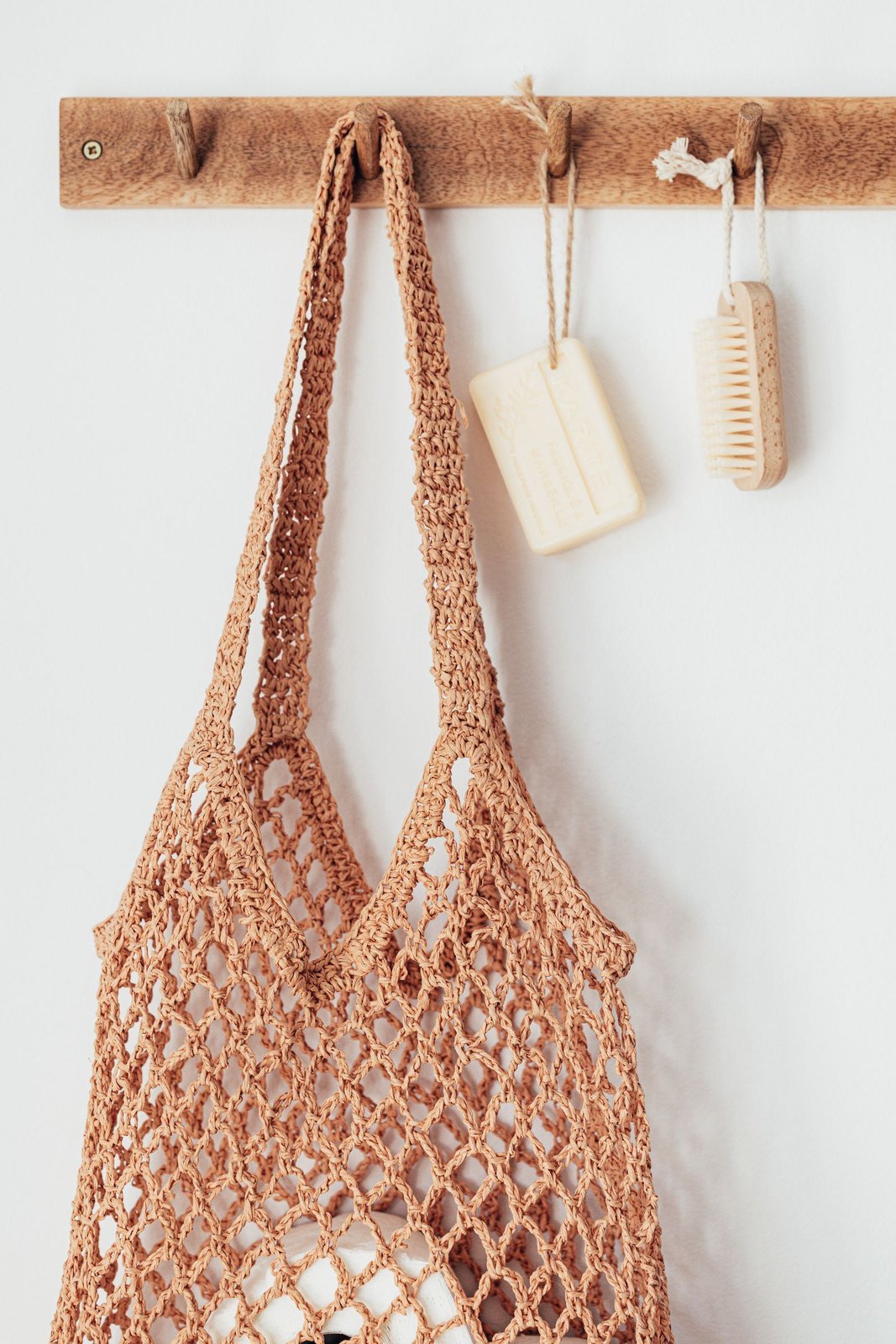
A hanging bag or a hook for a toiletry pouch is the same idea in a tighter space: the guest’s things have a place that is not the rim of the sink. If the bathroom already has a hook rail, use it. If it does not, the back of the door is usually the easiest reserved spot.
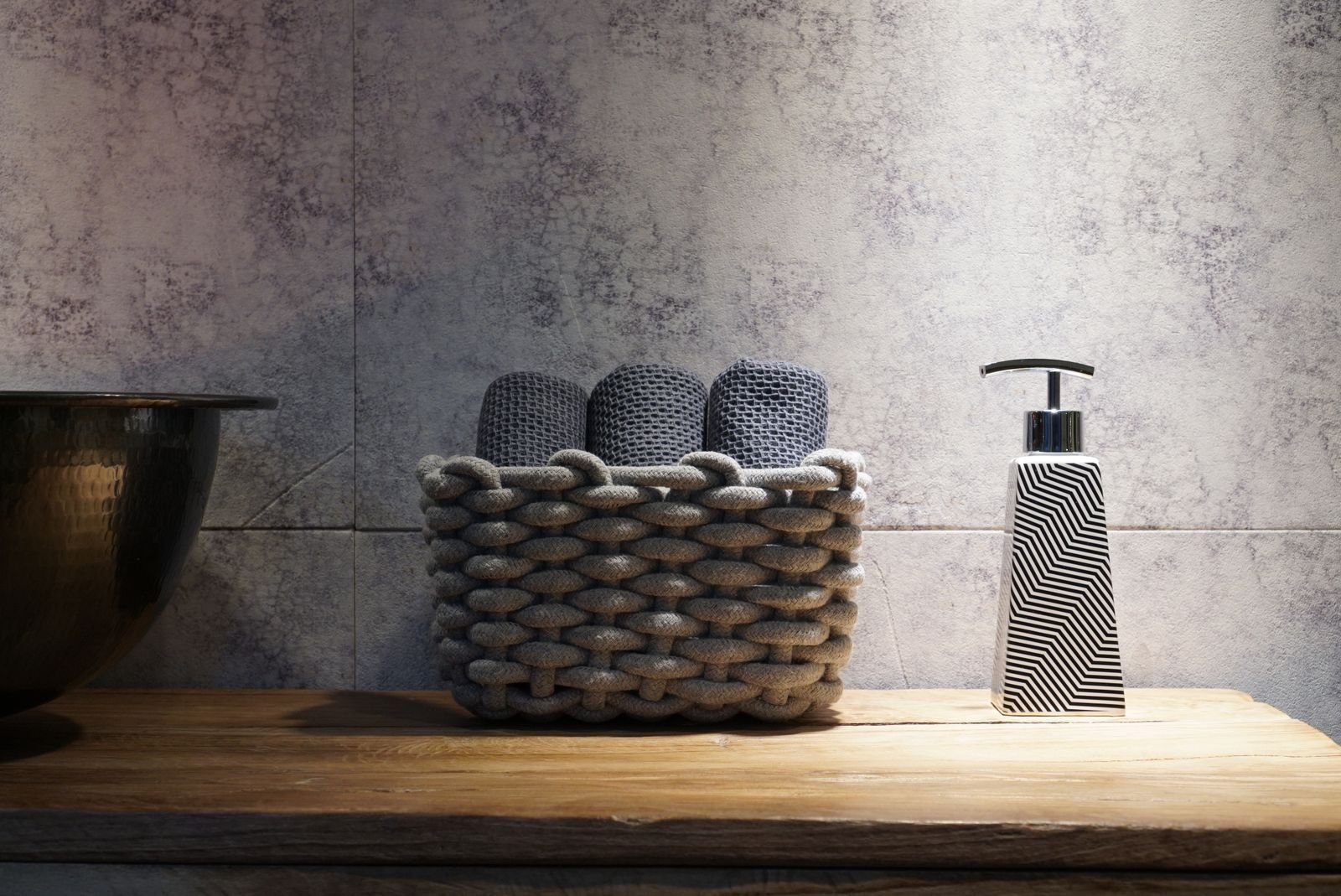
Fold or roll one extra towel and one extra washcloth in a small basket they can see without opening your personal cupboard. That basket can live on a shelf, a stool, or a bench just outside the bathroom if the room itself has no floor space. Point it out when people arrive so they do not have to ask, or worse, use your only remaining towel.
Set a simple morning order, and a closed-door rule
The morning after a holiday stay is when one bathroom feels smallest. Agree on a loose order the night before: who has an early departure, who can wait, and who needs the shower first. You do not need a printed schedule. You need everyone to know whether the first slot is 7:00 or “after coffee,” and roughly how long a turn should be. A short turn is more realistic in a small apartment than a long spa morning.
If two people are comfortable sharing a sink for teeth and faces, say so. If they are not, keep the door-closed rule simple: if the door is closed, wait. Do not knock in a way that startles someone in the shower, and do not assume an unlocked door is an invitation. A hook or a simple occupied sign on the door can help in a household with children or several adults, but the verbal rule is usually enough.
Keep the hallway side of the door clear. A pile of bags or a drying rack against the bathroom door turns a short wait into a blockage. If someone is waiting, they should be able to stand without blocking the kitchen or the only path through the apartment. If the bathroom opens directly into a living room that is also the guest bedroom, agree on a little warning before anyone walks in — a soft knock, or a moment’s pause — so a closed-door rule still works when the “hallway” is the foot of a sofa bed.
Move personal items out of the way
Before guests arrive, move personal medicines, prescriptions, and anything you do not want handled off the open sink and out of an unlocked medicine cabinet if that is easy to do. A high shelf in your bedroom, a closed box, or a bag you can put away is fine. This is courtesy and ordinary privacy, not medical advice.
Do the same with under-sink chemicals, bleach, drain cleaner, and anything you would not want a guest or a visiting child to reach while looking for shampoo. Close the cabinet, or move the heavy-duty products to a higher, less obvious spot for the stay. You do not need to empty the bathroom of your own things; you need the obvious surfaces to feel usable and safe for a visitor.
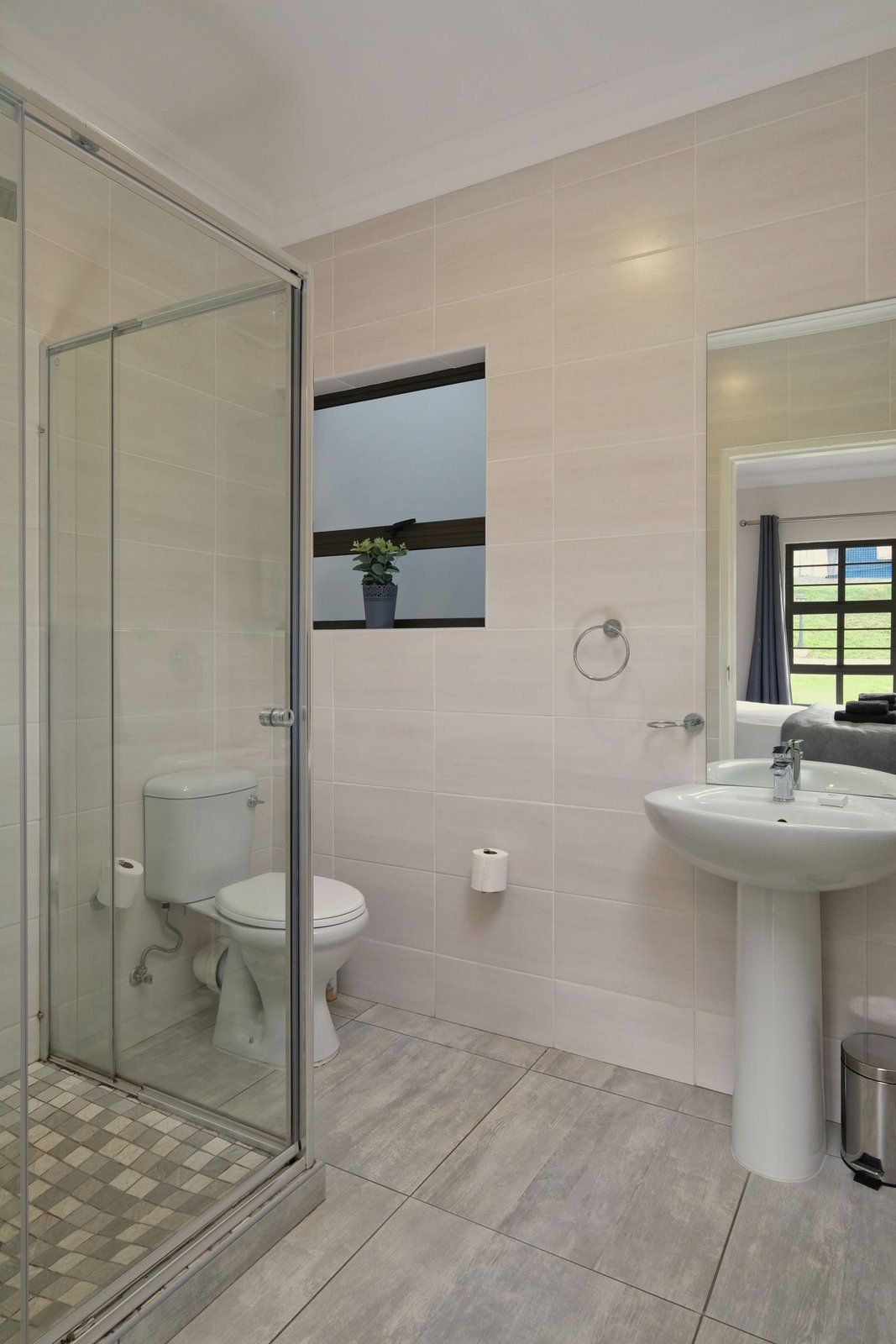
Leave one clear landing space on the sink or a small shelf for a guest caddy. If every inch is already full of your products, people will set a wet bag on the toilet lid or the floor. A two-minute clear-off does more than a new organizer.

A spare cup or a labeled slot for a guest toothbrush prevents a mix-up at a shared sink. If you would rather not share a cup, include a small travel cup or a cap in the guest basket. Point out the trash and the used-towel hook at the same time, so those questions do not happen through a closed door at midnight.
The night of, and the morning after
On arrival, show guests the bathroom, their towel hook, the extras basket, and the caddy. Tell them the closed-door rule and the morning order. That tour takes a minute and prevents most of the friction.
At night, keep a night light or a hall light in play if people will find the bathroom in the dark, and make sure the door can close fully. If the only light switch is inside the room, a small plug-in light in the hall is kinder than asking guests to fumble for a switch in a home they do not know. In the morning, the first person to use the shower should leave the room ready for the next: sink wiped of obvious splashes, used towel on its hook, caddy out of the basin. You are not running a hotel, but a thirty-second reset between turns is what keeps a single bathroom workable.
If two households have different shower habits, say the obvious things out loud: how long the hot water usually lasts in your building, whether the fan should stay on, and where a wet bath mat should go so the next person does not slip. Those notes sound fussy until someone uses the last of the hot water or leaves the mat in a puddle. They are part of sharing one room, not a lecture on cleaning.
If the stay is longer than one night, set a place for damp towels to dry instead of piling them on the bed. A hook with some air around it is better than a damp stack. Refresh the extras basket if a towel has been used and not yet washed, so the second night does not start with an empty hook. When guests leave, collect the guest towels and extra bedding for a separate laundry day, and put your own medicines and cleaners back where you like them.
A short written note on the door or on the basket can help if several guests arrive at different times and you will not be there to give the tour twice. One or two lines are enough: towel hook, caddy, extras basket, please wait if the door is closed. You can take the note down when the stay ends.
How to apply it
Reserve a hook or an over-the-door spot for a guest towel, hand over a caddy they can carry in and out, and put a small basket of extras where it can be seen. Agree on a morning order, and treat a closed door as a request to wait. Move personal medicines and harsh under-sink products out of the way before people arrive. That is enough to share one bathroom with overnight holiday guests in a small apartment without a traffic jam, and without sending anyone out of the house to wash up.
FAQ
How do I keep the bathroom from becoming a morning bottleneck?
Agree on a simple order the night before, especially who needs the shower first. Keep turns reasonably short, and ask each person to hang their towel and clear the sink before the next turn.
What should I put out for guests besides a towel?
A caddy or toiletry bag they can carry in and out, a visible basket with an extra towel and washcloth, and a spare toothbrush cup if you do not want to share one. A pre-packed guest kit can fill the basket.
Is it rude to ask people to wait if the door is closed?
No. A clear “if the door is closed, wait” rule protects privacy in a one-bathroom apartment. Tell guests the rule when they arrive so no one has to guess.
Should I leave my medicines and cleaners under the sink?
Move prescriptions and personal medicines out of easy view, and keep harsh under-sink chemicals closed or relocated for the stay, especially if children are visiting. You can return them to their usual spots after guests leave.
Do I need to add hooks to the wall?
Not necessarily. An over-the-door hook or an existing rail is often enough in a rental. The important part is that each guest towel has a reserved, obvious home.