How to Remove Kitchen Grease From Cabinets
Grease in a small rental kitchen rarely looks like a spill. It looks like a dull film on the cabinet doors nearest the hob, a sticky edge on the range-hood exterior, and a haze on the backsplash around the stove. You notice it when a handle feels tacky, or when a pale door no longer looks the color it did when you moved in.
If you want to remove kitchen grease from cabinets without damaging a finish you do not own, keep the method simple and renter-safe. Use a degreaser that is labeled for the surface, or start with warm soapy water. Wipe with a soft cloth, work from the top down, and test a hidden spot first. Do not scrub a cheap laminate, a thin painted door, or unsealed wood as if you were stripping furniture.
This is a targeted clean of the cabinet fronts and the nearby hood and backsplash, not a session on the oven cavity or the burner grates, and not a whole-apartment deep clean. The cooktop and oven have their own method in How to Clean a Rental Oven and Stovetop Without Damage. Cooking smells are covered in How to Get Cooking Smells Out of a Small Apartment. Point to those guides instead of restating them here.
Start with a hidden-spot test and the right cleaner
Before you wet a door you see every day, test a hidden spot: the inside edge of a door, a lower corner, or a stretch beside the hinge. Wipe, wait until it dries, and look for dulling, color lift, or a sticky residue. If the finish changes, stop and switch to a milder approach, or leave that surface alone.
Read the product label and use the cleaner only on the surfaces it names. A kitchen degreaser made for finished cabinets or sealed hard surfaces is a reasonable starting point if the label agrees. Warm water with a little mild dish soap is often enough for a light film and is a safer first try on an unknown rental finish. Follow the dilution, contact time, and rinsing instructions on the bottle. Do not invent a stronger mix, and never mix bleach and ammonia—or any two cleaners the labels do not tell you to combine.

Skip abrasive powders, steel wool, rough scouring pads, and anything sold as a finish stripper. Those can cut through a thin factory coating and leave a door worse than a greasy film. You are not refinishing the kitchen, and you should not sand, strip, or repaint cabinet doors unless your lease and your landlord clearly allow it.
If a previous tenant’s buildup is heavy, or the finish already looks worn, treat that as a possible maintenance issue rather than a challenge to scrub harder.
Work from the top down with a soft cloth
Grease migrates. If you clean the lower doors first, drips from the hood and the upper cabinets will land on the work you just finished. Start at the range-hood exterior, then the upper cabinet fronts, then the backsplash around the stove, then the lower doors and the handles.
Use a soft cloth or a non-scratch sponge. Lightly dampen it with the soapy water or the labeled solution. You want a wipe, not a soak. Standing water on the edge of a particle-board door or along an unsealed wood grain is how cheap finishes swell and peel.

Work in small sections:
- Hood exterior first. Wipe the underside lip and the front panel you can reach without forcing a filter out, unless the manual says the exterior cover is meant to be removed and you are comfortable doing that. The filter and the inside of the hood are a different job; if they are caked, that may be maintenance.
- Upper doors and the ends nearest the hob. These usually hold the thickest film. Wipe with the grain or with the door’s longest direction, then rinse the cloth and go over the same area with clean water so soap does not dry on the surface.
- Backsplash around the stove. This is the splash zone, not the cooktop. Stay on the wall or tile around the hob. Painted or papered walls elsewhere in the room belong in How to Clean Walls and Baseboards in a Rental Apartment (Without Damage).
- Lower doors, drawers, and handles. Handles and the top edges of lower doors collect a surprising amount of film because that is where hands and steam meet.
Dry each section with a second clean cloth as you go. A dry wipe helps you see whether the dull film is actually gone and keeps water from sitting in seams.
Cabinet fronts, cheap finishes, and unsealed wood
Not every rental door can take the same amount of cleaning. A sealed laminate or a well-varnished door will usually tolerate a gentle, labeled degreaser and a thorough rinse. A thin painted door, a paper-look wrap, or unsealed or lightly sealed wood is easier to dull, scratch, or darken.
On a cheap or unknown finish, start with the mildest option that still moves the film: a soft cloth, warm soapy water, and very light pressure. If that lifts the grease, stop there. If it does not, try a labeled product on another hidden spot rather than bearing down with the first cloth.
What not to do:
- Do not scrub in circles with a rough pad on a painted or wrapped door.
- Do not flood unsealed wood or the raw top edge of a door.
- Do not use a solvent the label does not list for finished wood or laminate.
- Do not try to “even out” a worn patch by rubbing the whole door harder.
If the finish is already peeling, white in patches, or sticky after a gentle clean, stop. That is no longer a grease-film problem. A damaged finish may need the landlord or a maintenance request, not a second round of product.
The range-hood exterior and the backsplash around the stove
The hood and the splash zone get the worst of the film because they sit in the steam path. They are also the surfaces renters are most tempted to attack with a harsh cleaner.
For the hood exterior, stay on the outside metal or painted cover. Spray the cloth, not a stream into seams or up into the fan housing. Wipe the lip, the front, and any fingers of grease that have crept onto the adjacent cabinet. If the exterior will not come clean after a labeled product and a soft cloth, or if the hood is damaged, noisy, or clearly clogged inside, that is a landlord or maintenance issue. You are not expected to deep-degrease a commercial-style interior.
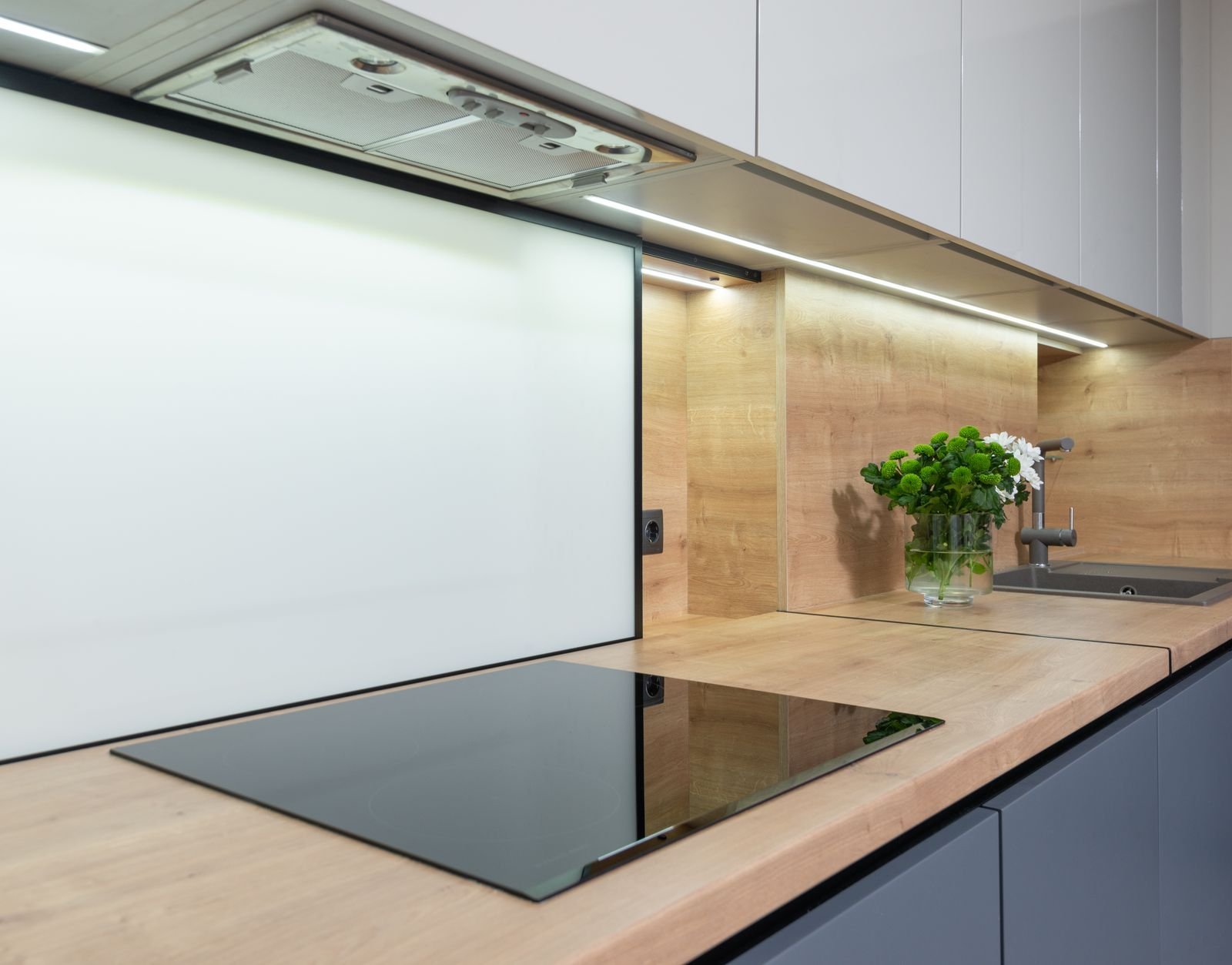
For the backsplash immediately around the stove, match the method to the material as far as you can tell. Sealed tile and many glass or metal splashbacks will take a labeled degreaser and a rinse. Paint, wallpaper, or an unsealed grout line needs a milder pass and a hidden-spot test. Do not let cleaner run down behind the hob or into an electrical outlet. Keep the cooktop itself for the oven-and-stovetop guide; this article stops at the surfaces around it.
A regular short wipe after a greasy cook—once the area is cool—does more than an occasional marathon. You do not need a full-apartment deep clean every time dinner spatters. When you do want that wider reset, use How to Deep Clean a Rental Apartment Without Damaging Anything rather than expanding this cabinet method to every room.
When to stop and call maintenance
A renter-safe clean has a stopping point. Stop if the hidden-spot test changes the finish, if a door swells or peels, if a product leaves a smear you cannot rinse off, or if the hood exterior stays caked after a gentle, labeled attempt. Those are signs the problem is beyond a household wipe.
Take a clear photo of the area before you do more, and describe what you have already tried—the product name and that you followed the label. Do not keep escalating to stronger chemistry. This is not a professional degreasing job, and it is not a refinishing project.

A grease-cleaning checklist for rental cabinets
Use this before you start, and again when you finish:
- I tested a hidden spot and waited for it to dry before I cleaned a visible door.
- I am using either warm soapy water or a degreaser labeled for the surface, and I am following the bottle. I am not mixing products, and I am not mixing bleach and ammonia.
- I am wiping with a soft cloth, from the hood down to the upper doors, the backsplash around the stove, then the lower doors and handles.
- I am not soaking edges, unsealed wood, or a cheap painted finish, and I am not using steel wool or a stripper.
- The cooktop, oven interior, room walls, and a whole-apartment deep clean stay in their own methods.
- If the finish is damaged or the hood will not come clean, I stop and treat it as a landlord or maintenance issue.
How to choose—and how to apply it
The calm way to remove kitchen grease from cabinets is to treat the film as a light, repeated job, not as a strip. Test a hidden spot, use a labeled degreaser or warm soapy water, and wipe with a soft cloth from the top down. Be gentler still on a cheap finish or unsealed wood. Clean the hood exterior and the backsplash around the stove the same way, and leave the cooktop, the oven, and the rest of the apartment to the guides that already cover them. You do not need a professional degreaser or a refinishing kit. You need a method the finish can survive, a rinse so soap does not stay behind, and the judgment to stop when a door or a hood is a maintenance issue rather than a cleaning one.
FAQ
What is the safest way to remove kitchen grease from cabinets in a rental?
Start with a hidden-spot test. Use warm soapy water or a degreaser whose label includes your surface, wipe with a soft cloth, and rinse and dry as you go. Work from the hood down. Do not scrub a cheap finish or unsealed wood, and do not mix cleaners.
Can I use a strong degreaser on painted or laminate cabinet doors?
Only if the label says that surface is appropriate, and only after a hidden-spot test. A mild soapy wipe is the better first step on an unknown rental finish. If the test dulls or lifts the coating, stop. A damaged finish may be a landlord issue, not a reason to try a harsher product.
How should I clean the range-hood exterior?
Wipe the outside cover and the lip with a soft cloth and a labeled cleaner or soapy water, spraying the cloth rather than soaking seams or the fan housing. If the exterior will not come clean, or the hood looks damaged or clogged inside, contact your landlord or maintenance rather than forcing filters or using a harsher chemical.
Why work from the top down?
Grease and dirty water run downward. If you clean the lower doors first, drips from the hood and upper cabinets will streak the work you just finished. The usual order is the hood exterior, upper doors, the backsplash around the stove, then lower doors and handles.
What if the grease will not come off?
Do not escalate to steel wool, a stripper, or a homemade mix. Recheck the label, try a second gentle pass, and then stop if the film remains or the finish looks worn. A hood or a door that will not come clean, or a finish that is already damaged, may need a maintenance request.