

How to Wash Curtains in an Apartment Laundry Room
Ready-made curtains pick up dust, kitchen film, and city grit, especially in a small apartment where the same panels sit close to a busy room. Taking them down can feel like a larger project than a load of sheets, and a shared laundry room does not give you much space to stage long, damp fabric.
If you want to know how to wash curtains in an apartment, start with the care label, not with a favorite cleaner. Some panels can go in a gentle machine cycle. Others should be hand-washed or only spot-cleaned. Heat, bleach, and a crowded dryer are how panels shrink, fade, or come out with a wrinkled or damaged blackout backing. Dry them with enough air so they do not mildew, then rehang them so they hang straight. If the curtains belong to the landlord, check the lease before you wash or alter them.
This is not a guide to choosing or hanging blackout curtains, and it is not the rest of your laundry system. Choosing and hanging those panels without damaging walls is already covered in Best Blackout Curtains for Renters: How to Choose Without Damaging Walls. Larger or bulkier loads have their own methods in How to Wash a Comforter in an Apartment Laundry Room, How to Wash Pillows in an Apartment Laundry Room, and How to Wash a Winter Coat in an Apartment Laundry Room. Timing and shared-machine habits live in Apartment Laundry Routine: A Simple System That Fits Shared Machines and How Often to Wash Sheets and Towels: A Practical Laundry Schedule for Small Homes. Here you are only getting curtain panels clean and back on the rod.
Read the care label first, and check who owns the curtains
Take one panel down and find the care label in the hem, the side, or the heading. That label is the rule, not a suggestion. It tells you whether the fabric can be machine-washed, should be hand-washed, or should not be washed at all. It also usually gives a temperature or a cycle, and it may warn against bleach, high heat, or ironing.
If the curtains came with the apartment or belong to the landlord, check the lease before you remove, wash, or alter them. Some agreements say the building or the landlord handles window treatments. Washing a panel that is not yours, trimming a hem, or moving hooks can become a problem if the fabric shrinks or the heading is damaged. Ask first, and wait for a clear yes.
If there is no label, do not invent a method. Treat the panel as delicate. Spot-clean a small, hidden patch first, or hand-wash one corner in cool water with a little mild detergent and let it dry to see whether the color or the backing shifts. If the fabric is silk, wool, heavily lined, or marked dry-clean only, do not force it through a shared washer. Follow the label, or use a cleaner the label allows.
Before any wash, take off hooks, rings, and loose weights and keep them in a labeled bag so you can rehang the panels in the same places. Shake or vacuum the dry fabric outdoors or over a bin if you can, so the machine is not full of loose dust. You are preparing a textile load, not refinishing the window.

Which panels can go in a gentle machine cycle
Many lightweight, ready-made cotton or polyester panels can go in a gentle or delicate cycle when the label allows it. Use the temperature the label lists, which is often cold or cool. A mild detergent is enough. Do not pack the drum. Long panels need room to move, and a crowded machine is harder on headings and on any coating.
A mesh laundry bag can help in a shared machine that is rougher than a home washer. Wash similar panels together, not with shoes, heavy jeans, or a load that will rub the fabric. If the label says to wash the panels separately, do that, even if it means a second cycle.
Skip the machine when the label says hand-wash, dry-clean only, or do not wash. Skip it as well for silk, wool, some linen, and many heavy lined drapes unless the label clearly allows a gentle cycle. In those cases, hand-wash in a tub or a clean sink if the label allows, support the wet fabric when you lift it, and do not wring a lined or blackout panel as if it were a towel. For a small mark on a panel you cannot wash, blot the spot, test a little mild detergent on a hidden area, and stop if the color or the backing changes. Do not mix cleaners, and do not invent a stain formula.
Blackout curtains need extra care. The room-darkening layer is not the same as a plain cotton face, and bleach should not be used on blackout coatings. Even when the face fabric looks sturdy, a harsh cycle, hot water, or the wrong detergent can wrinkle, crack, or loosen that backing. If the label says wipe clean or spot-clean only, believe it. Choosing those curtains is the blackout guide linked above; washing them is only about following the label you already have.
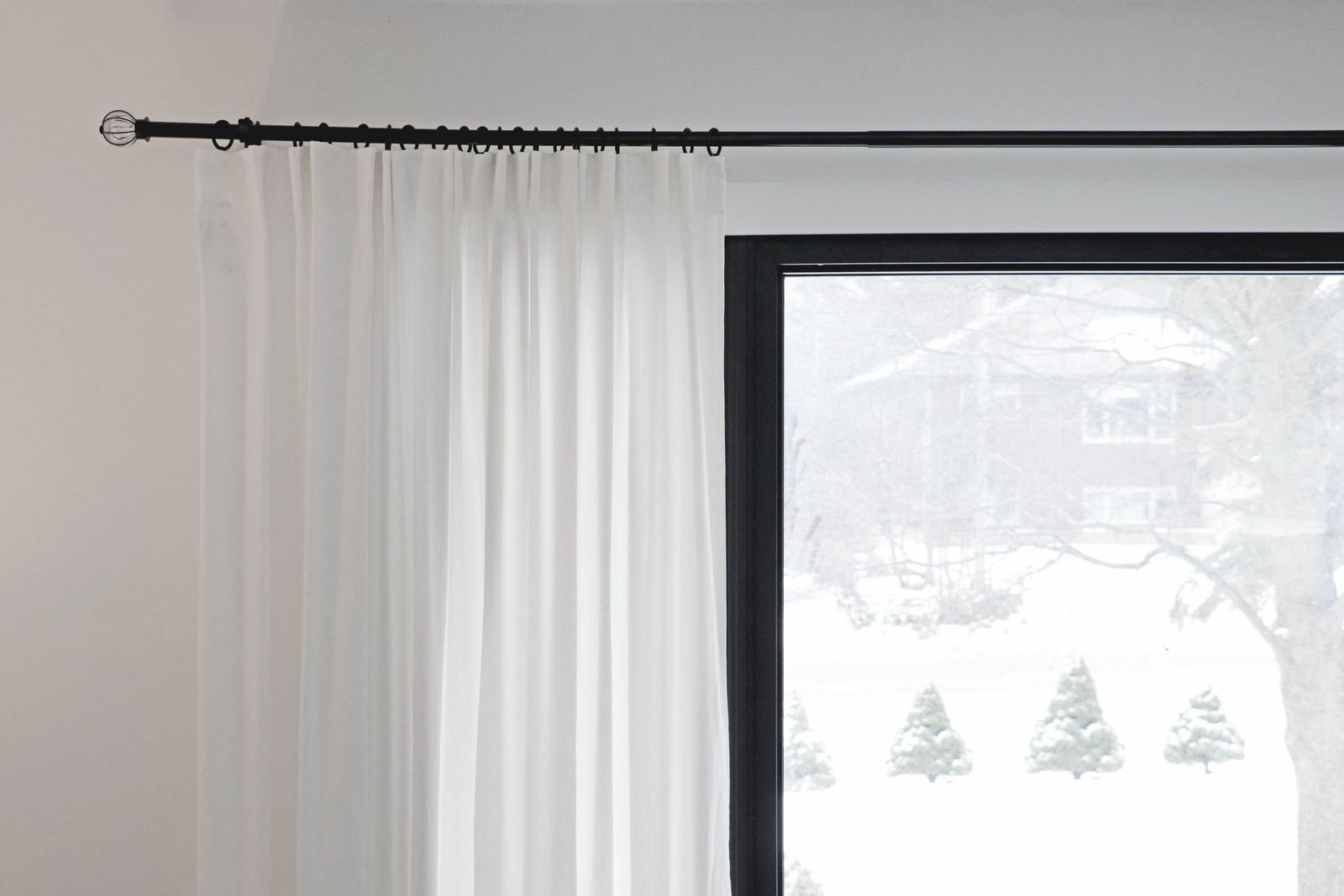
Avoid shrinking, fading, and wrinkled blackout backing
Most damage happens after you have already chosen the wrong heat. Hot water and a hot dryer shrink many curtain fabrics and can set wrinkles into a blackout layer. Stay with the temperature on the label. If the label is vague, stay cool and use low or no heat in the dryer, or skip the dryer.
Do not use bleach on blackout coatings. Do not use bleach on a panel unless the label clearly allows it for that fabric, and even then it is usually the wrong tool for a coating you want to keep smooth. A stained heading or a yellowed lining is not a reason to invent a stronger mix.
To reduce fading and abrasion, turn panels inside out if they will still move freely in the bag or the drum, and avoid overloading. Do not leave wet panels sitting in a warm machine after the cycle ends. Pull them out promptly so folds do not dry in place and so a damp blackout layer does not stay creased.
Do not iron a blackout backing unless the maker or the care label clearly says you can, and never with high heat on the coated side. Many wrinkled backings relax once the panel is hanging again. If a face fabric needs a light steam, test a hidden hem first and keep the iron or steamer off the coating.
Dry without mildew, then rehang so the panels hang straight
Damp curtains in a small apartment can mildew if they stay bunched in a bag, a basket, or a closed bathroom. Dry them as soon as the wash ends. If the label allows a dryer, use a low or no-heat setting and stop while the panels are just dry or still slightly damp, rather than baking them on high. High heat is how shrinkage and a wrinkled backing show up after an otherwise careful wash.
If the label says do not tumble dry, or the shared dryer is too hot to trust, hang the panels to dry with air all around them. A drying rack, a clean shower rail that can take the weight, or a sturdy indoor line can work if you spread the fabric and give the room some airflow. Do not hang dripping-heavy panels on a weak rental rod that could pull out of the wall. Do not leave a wet pile on the bed or the floor overnight.
When the panels are dry, or still barely damp if the label allows you to hang them that way, put the hooks or rings back in the same heading pockets and hang each panel in its original place. Smooth the heading with your hands, line up the pleats or the gathers, and let the length drop evenly. Most everyday wrinkles hang out in a day or two. Resist the urge to yank a hem or pin a new length unless the curtains are yours and you intended to alter them. Landlord panels should go back as they came down.

A curtain-washing checklist for an apartment laundry room
Use this before you take the panels down, and again before you start the machine:
- I have read the care label, and I am following the wash, bleach, and heat instructions on it.
- If the curtains belong to the landlord, I have checked the lease or had a clear yes before washing or altering them.
- Hooks, rings, and loose weights are off the panels and in a bag, and I know which panel hangs where.
- Only label-approved panels are going in a gentle, uncrowded cycle; the rest will be hand-washed or spot-cleaned, with no bleach on blackout coatings.
- I have a plan to dry the panels promptly with low or no heat, or by hanging them with airflow, and to rehang them in the same positions so they hang straight.

How to choose—and how to apply it
The calm way to wash curtains in an apartment laundry room is to let the care label set the method, and to treat a shared machine as a gentle tool rather than a default. Confirm who owns the panels, use a gentle cycle only when the label allows it, and keep heat and bleach away from fabrics and blackout coatings that cannot take them. Dry the panels with air and low or no heat so they do not mildew in a small apartment, then rehang them in the same hook positions so they hang straight. You need clean, even panels back on the rod, not a harsher process invented in the laundry room.
FAQ
How do you wash curtains in an apartment laundry room?
Read the care label, remove hooks and rings, and use a gentle, uncrowded cycle only if the label allows it. Hand-wash or spot-clean panels that say so. Skip bleach on blackout coatings, dry the fabric promptly with low or no heat or by hanging it with airflow, and rehang the panels in the same positions.
Can I put blackout curtains in the washing machine?
Only if the care label clearly allows a machine wash. Many blackout panels need a gentle cycle, no bleach, and low or no heat, and some should only be wiped or spot-cleaned. A wrinkled, cracked, or peeling backing is usually the result of heat or a harsh wash, not a reason to try bleach.
How do I dry curtains in a small apartment without mildew?
Do not leave damp panels bunched in a machine, a bag, or a closed room. If the label allows a dryer, use low or no heat and do not overdry. Otherwise hang the panels with air around them, support the weight, and keep some airflow in the room until they are dry.
The curtains belong to the landlord. Can I wash them?
Check the lease, and ask before you take them down, wash them, or alter hems or hooks. If the agreement says the landlord handles window treatments, wait for permission. A shrink or a damaged heading on panels that are not yours is a problem you do not want to create.
How do I rehang panels so they hang straight?
Put the same hooks or rings back in the same heading pockets and hang each panel in its original place. Smooth the heading with your hands and let the length drop evenly. Most wrinkles hang out; do not iron a blackout backing unless the label clearly allows it, and do not change the hem on landlord curtains.


