

Best Compact Washer-Dryer Combo Units for Small Apartments
Some apartments can take a full, side-by-side washer and dryer pair. Many cannot. If the only leftover space is a bathroom alcove, a closet, or a short utility wall, a compact combo that stays in the home may be the laundry setup that actually fits. The best compact washer-dryer combos for small apartments are not the largest machines with the most cycle names. They are the units that match your hookups, your floor, your venting options, and a load size you will really wash.
This article is about an all-in-one washer-dryer or a stacked combo unit that remains in the apartment. It is not a guide to a portable or roll-away mini washer, a standalone dryer, or line-drying. Best Portable Washing Machines for Small Apartments, Best Clothes Drying Racks for Small Apartments, and How to Dry Clothes in a Small Apartment Without a Dryer cover those other paths. Use them if you cannot install a staying combo. Use this article if you are choosing a combined unit that will live in the home.
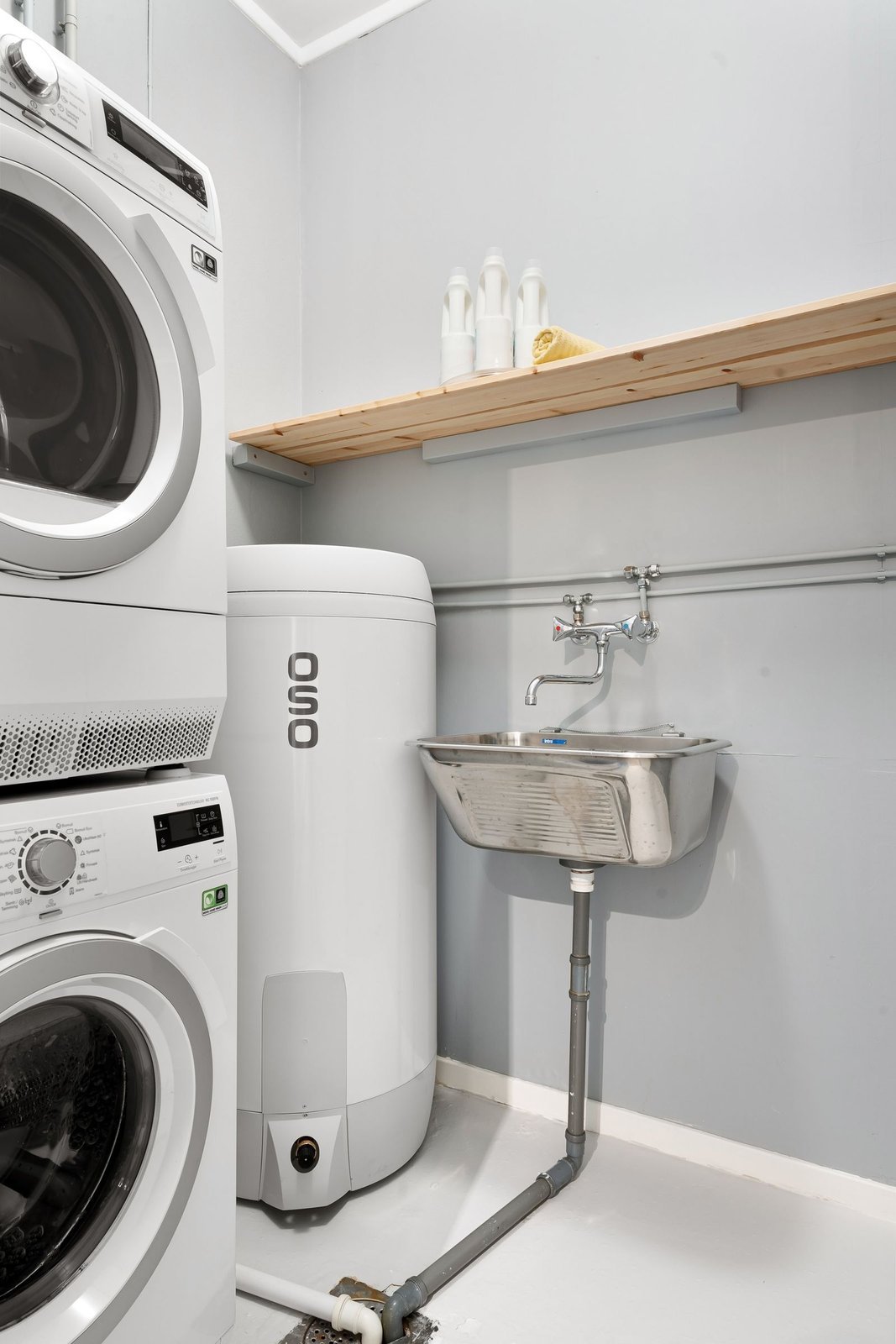
A combo is either one machine that washes and then dries in the same drum, or a compact stacked pair in which the dryer sits on the washer in one footprint. Both can work in a tight apartment. Both ask you to be honest about capacity, drying time, noise, and what your building will allow you to hook up.
When a combo unit makes sense
A combo makes sense when you have a legal water supply and drain, power that matches the machine, and a space that can hold the unit without blocking a door. It also makes sense when you lack the width for two full-size machines side by side, but you have the height for a stack or the depth for an all-in-one. If you only have a hallway outlet and a bathtub, a staying combo is not the next step.
Measure the alcove or closet, including the door swing, the shutoff valves, the drain height, and the space above for hoses and a vent if you need one. Leave room to pull the unit out a little for a clogged filter or a hose check. How to Organize a Laundry Closet or Washer-Dryer Nook in a Small Apartment is the guide for shelves and hampers around a nook once the machine is chosen. First, confirm that a combo can sit there at all.
An all-in-one unit is simpler in footprint: one door, one set of hookups, one cycle that can go from wash to dry. A stacked compact pair can give you a more familiar wash-then-dry split and, in some setups, a little more drying power, but it needs height, a safe stacking kit or a designed column, and often a vent decision for the dryer. Neither type is a full separate pair. If your lease or your building only allows a portable unit, stop here and use the portable-washer article instead.
A combo is also a time choice, not only a space choice. In-unit laundry can beat a shared basement if you wash often. Apartment Laundry Routine: A Simple System That Fits Shared Machines is the shared-laundry plan. A combo at home still needs a routine: smaller loads, longer dry times, and a hamper that does not overflow while a cycle finishes. Best Laundry Hampers for Small Apartments and How Often to Wash Sheets and Towels: A Practical Laundry Schedule for Small Homes can help you size the habit to the machine.

Venting, capacity, and the slower dry
Venting is the first technical filter. A vented dryer needs a proper exhaust path to the outside, or to a building-approved vent, and you usually cannot invent that in a rental closet. Many compact combos and almost all all-in-one units sold for apartments are ventless. They condense or use heat-pump drying and drain the moisture through the same drain line or a tank you empty. Ventless is often the only honest option in a unit without a dryer vent. It also tends to dry more slowly and can leave a bathroom warmer and more humid if the room has no exhaust fan.
Read the installation requirements, not the marketing word “ventless” alone. Some machines still want a louvered door, a minimum clearance, or a drain that can take condensate. If your closet is sealed and unvented, even a ventless combo can make the space damp. A bathroom with an exhaust fan is often a better home than a closed wardrobe.
Capacity is the second filter, and it is easy to overread. A compact combo’s “family” or “large load” claim is often smaller than a full-size pair in a house. The wash drum may take a modest load, and the dry cycle may handle even less, especially in an all-in-one that has to dry what it just washed in the same drum. If you regularly wash bulky bedding, check whether the unit can dry a duvet at all, or whether those items will still need a laundromat or a rack. Plan around the smaller of the wash and dry capacities, not the bigger number on the box.
Drying time is the trade many compact combos make. A wash may finish in a normal window, then the dry can run much longer than a full vented dryer. That is normal for many ventless and all-in-one units, not a defect you can “fix” with a hotter setting. If you need clothes back in an hour, a compact combo may frustrate you. If you can start a cycle and let it finish while you are home or at work, the slower dry is often acceptable. Finish-ironing and wrinkle release are separate jobs; Best Compact Irons for Small Apartments and Best Garment Steamers for Small Apartments cover those, not the combo itself.
Hookups, vibration, and noise on an upper floor
Hookups decide more than the brochure does. You need a supply of the right temperature, a drain that can take the discharge, and an outlet of the correct type and amperage. Some compact units use a standard household outlet; others want a dedicated circuit. Do not guess, and do not force a dryer plug into a kitchen outlet with an adapter. If you are renting, ask the landlord in writing what hookups exist and whether a staying combo is allowed before you buy or move a machine.
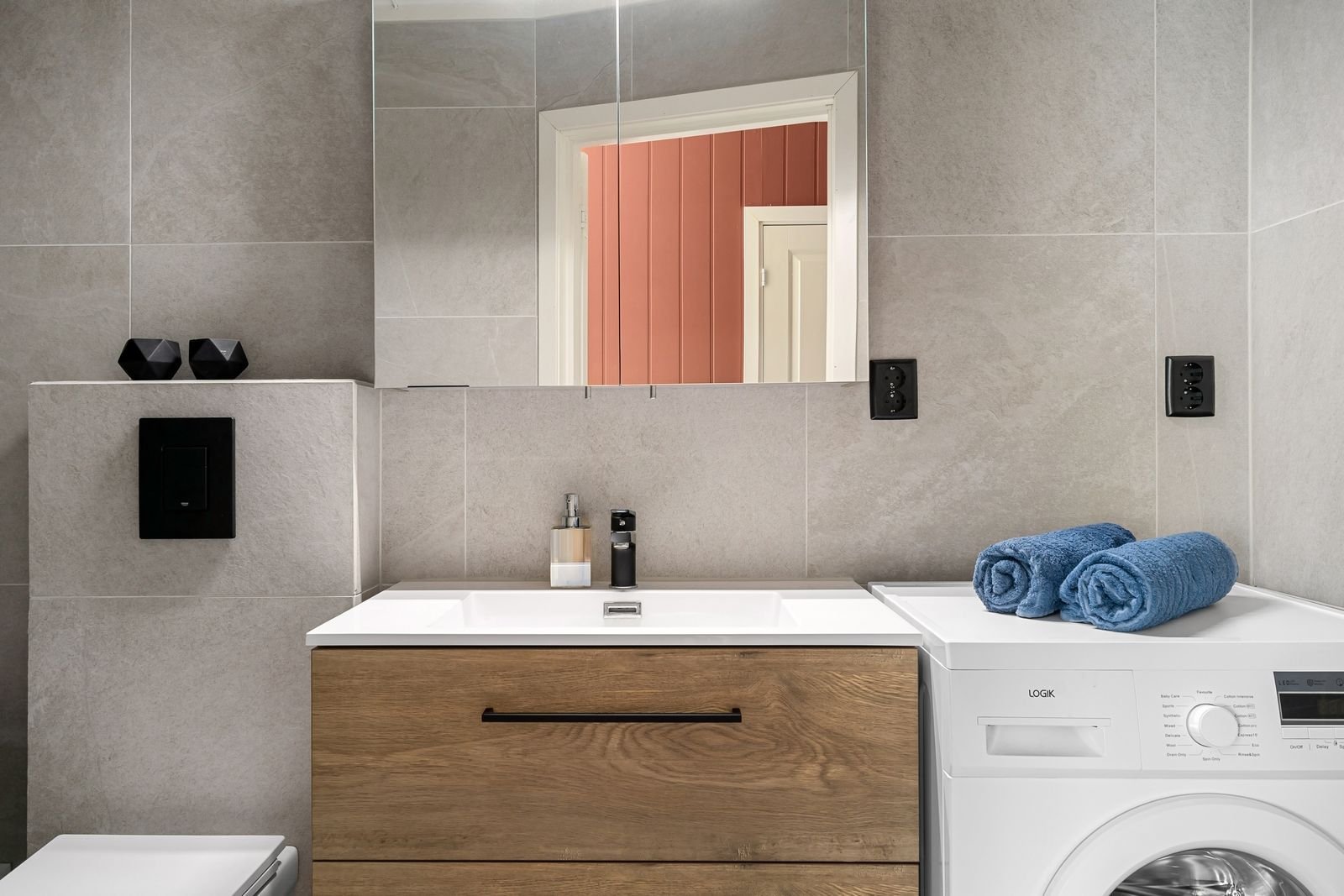
The photos in many listings show a clean stack in a tiled bath. That is useful as a space example, but it does not tell you whether the floor can take the vibration. On an upper floor, a poorly leveled combo can walk, rattle, and bother the neighbor below. Use a level, adjust the feet, and keep the machine on a solid, even floor. A thin, bouncy subfloor is a reason to be cautious, not a reason to skip leveling. Anti-vibration pads can help a little; they do not replace a machine that is sitting on three feet.
Noise matters in a studio or a bedroom wall. A spin cycle at night in a one-room home is a different experience than a basement laundry. Listen for spin noise and for the longer dry cycle, not only the wash chime. If the only place the combo can live is on the other side of a bedroom wall, a quieter, better-leveled unit matters more than an extra program.
Leave lint filters, condensate drawers, and hoses where you can reach them. If you cannot service the machine in that nook, the nook is too tight.
How to choose — hookup, capacity, venting, and noise
Choose the type first: an all-in-one if you have one footprint and want a single hookup, or a stacked compact pair if you have the height, a safe stack, and a dryer plan that your venting can support. Then match venting to the room you actually have. If there is no exterior vent, look at ventless models and at whether the bathroom or closet can handle the humidity.
Match capacity to your real loads, including the slower, sometimes smaller dry. If you are often washing towels and sheets, assume you will run more frequent, smaller loads rather than one oversized weekend batch. If the unit cannot dry what it can wash, you will still need a rack or a laundromat for part of the work.
Match the hookup and the floor next. Confirm water, drain, and power with the landlord. Confirm that you can level the machine on an upper floor and that the spin will be tolerable in the room where it must live. Finally, check that you can reach filters and hoses, and that you can take the unit with you if the lease ends, or leave it only if that was agreed.
A combo is the right appliance when hookup, capacity, venting, and noise all pass. It is the wrong one when you hope it will behave like a full, fast, vented pair, or when the only space you have cannot support a staying machine.

Practical takeaways
The best compact washer-dryer combos for small apartments are the ones that fit the hookup, the venting, the floor, and a load you will actually dry.
- Choose a staying all-in-one or a stacked combo only if the apartment can support it; do not treat a portable washer or a drying rack as the same appliance.
- Confirm water, drain, and power — and get landlord approval — before you buy or move a unit in.
- Match ventless or vented to the room you have; many apartment combos are ventless and dry more slowly.
- Size the machine to the smaller of wash and dry capacity, not the marketing load.
- Level the unit carefully on an upper floor, and pay attention to spin noise if you live in one room.
- Leave clearance to reach filters, hoses, and the drain.
A compact combo can replace a trip to a shared laundry room, but it cannot ignore hookups, humidity, or a slow dry. Choose it for the space and the service it can honestly provide, not for a brochure load it will not finish in an hour.
FAQ
What is the difference between an all-in-one combo and a stacked pair?
An all-in-one washes and dries in the same drum, in one cabinet, with one set of hookups. A stacked combo is a washer with a dryer on top, in one footprint, and it needs height and a safe stack. Both are staying in-home combos, not portable washers.
Do compact combos need a dryer vent?
Some stacked dryers are vented and need a proper exhaust. Many compact and all-in-one units are ventless and drain moisture through a condensate system. Check the specific machine and the room; you usually cannot add a vent in a rental closet.
Why does a compact combo take so long to dry?
Ventless and all-in-one drying is often slower than a full vented dryer, and the dry load may be smaller than the wash load. That is a common trade for a machine that fits an apartment, not always a sign the unit is broken.
Can I put a combo on an upper floor?
Often yes if the floor is solid, the machine is leveled, and the building allows it. Vibration and spin noise are the risks. Use the feet, check for walking, and talk to the landlord if the floor feels springy.
Is a portable washer the same as a compact combo?
No. A portable or roll-away mini washer is a different product, usually without a built-in dryer, and it is covered in a separate guide. This article is for a combined washer-dryer that stays hooked up in the home.


