How to Clean a Refrigerator in a Small Kitchen
A compact fridge still spills, sours, and collects crumbs on the door seals, and in a small kitchen those jobs have to happen without taking over the only counter or soaking the floor. Learning how to clean a refrigerator in a small kitchen is a practical clean-out: empty and sort without covering the worktop, wash shelves and drawers in a small sink, wipe the seals, and handle spills and smells without flooding the room. It also covers how often a deep clean is worth doing, and how to keep the fridge running while shelves are in the sink.
This is not a guide to where food lives, or to using food up before it spoils. Those plans are in How to Organize a Small Apartment Fridge, How to Store Leftovers in a Small Kitchen, and How to Reduce Food Waste in a Small Kitchen. Buying a second compact fridge is in Best Mini Fridges for Small Apartments. This article is the actual wash. Cleaning the microwave or a rental oven is a separate job, as in How to Clean a Microwave in a Small Kitchen and How to Clean a Rental Oven and Stovetop Without Damage.
How often a deep clean is worth doing
A small fridge does not need a weekly teardown. It does need a short wipe when something leaks, and a deeper clean when shelves are sticky, a smell lingers, or you can no longer see what you own. For many households, a thorough clean every one to three months is enough, plus a quick wipe when a jar leaks. If you cook a lot, or if produce often wilts in the drawers, clean sooner. If the fridge is lightly used and stays dry, you can wait longer. There is no medical schedule here, and no sanitizer “kill rate” to chase.
A deep clean is worth the disruption when you can set aside one short block of time, have a place for the food while shelves are out, and can get the shelves back in before anything that must stay cold sits too long. It is not worth pulling every shelf on a busy weeknight if a targeted wipe of one spill would do.
Empty and sort without covering the only counter
The worktop in a small kitchen is also the landing space for dinner. Do not turn the entire counter into a fridge dump. Work in stages: pull one shelf or drawer at a time, sort that food, and only then move on.
A practical sort looks like this:
- Throw out food that is spoiled or past a date you actually trust, according to the label and your own judgment. This is not a food-safety certification.
- Group leftovers and open items you will eat soon, using containers you already have. Best Meal Prep Containers for Apartments: What to Buy for a Tiny Fridge can help if leaky containers are part of the mess, but you do not need a new set to clean today.
- Park the keepers in a cooler bag or a clear zone on the table — not spread across the only cutting board. If you have no second surface, use a tray on a chair, then return the tray when you are done.
- Do not overstock the fridge as you put food back. How to Stock a Small Kitchen Without Overbuying is the upstream habit; the clean is easier when the box is not packed to the door.
A packed interior is often why a fridge smells and why shelves are hard to wash.
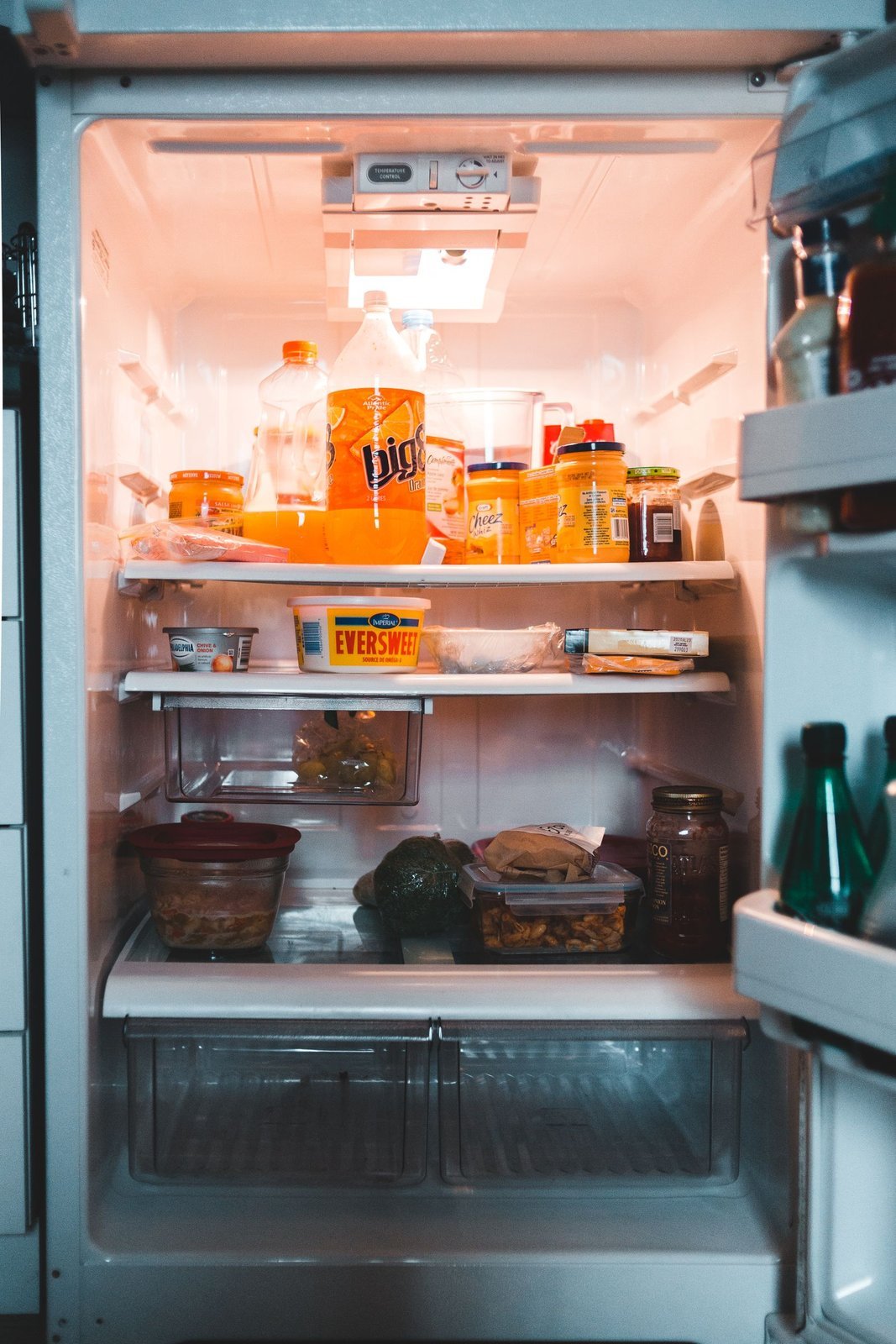
Keep the fridge running, and unplug only if you can do it safely
You usually do not need to shut the fridge down for the whole clean. Leave the unit running, take out one shelf at a time, wash it, dry it, and put it back. The door should stay closed as much as you can between steps, so the box does not warm up while a shelf sits in the sink.
Unplug only if you can do it safely and the fridge will not be off long enough to spoil food. That means you can reach the plug without yanking the unit by the cord, you have a plan for perishable food, and you will not leave the fridge off while you run errands. If the plug is behind the fridge and you would have to drag the appliance, skip unplugging and work with the door closed between shelves. Do not pull a fridge out by the door, and do not leave a pulled-out unit blocking an exit.
If you do unplug, keep the door closed until you are ready to work, move perishable food into a cooler, and plug the fridge back in as soon as the interior is dry enough to reload. This is not a warrant that food will stay safe for a set number of hours; when in doubt, keep the fridge running.
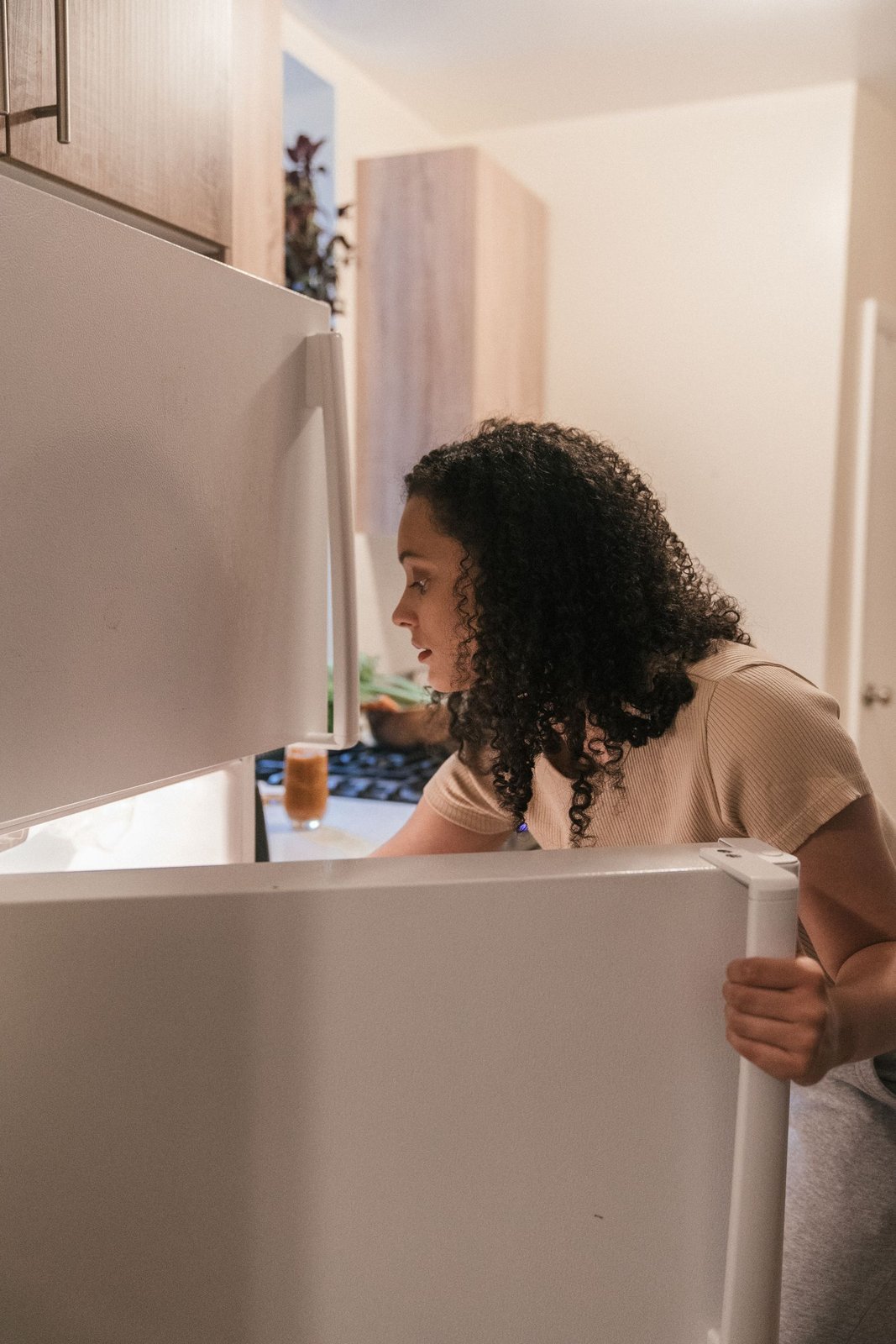
Wash shelves and drawers in a small sink
Check the maker’s guidance before you remove a glass shelf. Some shelves lift out; some are locked on tabs; some are not meant to come out at all. If a shelf feels stuck, stop rather than flexing the glass. Do not force a cracked shelf, and do not stand a wet glass shelf on its edge on the floor where it can slip.
Wash what you can remove in a small sink, the same way you would wash a heavy dish when you have no dishwasher, as in How to Wash Dishes in a Small Kitchen Without a Dishwasher. Use warm water and a mild dish soap. Do not use harsh oven cleaner inside a fridge, on a shelf, or on a door seal. Oven cleaner is the wrong product for this surface, and it can damage plastic and leave a residue you do not want near food. A soft cloth or a non-scratch sponge is enough. Rinse, then dry the shelf completely before it goes back, so you are not dripping into the fridge or the floor.
Work over the sink, not over the only stretch of floor. A towel on the closed dishwasher, if you have one, or on a nearby stool, can hold a dripping shelf for a moment, but do not flood the floor. Empty a crisper drawer of liquid before you lift it, and wipe the rails inside the fridge before the drawer goes back.
Door seals collect crumbs and sticky residue. Wipe them with a damp cloth, including the folds, and dry them so the door can close cleanly. A dirty seal is often why a door does not sit flush, and why a smell returns. You do not need a special gel or a medical disinfectant for this wipe.

Spills, smells, and the floor you should not soak
Wipe a new spill as soon as you see it, including the shelf below and the door bin if it ran. For an older, dried spill, loosen it with a warm, damp cloth rather than a flood of water. Baking soda on a damp cloth can help with a lingering odor on a shelf or in a drawer; this is a household wipe, not a medical claim, and it will not “kill” bacteria on a guaranteed schedule. If a smell remains after a clean, check the drain or the back of a drawer for a forgotten leak, throw out the food that is the source, and leave an open box of baking soda only if you want a simple odor absorber — not as a substitute for finding the spill.
Cooking smells in the room are a different problem from a sour fridge. How to Get Cooking Smells Out of a Small Apartment is for the air in the home, not for a fridge interior.
Do not pour a bucket of water into the fridge, and do not mop the kitchen floor as part of the fridge job unless you actually spilled. Water under a fridge or along a rental floor is a problem for the unit and for the downstairs neighbor. If you did spill a lot, wipe it up, keep people from walking through it, and let the area dry.
When the shelves are back, reload in a way you can see and reach, then wipe the exterior if fingerprints bother you. The outside of a large stainless door can be wiped with a damp cloth, as in the photo of a French-door fridge above; that is a surface wipe, not proof that your compact unit looks the same. Finish by checking that the door closes fully and the seal sits flat.

Practical takeaways
- I empty and sort one shelf at a time, so the only counter is not covered with the entire fridge.
- A deep clean is worth doing every one to three months, or sooner after a leak or a lingering smell, not on a fixed medical schedule.
- I keep the fridge running while shelves are in the sink when I can, and I unplug only if I can do it safely and the fridge will not be off long enough to spoil food.
- I check the maker’s guidance before removing a glass shelf, wash with mild soap, and do not use harsh oven cleaner inside a fridge.
- I wipe door seals and spills without soaking the floor, and I do not invent a sanitizer kill rate or a medical claim.
- Food goes back in a way I can see, not packed until the door barely closes.
How to clean a refrigerator in a small kitchen—and how to apply it
The calm way to clean a refrigerator in a small kitchen is to treat it as a short, staged wash, not as a project that takes the whole room. Sort one shelf at a time, wash and dry what you can remove in the sink, wipe the seals, and keep the fridge running unless you can unplug it safely for a short time. A compact rental fridge gets clean the same way a larger one does, with less counter, a smaller sink, and care for the floor.
FAQ
How do you clean a refrigerator in a small kitchen?
Empty and sort one shelf at a time so the only counter stays usable, wash removable shelves and drawers in the sink with mild soap, wipe the door seals, and dry everything before it goes back. Keep the fridge running if you can, and do not flood the floor.
Should I unplug the fridge to clean it?
Only if you can reach the plug safely and the fridge will not be off long enough to spoil food. In many rentals it is calmer to leave the unit running, work one shelf at a time, and keep the door closed between steps.
How often should I deep-clean an apartment fridge?
When shelves are sticky, a smell remains after a wipe, or you cannot see what you own — often every one to three months, plus a quick wipe after a leak. This is not a medical timetable.
Can I use oven cleaner or a strong disinfectant inside the fridge?
Do not use harsh oven cleaner inside a fridge. Wash with warm water and mild dish soap, and follow the maker’s guidance for any other product. This guide does not invent sanitizer kill rates or a medical claim.
What if a glass shelf will not come out?
Check the maker’s guidance and stop if the shelf feels locked or stuck. Do not flex glass over a hard floor. Wipe the shelf in place if you cannot remove it safely.