How to Furnish a Small Bedroom With No Space for Nightstands
Some small bedrooms have a few inches for a skinny nightstand. Others do not. When the bed fills the wall, and the remaining strip is a walkway or a door swing, a table beside the mattress will only pinch the room. You still need a place for a lamp, a phone, a glass of water, and a book. If you want to furnish a small bedroom with no space for nightstands, the job is to give those objects a stable home that does not block the path. The test is simple: can you set a glass down and turn out the light without climbing over a piece of furniture, and can you walk to the door in the dark?
This is not a product guide for a nightstand you might squeeze in. Best Nightstands for Small Bedrooms is the article for when you do have room. Here, assume you do not. The layout of the bed still matters, because a few inches of clearance can decide whether a stool or a dresser can work at all. How to Arrange Furniture in a Small Bedroom can help you place the bed so a walkway stays honest. This article is about the surface that replaces the nightstand once the bed is where it has to be.
The room should also still feel like a bedroom, not a storage locker. How to Make a Small Bedroom Feel Bigger Without a Reno covers visual space. Keep the replacement surface slim, keep the floor as clear as you can, and put only what you need at night within reach.
A shelf, a ledge, or a headboard that holds the night things
A rental-safe leaning shelf or a narrow wall shelf can take the place of a table if it is sturdy and sits close enough to the pillow that you can reach a glass without standing up. A leaning ladder shelf that rests on the floor and against the wall, without screws, is often the easiest renter option, provided it cannot tip and the floor is level. Put the night items on the rung or shelf closest to the pillow, and keep heavier objects low. Do not improvise a heavy shelf on weak hooks or on a crumbly wall. If you need to fix something into the wall, use a method your lease allows, or skip the wall and use a floor-standing piece instead.
A window ledge can work if it is wide, stable, and close to the head of the bed. Books, a small lamp, or a phone can sit there if they cannot be knocked into the gap behind the bed or onto the floor. Do not use a thin, sloped, or damp sill as a drink stand. If the window is the only source of drafts, keep water off the ledge and use a tray so a spill is easy to wipe. A ledge is a bonus surface, not a promise that every window can be a table. If the bed has to sit a few inches off the window wall so a radiator or a curtain can work, the sill may be too far to be useful, and a stool or a caddy will be better.
A headboard with storage can hold a book, a phone, and sometimes a small light, which is useful when both sides of the bed are blocked. How to Create a Rental-Friendly Headboard Without Damaging Walls is today’s midday article for a headboard you can add without harming the wall; do not treat this section as a second version of that guide. If you already have a storage headboard, use the shelf or pocket for night items and keep the walkway free of extra tables. Best Bed Frames with Storage for Small Bedrooms is the buying guide for frames with drawers; those drawers are for clothes and bedding, not for a glass of water.
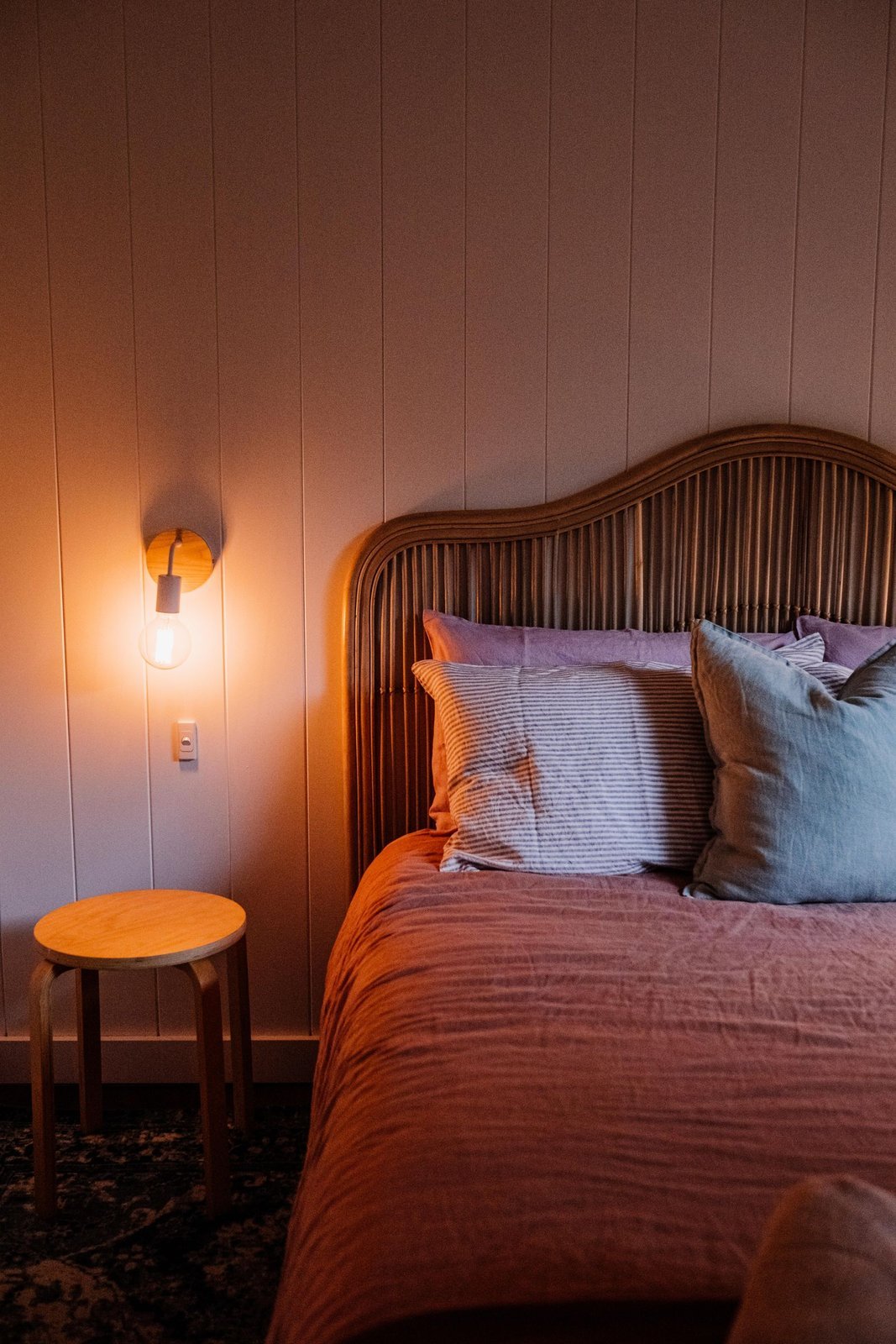
A stool, a bed caddy, or a dresser used from the side
A slim stool or a narrow bench that tucks under the bed edge, or slides in when you walk past, can hold a lamp and a phone if it is stable and does not tip. Choose a piece with a flat, level top, and put a small tray on it if you also want water. The stool should be light enough to move with one hand, and it should not become a dumping ground for laundry. When you are not in bed, tuck it so the walkway opens again. If the stool wobbles on an uneven floor, a folded felt pad under one leg is safer than stacking books under a lamp.
Best Desk Lamps for Small Apartments: Bright Light Without Wasting Space can help you choose a compact lamp that is stable on a small stool or a shelf. A clamp light or a wall-mounted sconce, if your lease allows it or if it leans or clamps without damage, can free the stool for the phone and the glass. Do not perch a wobbly lamp on a round stool without a tray or a wide enough base.
A bed caddy or a bedside pocket that slides under the mattress or hangs from the frame can hold a book, glasses, and a phone when there is no floor space at all. Pick one that stays put when you turn over, and keep liquids out of it. A pocket is for dry items. Water still needs a stable, wipeable surface, even if that surface is a window ledge or a stool you pull out only at night. If you share the bed, one pocket per person keeps chargers and glasses from migrating into the same tangle in the middle.
A dresser can replace a nightstand if you can reach the top from the bed, or at least from a seated position at the side, without blocking the door. Best Dressers for Small Bedrooms is the buying guide for the piece itself. For this layout, the useful test is reach and clearance: if the dresser sits on the adjacent wall and you cannot set down a glass without getting out of bed, it is a clothes chest, not a nightstand substitute. If it can live at the foot or the open side of the bed with a lamp on the end, and you can still walk past, it can do both jobs. Leave a clear rectangle on the top, the size of a book and a glass, and do not fill the surface with frames and trays until there is no landing spot at night.
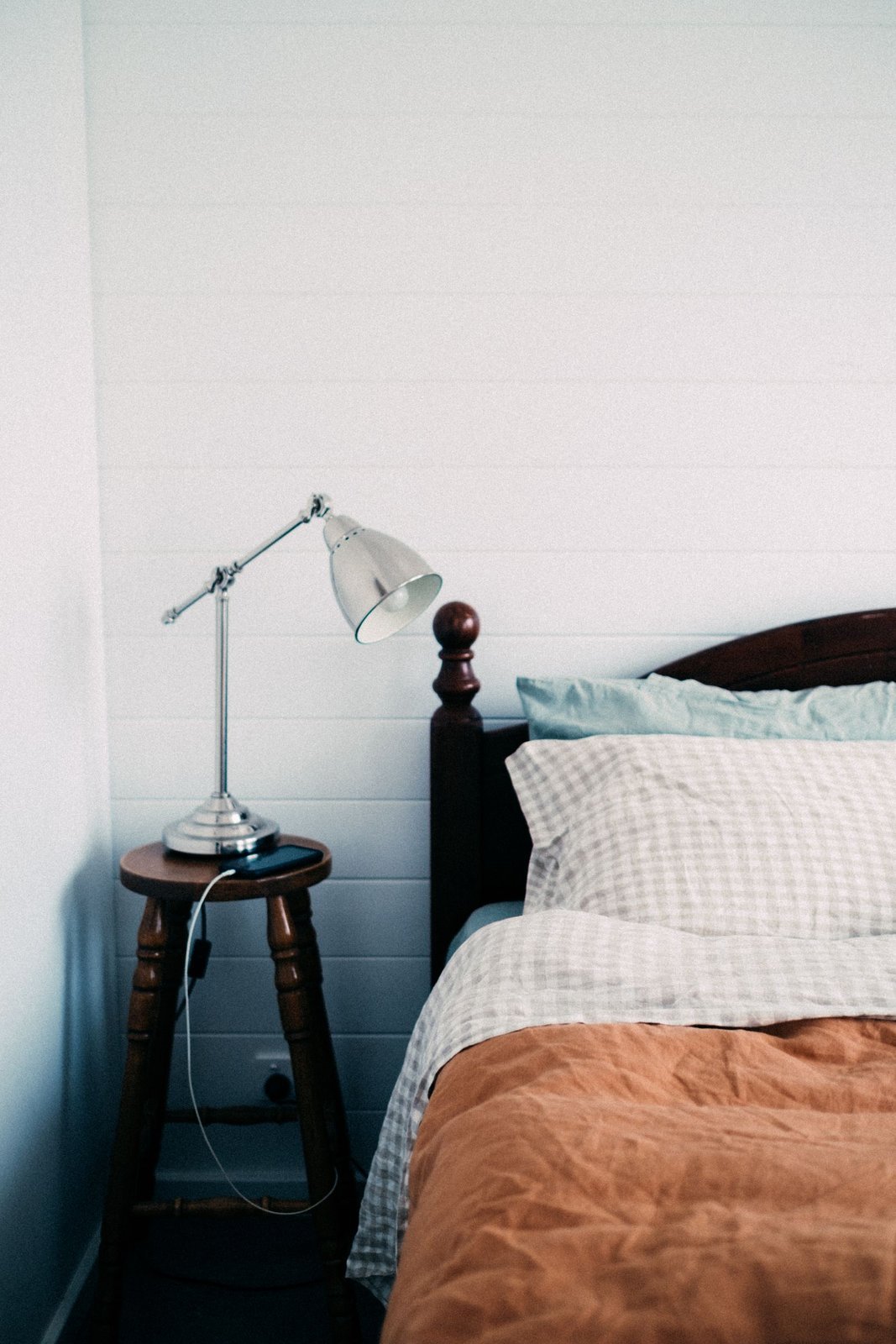
Keep the walkway clear, especially if you share the room
The walkway is the reason the nightstand did not fit, so do not give that space back to a cluttered stool, a leaning pile, or a dresser that sticks into the path. Leave enough room to get in and out of bed, open a closet, and reach the door in the dark. If you have to sidestep every morning, the replacement surface is too large or in the wrong place. Measure the aisle with the stool or dresser in its nighttime position, not only when it is tucked away for a photo.
If you share the bedroom, both people need a reachable surface or a pocket, even if they are not matching. How to Share a Small Bedroom with a Partner covers the wider sharing plan. For nightstand-free layout, that might mean a shelf on one side and a caddy on the other, or one window ledge and one stool. Agree that the walkway stays clear, and that laundry does not land on the only bedside surface.
A getting-ready corner can also absorb some of what used to live on a nightstand, such as jewelry, lotion, or a second charging cable, so the bedside surface stays small. How to Set Up a Getting-Ready Corner in a Small Bedroom is the article for that zone. Use it for morning things; keep the nighttime items at the pillow. If the room has no closet, clothes storage is a separate problem. How to Organize a Bedroom With No Closet covers clothes. Do not solve a missing closet by stacking clothes on the stool you need for a lamp.
Charge phones on a stable surface, and keep cords from crossing the walkway. A small hook or a clip on the side of a dresser, if it does not damage the piece, can keep a cord off the floor. If you need more light than a compact lamp can give, consider whether a wall light is allowed, rather than adding a second floor lamp that eats the aisle. A tripped cord in a tight bedroom is both a mess and a hazard, so route cables along the bed frame or the wall, not across the path.

Practical takeaways
You can furnish a small bedroom with no space for nightstands when each person can reach a stable place for a light, a phone, and a book, and the walkway stays open.
- Choose one replacement per side of the bed you use: a leaning or narrow shelf, a window ledge if it is stable, a tuck-under stool, a bed caddy for dry items, a reachable dresser top, or a storage headboard.
- Keep water on a level, wipeable surface, not in a fabric pocket and not on a sloped sill.
- Use a compact lamp, a clamp light, or a renter-safe wall light so the small surface is not swallowed by a large lamp base.
- Tuck or slim every piece that lives in the aisle, and do not let laundry occupy the only bedside landing spot.
- If you share the room, give each person a reachable surface and keep the path between the bed and the door clear.
A missing nightstand is a space problem, not a sign that the bedroom cannot work. A shelf, a stool, a ledge, or a headboard shelf can hold the night things if you are honest about reach, stability, and the walkway you still need in the dark.
FAQ
What can I use if there is no room for a nightstand?
A rental-safe leaning or narrow shelf, a stable window ledge, a slim stool that tucks, a bed caddy for dry items, a dresser you can actually reach from the bed, or a headboard with a shelf or pocket.
Is a stool safe for a lamp and a glass of water?
It can be, if the top is stable and level and the lamp has a solid base. Use a small tray for the glass, and tuck the stool out of the walkway when you are not in bed.
Can I use the window sill as a nightstand?
Yes if the sill is wide, sturdy, and close to the pillow, and if a glass will not slide or spill into a gap. Skip a narrow, sloped, or damp sill, and keep water on a tray.
How do two people share a room with no nightstands?
Give each person a reachable surface, even if they do not match: a shelf on one side and a caddy or stool on the other. Keep the walkway between the bed and the door clear.
Should I buy a smaller nightstand anyway?
Only if you truly have the floor space after the door swing and the walkway are counted. If a table would block the path, use one of the replacements in this article instead.