

How to Set Up a Yoga or Stretch Corner in a Small Apartment
A studio or one-bedroom rarely has a spare room for exercise. What it can have is a yoga corner in a small apartment: a clear floor rectangle, a mat you can store, enough light to use the space, and a habit of putting the corner away so the sofa path still works. The goal is not a home studio. It is a short, repeatable stretch or yoga spot you can set up and take down without remodeling the rental.
A practical setup has four parts: a mat that can be stored, a floor rectangle you can actually keep clear, lighting that makes the corner usable, and a put-away step so the living room or bedroom works again. You do not need ceiling anchors or a drilled ballet barre unless the lease clearly allows them. You need a floor plan that comes out and goes back.
This is not a reading nook, and it is not a desk. A sitting corner is in How to Set Up a Reading Nook in a Small Apartment. A work surface is in How to Organize a Work-From-Home Corner in a Small Apartment. Making a room feel larger is in How to Make a Small Living Room Feel Bigger Without a Reno and How to Make a Small Bedroom Feel Bigger Without a Reno. Furniture plans are in Studio Apartment Furniture Layout: Make a One-Room Home Feel Bigger, How to Arrange Furniture in a Small Living Room, and How to Arrange Furniture in a Small Bedroom. If you need a temporary visual split, Best Room Dividers for Studio Apartments is the divider guide. Those guides can support this plan. This article is only about a short floor space you can move in.
This is also not a workout prescription. It will not tell you which poses to do, promise pain relief, or treat advanced shapes as beginner defaults. If you have an injury, dizziness, or a condition that makes floor work risky, check with a clinician before you start. The space can still be ready. The practice itself is yours to choose, gently, or to skip.
A mat that can be stored
The mat is the whole corner, folded or rolled, when you are done. Choose a mat you can pick up with one hand and park in a slim home: a closet end, a basket, a hook the lease allows, or a narrow gap beside a dresser. You do not need a “best mat” test list or a thick competition model. You need a surface you will actually unroll, and a place it will live when the room is a living room again.
A practical mat plan looks like this:
- Keep one mat, not a stack of extras, unless you have a real second user and a real second slot.
- Roll or fold it the same way each time so it fits the slot you already have.
- Hang it only on a hook or over-the-door option the lease allows, and only if the mat is clean and dry. Do not assume you can add a ceiling hook or a wall barre.
- If the mat picks up dirt from a busy floor, a quick wipe or a shake out the door, if that is allowed, keeps it from becoming something you avoid using.
The mat should not become a permanent rug in the only walkway. If it stays out all week, people will walk on it, and the corner will stop feeling like a place you can return to.

A clear floor rectangle, not a spare room
You do not need a dedicated studio. You need a rectangle long enough for the mat, plus a little space at each end so you are not hitting a table leg or a heater. In many apartments, that rectangle is the space in front of a sofa, the foot of the bed, or a cleared patch by a window. The furniture plan for the rest of the room is already covered in the layout guides above. The yoga-corner habit is that the rectangle can be cleared in a minute or two.
A workable rectangle usually means:
- Slide a light chair or a small table aside, rather than building a permanent empty zone you cannot use for anything else.
- Keep the path to a door, a heater, and a fire-escape route clear even when the mat is down. A stretch corner is not an excuse to block an exit.
- Avoid placing the mat where a door swings over it, or where a roommate would have to step over you to reach the kitchen.
- If the only open floor is in the bedroom, that can be the corner. If the only open floor is the living room, use that, and plan the put-away step so evening seating still works.
A room divider can hide a rolled mat or mark a studio zone, but it should not steal the floor you need to lie down. Best Room Dividers for Studio Apartments is the divider itself. Studio Apartment Furniture Layout: Make a One-Room Home Feel Bigger and How to Arrange Furniture in a Small Living Room can help you leave a clear patch without pushing every piece to the walls for no reason. How to Arrange Furniture in a Small Bedroom is the bedroom version.

Lighting, and what not to attach to the wall
You need to see the floor and feel reasonably awake in the corner. Daylight from a window is enough for many people. If you practice after dark, a lamp you already own, moved a little closer, is usually better than a new fixture or a drilled wall sconce. This is not a lighting-design project, and it is not the same job as making the whole room feel bigger, as in How to Make a Small Living Room Feel Bigger Without a Reno or How to Make a Small Bedroom Feel Bigger Without a Reno.
Keep renter walls in mind:
- Do not install ceiling anchors, hanging straps from a joist you have not confirmed, or a drilled ballet barre unless the lease allows that kind of hardware and you can restore the wall.
- A removable hook or a freestanding object is the default. If you want a strap, hold it, or use a piece of furniture that is already stable, rather than trusting a weak adhesive hook with your weight.
- If you like a little privacy in a studio, a curtain or a lightweight divider can help, but it should not require masonry holes. A reading chair can sit nearby without turning this into a nook for sitting with a book, as in How to Set Up a Reading Nook in a Small Apartment. A desk should stay a desk, as in How to Organize a Work-From-Home Corner in a Small Apartment.
If you feel dizzy, short of breath, or pain that worries you, stop and check with a clinician. A corner can be comfortable and well lit without becoming a treatment plan.
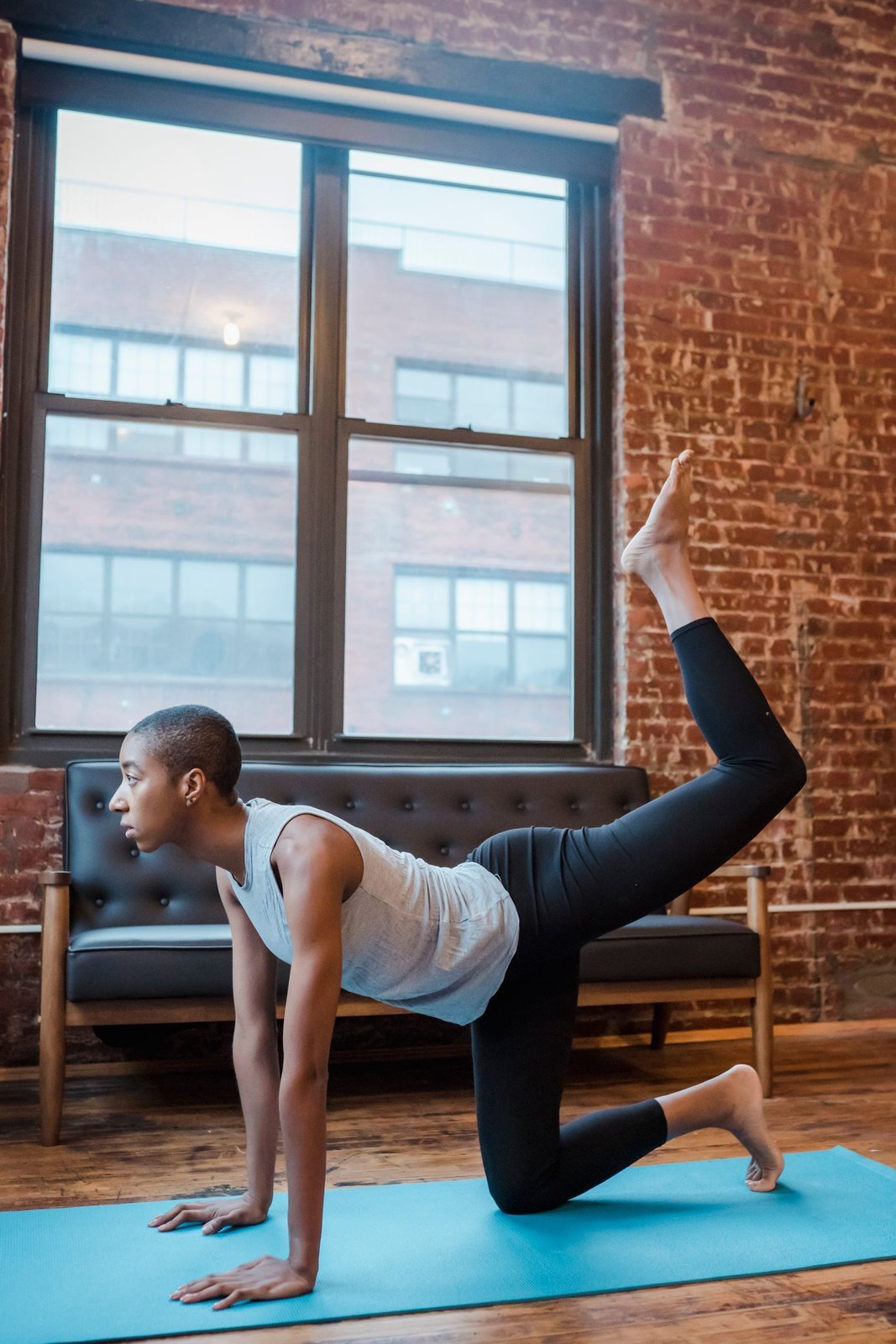
Put the corner away so the room works again
The last step is the one that makes the corner repeatable. Roll the mat, put it in its slot, and slide the chair or table back so the walkway and the sofa or bed work for the rest of the day. A mat left in the middle of a studio becomes a trip hazard and a visual pile. A corner you can reset will actually get used tomorrow.
A short put-away habit:
- Roll the mat as soon as you finish, even if you think you will come back later.
- Return any slid furniture to a place that keeps the door and the main path clear.
- Put a water glass or towel back in the kitchen or bathroom, not on the floor “for next time.”
- If you share the room, leave the floor how the other person needs it, not as an obstacle course.
The living room should still be a living room, and the bedroom should still be a bedroom. That is the point of a corner, not a spare room.

A checklist for a small-apartment yoga corner
Use this when you first pick a spot, and again if the mat starts living in the walkway:
- I have a mat I can store in a slim slot, basket, or lease-friendly hook, and I am not leaving it as a permanent rug in the only path.
- I can clear a floor rectangle in a minute or two without blocking a door, a heater, or an exit.
- Lighting is good enough from a window or a lamp I already own. I am not drilling a barre, a ceiling anchor, or a wall fixture the lease does not allow.
- I am not following this article as a medical or exercise prescription. If I have an injury, dizziness, or a condition that makes floor work risky, I will check with a clinician.
- When I finish, the mat is rolled, the furniture is back, and the room works as a living room or bedroom again.
How to set up the corner—and how to apply it
The calm way to build a yoga corner in a small apartment is to keep it small and repeatable. Choose a mat you can store, clear a short floor rectangle, use the light you already have, and put the corner away when you are done. Leave rental walls alone unless the lease allows a specific hook or rail, and treat the practice itself as something you choose carefully, not as a promise of pain relief. A tight home will not grow a spare studio. It will make room for a short stretch or yoga session when the floor can be cleared in a minute, and when it can be given back.
FAQ
How do you set up a yoga corner in a small apartment?
Clear a short floor rectangle for a mat you can store, use daylight or a lamp you already own, and put the corner away so the living room or bedroom works again. You do not need a spare room, and you should not drill a barre or ceiling anchor unless the lease allows it.
Do I need a dedicated room or a permanent empty zone?
No. A rectangle you can clear in a minute or two is enough. Slide a light chair aside if you need to, keep exits clear, and return the furniture when you finish.
Where should the mat live when I am done?
In a slim closet slot, a basket, a gap beside a dresser, or a hook the lease allows. It should not stay in the only walkway as a permanent rug.
Can I install a ballet barre or ceiling straps?
Only if the lease allows that hardware and you can restore the wall or ceiling. The default renter plan is a mat on the floor and, if you want a strap, something freestanding or handheld, not a drilled fixture.
Is this a plan for treating pain or learning advanced poses?
No. This article is about the space, not a medical or exercise prescription. It does not promise pain relief or treat advanced poses as beginner defaults. If you have an injury, dizziness, or a condition that makes floor work risky, check with a clinician.


