
How to Organize a Shared Closet for Two in a Small Apartment
One bedroom closet and two wardrobes will stall a rod faster than either person notices. Shirts mix, hangers go in both directions, and the everyday jacket both of you reach for disappears behind off-season coats. Then clean clothes land on a chair because nothing else will slide.
If you want to organize a shared closet for two, treat the closet as one shared system with clear zones, not as two complete wardrobes squeezed into the same opening. Decide what hangs and what is folded. Keep a short shared everyday section, plus a personal zone for each person. Edit what actually gets worn, and rotate seasonal pieces so the rod stays usable. A tight apartment closet cannot hold two unedited collections, and it does not become fairer when the louder pile simply takes more hangers.
This is not a solo edit of one person’s closet. That work is already covered in How to Declutter a Small Closet Without Expensive Systems. The product types a renter can add without drilling are in Closet Organizers for Renters: No-Drill Ideas That Still Look Neat. Coats that live by the door have their own plan in How to Organize a Coat Closet in a Small Apartment. Here you are only dividing one small bedroom closet between two people.
Give each person a clear zone, and name what is shared
Start with the opening you actually have: one rod, one shelf, and whatever floor or side space the closet already includes. Do not assume you can add a custom build-out, a second fixed rod, or a built-in dresser. A tension rod, a hanging shelf organizer that slips over the existing rod, or a simple fabric set of shelves can help if the lease allows temporary, no-drill additions. If those are not a fit, zones can still be created with a vertical split: left and right on the same rod, and a matching split on the shelf above.
Agree the split out loud. Equal width is a fair default when both people have a similar amount of clothing. If one person works in clothes that must be hung and the other mostly folds, the hanging length can be unequal as long as the folded shelf space balances it, and both people agree. Mark the split with a spare hanger, a small removable label, or a change in hanger color so the boundary is visible when you are putting laundry away in a hurry.
Keep a short shared section in the most reachable place, usually the front of the rod or a middle gap both of you can see. Shared means the pieces either of you might grab on an ordinary day: a bathrobe, a spare hoodie, a set of hangers for clothes that came back from the laundry together, or a bag you both use. Shared does not mean a third wardrobe. Two or three hanging spots and one shelf cubby are enough. Everything else should have an owner.
Personal space is not a luxury in a shared closet; it is how the system stays calm. Each person needs a zone they can edit without asking permission for every T-shirt. That zone should be large enough for the clothes that person actually wears in this season, not large enough for every item they have ever owned.
Decide what hangs and what is folded
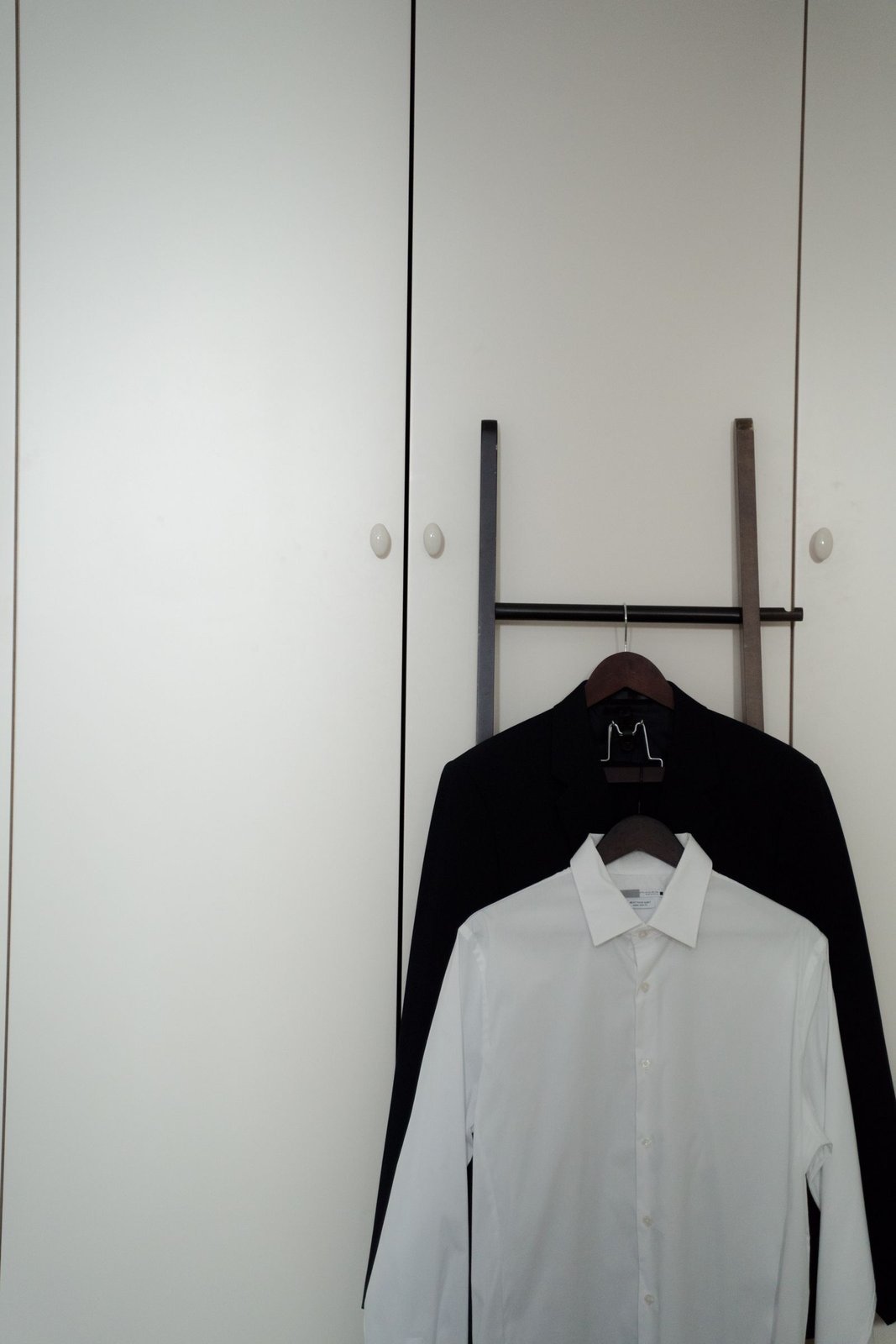
The rod is the scarce resource. Hang the pieces that wrinkle, that need to be seen to be worn, or that do not stack: button-down shirts, dresses, tailored trousers, jackets, and anything on a hanger that would slump in a pile. Fold the pieces that stack well: T-shirts, knits, sweaters, athletic wear, and jeans if you prefer them folded. If both people hang jeans, the rod will fill before the shelf does. Agree one rule and follow it on both sides, or accept that one person’s hanging habit will cost the other person rod space.
Use the same hanger style as much as you can. Mixed bulky hangers waste width and make the split look messier than it is. Thin, sturdy hangers, all facing the same way, give each zone a little more room. You do not need a branded organizing kit for that. You need a consistent hanging habit.
Folded stacks belong on the shelf, in a hanging fabric shelf if you add one, or in a dresser if the closet cannot hold them. A dresser is a support, not the subject of this plan; choosing one for a tight bedroom is covered in Best Dressers for Small Bedrooms. If sweaters are crushed on a high shelf, they are no longer a successful fold. Give bulky knits a lower, reachable stack, even if that means fewer hanging items.
Shoes can take the closet floor in a small apartment and quietly steal the walking space you need to reach the rod. Keep only the pairs you both wear with this season’s clothes, and give the rest another home. A full shoe-storage system is already covered in How to Organize Shoes in a Small Apartment. The closet-floor rule here is simple: if shoes block the hanging zones, they are no longer earning that floor.

Edit what actually gets worn, fairly
A shared closet fails when one unedited pile hides the other person’s everyday clothes. The edit has to be fair, and it has to be about wear, not about taste. Each person should go through their own zone first. Keep what has been worn in the last few weeks, or what is needed for work, weather, or a planned event. Pass on, store, or let go of what has not left the hanger in a season, unless it has a specific upcoming use.
Do the edit at the same time if you can, so the leftover space is divided honestly. If one person edits and the other does not, the emptied zone will fill again with overflow from the unedited side. A fair edit is not equal item counts. It is equal access to the clothes each person actually wears, in a closet that can close.
Be kind about “maybe” pieces. A maybe pile can live in a bag or bin for a week, off the rod. If neither of you reached for those items, they should not return to the prime hanging space. The solo method for letting go of clothes is in the decluttering guide linked above. In a shared closet, the extra step is only this: do not use your partner’s zone as the place maybe items wait.
Use seasonal rotation so the rod does not stall
Off-season clothes are the most common reason a shared closet stops sliding. Two winter coats, two sets of heavy knits, and last season’s clothes still on the rod will stall the hangers both of you need in the morning. Keep the current season in the closet. Move the rest out.
The full method for storing what is not in season is in How to Store Off-Season Clothes in a Small Apartment. Under the bed and a storage bed frame can hold those bins if the closet cannot; those options are in Under-Bed Storage Ideas for Small Apartments and Best Bed Frames with Storage for Small Bedrooms. In this closet, the rule is narrower: if a piece will not be worn until the weather changes, it should not sit in the everyday hanging zone.
Rotate together at the change of season. Bring in what you both need now, and take out what you both wore last season. If only one person rotates, the shared rod will still stall. A short shared section can hold a transitional piece, such as a light jacket, for a few weeks. It should not become a second off-season rail.

Keep the system usable after laundry day
The plan only works if clean clothes go back to the right zone. Leave a small gap in each hanging section so new laundry can slide in without a fight. Fold one person’s stack on that person’s shelf, even if you do the laundry together. A mixed pile on the shared shelf will undo the split by the end of the week.
If the closet is still too small after a fair edit and a seasonal rotation, the answer is not a custom unit you cannot install in a rental. Move folded clothes to a dresser, move off-season bins out, and keep this closet for what you both dress in now. If the door will not close, something still in it is not everyday clothing for this season.

A shared-closet checklist for two people
Use this when you first split the closet, and again at a seasonal change:
- We have named a left and right (or upper and lower) personal zone, and a short shared everyday section both of us can reach.
- We agree what hangs and what is folded, and shoes are not blocking the rod or the floor we need to stand in.
- Each of us has edited our own zone for what we actually wear now, and “maybe” items are not stored in the other person’s space.
- Off-season clothes are out of the everyday rod, and the current season can slide on the hanger.
- Clean laundry goes back to the owner’s zone, with a little gap left so the closet can still close.
How to choose—and how to apply it
The calm way to organize a shared closet for two is to split one tight bedroom closet into zones both people can see. Give each person personal space, keep a short shared everyday section, hang only what needs a hanger, and fold the rest. Edit what actually gets worn, and rotate the season so the rod does not stall. You do not need a custom build-out to make that work in a rental. You need a fair split, a current-season edit, and a habit of putting laundry back on the correct side. A small closet cannot hold two unedited wardrobes. It becomes shared when both of you can get dressed without moving the other person’s day out of the way.
FAQ
How do you split a small closet between two people?
Start with a visible left-and-right or upper-and-lower split on the existing rod and shelf, and keep a short shared section in the most reachable spot. Equal width is a fair default, but hanging space can be unequal if folded space balances it and both people agree. Use a removable marker or hanger color rather than a custom build-out.
What should be shared, and what should stay personal?
Share only the few pieces either of you might grab on an ordinary day, in two or three hanging spots or one cubby. Each person should still have a personal zone they can edit without negotiating every item. Shared should not become a third wardrobe.
Should clothes be hung or folded in a shared closet?
Hang pieces that wrinkle or need to be seen, such as shirts, dresses, jackets, and tailored trousers. Fold T-shirts, knits, and other items that stack well, so the rod stays clear. Agree one hanging-versus-folded rule, because one person’s extra hangers come out of the other person’s space.
How do you edit a shared closet fairly?
Each person edits their own zone first, keeping what is worn in the current season or needed for work and weather. Do the edit at the same time if you can, and do not park “maybe” clothes in your partner’s space. Fairness is equal access to what each person actually wears, not an identical item count.
Where should off-season clothes go if the closet is already tight?
Move off-season pieces out of the everyday rod and into bins elsewhere in the apartment, then bring in the current season together. The closet should hold what you both dress in now. A full off-season storage plan, and under-bed options, live in their own guides.


