How to Wash Kitchen Towels, Aprons, and Dishcloths After a Holiday Cooking Day
After a holiday cooking day, the towels, aprons, and dishcloths by the stove are a different laundry problem than the rest of the kitchen. They are often oily, damp, and already sitting in a heap. If they stay that way overnight, they sour quickly and the sink stays blocked. This guide is how to wash kitchen towels, aprons, and dishcloths after a holiday cooking day so those cooking textiles get into a machine, or at least onto a drying rack, before you go to bed.
This is not how to clean up the dishes, counters, floors, and trash after the meal. It is not a wash plan for tablecloths, cloth napkins, or placemats, and it is not the load of guest towels and extra bedding after overnight visitors. It is also not a dish-towel buying guide, a bath-towel odor project, or a cabinet-grease or range-hood job. Those are separate articles. The job here is narrower: get the cooking cloths sorted, washed as hot as their labels allow, and fully dry.
Do not leave a wet, greasy pile overnight
The first decision is timing. A damp, greasy towel left in the sink or in a plastic bag will smell by morning, and a wet apron bunched on a chair will stay wet in the folds. As soon as the cooking is done—or as soon as guests have food in front of them—start a small pile just for cooking textiles, not mixed with table linens.
You do not have to finish the entire kitchen first. How to Clean Up After a Holiday Meal in a Small Kitchen is the dishes-and-counters sequence. This load can start while pans are still soaking. If you only have a few minutes, rinse the worst grease off a cloth under hot water, wring it, and hang it until you can wash. Do not leave a sopping rag in a ball.
If overnight visitors also created a towel and bedding pile, keep that pile separate. How to Wash Guest Towels and Extra Bedding After Overnight Visitors is a different fabric mix, and How to Wash Tablecloths, Cloth Napkins, and Placemats in an Apartment Laundry is the table-linen load. Cooking cloths carry oil and food residue that those loads usually do not.
If the kitchen produced more cloths than one small machine can handle tonight, wash the greasiest rags first and hang the rest cleanly until the next cycle. A second short load in the morning is better than one overloaded drum that leaves everything still damp.
Sort by soil, then read the labels
Sort before you wash. Heavily soiled dish rags, the cloth you used to wipe a roasting pan, and anything stiff with gravy should not share a gentle cycle with a barely used hand towel or a linen apron with a care tag that says cool water. Make two groups: workhorse cloths that can take a hot wash if the label allows, and anything delicate, decorative, or still fairly clean.
Shake crumbs into the trash, not into the machine. If a cloth is loaded with food scraps, rinse it first so you are not washing leftovers. Check pockets on aprons. Look at care labels on aprons and any towel that is not a plain cotton work cloth. “Wash as hot as the care label allows” means follow the garment, not a one-temperature rule for every fabric.
A stained cotton dishcloth can often go hot. A waxed-canvas or leather-strap apron may need a wipe and a much gentler wash, or even a spot clean only. If you cannot find a label, choose the milder option rather than guessing at a sanitizing cycle.
You do not need a new set of towels to do this well. If you are replacing cloths that are already worn out, Best Dish Towels and Kitchen Cloths: What to Buy and How Many You Need can wait until after this load is running.
Wash hot enough, but do not overload the machine
In a small apartment, the washer—whether it is in a closet, a basement laundry room, or a shared machine down the hall—fills fast on a holiday. One stuffed load of wet towels will not rinse well and may come out still greasy. Wash a modest load of cooking textiles, or split a large pile into two shorter cycles, rather than packing the drum.
Use a regular detergent in the amount the washer or the bottle suggests for a small or medium load. You do not need a special “kitchen degreaser” product, and this guide will not invent a bleach recipe or a disinfectant protocol. If a care label allows bleach and the cloth is white cotton, that is a personal label-following choice, not a requirement. Skip anything that the label forbids.
If you are carrying a bag to a shared laundry room, keep wet cooking cloths in a washable tote, not in a sealed plastic sack for hours. Get the cycle started, then come back when it ends. A forgotten wet load in a public machine is hard on the next person and on the cloths.
Hot water helps with oily cooking residue on cloths that can take it. If the apron says warm or cold, honor that and wash it separately. If you are using a shared machine, do not leave a wet load in the drum after the cycle ends. Move it to a bag or basket and get it hanging as soon as you are home.
How to Keep Towels from Smelling Sour in an Apartment is the longer odor problem, often with bath towels that never dry. The same underlying issue applies here: a greasy kitchen towel that stays damp will sour. The fix after a cooking day is a prompt wash and a full dry, not a new fragrance product. Everyday timing for sheets and bath towels is covered in How Often to Wash Sheets and Towels: A Practical Laundry Schedule for Small Homes; this holiday load is extra, not a replacement for that schedule.
If these cooking textiles are becoming a regular add-on to your week, fold them into Apartment Laundry Routine: A Simple System That Fits Shared Machines. For tonight, the success is simpler: the greasy cloths are not still in the sink.
Hang until fully dry
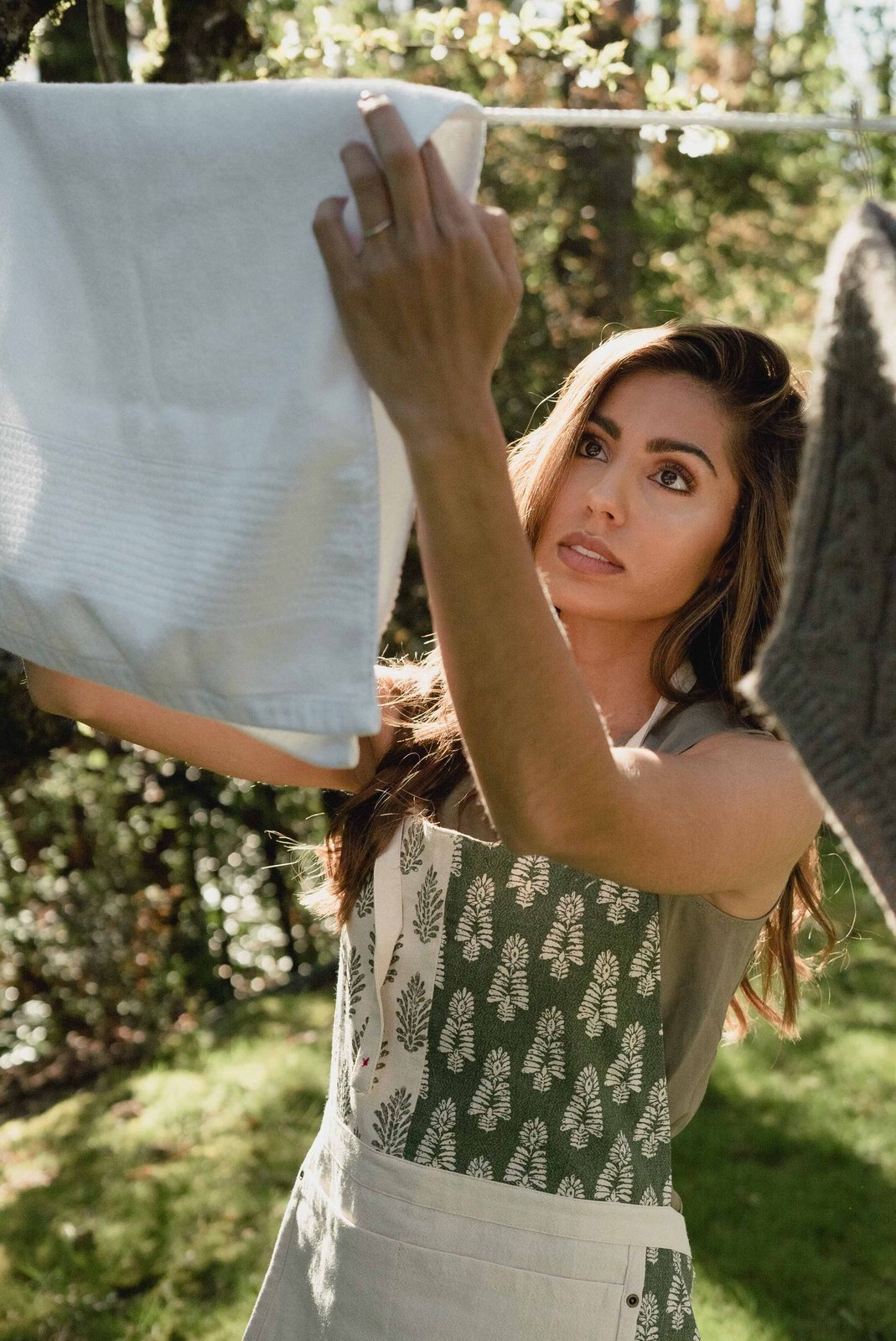
A half-dry towel folded into a drawer is how the sour smell starts. After the wash, hang kitchen towels and dishcloths so air can reach both sides: a rack, a shower rod you already use for laundry, a drying stand, or a clothesline if you have one. Do not stack damp cloths. An apron should hang from the neck strap or a hanger, not from a crumpled waist tie.
In a small apartment, a drying rack in a bathroom or near a slightly open window is usually better than draping wet towels over a radiator or a wooden chair back for hours. If you hang cloths in the kitchen, keep them away from a greasy stove until they are dry, or you will just re-soil them.
Space the cloths so they are not overlapping. Two racks, or one rack plus a couple of hangers, will dry a holiday pile faster than a single crowded rail.

A towel that feels dry on the surface but cool and thick in the middle needs more time. Give dishcloths a full dry before they go back to the sink rail. This is also a good moment to put the everyday kitchen back in a usable state without turning the laundry into a deep clean. Cabinet grease and a range hood are not this load; they have their own articles in How to Remove Kitchen Grease From Cabinets and How to Clean a Range Hood and Grease Filter in a Rental Kitchen.
Know when a rag should be retired
Not every cooking cloth deserves another wash. A rag with a rancid smell that survives a hot wash, a cloth with thick, painted-on grease in the weave, or a towel with holes that catch on a pan handle is often better in the trash than in the next cycle. A stained but intact cotton cloth can still be a work rag if it smells clean after drying. A “nice” apron with a small gravy spot can go back into service if the rest of the fabric is sound.
Good enough is not a perfectly stain-free heirloom apron. Good enough is a sink that is no longer a nest of wet cloths, and a rack of cooking textiles that will actually be dry by morning. You can live with a faint tomato stain on a work towel.
If you cook a large holiday meal only a few times a year, you may only need this load once, plus your ordinary kitchen-towel rhythm. If the apartment already has a short daily tidy, keep the laundry of cooking cloths as its own finish, not as a substitute for How to Do a 15-Minute Daily Cleaning Reset in a Small Apartment or for How to Speed-Clean a Small Apartment Before Guests Arrive. Those are room-reset jobs. This is the textiles that did the cooking.
A short post-cooking laundry checklist
Before you go to bed, confirm:
- Cooking towels, aprons, and dishcloths are not left in a wet, greasy pile in the sink.
- Heavily soiled rags are sorted from lightly used hand towels and from any delicate apron.
- Care labels have been checked, and the wash is as hot as those labels allow.
- The machine is not overloaded.
- Table linens and guest bedding are in a separate pile, not in this load.
- Washed cloths are hanging with air around them, not stacked damp.
- Any rag that is worn out, holey, or still sour after a proper wash is retired.
If those steps are done, you have washed kitchen towels, aprons, and dishcloths after a holiday cooking day well enough. The cloths are in the wash or they are drying. That is the whole job.
FAQ
Should I wash kitchen towels on the same day I cook a holiday meal?
Yes if you can. A wet, greasy pile left overnight is what makes cooking cloths smell. If you cannot start a machine immediately, rinse and wring the worst cloths and hang them until you can wash.
Can I wash aprons in the same load as dishcloths?
Only if the fabrics and care labels are compatible. A sturdy cotton apron may be fine with cotton dishcloths. A delicate or structured apron should be washed separately, or spot-cleaned if the label is restrictive.
How hot should I wash greasy kitchen towels?
As hot as the care label allows. Hot water helps with oily residue on plain cotton work cloths, but it can shrink or damage some aprons and decorative towels. Follow the label instead of using one temperature for everything.
Why do my kitchen towels still smell after washing?
The usual cause is that they were left damp too long, or the machine was overloaded and they did not rinse or dry fully. Wash a smaller load, hang the cloths until they are dry all the way through, and retire rags that still smell sour after that.
When should I throw a dishcloth away instead of washing it again?
Retire a cloth that stays sour after a proper wash and a full dry, has grease that will not come out of the weave, or is so worn it is falling apart. A stain alone is not a reason to throw out an otherwise sound work towel.