How to Store Extra Bedding and Blankets in a Small Apartment
Extra bedding has a way of becoming a second bed in a small apartment. A spare guest pillow lands on a chair. A backup duvet is stuffed on the closet floor, and off-season blankets migrate onto the end of the mattress. If you want to store extra bedding and blankets in a small apartment, give those pieces one or two clear places, not a new closet you do not have.
This is not a towel-storage article. How to Store Towels in a Small Apartment Without a Linen Closet is the guide for bath towels and washcloths. It is also not a linen-closet organizing article. How to Organize a Small Linen Closet is for the rare rental that already has one. Stay here when the job is spare guest pillows, a backup duvet, throws, and off-season blankets, and the apartment has no dedicated linen cupboard. This is also not a general under-bed storage system. Under-Bed Storage Ideas for Small Apartments covers that wider plan. Under-bed can be one home for bedding, not the whole system.
Good enough is simple. You can find a clean spare set without unpacking the whole closet, and pillows are not crushed flat forever. You do not need a basement or a brand ranking to get there.
Give spare bedding one or two homes you can actually reach
Start by naming what you are storing. A backup sheet set, one or two spare pillows, a duvet you do not use every night, a winter blanket, and a couple of throws is a realistic spare kit for many apartments. More than that, and you are storing a second household on one shelf.
Wash items before they go into long-term storage if they are not already clean. How Often to Wash Sheets and Towels: A Practical Laundry Schedule for Small Homes can help you keep the everyday set on a schedule; spare bedding should go away clean, dry, and fully cool. A damp duvet in a closed bag will smell musty. If a comforter needs a wash before it is stored, do that as its own laundry job. How to Wash a Comforter in an Apartment Laundry Room is that guide. Spare pillows deserve the same honesty. How to Wash Pillows in an Apartment Laundry Room covers washing them; this article is about where they live afterward.
Then pick one primary home and, if you need it, one overflow home: an under-bed bag, a high closet shelf, a vacuum bag if your vacuum actually works with it, a trunk or storage ottoman, or one clearly labeled bin. Two homes are enough. Five half-used spots are how a spare set disappears.
Use the under-bed space for flat, labeled bags
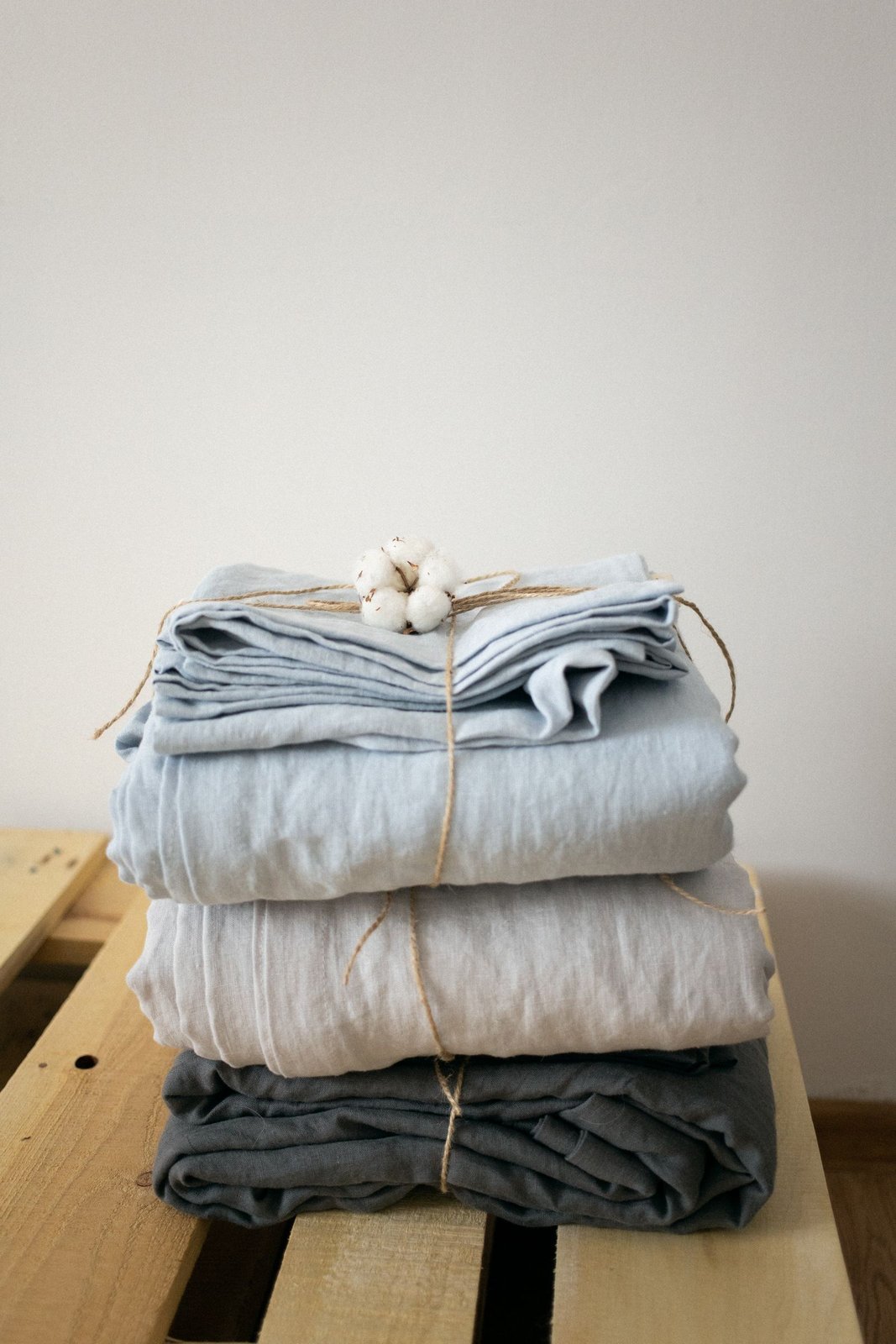
If there is clearance under the bed, a low, zippered bag or a shallow bin can hold a spare duvet, a folded blanket, or a sheet set you do not need every week. Measure the height before you buy or reuse a bag. A bag that only fits if you jam it will catch on slats or refuse to slide out when a guest is already at the door.
Keep under-bed bedding in a closed bag, not in an open pile that collects dust. Label the short end that faces out: “guest sheets,” “winter duvet,” “spare blanket.” The point of under-bed storage here is findability, not hiding. If you already use that space for shoes or off-season clothes, do not evict everything for bedding. Choose one under-bed zone for linens and leave the rest to the system you already have.
How to Store Off-Season Clothes in a Small Apartment is the guide for clothing that also wants that space. Bedding and clothes can share the under-bed area only if each has a labeled bag and you can pull one without unpacking the other.
Keep a high closet shelf for the set you need most often
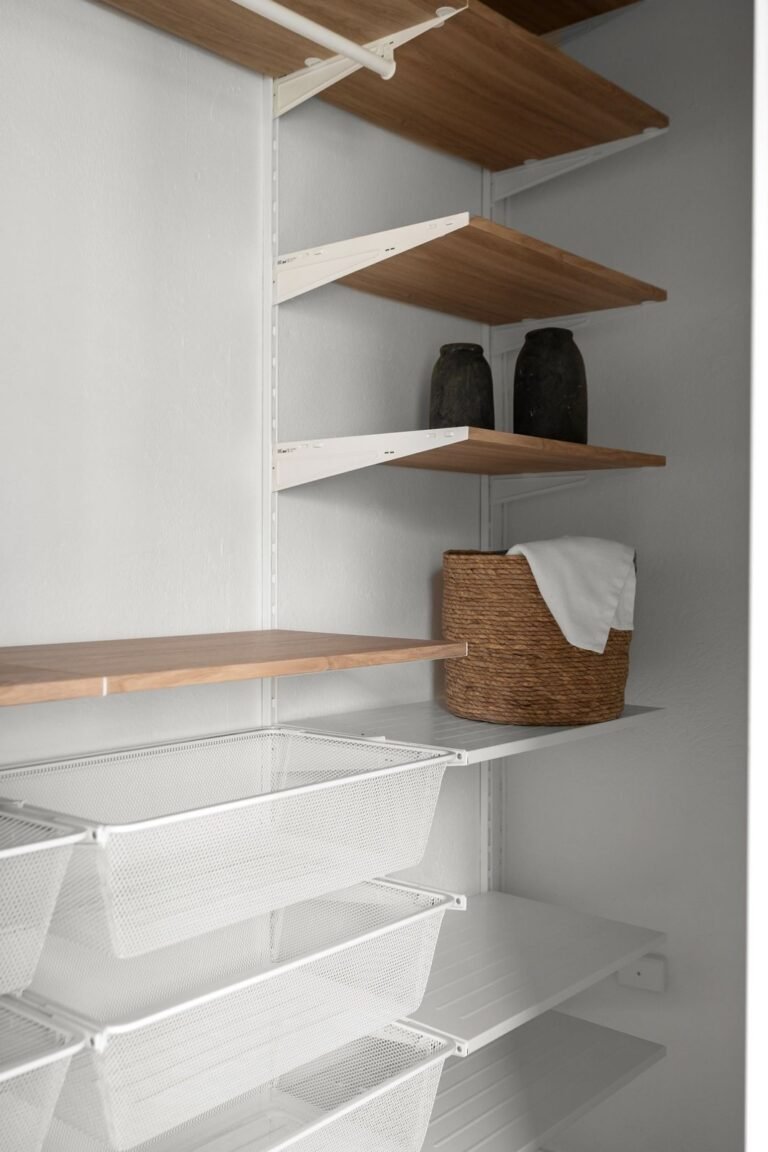
A high closet shelf is a good home for the spare set you are most likely to need: guest sheets, a backup pillow in a loose bag, or the throw you use when the weather changes. Fold items so you can see the stack from the front. A small bin or a labeled tote on that shelf is better than a loose heap that avalanches when you pull one blanket.
Do not treat the closet floor as overflow for bedding. The floor becomes a pile, and the pile becomes the reason you cannot find a clean set. If the shelf is already full of clothes, move the least-used clothing elsewhere rather than stacking bedding in front of hangers. A bulky duvet may belong under the bed or in a trunk, while the sheet set stays on the shelf.
Use a vacuum bag only if your vacuum works with it
A vacuum storage bag can shrink a bulky duvet or an off-season blanket so it fits on a shelf or under the bed. It is useful only if you have a vacuum that actually seals the bag, and if you will not leave a pillow in there flattened for months. Follow the bag’s instructions, and check that the valve is closed so the bag does not slowly refill with air.
Vacuum bags are a tool, not a basement substitute. Best Vacuum Storage Bags for Small Apartments is the buying guide for choosing a bag that matches the vacuum you already own. If your vacuum will not seal the bag, do not buy a stack of bags in the hope that they will work. Fold the duvet into a regular zippered bag or a bin instead.
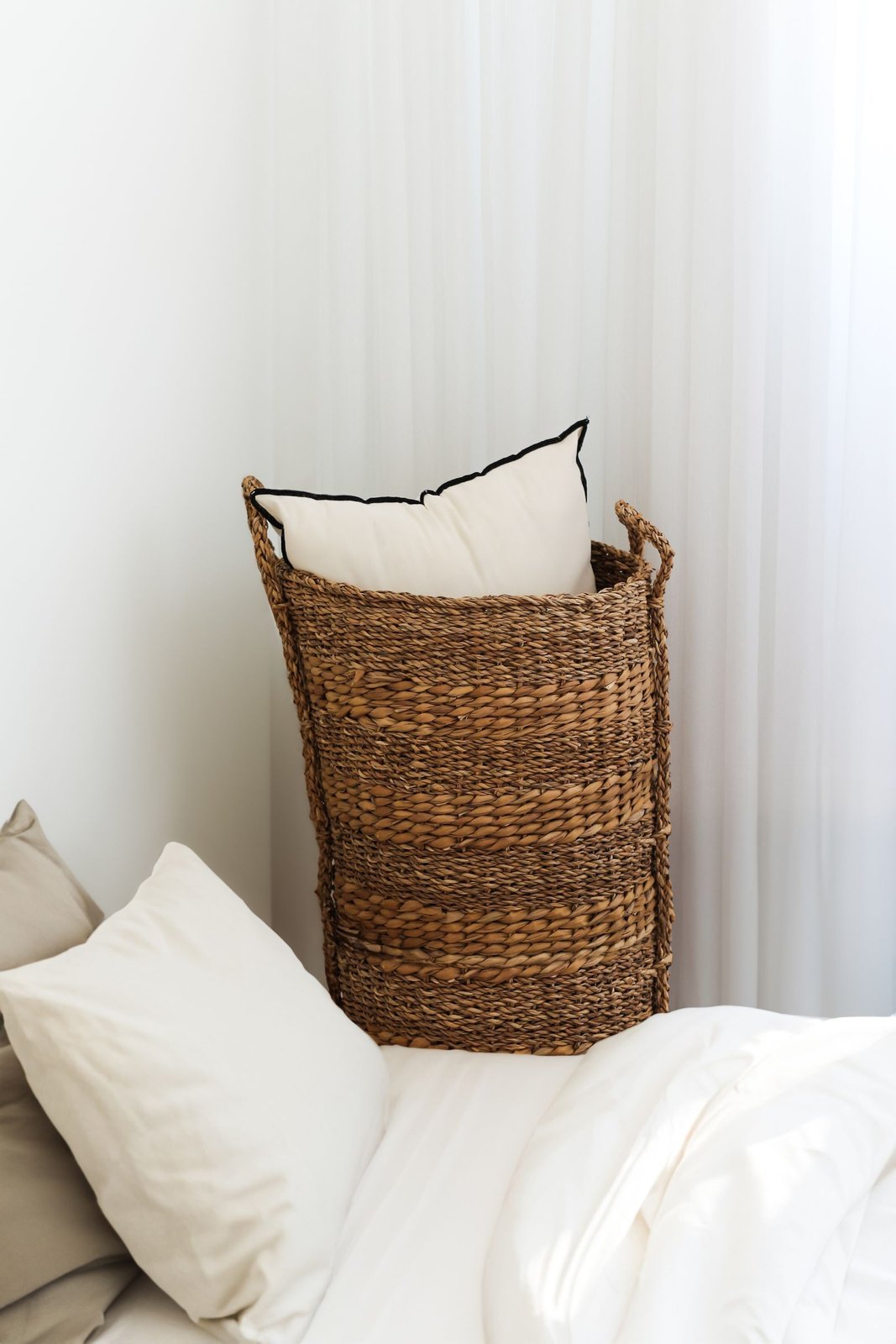
Do not vacuum-pack pillows for long-term storage if you can avoid it. Foam and some fills recover poorly after being crushed flat, and a guest pillow that stays compressed is no longer a comfortable spare. If you must reduce a pillow’s volume for a move, let it recover fully before you need it. Store everyday spare pillows loosely in a breathable bag.
Give a trunk or ottoman a real job
A trunk at the foot of the bed, or a storage ottoman in the bedroom or living room, can hold throws and a folded blanket without inventing a closet. The useful version is one you can open and close again so the top stays a seat, not a temporary dump. Best Storage Ottomans for Small Living Rooms is the guide for choosing one; this article is about using it as a home for extra bedding, not as a catch-all.
Keep the trunk or ottoman for a short list: the throws you actually use and one spare blanket. If you also stuff in shoes and chargers, you will unpack the whole box every time someone wants a blanket.
Use one clearly labeled bin for guest bedding
Guest bedding should be findable in one place. A single lidded bin or zipper bag labeled “guest set” can hold a clean sheet set, a spare pillowcase, and a light blanket, with the pillow stored beside it in a loose bag rather than crushed in the same bin. When someone stays over, you take down one container instead of unpacking the closet.
If you have a backup duvet or comforter, it may be too large for that bin. Give it its own labeled bag under the bed or on the high shelf, and keep the sheet set in the guest bin so the two can be found together in a minute. Best Comforters and Duvets for Apartment Beds and Best Sheet Sets for Apartment Beds can help you choose bedding you will actually want to store and use; they are not storage systems. Spare pillows should stay in a shape you would still offer a guest. Best Bed Pillows for Apartment Beds is the guide for choosing them.
Label the bin on the end you will see. “Sheets” is vague if you also have winter flannel and a stained set you meant to retire. “Guest sheets — clean” is enough. Retire bedding you would not put on a bed, rather than storing it “just in case” until it fills the only bin.
Do not crush pillows, and do not assume a basement
Pillows need some loft to remain useful. A week in a packed suitcase is different from a year under a stack of winter blankets. Store spare pillows in a breathable bag, on a shelf, or loosely in a bin with room to spare. If a pillow has been flattened, give it time to recover, and wash it if it smells stale, before you store it again.
Do not plan around a basement, a garage, or an attic you do not have. In a small apartment, the real options are in the rooms you already live in. If the extras will not fit in an under-bed bag, a high shelf, a trunk, or one bin, you have more spare bedding than the apartment can house. Keep the set you will use and let the rest go.
What good enough looks like is not a styled linen wall. It is a labeled bag or bin you can pull out, a clean spare set inside, and a pillow that still feels like a pillow.

Practical takeaways
You can store extra bedding and blankets in a small apartment when spare pillows, a backup duvet, throws, and off-season blankets have one or two clear homes you can reach.
- Wash and dry bedding before it goes into storage, and pick one primary home plus one overflow home if you need it.
- Use an under-bed bag for bulky, flat items, and label the end that faces out.
- Keep the set you need most often on a high closet shelf, not in a heap on the closet floor.
- Use a vacuum bag only if your vacuum seals it, and do not crush pillows flat for months.
- A trunk, storage ottoman, or one clearly labeled guest bin makes a spare set findable. Do not assume a basement you do not have.
A small apartment can hold a backup set. It cannot hold an unmarked pile that has to be unpacked every time a guest stays.
FAQ
Where should I store extra blankets if I have no linen closet?
Use an under-bed bag, a high closet shelf, a trunk or storage ottoman, or one clearly labeled bin. Pick one or two of those homes and keep guest bedding together so you can find a clean set without unpacking the closet.
Can I keep spare pillows in a vacuum bag?
It is better not to leave pillows crushed flat for a long time. Store them loosely in a breathable bag or on a shelf. A vacuum bag is more useful for a bulky duvet or an off-season blanket, and only if your vacuum actually seals the bag.
How do I keep guest bedding easy to find?
Put a clean sheet set and a light blanket in one labeled “guest” bin, and store the spare pillow beside it in a loose bag. Label the end you will see, and avoid mixing guest bedding with off-season clothes or random closet overflow.
Should extra bedding go under the bed or on a closet shelf?
Use under-bed space for bulky, flat items such as a backup duvet or a winter blanket, if there is enough clearance. Keep the set you need most often, such as guest sheets, on a high shelf where you can reach it quickly.
Do I need a basement or a second closet to store off-season blankets?
No. In a small apartment, the real options are an under-bed bag, a high shelf, a vacuum bag if your vacuum works with it, a trunk or ottoman, or one labeled bin. If the extras still will not fit, you have more spare bedding than the home can hold.