Best Compact Coffee Makers for Small Kitchens
A coffee maker should make mornings easier, not colonize the only clear stretch of counter. In a galley, studio, or one-wall apartment kitchen, the “best compact coffee makers” are not the widest café machines in a lifestyle photo. They are the ones that match the way you brew, fit beside the kettle or the toaster, and can be cleaned in a small sink without a tray of fiddly parts.
There is no single winning model in this guide. “Best” means choosing a type, a footprint, and a care routine for a compact US or UK kitchen. Many apartments have 12–18 inches of free width once a board, a knife block, or an air fryer takes its share. A slimmer machine you will use and empty every day will beat a handsome, deep unit that never quite has a home.
Measure the counter—and the cupboard—before you shop
Do this with a tape measure, including the plug.
- Width, depth, and height: the clear rectangle on the counter, and the space under a cupboard or shelf. Remember the water tank if it sits at the back or the side, and the lid if it lifts up to fill.
- Clearance to operate: room to pull a carafe, slide a mug under a spout, or open a portafilter handle. A machine that fits until you brew is not a compact win.
- Outlet and cord: a nearby outlet that is not already overloaded, with the cord lying flat rather than across a hob or a wet sink edge. Do not use a flimsy extension as a permanent plan.
- Storage option: if you will not leave the maker out, measure the cupboard or the pantry shelf, including the carafe and any stand.
- Water fill: whether you can lift the whole machine to the sink, or only a removable tank, in a tight galley.
A practical everyday footprint for many apartments is a maker that stays well under a standard wall cupboard and leaves a landing space for a mug and a spoon. If you also keep a toaster oven or an air fryer on the same run, decide which appliances are daily and which can live in a cupboard.
Drip, espresso, pour-over, or single-serve
Each type is a trade-off. Pick for how you drink coffee most mornings, not for a ranking list.
Slim drip or filter machines are still the straightforward choice if you want a carafe and a familiar routine. Look for a narrow body, a tank you can lift out, and a warming plate or a thermal carafe you will actually use. A 4–8 cup machine is plenty for one or two people; a wide 12-cup body is often wasted width. Confirm whether the carafe is glass or thermal, and how you will store it if the maker goes in a cupboard.
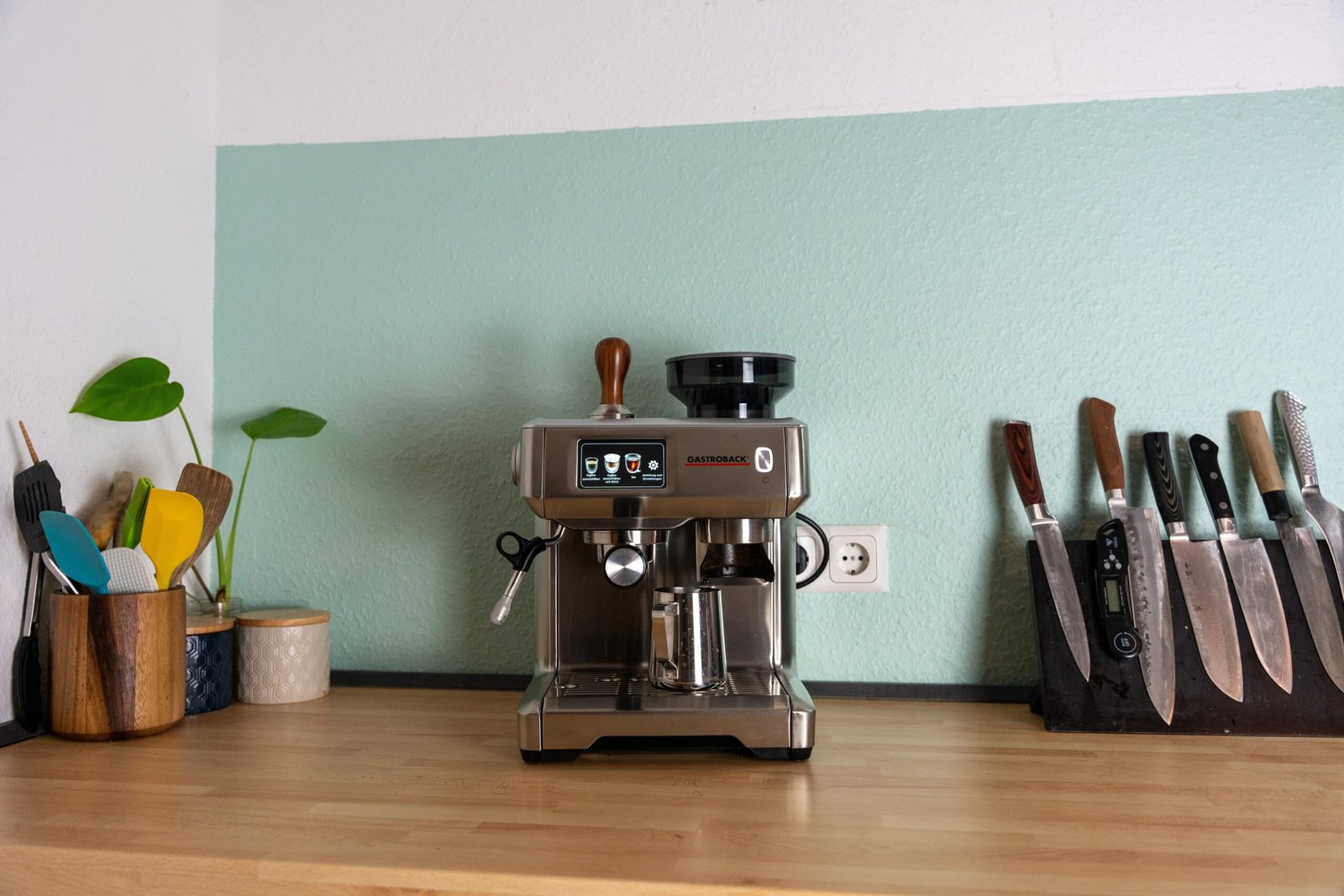
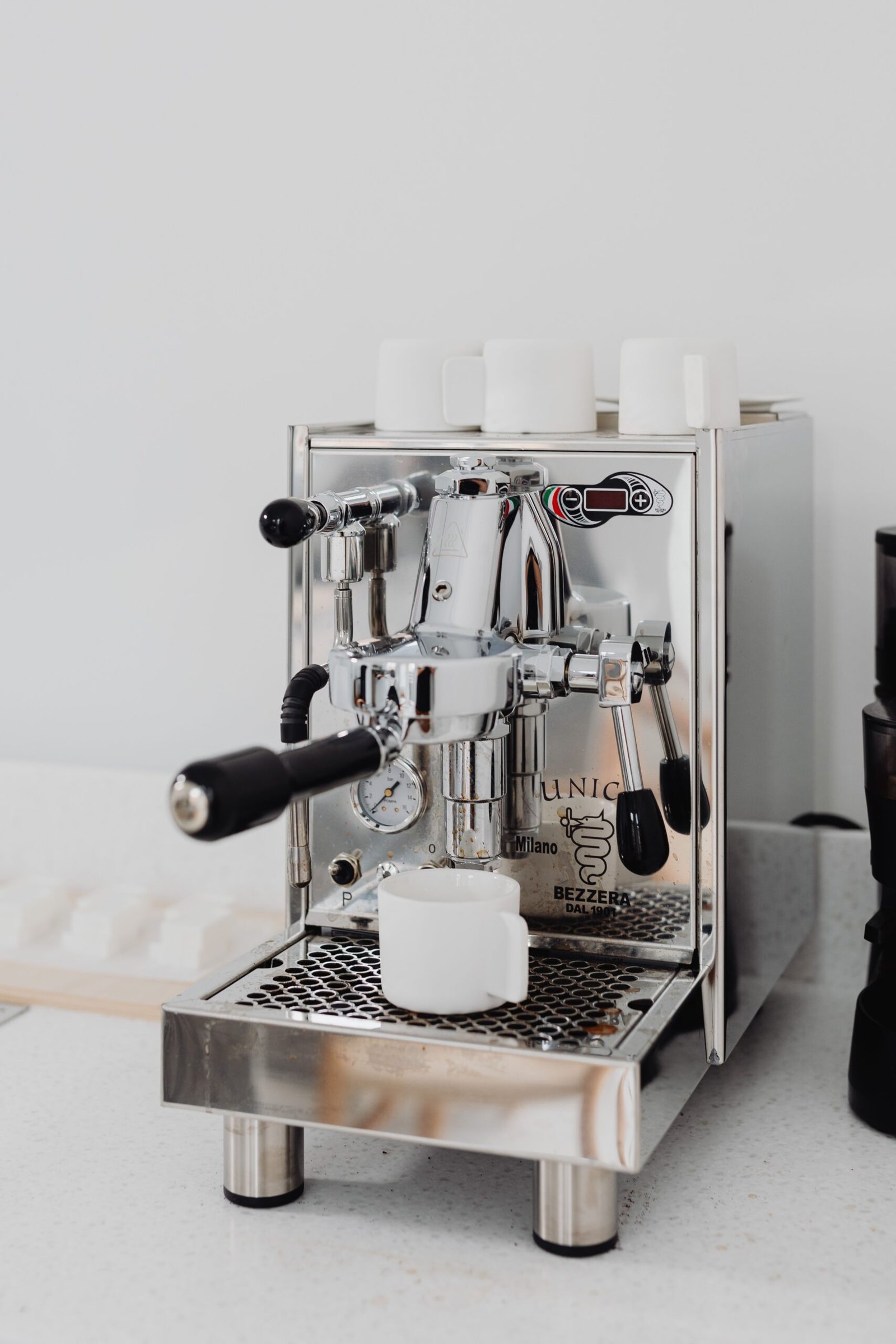
Compact espresso machines earn the space if you drink espresso or milk drinks most days and will clean the portafilter and drip tray. “Compact” should mean a small depth as well as a short width; a short-but-deep machine still blocks a galley. Check cup clearance if you like a taller mug, and be honest about noise in a studio. A steam wand adds ritual and cleaning. If you only want a simple shot now and then, a smaller manual or a moka pot may be enough.
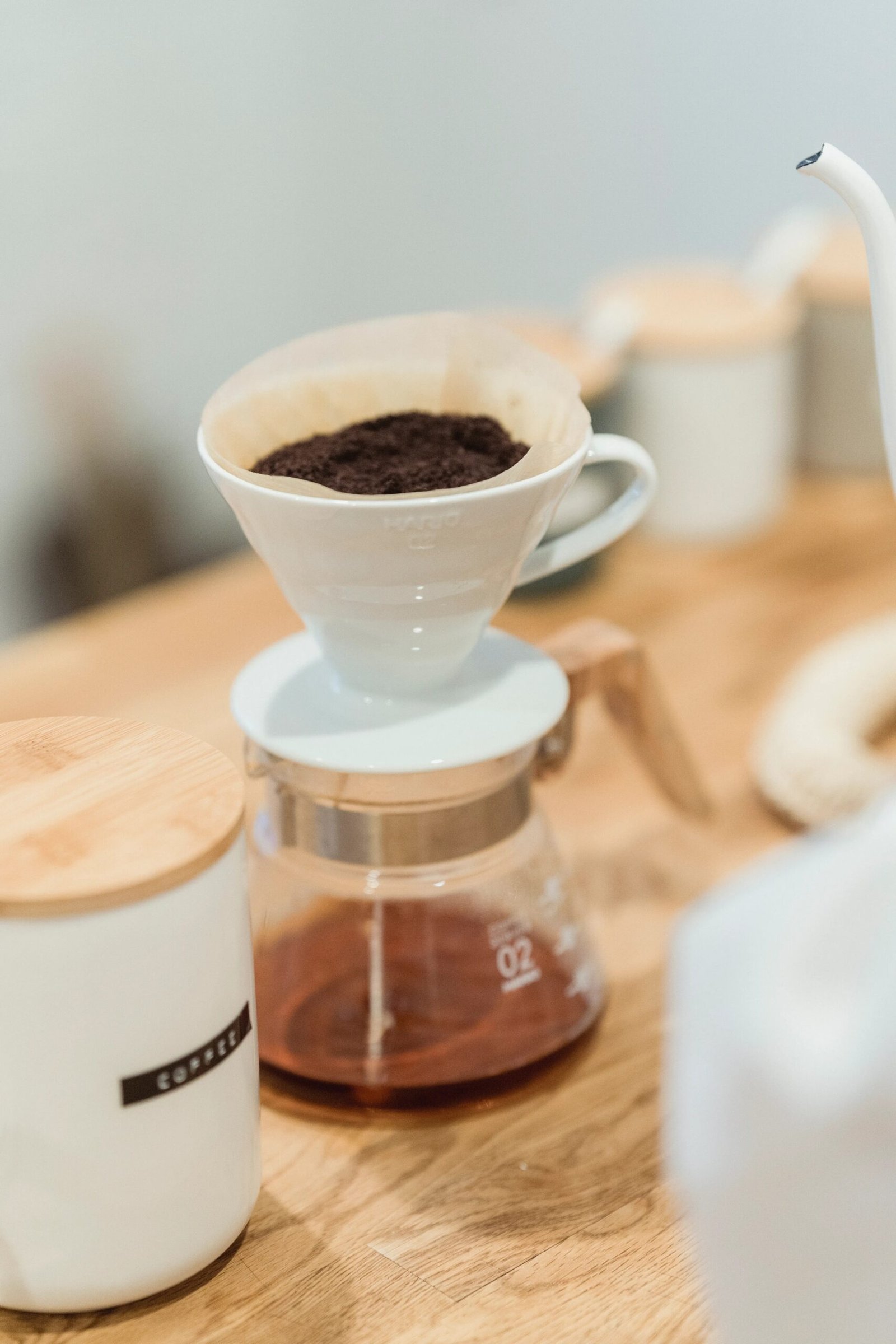
Pour-over and manual methods (a cone and server, or a small dripper that sits on a mug) are the most compact of all, especially if you already own an electric kettle. They ask for a little time and a place to dry the dripper. They are excellent when you want almost no counter presence and a single mug at a time. They are a poor “machine replacement” only if you need to brew for guests in one go without standing at the counter.
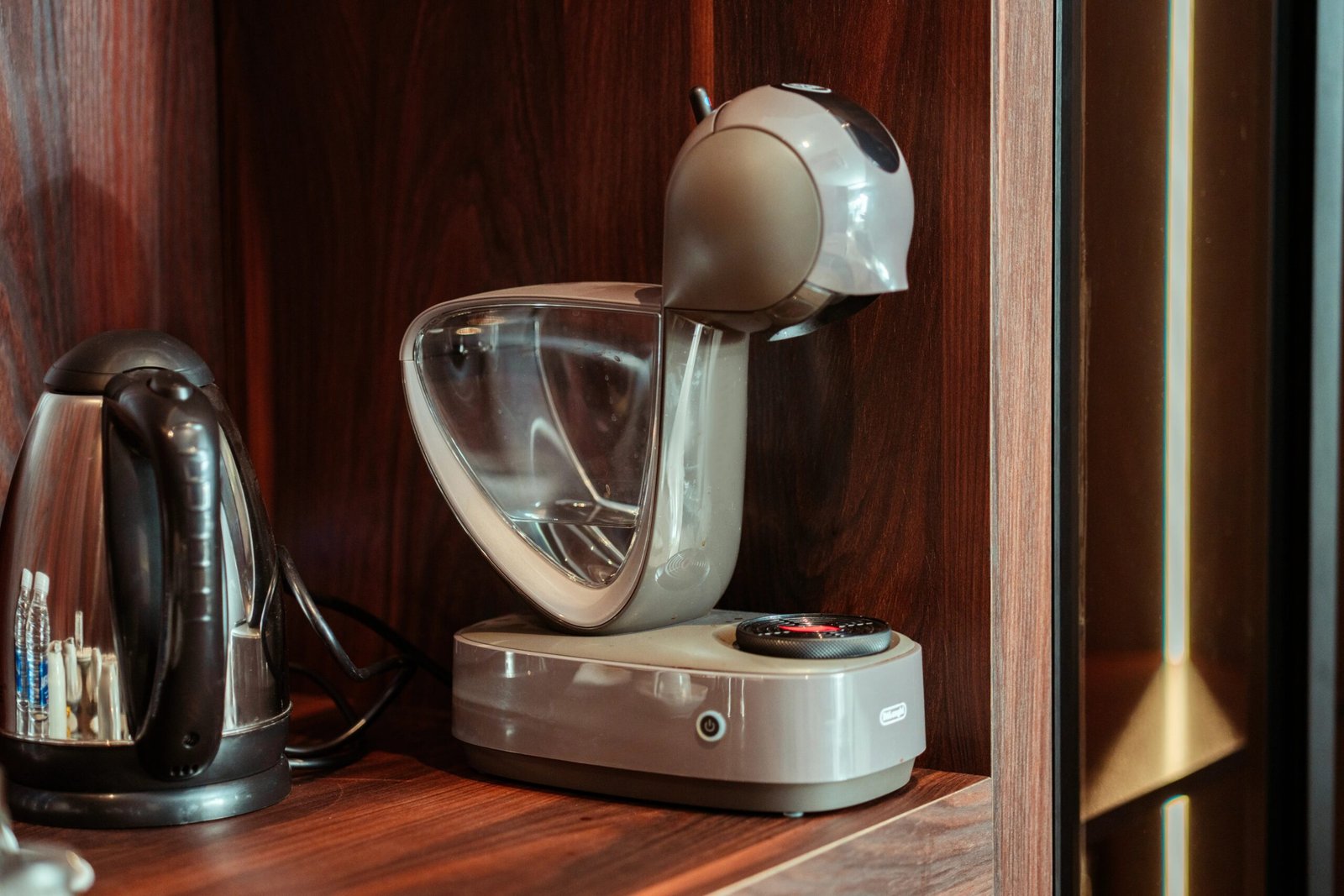
Single-serve pod or capsule machines are usually slim and fast, with an easy learning curve. The trade-offs are ongoing pod cost and waste, a water tank to empty when you travel, and a drip tray to wash. If you go this route, plan a small caddy for pods so they do not scatter, and check whether the used-capsule container is easy to empty in a small kitchen.
A moka pot or a small French press can also be “the coffee maker” in a tiny kitchen. They store in a cupboard, use the hob or an already-owned kettle, and keep the counter free. They are slower for some routines and need careful heat and cleaning, but they are worth considering before you add another plug-in.

Tanks, mugs, noise, and what stays out
A compact machine still needs a water tank you can fill without a mess. Removable tanks are easier in a galley than lifting the whole unit under a low tap. Smaller tanks mean more refills; that is often fine for one or two mugs and better than a large tank of water sitting for days. Do not leave stale water in the tank when you go away for a week.
Mug size matters. Some compact espresso spouts leave little room for a breakfast cup; drip machines vary in how a carafe or a mug sits on the plate. If you always brew into a travel mug, measure the height before you buy.
Noise is part of apartment life. A pump espresso machine is usually louder than a drip or a pour-over. If you share a studio or have thin walls, a manual method or a quieter drip cycle may be the kinder “compact” feature. Programmable start times are useful only if the machine is stable, the carafe is in place, and you will still empty the grounds the same morning.
Decide whether the maker is a permanent resident or a cupboard appliance. A machine you will use twice a day can stay out if the footprint is honest. A weekend espresso toy should not hold the only landing space beside the sink. Vertical storage beside the fridge works only if the maker is fully dry and the tank is empty. For a calmer counter, see Best Kitchen Organizers for Small Apartments.
Cleaning, descaling, and basic electrical sense
A compact coffee maker stays pleasant only if you will clean it. Empty the grounds or pod bin daily, rinse the carafe, drip tray, and tank on a regular rhythm, and wipe the splash around the spout so it does not become a sticky ring on the worktop. Pour-over drippers and presses should be washed and dried so they do not pick up odors in a closed cupboard.
Descaling follows the maker’s instructions and the hardness of your water. Use the product or method the manufacturer allows; do not invent a harsh cleaner. A machine that takes ten minutes to descale is more “compact-friendly” than one with a maze of parts you will never unscrew. If you cannot see yourself doing this a few times a year, choose a simpler brew method.
Safety is ordinary rather than dramatic: sit the maker on a dry, stable, heat-resistant surface, away from the sink’s puddle zone and the edge of the hob. Keep the cord in good condition, unplug before a deep clean, and do not immerse a motorized base. Let hot surfaces cool before the machine goes into a cupboard. This is normal appliance care, not a substitute for the manual that came with your model.
What to skip
Skip wide café-style machines with no published dimensions, “all-in-one” units that also grind and steam if you will only use one function, and anything that needs a permanent water hookup. Be cautious with very cheap plastic drip machines that have no listed tank capacity or a carafe that does not nest for storage. Skip a second coffee maker “for guests” until the first one has a stable home.
If your mornings are one mug and you already love a kettle, a dripper may be all you need. If you want a one-button carafe, a slim drip machine is the calmer path. If espresso is the daily drink, measure depth as carefully as width.
A practical buying checklist
Before you buy, confirm:
- I measured width, depth, and height, including tank, lid, carafe, and cupboard clearance.
- I can operate the spout, handle, or mug space in that rectangle.
- The type matches my usual drink: slim drip, compact espresso, pour-over, or single-serve.
- The water tank is easy to fill and empty in my sink.
- I have a nearby outlet and a safe, dry place for the cord.
- I will clean the daily parts and descale as the maker recommends.
- There is a permanent counter home, or a cupboard that fits the whole kit.
- I am not adding a machine that duplicates a kettle-and-dripper routine I already like.
How to choose—and how to apply it
The best compact coffee makers for a small kitchen are the ones that fit the counter, brew the way you actually drink, and clean in a few minutes. Measure the space, pick a slim drip, a truly compact espresso, a pour-over, or a single-serve machine, and give it a dry, stable home. Skip wide café machines that leave you no room to plate breakfast.
A maker that fits the kitchen you have will always beat a machine you have to shuffle before the first cup.
FAQ
What size coffee maker is best for a small kitchen?
Choose a machine that fits your measured width, depth, and cupboard height, with room to fill the tank and set a mug. For one or two people, a slim 4–8 cup drip maker, a compact espresso unit, or a pour-over dripper is usually enough. Always check the published dimensions, including the tank.
Is a compact espresso machine practical in an apartment?
Yes if you will use it most days and clean the portafilter and drip tray. Measure depth as well as width, listen to the pump noise if you live in a studio, and confirm cup clearance. If you only want an occasional shot, a moka pot or a manual method may be simpler.
Do I need an electric coffee maker if I already have a kettle?
Not necessarily. A pour-over dripper, a French press, or a moka pot can be the most compact setup in a tight kitchen. An electric drip or espresso machine is worth the space if you want more automation or a different style of coffee.
How do I keep a small coffee maker from cluttering the counter?
Give it a dedicated rectangle, store the extras (filters, scoop, pods) in one small caddy or a nearby tray, and put away any machine you do not use daily. Empty the tank if you will be away, and keep the area around the spout wiped dry.
How often should I descale a compact coffee maker?
Follow the manufacturer’s guidance and your water hardness. Many households descale every couple of months, sooner if the flow slows or the maker prompts you. Use only the method the manual allows, and rinse thoroughly.