How to Set Up a Guest Bed in a Small Apartment
A small apartment can still host a guest. What it cannot usually offer is a spare room that sits empty between visits. The bed has to earn its keep as a sofa, a closet item, or a bag that comes out for one night, and it has to leave a clear path to the door in the morning.
If you want to set up a guest bed in a small apartment, decide what kind of bed you will actually unfold, where it lives when no one is visiting, how you will store a small set of bedding, whether a screen or divider would give a little privacy, and how you will tidy the room so a studio feels like your home again. Do not place a temporary bed where it blocks a door or a fire exit.
This is a plan for an occasional overnight sleep space, not a rewrite of the furniture you may already be choosing. Sofas, room dividers, a mattress in a box, toppers, bed pillows, storage bed frames, studio layouts, and renter-safe decorating already have their own guides: Best Sofas for Small Living Rooms, Best Room Dividers for Studio Apartments, Best Mattress in a Box for Small Apartments, Best Mattress Toppers for Apartment Beds, Best Bed Pillows for Apartment Beds, Best Bed Frames with Storage for Small Bedrooms, Studio Apartment Furniture Layout, and How to Decorate a Rental Apartment Without Damaging Walls. Use those for the piece or the layout itself. This article is about standing up a guest bed for a night, and putting it away again.
Choose a sofa bed, an air mattress, or a folding cot
The right guest bed is the one you will set up without rearranging the whole apartment, and the one you can store when the visit is over.
A sofa bed is the most “always there” option. If you already need a sofa, a sleeper can spare you a second piece of furniture. The trade-off is weight, a mechanism you have to be able to open in a tight room, and a sitting height that still works on ordinary evenings. Leave a clear path to unfold it, and measure the bed once it is open—not just the sofa when it is closed. The sofa buying guide is the place to think about size and style; here, the test is whether you can open the bed without blocking a door, a heater, or the only walkway.
An air mattress is the most packable option. It lives in a bag or an under-bed box and comes out for guests who visit only now and then. The trade-off is pump time, a surface that needs a decent topper or extra blanket for comfort, and a little noise as it settles. Inflate it where it will be used, on a clear patch of floor, and keep the pump with the mattress so you are not hunting for it at midnight. Do not place it in front of an exit, and do not run a cord where someone will trip on the way to the bathroom.
A folding cot or a slim guest cot is the middle path: more structure than an air bed, more packable than a sofa bed. It usually stores on edge in a closet or along a wall. Check the folded height and the open footprint, and make sure you can carry it through your hallway. A cot should sit level, away from a swinging door.

You do not need all three. Pick the one that matches how often you have guests and how much storage you actually have. This guide does not rank brands or invent a best score. Comfort is personal. A mattress topper or a better pillow can soften a sofa bed or an air mattress; those products have their own guides if you need them. A full mattress in a box is a different purchase, for a bed that stays set up, not for a guest space that has to disappear.
Give the packed-away bed a real home
A guest bed that has no off-duty home will live in the middle of the room. Before the first visit, decide where the folded cot, the air-mattress bag, or the extra bedding will sit: a high closet shelf, a clear lane under the bed, a slim gap beside a wardrobe, or, if you have a storage bed frame, a drawer that is not already packed tight. Measure the packed size, not the open size.
Keep that home empty enough that you can retrieve the bed without a twenty-minute unpack. If the only space is a hallway, it is not a home. A packed cot or a mattress bag should not stand where a door opens, where a fire exit must stay clear, or where you walk in the dark.
The sofa bed is the exception: its packed home is the sofa itself. What still needs a home are the sheets, the extra pillow, and any topper you use only for guests. Those should not live in a heap on a chair from one visit to the next.
Keep a small bedding bin
A guest should not have to hunt through your everyday linen stack, and you should not have to remake your own bed to find a spare set. Put one complete sleep kit in a single small bin, bag, or basket: a fitted sheet or a mattress cover that fits the guest bed you own, a top sheet or a light duvet, one or two pillows, and a spare pillowcase. Add a spare towel if you like, but keep the kit small enough to lift in one trip.

Store the bin with the packed bed, or on a reachable closet shelf. Label it if you share the apartment. After a visit, wash the linens and put them back in the same bin so the next setup is only unfolding and making the bed. If you use a topper for an air mattress or a sofa bed, let it air, fold it, and keep it with the kit rather than stuffed in a damp heap.
You do not need a large linen cupboard for this. One bin is the point. A wider set of everyday sheets is a different job; this kit is only for the guest bed.
Add a bit of privacy with a screen or divider
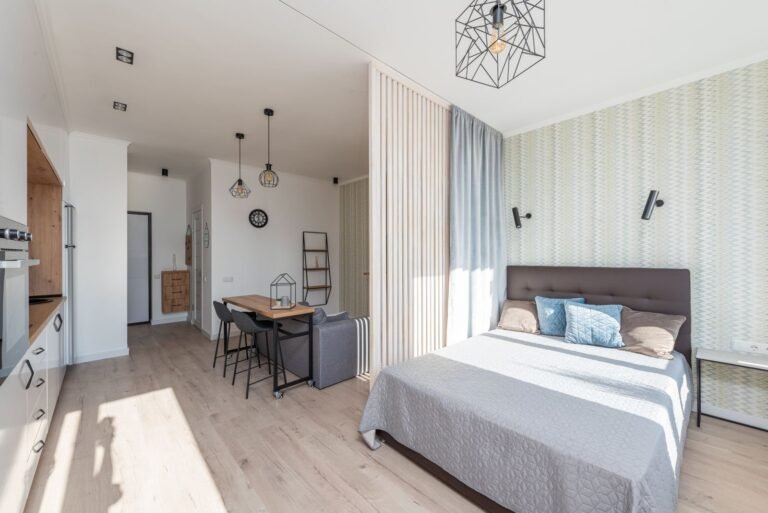
In a studio or a one-room layout, a guest is sleeping in the same space you live in. A little visual break helps both of you. A folding screen, a slim open shelf used as a divider, or a curtain on a tension rod can mark a sleep zone without building a wall.
The divider buying guide is the place to choose a style. Here, the rules are simpler. The screen should stand stably, should not block a door or a fire exit, and should not trap the guest without a clear path to the bathroom and the way out. A tension rod or a renter-safe hanging method belongs in the decorating-without-damage guide; do not assume every hook or adhesive product will leave the wall unmarked. If you need to drill or to alter a doorway, that usually wants written permission, and it is more than this temporary setup needs.

A divider is optional. If the room is too tight for a screen that still leaves a walkway, skip it. A lamp, a charged phone, and an agreed plan for morning noise will do more for a guest than a screen that turns the only exit into a maze. The studio-layout guide can help you keep circulation clear; on a guest night, that circulation matters more, not less.
Do a morning tidy-up in a studio
The visit ends when the bed goes away and the room can be walked through again. In a studio, that tidy-up is part of the setup, not an afterthought.
Deflate the air mattress fully, fold the cot, or fold the sofa bed back into a seat. Put the bed in its packed home the same day, not “this evening.” Strip the linens into the wash and return the empty bin to the shelf. Move the screen so the path to the door is obvious. Open a window if you can, and put your own furniture back where you actually live.

Leave the exit clear while you work. A half-folded mattress in front of the door is still an obstruction. If a guest is leaving later in the day, agree a window when the bed can come down so you are not both circling a blocked room.
A guest-bed checklist for a small apartment
Use this before a visit, and again in the morning:
- I chose one sleep option—a sofa bed, an air mattress, or a folding cot—that I can set up and store in this apartment.
- The open bed does not block a door, a fire exit, a heater, or the path to the bathroom.
- The packed bed and a small bedding bin have a home that is not a hallway or a chair.
- The kit has a sheet, cover, and pillow that fit this guest bed, and I can wash and return them to the same bin.
- If I use a screen or divider, it is stable and still leaves a clear way out.
- In the morning, the bed is packed away, the linens are in the wash, and the room can be walked through again.
How to choose—and how to apply it
The calm way to set up a guest bed in a small apartment is to plan a sleep space that is temporary on purpose. Choose a sofa bed, an air mattress, or a folding cot you can actually store. Keep one small bedding kit with it. Add a screen only if it still leaves a clear exit. In the morning, put the bed away so the room is yours again. You do not need a spare bedroom or a renovation. You need a bed that appears for a night, a bin that holds the linens, and a path to the door that stays open.
FAQ
How do I set up a guest bed in a small apartment if I do not have a spare room?
Pick one option you can store: a sofa bed if you already need a sofa, an air mattress if guests are occasional, or a folding cot if you want more structure than an air bed. Keep a small bedding bin with it, leave a clear path to the door, and pack the bed away in the morning.
Is a sofa bed better than an air mattress or a folding cot?
It depends on how often you have guests and how much storage you have. A sofa bed is always in the room and has to sit well as a sofa. An air mattress packs small but needs floor space and a pump. A cot sits between the two. This guide does not rank products; choose the one you will actually set up and put away.
Where should a packed guest bed and the bedding live?
Give them a measured home: a closet shelf, a clear under-bed lane, or a drawer that is not already full. The sofa bed stays a sofa; the sheets and any guest-only topper still need a bin. Do not store a packed bed in a hallway, or where a door or fire exit has to stay clear.
How can I give a guest some privacy in a studio?
A stable folding screen, a slim divider, or a curtain on a tension rod can mark a sleep zone. It must not block the way out or the path to the bathroom. If the room is too tight for a screen, skip it and keep circulation clear instead. Renter-safe hanging methods, and the limits of hooks and adhesives, are covered in the decorating guide.
What should I do with the guest bed in the morning?
Fold or deflate it the same day, put it back in its home, strip the linens into the wash, and return the empty kit to the bin. Move any screen so the door path is obvious. Do not leave a half-packed bed in front of an exit while you finish the rest of the tidy-up.