How to Cook a Holiday Meal in a Small Apartment Kitchen
A holiday menu can outgrow an apartment kitchen before the first onion is chopped. The roast needs the oven, three sides want the same temperature, and the fridge already holds breakfast. Learning how to cook a holiday meal in a small apartment kitchen starts with treating those limits as part of the menu, not as problems to solve at the last minute.
Aim for one satisfying main, a few deliberately chosen sides, and a dessert that does not need the oven during the final rush. This is a cooking workflow, not a seating plan. For the broader gathering, use How to Host a Dinner in a Small Apartment; here, the priority is getting several dishes through one small kitchen in a sensible order.
Start with a meal that fits the equipment
Write the guest count, dietary requirements, and dishes people genuinely care about. Circle the one or two holiday traditions worth protecting. Everything else can be simpler. A treasured stuffing recipe may earn the oven slot that an optional second vegetable would otherwise occupy.
Choose a main, one substantial side, one vegetable, something cold or room temperature when appropriate, and dessert. Those are planning categories, not a required number of courses. If two sides are enough, stop there. Portion from the recipes rather than multiplying every dish as though it were the only food available.
For a very small celebration, How to Cook for One or Two in a Small Kitchen provides useful scaling context. A holiday meal still needs its own timetable because even modest portions can compete for the same burner or roasting pan.
Check the roast before committing to it
Measure the oven interior, the roasting pan with its handles, and the refrigerator shelf space. Include room to lift the pan safely, not merely slide it through the door. Check that a raw main can remain contained below ready to eat food while chilled.
A whole turkey is not obligatory. A smaller roast, turkey breast, or a braise may fit the kitchen and the guest count better. Pick a trusted recipe for the specific cut and quantity. Do not assume that halving the weight simply halves the cooking time or that every pan behaves alike.
If the main is frozen, use authoritative thawing instructions and allow suitable refrigerator space and time. Never solve a scheduling problem by leaving raw poultry on the counter. Use a food thermometer and recognized safe temperature guidance for the food you are preparing; this planning article is not a substitute for those instructions.

Give every dish an appliance and a pan
Make a short list with five columns: dish, pan, appliance, recipe temperature, and what happens before serving. Add any required resting, reheating, or finishing step. This reveals conflicts sooner than a beautiful menu does.
A stovetop vegetable can free an oven shelf. An existing rice cooker or other suitable appliance might handle a compatible side if its instructions and recipe support that use. Do not buy several appliances for one meal, stack them together, or improvise hot holding in equipment not intended for it.
Check pan fit together while everything is cold. Two pans that fit separately may not fit side by side with adequate circulation. Keep handles from blocking other cookware. If dessert needs baking, schedule it earlier when the recipe allows; How to Bake in a Small Apartment Kitchen covers the separate challenges of baking in limited space.
Make ahead only what you can actually store
Making everything early sounds efficient until the refrigerator becomes a wall of deep casserole dishes. Decide which preparations save meaningful work without creating an impossible storage problem. A prepared dressing, washed vegetables, or a fully finished dessert may be more helpful than multiple assembled trays.
Use the recipe’s storage and reheating directions. Keep raw ingredients separate from cooked food. Label containers so a helper does not mistake an unfinished component for a ready side. Leave enough room for normal chilled essentials, and avoid packing shelves so tightly that air cannot circulate.
Use How to Meal Prep in a Small Kitchen (Without Taking Over the Counter) for the mechanics of working in small batches. For this meal, batch work by task: chop the vegetables together, wash the board, then handle the next job. Do not leave ingredients spread across every surface while you start another recipe.
Reserve chilled space before shopping
Assign an actual shelf or container footprint to the main, prepared sides, and foods awaiting service. Look through existing groceries first so you do not buy another ingredient hidden behind a carton. Keep the refrigerator door able to close easily without pressing against a crowded tray.
The layout principles in How to Organize a Small Apartment Fridge help with that temporary arrangement. Avoid a complete kitchen reorganization on cooking day; moving a few containers to create a reliable landing place is enough.
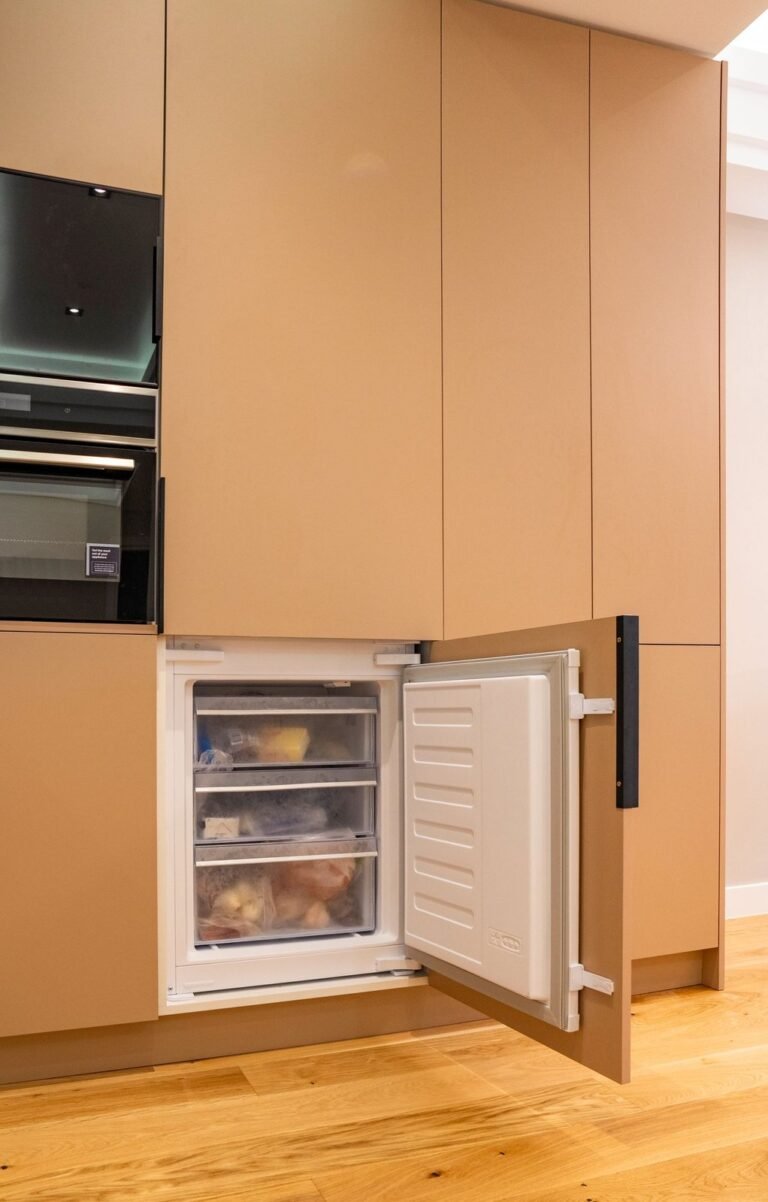
Freezer space also needs a decision. If you intend to freeze some food later, leave a practical portioning area now. How to Organize a Small Kitchen Freezer can help you locate usable space without treating the freezer as an unlimited escape route for an overlarge menu.

Write the timetable backward from serving
Choose an intended serving window, then work backward using the recipes’ actual instructions. Mark the main’s cooking and resting stages, the point when sides enter the oven, and any finishing work. Add realistic time for preheating, washing tools, and moving pans safely.
Do not create a chain that depends on everything finishing at the exact same minute. Choose one side that is pleasant without last second attention and one dessert already finished. If two dishes require incompatible oven settings at the same stage, change the menu rather than inventing a compromise temperature.
Keep the plan visible away from splashes. A simple handwritten sequence is easier to consult than several open phone tabs. Add a clear note about which dish can be dropped if the main runs late. Optional food should remain optional when the kitchen becomes busy.
Create three working zones, not more counters
You need a prep area, a safe heat resistant landing area for hot pans, and a clear route between sink, fridge, and cooker. These can be small, but they cannot all be the same occupied patch of counter at once.
Put away appliances unrelated to the menu. Use How to Keep Small Kitchen Counters Clear to identify what can leave the work area temporarily. Do not use the stovetop as storage, balance trays over an active sink, or place hot cookware on a chair where someone might sit.
Set out serving utensils and trivets before cooking starts. Match each dish to a serving vessel, or decide to serve directly from suitable cookware. A separate platter for every item creates more lifting and washing without necessarily improving the meal.

Let a helper own a contained task
In a narrow kitchen, an extra person can create more traffic than progress. Give a helper one defined job outside the cooking lane: setting out clean plates, checking the written sequence, or gathering empty packaging. Keep knife work on a stable, appropriate surface.
If someone brings a dish, agree on its arrival condition. Ask whether it arrives ready to serve, chilled for later reheating, or unfinished. An unplanned casserole that needs your oven during the roast’s final stage is not a small addition; it changes the cooking schedule.
Avoid sending people across the kitchen with hot pans while another person opens the fridge. Pause, clear the route, and move one thing at a time. The few seconds spent communicating are easier than dealing with a dropped dish in the only walkway.
Keep the sink usable throughout the cook
Wash a board or mixing bowl when you finish with it rather than parking it under the next tool. Keep food scraps contained and use a small designated space for items awaiting washing. Empty packaging should leave the work area promptly.
Do not fill the only sink with a long soak when vegetables, hands, or equipment still need rinsing. Keep clean drying space separate from raw food work. If there is no dishwasher, How to Wash Dishes in a Small Kitchen Without a Dishwasher offers a fuller washing setup; the holiday version is simply to prevent a queue of bulky cookware.
Stop for a brief reset between major stages. Put dry utensils away, replace a wet cloth, and clear the hot pan landing zone again. This is part of cooking time, not a failure to move quickly enough.
Plan the finish and the leftovers together
Before service, check the recipe sequence again rather than relying on the clock alone. Finish the dishes that need attention, keep food at safe temperatures as appropriate, and avoid leaving cooked food sitting while waiting for a decorative flourish. Follow recognized guidance for safe holding, cooling, and refrigeration.
Choose a serving location that does not obstruct the cooker. If the table is also the only prep surface, clear it completely before setting food down. How to Serve and Eat Dinner in a Small Apartment Without a Dining Table covers practical serving arrangements when there is no separate dining area.
Have clean, shallow containers ready and portion leftovers promptly according to food safety guidance. Label what you keep and decide what you can realistically eat or freeze. How to Store Leftovers in a Small Kitchen provides the storage follow through. A smaller menu pays off here: fewer containers, fewer mystery portions, and an easier return to normal meals.

The useful definition of a successful feast
Success is a main cooked properly, sides that reach the table in a reasonable window, and a kitchen people can move through. It is not a dozen dishes or a perfectly synchronized photograph. Protect the important tradition, simplify the supporting food, and leave breathing room in both the fridge and the timetable. Next time, keep the menu notes that worked and remove the dish that demanded too much space.
FAQ
Do I need a whole turkey for a holiday meal?
No. A smaller roast, turkey breast, or braise may fit the oven, refrigerator, and number of diners better. Follow a trusted recipe for that specific main.
Can I prepare every side the day before?
Only if the recipes support it and you have safe chilled storage and a workable reheating plan. A few useful components are often easier to manage than several assembled dishes.
What should I do if the oven schedule is too crowded?
Replace one oven side with a compatible stovetop dish or a dish that does not require last minute heat. Do not improvise cooking temperatures to force incompatible recipes together.