How to Store Gift Wrap, Bags, and Cards in a Small Apartment
A roll of wrapping paper is easy to buy and surprisingly difficult to put away. It leans behind a coat, falls into the closet, and emerges with a crushed end just when you need it. Add reusable bags, tissue, ribbon, and cards, and a small gift wrapping stash can occupy several unrelated corners.
To store gift wrap, bags, and cards in a small apartment, give the long items a protected shape and the little items a portable home. You do not need a craft room or a permanent wrapping station. You need one main storage location, a small working kit, and a limit that keeps saved supplies usable.
Gather the supplies before choosing a container
Collect paper rolls, flat sheets, bags, tissue, ribbon, bows, tags, unused cards, tape, and wrapping tools. Look behind doors and inside shopping bags, but do not turn this into a whole apartment sorting project. The goal is to see the real dimensions and quantity of the wrapping collection.
Separate supplies you can use now from damaged leftovers. Recycle paper where local rules allow, and check restrictions on metallic finishes or mixed materials. Keep only clean, sound bags with working handles. A torn bag that needs an elaborate repair is not automatically a useful saving.
Leave ornaments and seasonal display pieces out of this session. How to Store Holiday Decorations in a Small Apartment handles those different shapes. Wrapping supplies may share the same cupboard, but they need their own container so getting a birthday card never means unpacking a tree.
Choose a storage location by the longest roll
Measure the longest paper roll, including its tube ends. Then measure the proposed closet gap, door clearance, or under bed space. Include the distance needed to lift or slide the container out. A bin that fits a cavity but cannot be removed conveniently is not a successful fit.
Keep paper dry and away from damp exterior corners, plumbing leaks, or areas where cleaning splashes reach. Avoid pressing rolls against a heater or blocking a building vent. A location near the place you normally wrap is helpful, but a dry accessible cupboard beats a convenient damp nook.
Decide whether the stash will stand upright or lie flat. Mixing both arrangements can work when long rolls need a different position from cards and ribbon, provided everything remains in one clearly defined zone rather than scattered throughout the home.

Store rolls upright without making an avalanche
A slim, stable bin or purpose made tall bag can hold paper vertically. The container must support enough of the roll that it does not bend or topple. Check that its base stays stable when the tallest roll is removed, especially if only a few rolls remain.
Stand rolls loosely enough to lift one without dragging its neighbors out. Avoid forcing thick rolls into tight compartments. Secure an opening paper edge with a reusable band or a loose paper sleeve; do not put adhesive tape directly across the decorative surface if it may tear the sheet.
Use a modest roll limit based on the container, not on every color you might someday need. One versatile paper and a few genuinely useful seasonal choices may cover more occasions than a crowded assortment of nearly empty tubes.
Use flat storage when vertical space is scarce
A long shallow container works under a bed if it clears the frame, wheels out or slides easily, and does not block anything the bed needs to function. Check the lid height as well as the base. Paper edges should not rub against rough hardware every time you retrieve the box.
Keep rolls parallel, with enough space that the lid closes without crushing them. Flat sheets can go in a large envelope or folder within the container. Do not fold beautiful paper repeatedly just to make it fit a box you already own.
The measurements in Under-Bed Storage Ideas for Small Apartments help assess that location. If wrapping happens frequently, consider whether bending to floor level each time will discourage you from returning supplies. A slightly less hidden shelf may be the more maintainable choice.
Make an over door organizer earn its space
An organizer with long pockets can suit a closet door, but check both the door and the loaded organizer before committing. Confirm that the door closes normally, the hardware matches its thickness, and nothing scrapes a painted surface. Follow the organizer’s load limit and your lease requirements.
Do not overload shallow pockets with heavy tools or thick stacks of bags. Keep long rolls restrained so they cannot swing into the doorway. If the organizer bumps clothing or prevents a door from opening fully, it is competing with daily use rather than solving a storage problem.
For the broader door clearance questions, see Over-the-Door Storage Ideas for Small Apartments. The wrapping version should be narrow and predictable: the items you need, within the pockets designed for them, without making a second curtain of loose bags.
Nest gift bags by size and occasion lightly
Flatten each bag along its existing creases, smooth the base, and tuck handles inward without pulling them tight. Sort into a few practical groups such as small, medium, and large. Put smaller bags inside a larger sound bag or stand each group in a shallow file style section.
Avoid sorting into so many occasions that every section contains only one bag. A neutral bag can handle several celebrations; an elaborate labeling system does not make it more useful. Keep delicate finishes from rubbing against abrasive decorations or exposed tape.
Set a capacity limit now. When the bag compartment is full, use some, pass along clean extras appropriately, or stop saving every incoming bag. A collection that cannot be lifted out as one tidy group is likely holding more than your household needs.

Protect tissue and keep ribbon from tangling
Flatten sound tissue gently and store it between two pieces of clean card or inside a wide envelope. Keep it above heavier supplies rather than underneath a stack of rolls. Accept a few normal creases; do not save tissue that is torn, stained, or so crumpled you would not want to use it.
Keep ribbon on its original spool when possible. Contain loose lengths individually with a small reusable tie or paper sleeve, then group them in a shallow compartment. Store structured bows separately so they do not become flattened under tape dispensers.
Avoid elaborate dowel systems unless you already have a suitable safe setup and use ribbon often. A small box of untangled, visible options is easier to retrieve from a rental closet than a homemade installation that obstructs the shelf.

Give cards a shallow box, not a deep pile
Separate unused greeting cards, blank note cards, envelopes, and gift tags. Keep matching envelopes with the cards they fit. Simple dividers for everyday occasions and seasonal cards are usually enough. Check the box depth so cards stand or lie without bending when the lid closes.
Sentimental cards belong in a separate memory collection, not among blank cards you need to grab quickly. How to Organize Paperwork in a Small Apartment explains another category with different retention needs; neither household documents nor keepsakes should quietly take over the wrapping kit.
If you find yourself buying duplicate cards, put the most versatile ones at the front and check the box before shopping. A short note on the inside lid can list what is running low without creating another notebook to maintain.
Assemble the ready to wrap kit
Use a small caddy or lidded box for scissors, one working tape dispenser, tags, a pen, and a few ties or short ribbon lengths. Keep cutting tools safely contained and away from children. Store spare consumables in the main stash rather than filling the working kit with every backup.
Try a real retrieval rehearsal: take out one bag, tissue, a card, and the kit. If that requires emptying a shelf, revise the layout. The best system makes a single present easy, not only a long wrapping session once a year.
Return tools immediately after use. A kit with scissors missing and dried out pens still looks organized, but it does not function. Replace or remove failed supplies when you notice them rather than leaving the next wrapping session to discover the problem.
Fit the stash around everyday closet use
If the collection shares a hall closet, put occasional paper behind more frequently used household items without hiding the label. Keep the retrieval path clear and do not balance a long container overhead where it may fall. How to Organize a Hall Closet in a Small Apartment can help protect the closet’s daily purpose.
Seasonal clothing also needs its own boundary. Use How to Store Off-Season Clothes in a Small Apartment for garment storage instead of stuffing paper rolls into clothing bags. Friction and repeated handling can damage both paper and fabric.
A suitcase is only a sensible container if it remains dry, easy to access, and does not need unpacking every time you travel. How to Store Luggage in a Small Apartment covers that tradeoff. Do not make one infrequently used possession inaccessible by filling it with another collection.
Keep the label useful for other people
Label the outside with the contents rather than a vague seasonal name. A housemate should know that cards and tape are inside without asking you. Put the label on the side visible when stored, not only on a lid hidden under the bed.
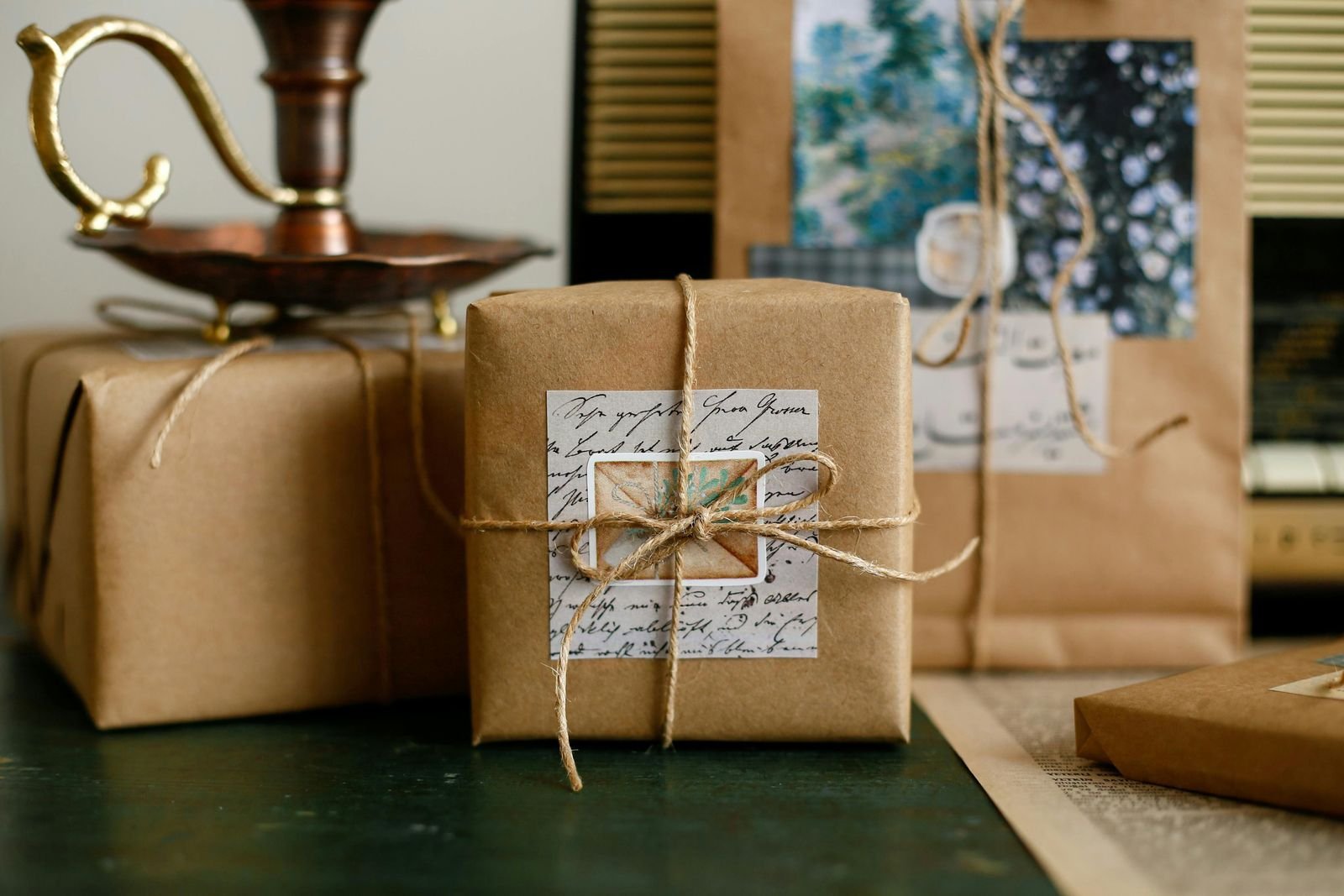
End each wrapping session with a short reset
Put usable paper back with its edge restrained, flatten bags before storing them, and return the caddy intact. Recycle unsuitable scraps rather than sweeping them into the box for later. Keep only offcuts large enough for something you actually wrap. With one protected roll zone, one bag section, and a small card box, the next gift can start without a search.
FAQ
Should wrapping paper be stored upright or flat?
Either can work. Upright storage needs a stable container that supports the rolls; flat storage needs enough length and a lid that does not crush them.
How many gift bags should I keep?
Use the capacity of one practical section as your limit. Keep sound bags in sizes you actually reuse rather than saving every bag automatically.
Can I keep wrapping supplies inside luggage?
Only if retrieving them and using the luggage remain easy. A frequently used suitcase usually creates more unpacking than it saves.