How to Set Up a Small Apartment Balcony as a Living Space
A small apartment balcony is easy to over-promise. A photo of an outdoor living room does not match a slab that holds two feet of depth, a Juliet railing, or a windy corner on a high floor. If you want to set up a small apartment balcony as a living space, start with what the balcony can honestly hold: often a chair and a plant, sometimes a small table, and rarely a full lounge set. The aim is to make the outdoor slab you already have usable, not to turn it into a storage closet or a safety problem.
This article is about that outdoor space — a Juliet-to-small balcony or a modest slab — and how to live on it. It is not an indoor plant plan; How to Add Plants to a Small Apartment Without Crowding It is inside the room. It is not privacy inside a studio. How to Create Privacy in a Studio Apartment covers the interior. Indoor furniture layout lives in How to Arrange Furniture in a Small Living Room. A reading nook and a yoga corner are indoor setups too. Here you are only dressing the balcony you already have.
Be honest about the balcony you have
Walk outside and measure the depth, the width, and the clear path to the door. A Juliet balcony may only take a narrow box of herbs and a folding stool you bring out when you sit. A shallow slab may take one chair and one plant. A slightly deeper balcony may take a small table and two chairs, if the door still opens and a person can still step out.
Do not block a fire escape or an egress path. If the balcony is part of how you would leave the apartment in an emergency, or if a stair or a ladder crosses it, keep that route clear. A pretty seating arrangement is not worth a blocked exit. The same rule applies to the door swing: a chair that stops the door from opening fully does not belong there.
Weight is not theoretical. A balcony is not a storage unit for gym weights, a stack of boxes, or a heavy stone table you saw in a catalog. Keep furniture light and, when you can, hollow or folding. One person should be able to move each piece. If you are not sure what the building allows, ask the landlord or check the house rules before you add anything heavy. Do not drill through a railing or the deck without permission.
This is not a pet-proofing guide. If you share the balcony with an animal, use your building’s rules and your own judgment about height and gaps. The advice below is about making a small outdoor space livable for you, without turning it into a hazard.
Weight, drainage, and wind
Three practical limits show up on almost every rental balcony: weight, water, and wind.
Keep the load light. A folding chair, a small table, and a plant in a reasonably sized pot are a realistic set. A solid wood bench, a large ceramic planter, or a stack of unused furniture is not. Distribute weight rather than parking everything in one corner, and do not hang heavy objects from a railing that was not designed for that load.
Drainage matters more than it looks. Water has to leave the slab. Do not cover the whole floor with a mat that traps a puddle against the deck, and do not block the drain or the gap at the edge with a planter. After rain, the balcony should dry. A soaked pad against a landlord’s deck is how finishes suffer and how neighbors below get a drip they did not ask for.
Wind is the third limit, especially on upper floors. A lightweight chair can travel. A tall, empty pot can tip. A loose cushion can leave. Choose furniture with enough mass or a low profile, or bring pieces in when a storm is coming. Do not treat a high balcony like a sheltered backyard.
If you want a plant, start with one that matches the light and the wind, in a pot with a saucer you will actually empty. A single healthy plant is more livable than a row of pots that blocks the rail and the drain. Indoor plant styling belongs in the indoor guide already linked above; outdoors, the plant has to stand up to weather and still leave you a place to sit.
A chair, a plant, and a privacy screen that stays legal
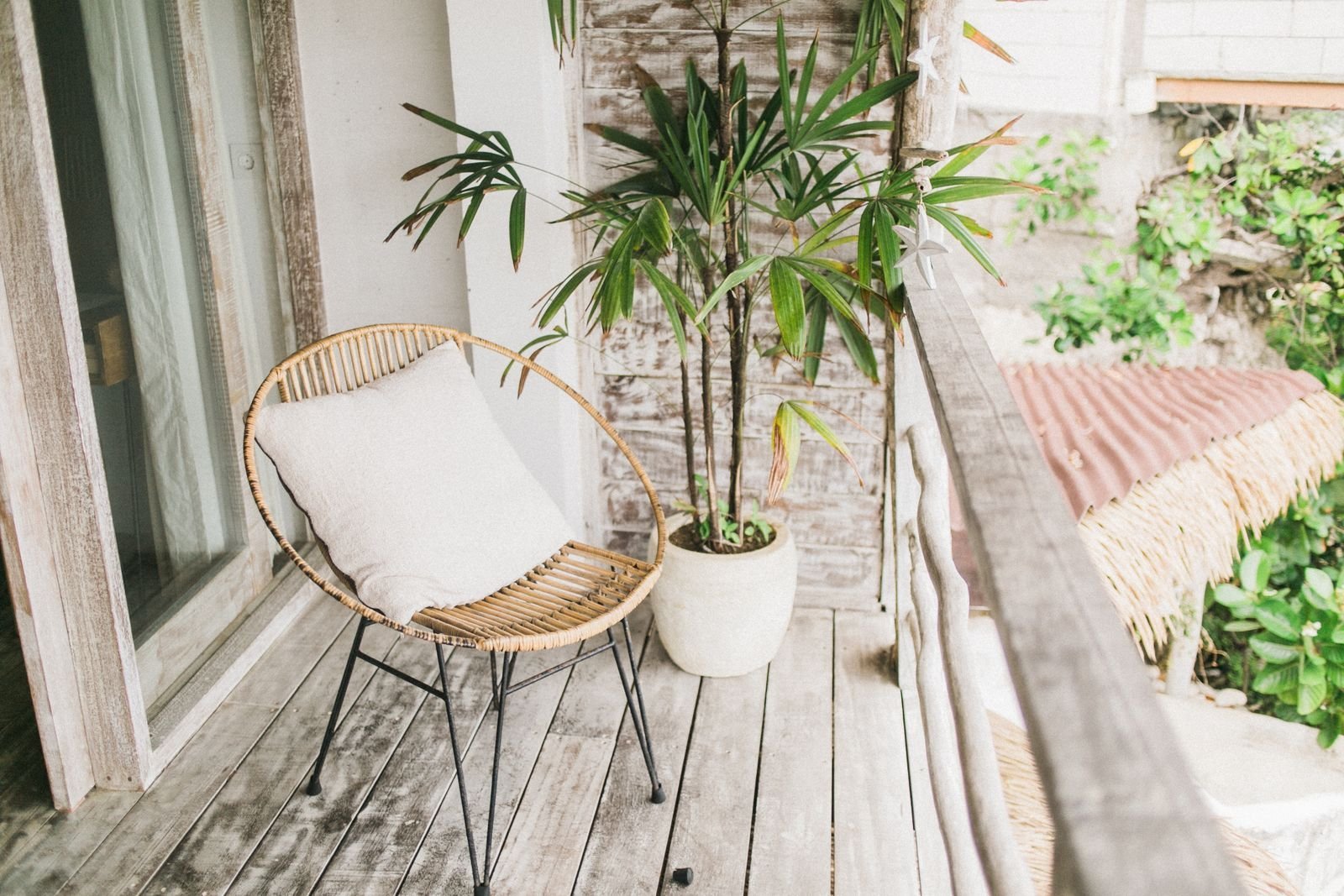
A chair and a plant are the honest core of many small balconies. Add a small table only if it still leaves a path. Folding pieces are easier to live with because they can come inside when you need the slab clear.
A privacy screen is tempting when you look into another kitchen or a walkway. It has to stay within building rules, and it cannot become a sail. A heavy, unapproved screen, a sheet lashed to the railing, or a tall panel with no gap is how a gust turns your privacy idea into a problem for the railing and for the person below. If the building allows a screen, choose a modest, well-secured one that does not block required openings or hang over the edge. If the building does not allow it, do not install one.
Indoor curtain methods are a different project. How to Hang Curtains in a Rental Apartment and How to Decorate a Rental Apartment Without Damaging Walls are for the interior. On the balcony, do not drill the railing or the slab to hang a curtain as a casual weekend fix. Ask first, or use a free-standing, weighted solution that the rules already allow.
You also should not run a grill or a space heater on the balcony if the building forbids it. Many buildings do. An indoor heater is not an outdoor heater, and a grill is a frequent lease and fire-code issue. If the rules are unclear, ask. The balcony is not the place to invent a workaround.
A yoga mat or a reading chair can live on the balcony only if the space is actually large and private enough, and only if you will bring soft items in when the weather turns. The indoor versions of those corners are already covered in How to Set Up a Yoga or Stretch Corner in a Small Apartment and How to Set Up a Reading Nook in a Small Apartment. Do not force those full setups onto a slab that only holds a chair.

A floor mat, rain, and where the cushions go
If you add a floor mat, choose one that lets water through or dries quickly, and that will not trap moisture against the deck. A thick, solid mat that stays wet under a planter is a poor match for a rental slab. Lift the mat after a heavy rain if water has pooled, and do not nail or glue it down.
Cushions should not live outside as the default. Bring them in when it rains, and when you will not be on the balcony for a stretch of days. A small indoor bin, a hall closet, or a chest by the door is a better home than a soaked cushion over a weekend. If you use covers, they still need to come off and dry; a cover that traps wet foam is not protection.
Plan the path for those cushions before the first storm. If the only place they fit is on the bed or in the one hallway, you will leave them out “just this once.” A slim indoor home for two cushions and a throw is part of setting up the balcony, not an afterthought.
Lights and small decor should be light, unsecured only if they cannot fly, and never a reason to drill the rail. Battery lanterns you can carry inside are easier than a string you have to attach without permission.

A winter pack-down that still fits the apartment
When the season turns, pack the balcony down in a way a small apartment can actually absorb. Fold the chairs. Empty the saucers. Bring cushions and textiles inside. A hardy plant may stay if the climate and the pot allow it; a tender plant should come in, and only if you have a place for it that does not crowd the room. The indoor plants article already linked above will help you place it without blocking a path.
Do not leave a stack of furniture outside all winter just because you have no indoor corner. Either keep one hardy chair if the building and the weather allow it, or fold everything and store it under a bed, behind a door, or in a closet. A balcony packed with unused chairs under a tarp is storage in the air, not a living space, and it can still be a wind and weight problem.
In spring, bring back only what you used last year. If you never sat in the second chair, it does not need to return. The test of a small balcony setup is not how complete it looks from the street. It is whether you go outside and sit, and whether the slab stays safe, drained, and clear.

Practical takeaways
- Be honest about the balcony you have. A chair and a plant are often enough; a full outdoor living room usually is not.
- Keep weight light, keep drains and the door path clear, and do not block a fire escape or an egress route.
- Choose a privacy screen only if the building allows it, and only if it cannot become a sail. Do not drill a railing or the deck without permission.
- Use a floor mat that will not trap water against the deck, and bring cushions inside when it rains.
- Pack down in winter so the furniture still fits the apartment. Do not run a grill or a space heater if the building forbids it.
FAQ
How do I set up a small apartment balcony as a living space if it is only a few feet deep?
Start with one chair and one plant, and add a small folding table only if the door still opens and you can still walk out. A Juliet balcony may only take a stool you bring out when you sit. Keep the path and any fire escape clear.
Can I put a privacy screen on a rental balcony?
Only if the building allows it, and only if the screen is modest, well secured, and not a sail in the wind. Do not lash a sheet to the railing or drill the rail without permission. If the rules say no, skip the screen and use the indoor privacy and curtain guides for the room itself.
What kind of floor mat is safe on a rental deck?
Choose a mat that lets water through or dries quickly, and that does not block a drain. Lift it after heavy rain if water has pooled. Avoid a thick, solid mat that stays wet against the deck, and do not glue or nail it down.
Where should cushions go when it rains?
Bring them inside. Plan a slim indoor home — a bin, a closet, or a chest — before the first storm. A cover can help between showers, but wet foam left in a cover is still a problem.
Can I use a grill or a heater on the balcony?
Not if the building forbids it, and many buildings do. Do not treat an indoor space heater as outdoor heating, and do not assume a small grill is allowed. Check the lease and the house rules first.