How to Keep Towels from Smelling Sour in an Apartment
A sour towel is usually a drying problem, not a mystery stain. In an apartment, a bath towel may come out of a shared or in-unit machine already musty, or it may smell fine at first and go sour after one hang in a tight bathroom. The fabric stays damp in the fold, in a crowded machine, or in a hamper, and that lingering moisture is what you smell the next time you use it. If you want to keep towels from smelling sour in an apartment, the fix is to wash them in a way that actually rinses, and to dry them all the way through before they go back on the bar or into the closet.
This article is the sour-smell problem and the fix, not the calendar for how often linens should be washed. That schedule lives in How Often to Wash Sheets and Towels: A Practical Laundry Schedule for Small Homes. The weekly trip to a shared machine is Apartment Laundry Routine: A Simple System That Fits Shared Machines. Larger or more delicate loads have their own plans in How to Wash a Comforter in an Apartment Laundry Room, How to Wash Pillows in an Apartment Laundry Room, How to Wash Delicates in an Apartment Laundry Room, and How to Wash Gym Clothes and Activewear in an Apartment. If you do not have a dryer, or the building dryer is weak, use How to Dry Clothes in a Small Apartment Without a Dryer and Best Clothes Drying Racks for Small Apartments. A hamper that holds damp towels against other laundry is a common cause, and choosing one is Best Laundry Hampers for Small Apartments. Kitchen cloths are a different job, covered in Best Dish Towels and Kitchen Cloths: What to Buy and How Many You Need. What follows is why bath towels go sour in an apartment, and how to get them fully dry.
Why towels go sour in a small apartment
The smell shows up when a towel never fully dries. A tight bathroom with a closed door and a weak fan can leave a hanging towel damp in the middle for hours. Two towels sharing one bar fold against each other and stay wet where they touch. A towel bunched on a hook dries even less. If you hang a towel that is already musty from the machine, the bathroom cannot fix it.
The wash side of the problem is just as common. An overloaded machine does not rinse detergent out of thick fabric, and leftover soap holds odor. A shared washer that already smells musty will pass that smell into the load. A dryer on a low or timed cycle may stop while the core of a bath towel is still cool and damp. And a damp towel left in a hamper, even overnight, can sour before you ever hang it. None of this requires a rare chemical problem. It is moisture, leftover detergent, and a place that cannot dry air.
A fragrance spray, a scented bead, or a strongly perfumed detergent can cover the smell for an hour and leave it in the fabric the next day. Do not treat a spray as a substitute for actually drying the towel. You do not need a miracle additive. You need a complete rinse, complete drying, and enough towels that one set can hang long enough to finish.
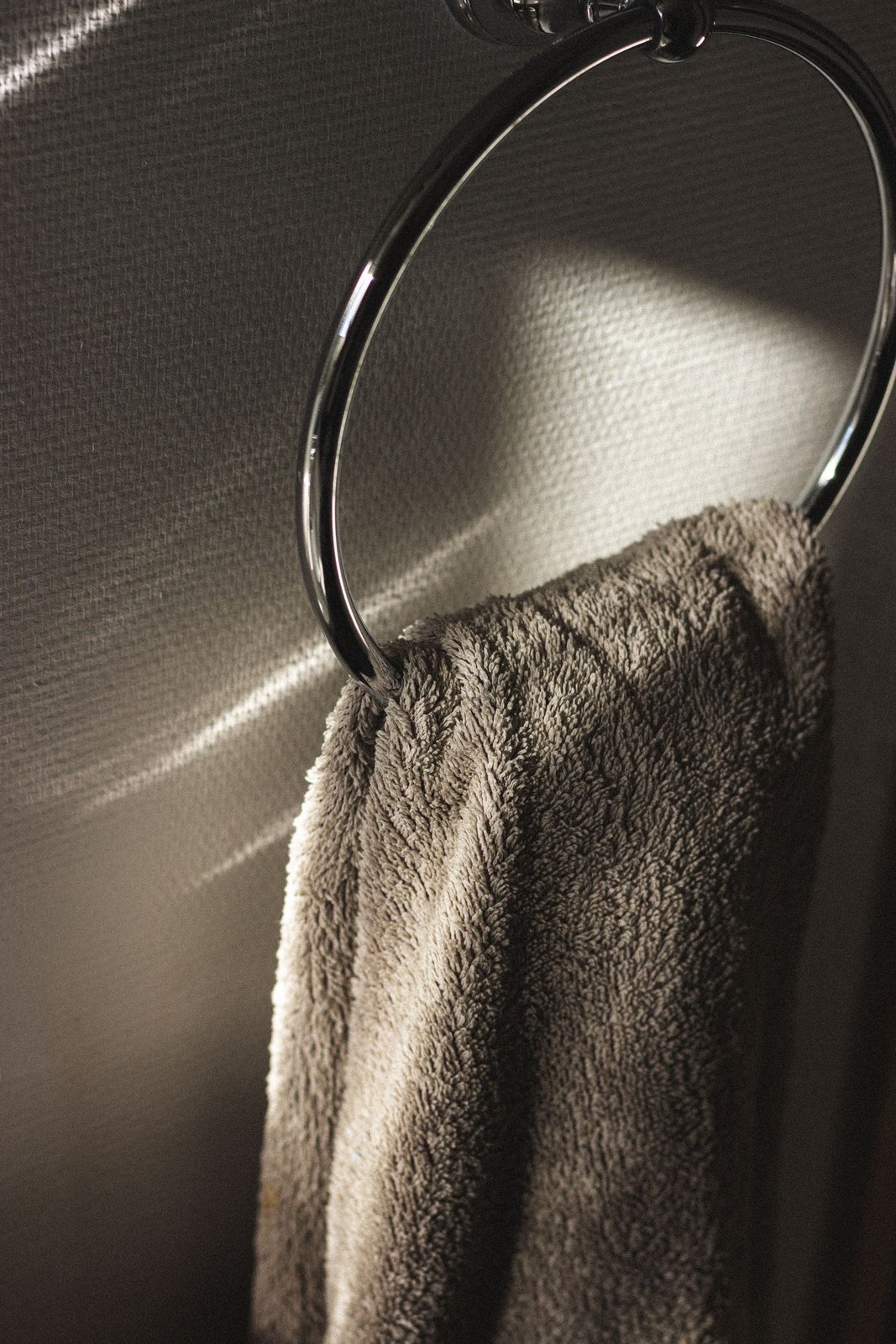
Wash so the towel actually rinses, and dry it all the way through
Wash towels with similar towels, not in a mixed load packed with jeans and sheets. They need room to move, and they need a rinse that can get through the pile. Use a normal amount of detergent, or slightly less if your machine is small or the water is soft; more soap is a common reason a towel feels sticky and then smells. If the washer has an extra-rinse option, use it for towels that already smell sour. Do not overload. If you have to push the door shut on a mound of fabric, take a few pieces out.
If a towel already smells, wash it before you use it again. One “refresh” hang in the bathroom will not undo a musty wash. A hot cycle can help on towels that the care label allows, but heat is not a requirement if the machine you have only offers warm, as long as the load can rinse and then dry completely. Skip a thick fabric softener layer that can coat the fibers and hold odor. If you like a little softness, use less than the bottle suggests, or skip it on the load you are trying to reset.
Drying is the step that decides whether the smell comes back. In a dryer, run towels until they are fully dry, not just warm on the outside. If the building dryer is low-heat or shuts off on a short coin cycle, add time, or finish the towels on a rack at home rather than folding them damp. Shake them out before they go in, and do not cram a large load into a small drum. If you hang towels to dry, spread them on a rack or a bar so air can reach both sides. A radiator or a heated towel rail can help if it is allowed in your unit and the towel is spread, not bunched; do not drape a wet towel over a space heater or block a vent.
Feel the seam and the middle of the towel before you fold it or hang it for reuse. If that part is cool or clammy, it is not dry. Give it more time. Folding a half-dry towel for a tidy shelf is one of the fastest ways to lock in a sour smell.

Own enough towels that one set can dry, and hang them so air can move
A single bath towel that you reuse all week in a small bathroom rarely has time to dry. Keep at least two bath towels per person in regular rotation, and more if the bathroom is damp or you shower more than once a day. One towel hangs and dries while you use the other. Wash the used one once it has had a real chance to dry, rather than throwing a still-damp towel into the hamper, where it will sit against other clothes.
Hanging matters as much as the count. Give each towel its own bar, ring, or hook, and spread it so the fabric is not folded thickly against itself. If the only bar is already full, use a short rack in a room with more air, or rotate the second towel on a hanger outside the bathroom. A tight bathroom with the door always shut and the fan off will fight you. Run the fan during and after a shower, and leave the door ajar if your layout allows it, so the hanging towels can finish drying.
Do not leave damp towels in the hamper “until laundry day” if that day is not today. A wet towel in a closed bag or a lid-down hamper is a reliable way to sour the towel and the clothes around it. If you cannot wash it yet, hang it until it is dry, then put the dry towel in the hamper. The hamper is for dry, dirty laundry, not for wet fabric.

When the washer is the source, and when to retire a towel
Sometimes the towel is not the only thing that smells. If several loads come out musty, including clothes that dried fully, the washer may need a clean. Follow the machine’s ordinary cleaning cycle or the building’s posted instructions if you use a shared laundry room. Wipe the door gasket, leave the door ajar after a wash if the machine is in your unit, and do not let wet clothes sit in the drum. You do not need a homemade chemical mix. An ordinary washer-cleaner tablet or a cleaning cycle, used as the maker directs, is enough. If a shared machine is consistently sour and the building will not address it, drying the load completely at home still helps, and you can ask the building to service the washer rather than trying to take it apart.
A towel that has been sour for a long time can often be reset with one thorough wash, an extra rinse, and a complete dry. If it still smells after that, wash it once more, alone, and dry it fully. If the odor remains in a towel that is also thin, rough, or permanently dingy, it may be time to retire it and use the replacements you already rotate. That is a practical choice, not a product ranking.
A short check after each shower helps more than a complicated routine: spread the towel, give it its own hanging space, and do not put it in the hamper until it is dry. After each wash, feel the middle before you fold. Those two habits are what keep towels from smelling sour in a small apartment bathroom.

Practical takeaways
Sour towels in an apartment are almost always towels that did not rinse well or did not dry all the way through.
- Wash towels with room to move, use a normal or slightly smaller amount of detergent, and add an extra rinse if they already smell.
- Dry them completely — in a dryer until the middle is dry, or spread on a bar or rack — and do not fold a clammy towel.
- Keep at least two bath towels in rotation so one can dry while you use the other, and give each towel its own hanging space.
- Hang a damp towel until it is dry; do not leave it in a hamper, and do not cover the smell with a fragrance spray.
- If several loads come out musty, clean the washer the ordinary way, or ask the building to service a shared machine.
A small bathroom and a shared laundry room make drying harder, but they do not require a special product. They require a complete rinse, enough air, and enough towels that one set can finish drying.
FAQ
Why do my towels smell sour right out of the machine?
The load may have been too crowded to rinse, leftover detergent may still be in the fabric, the washer itself may be musty, or the dryer may have stopped while the towels were still damp in the middle. Wash a smaller load, add an extra rinse, and dry them completely before you fold them.
Can I just spray a sour towel and keep using it?
No. A fragrance spray can hide the smell for a short time, but it does not dry the towel or remove leftover detergent. Hang it until it is fully dry, then wash it if the smell is already in the fabric.
How many bath towels do I need in a small apartment?
At least two per person in regular use, so one can dry while you use the other. Add another set if the bathroom stays damp or you shower more than once a day.
Should I wash sour towels in hot water?
Use the warmest setting the care label allows. Heat can help, but a complete rinse and a complete dry matter more than pushing a towel beyond what the fabric can take. An extra rinse is often the more useful option.
When is the washer the problem?
If several fully dried loads come out musty, clean the washer with its ordinary cleaning cycle, wipe the gasket, and leave the door ajar after a wash if it is your machine. For a shared machine, ask the building to service it rather than inventing a chemical mix.