
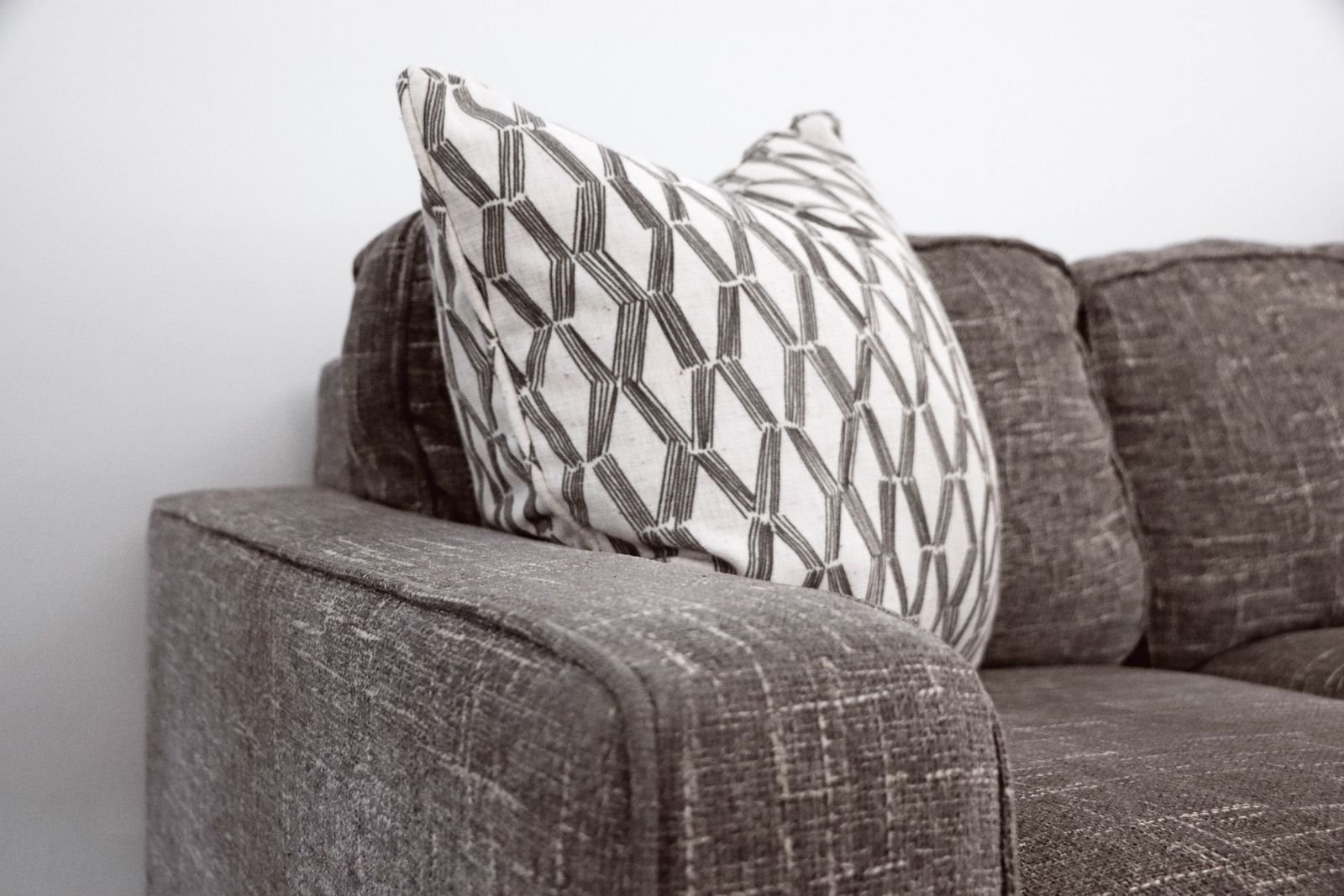
Best Throw Pillows for Small Sofas: Size, Fill, and Easy Covers
A small sofa has a job that a styled showroom couch does not: people need to sit down without first relocating a hill of cushions. The “best throw pillows for small sofas” are sized to the seat, filled so they stay plump after a weeknight slump, and covered in fabric you can unzip and wash. Extra pillows past that point are storage, not comfort.
This guide does not crown a brand. “Best” means choosing diameter or rectangle size, insert quality, cover fabric, and quantity for a compact US or UK living room—loveseats, apartment two-seaters, and short three-seat sofas that already share the room with a coffee table and a walkway.
Start with the sofa, not the pillow display
Measure before you browse:
- Seat width between the arms. This tells you how many pillows you can place and still leave a clear place to sit.
- Seat depth. A shallow apartment sofa (often around 20–22 inches / 50–56 cm of usable depth) cannot take two stacked rows of 22-inch European squares.
- Back height. Tall pillows on a low back look oversized and slide forward.
- Arm style. Thick rolled arms already take width; skinny track arms leave more room for a lumbar pillow.
A useful rule of thumb: leave at least one open seat after the pillows are in their everyday positions—not only after you have styled them for a photo and then dumped them on the floor.
If the room is visually busy already—patterned area rug, busy curtains, a lot of wall art—choose calmer pillow fabrics. If the sofa and walls are plain, one patterned pillow plus one textured solid is usually enough interest.

Sizes that work on compact sofas
Pillow “size” usually means the cover measurement. Inserts are often bought one size larger than the cover so the pillow looks full. Confirm whether the shop lists cover size, insert size, or both.
16-inch (about 40 cm) squares work on very small loveseats or as an inner layer. Alone, a pair can look undersized on a wider three-seater. 18-inch (about 45 cm) squares are the workhorse: two of them, one toward each arm, leave a clear middle seat on a loveseat. 20-inch (about 50 cm) squares suit a compact three-seater or a deeper loveseat—two plus a lumbar can work; three often crowd a true two-seater. 22-inch (about 55 cm) squares are statement pillows; use at most one on a small sofa, or skip them on a shallow seat.
Lumbar pillows (typically about 12 × 20 or 14 × 20 inches) often add the most comfort because they support a lower back without blocking the seat. Bolsters are rarely necessary and awkward to store when guests need the full cushion.
A simple formula: a loveseat takes two 18-inch pillows or one 18-inch and one lumbar. A compact three-seater takes two 18- or 20-inch pillows plus one lumbar, or three 18-inch pillows if you sit on the ends. On a sleeper sofa, prefer fewer, flatter pillows you can park in a basket at night.
Inserts and fills: why the inside matters more than the cover photo
A beautiful cover over a thin insert will look deflated by week two.
Down-alternative fiber fills are the usual apartment choice: generally easier to wash or spot-clean than down, cheaper to replace, and widely available. Denser inserts recover better after you lean on them. Down or feather blends feel soft but need regular fluffing, may poke through cheaper covers, and are not ideal if someone prefers to avoid feathers. Foam or structured cores hold a lumbar upright and feel firmer, less cozy for curling into a corner.
For a tailored look, many people use an insert 1 to 2 inches larger than the cover (a 20-inch insert in an 18-inch cover). Match sizes for a softer slouch. On a small sofa, slightly overfilled 18-inch pillows often look better than underfilled 20-inch ones. If you already own limp pillows, replacing inserts is cheaper than buying new decorative covers and repeating the sag.
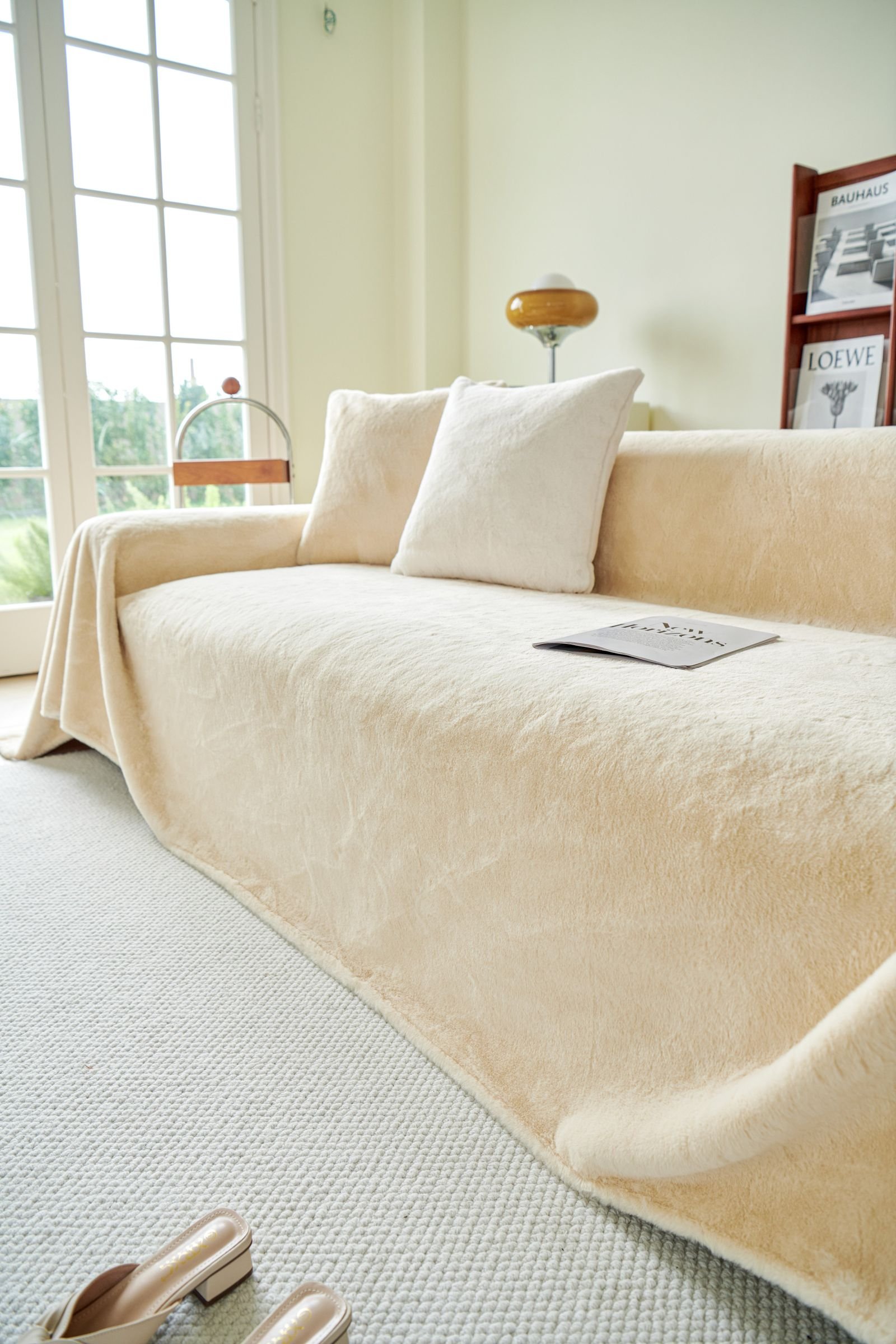
Covers you can actually wash
Removable zippered covers let you wash pizza-night stains without soaking the insert, change a seasonal color without storing five extra stuffed pillows, and keep a spare cover in a small closet.
Mid-weight cotton, linen blends, and tight performance weaves are easier to live with than delicate silk or heavily embellished shop pieces. Textured knits look warm—check whether they pill and whether the cover truly unzips. Pick one color already in the room and one supporting neutral. High-contrast patterns read as larger; charming on a single pillow, chaotic on four matching prints.
Follow the care label. Many covers prefer a gentle wash and air dry. When you wash them, fold them with the rest of your linens; a sheet-and-towel rhythm is a useful reminder, especially in homes that eat on the sofa. Wash inserts only if their own label allows it.
How many pillows—and where they go
Everyday placement should take under ten seconds to restore.
A two-pillow setup—one near each arm—is the easiest to live with. A three-pillow setup uses two related squares at the arms and a different texture or a lumbar in the middle. The middle pillow is the one you will move every time someone sits; make it the lightest.
If you like extra pillows for movie night, store them in a lidded basket beside the sofa instead of stacking them on the seat all day. That keeps a studio sofa usable; studio layout ideas can help you decide where the basket lives. Do not add so many throws that the sofa’s own back cushions slump forward. If the sofa already has loose back cushions, you may need fewer decorative pillows, not more.

Mixing texture without cluttering a small room
Texture does more than extra color in a compact space.
- Pair one nubby or knitted pillow with one smoother cotton or linen.
- Keep patterns in the same color family as a solid partner.
- Repeat a pillow color once elsewhere in the room (a throw folded over the arm, a stripe in the rug) so it feels intentional.
- Avoid mixing more than three fabrics on a two-seat sofa.
A knitted or crocheted pillow adds warmth, but chunky handwork can snag and is slower to wash—use it as the “special” pillow, not the one that absorbs every snack night.
If evening light in the room already does a lot of work—say from a well-placed desk or reading lamp—you do not need metallic or high-sheen pillow fabrics to make the corner feel finished. Matte textures photograph less “showroom” and hide daily wear better.
Window treatments change how pillow colors read. Strong daylight through sheers will wash out pale linen; evening blackout curtains will make jewel tones feel deeper. Look at fabric swatches in the room at night as well as at noon.
Buying without a closet full of leftovers
Start with covers and inserts as separate items when you can. That way you can replace a stained cover without throwing away a good insert, and you can size inserts correctly.
Buy for the sofa you own, not for a future sectional. If you move often, choose covers in colors that can work against a beige rental sofa or a gray one—warm neutrals and one darker accent travel better than a very specific pattern match.
Skip stuffed decorative shapes that cannot be washed, mini pillows that exist only for a photo, and sets of six sold for large sectionals. Return or rehome pillows that force you to sit forward on the seat; comfort is the quality test, not symmetry alone.
A practical buying checklist
Before you buy, confirm:
- I measured seat width, depth, and back height.
- The everyday arrangement leaves a clear place to sit.
- Square sizes are mostly 18 or 20 inches, with lumbar as an option—not a stack of 22-inch statements.
- Inserts are full enough (often one size up) and made of a fill I am willing to fluff or wash as labeled.
- Covers unzip and have a care method I will actually use.
- Colors relate to the sofa, rug, or curtains already in the room.
- I am buying two or three pillows for daily use, not a six-piece set “to style later.”
- Extra movie-night pillows have a basket or closet home.
How to choose—and how to apply it
The best throw pillows for a small sofa are a short, washable set: usually two well-filled 18- or 20-inch pillows, or one square and one lumbar, in covers you can unzip after a spill. Scale them to the seat you measured, pick inserts that stay plump, and let texture—not quantity—add interest. Keep everyday pillows easy to reset so the sofa remains a place to sit.
A small sofa should look finished when you walk in and feel available when you sit down. That balance is the whole point.

FAQ
How many throw pillows should a small sofa have?
Most apartment loveseats look and work best with two pillows. A compact three-seater can take three if one is a smaller lumbar or if you routinely sit at the ends.
What size throw pillow is best for a loveseat?
Eighteen-inch squares are a reliable starting point. Use 20-inch pillows only if the seat is wide and deep enough that they do not collide in the middle.
Should pillow inserts be larger than the covers?
Often yes, by about 1–2 inches, if you want a full look. Match sizes if you prefer a softer, less tailored pillow.
Are removable covers worth it?
Yes in almost every apartment. They are easier to wash, easier to store, and cheaper to replace than a whole stuffed pillow when something spills.
How do I keep pillows from taking over the sofa?
Limit daily pillows to the number that still leaves a seat open, and park extras in a basket. If you find yourself moving the same pile every evening, you own too many for that sofa.





7 Comments