
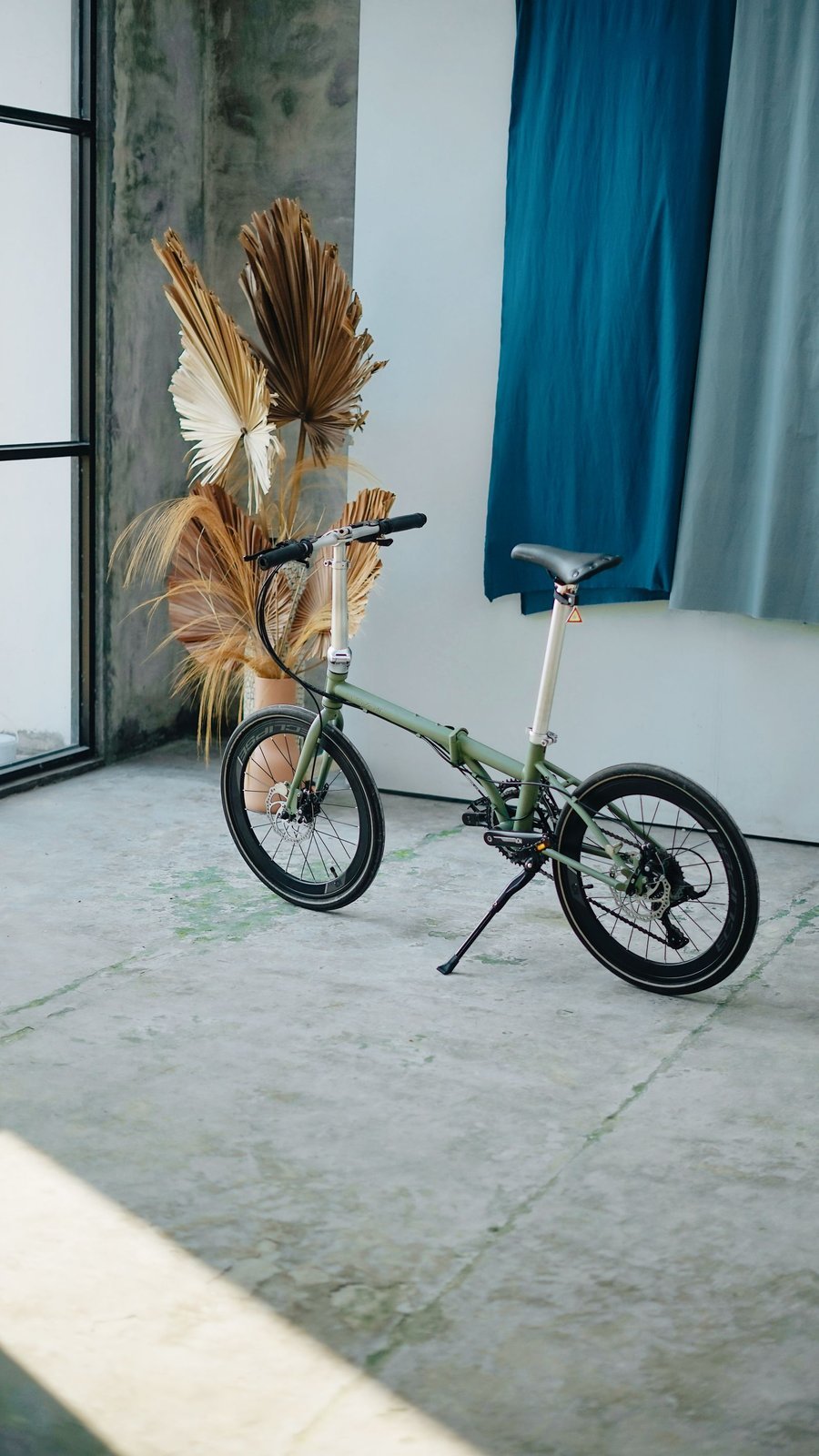
How to Store a Bike in a Small Apartment
A full-size bike does not put itself away like a pair of shoes. In a small apartment it can take the only clear patch by the door, lean a greasy pedal against a rental wall, or leave a wet tire track across the path to the sofa. The question is whether the bike has a home the lease, the building, and the room can actually support.
If you want to know how to store a bike in a small apartment, start by choosing a real place: a pad in the entry, a hallway the building rules allow, a bedroom corner, or a vertical stand that does not need a hole in the wall. Then decide whether the building’s bike room is simply the better answer. Floor storage is usually the easiest renter-friendly option; vertical storage can save floor space, but only with a no-drill path, or with permission and hardware you can remove cleanly. Protect the walls and floors, keep grease and wet tires off the sofa path, and never treat a stairwell or a blocked exit as parking.
This is not a general entryway makeover. Bags, keys, and a door landing strip are already covered in Entryway Storage for Small Apartments: A Calm Setup That Actually Fits and How to Set Up a Drop Zone in a Small Apartment Without an Entryway. Coats belong in How to Organize a Coat Closet in a Small Apartment, shoes in How to Organize Shoes in a Small Apartment, and suitcases in How to Store Luggage in a Small Apartment. Over-the-door racks help with bags, not a bicycle, as in Over-the-Door Storage Ideas for Small Apartments. Those guides handle bags and shoes. This one is about a full-size bike.
Where a bike can actually live
Start with the places that already exist, and check the lease and building rules before you treat them as permanent.
A pad in the entry can work if you have a little floor inside the door, the bike does not stop the door from opening fully, and no one has to climb over the wheel. Put a washable mat or tray under the tires so wet rubber and grit stay off the floor. This is bike parking, not a second drop zone; the bike needs its own clear footprint.
A hallway inside the apartment can work only if it stays a hallway. The bike should sit tight to a wall, leave a walking line, and never sit in a shared corridor, a stairwell, or in front of a fire door. If the building forbids hallway parking, that option is closed, even if the space looks empty.
A bedroom corner is often the most honest indoor option: out of the entry, off the sofa path, and away from guests. The tradeoff is rolling it through the living room, so you will need a clean-tire habit.
A vertical stand can shrink the floor patch if it is stable and the ceiling is high enough. Choose a freestanding stand that needs no drilling. A wall hook is a different decision: check the lease, use proper hardware only where you may make a small, repairable hole, and keep the freestanding stand as the no-hole option. How to hang things in a rental without casual wall damage is covered in How to Decorate a Rental Apartment Without Damaging Walls.
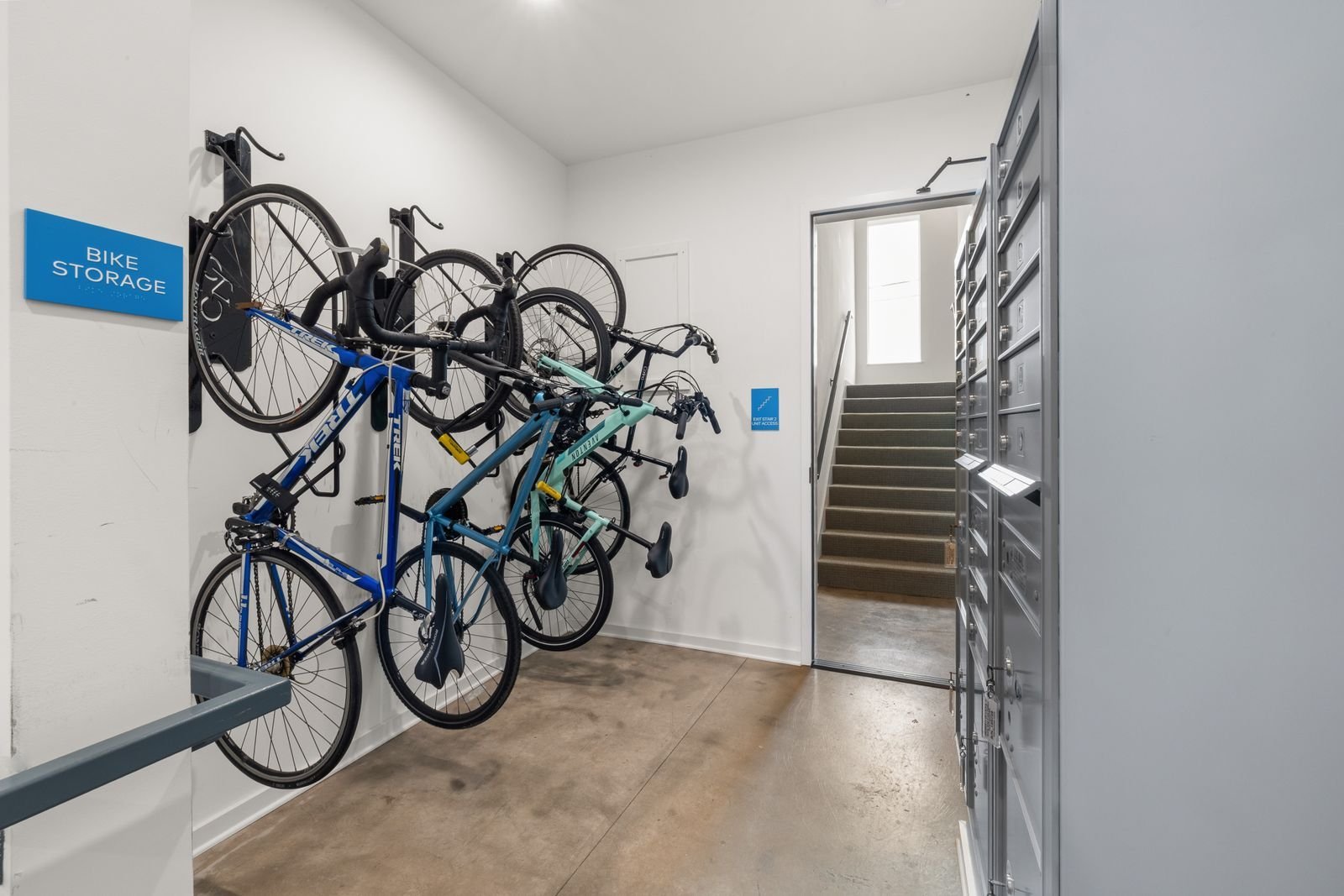
Sometimes the best home is not inside the apartment at all. If the building has a bike room or rack you can actually use, and you are comfortable with its access and security, that room can free the entry, hallway, and bedroom. Keep the bike inside when the room is full, locked at the wrong hours, or not a place you trust. Indoor storage is not automatically better just because the bike is closer to the sofa.
Floor storage versus vertical storage
Floor storage is the default in a rental because it needs no holes: a mat, a simple floor stand, or a bike that sits stably in a measured corner. It uses more floor, but it is easier to move, roll out, and take with you at move-out. If the only open floor is the walkway, it is not a fit. Look at a corner, not the middle of the room.
Vertical storage earns its space when you cannot spare the floor. A freestanding vertical stand keeps the bike upright on a smaller footprint without assuming you can put a hook into a stud. Measure height as well as depth: handlebars and a tall frame can still jut into a walkway if the stand sits too close to a door swing.
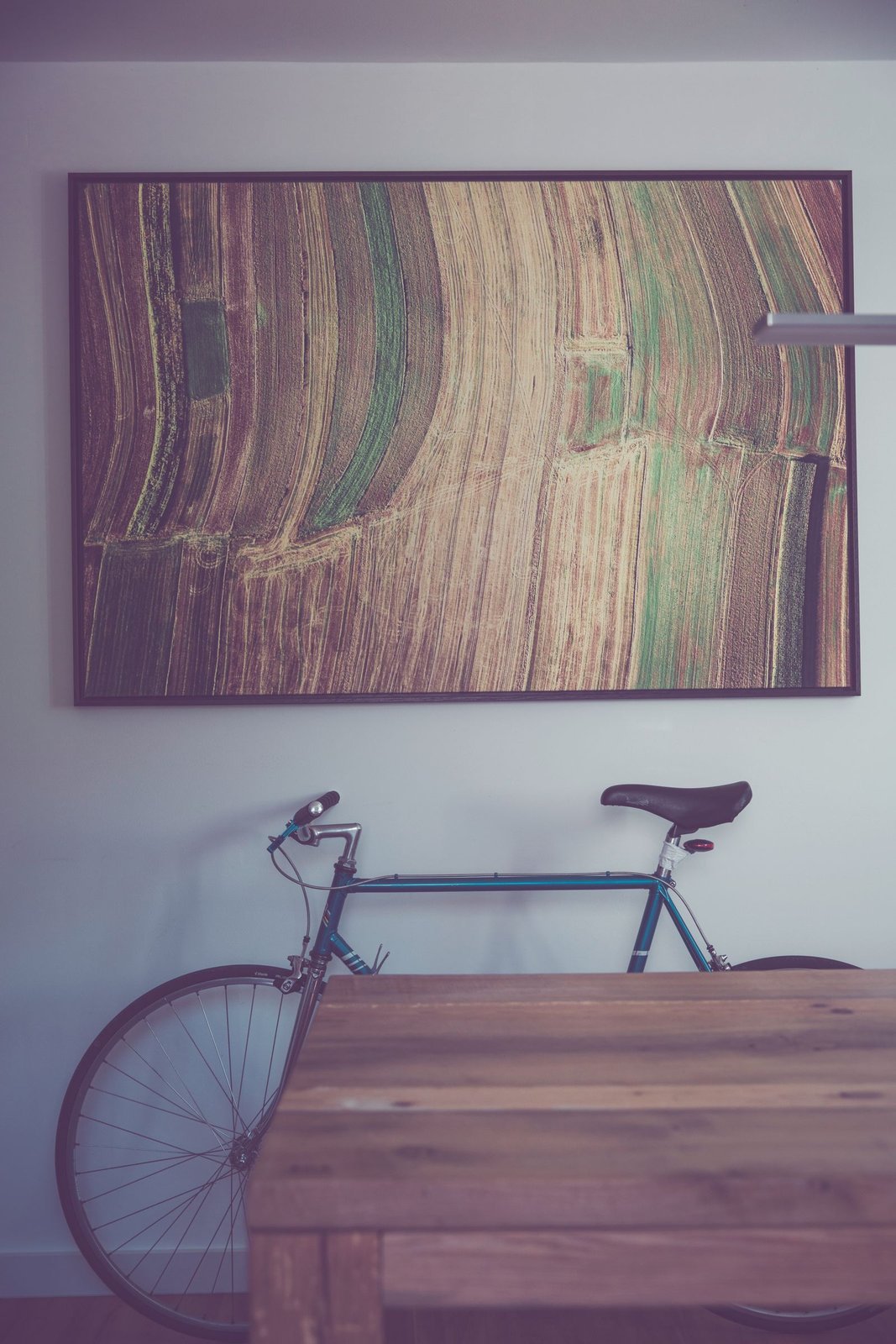
Do not treat a raw lean against the wall as vertical storage. A pedal or greasy chain can mark paint, and a bike that slips can scratch the floor. If you must lean it briefly, put a mat under the tires and a soft buffer against the wall, then move it to a stand or a true corner.
Wall-mounted hooks can be tidy, but they are not the starting point in a rental. Check the lease and, if needed, ask before you drill. If you get approval, use hardware meant for the bike’s weight, into a structure that can hold it, and plan how you will patch later. If you cannot get approval, stay with the no-hole stand or the bike room. Improvised hooks, over-the-door hangers, and closet rods are for lighter things. A falling bike is a safety problem, not a shortcut.
Protecting walls and floors in a rental
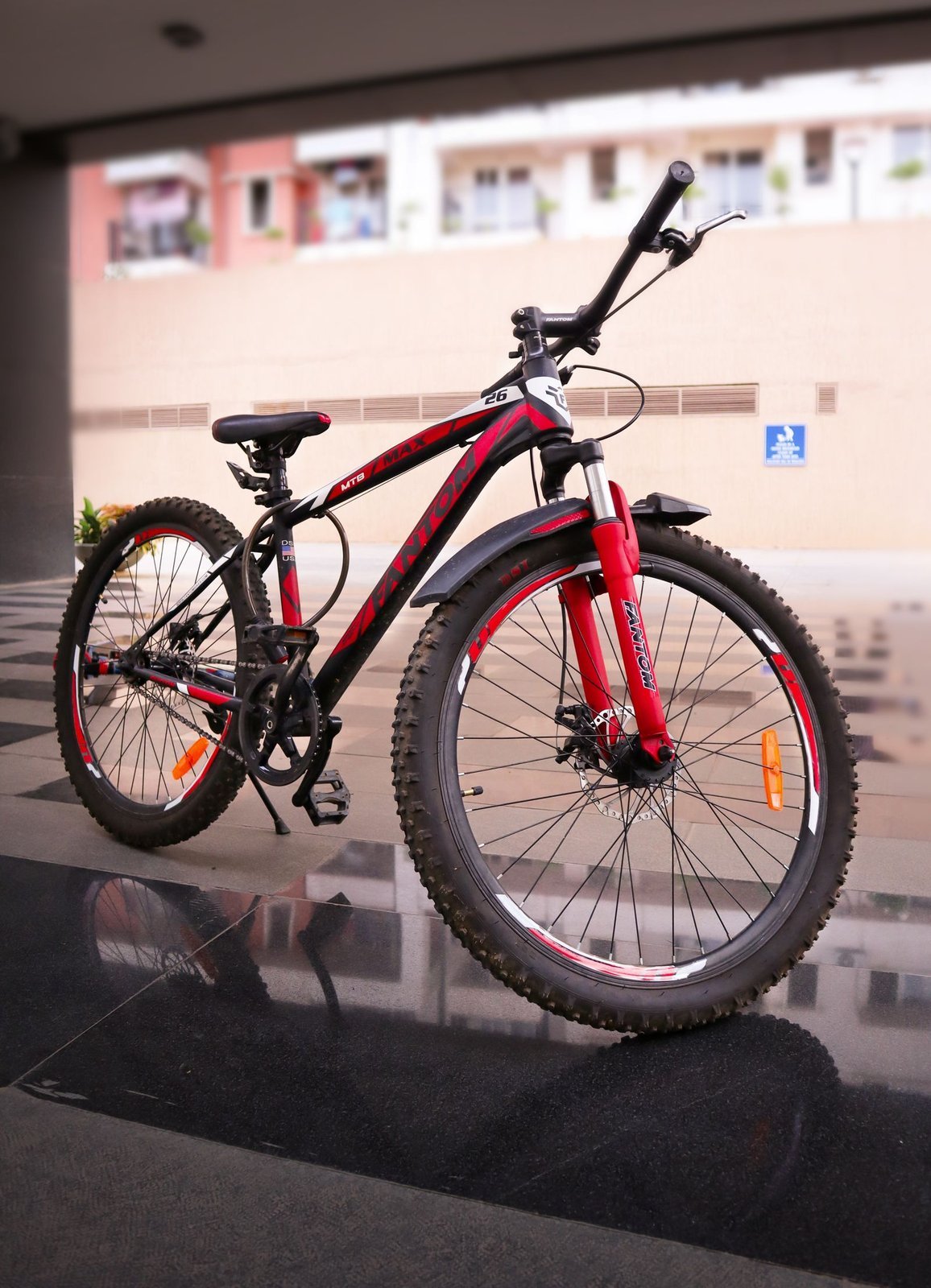
The aim is to store the bike without leaving a mark you will pay for later, especially at the contact points: tires, pedals, handlebars, and the chain side.
Put a dedicated mat, tray, or washable rug remnant under the wheels. It catches water, grit, and small oil spots, and it marks the bike’s home. On wood or vinyl, this matters as much as on tile. A kickstand can dent a soft floor if it always sits on the same unprotected point.
Keep the frame off painted plaster or wallpaper. A freestanding stand is cleaner than a lean. If a stand has contact pads, use them. If you use a wall hook with permission, keep wheels and pedals off the wall, and use a simple buffer that comes off at move-out without pulling paint.
Do not screw a rack into masonry, a hollow door, or a spot you do not have permission to use, and do not assume a tension rod or coat hook will hold a bicycle. The no-hole path is a floor pad or freestanding stand. The approved-hole path is proper hardware you can remove and a wall you can restore.
Keeping grease and wet tires off the sofa path
The path from the door to a bedroom corner often crosses the living room. That is fine if the tires are reasonably clean and the chain is not wet with oil. It is not fine if every ride paints a line across the rug. A simple arrival habit is enough:
- Stop on a mat just inside the door, or just outside if the building allows it and the bike is not left in a public exit path.
- Wipe wet or muddy tires before you roll farther. A rag by the door is enough; you do not need a hose.
- If the chain faces the sofa, turn the bike so it faces the wall, not the upholstery.
- Let a dripping bike stand on the mat until it is only damp, then move it to its corner or stand.
If that habit feels like too much every day, the bike room, or a pad that never leaves the entry, is the better plan. Do not leave the bike in the only walkway “just until it dries,” which is how a temporary park becomes a trip hazard.
What is not a solution
Do not store a bike in a stairwell, on a landing, or in front of an exit, a fire door, or a shared corridor the building has not approved. Those places may look unused, but they are still egress routes, and a bike there is often against the rules.
Do not block the apartment door from opening all the way, or leave the bike where someone has to sidestep a pedal in the dark. If the only indoor floor that fits is the path everyone walks, use the bike room or a vertical no-hole stand in a true corner instead.
A coat closet, an over-the-door hook, and a luggage gap are the wrong shape and weight rating for a bicycle. Keep those for coats, bags, and suitcases, and give the bike its own plan.
A renter-friendly bike storage checklist
Use this before you lean the bike on the nearest wall:
- I have checked the lease and building rules, and I am not using a stairwell, shared exit, or off-limits hallway.
- The bike has a defined home: an entry pad, an allowed indoor hallway that still walks, a bedroom corner, a freestanding stand, or the building bike room.
- If I want the bike off the floor, I have a no-hole vertical stand, or approval and proper hardware for a hook I can remove later.
- There is a mat or tray under the tires, and the frame is not rubbing painted walls.
- Wet tires and the chain do not cross the sofa path until they are wiped, and the bike is not left in the only walkway to dry.
How to store the bike—and how to apply it
The calm way to store a bike in a small apartment is to pick a real home and protect everything it might touch. Start with a pad in the entry, an allowed hallway, a bedroom corner, or a freestanding vertical stand, and use the building’s bike room when that is the better answer. Prefer no-hole storage unless you have permission for a proper hook. Keep grease and wet tires off the sofa path, and never treat a stairwell or a blocked exit as parking. A tight home can hold a bicycle, but not one that lives in everyone’s way.
FAQ
How do you store a bike in a small apartment?
Give it a defined home that does not block a door or exit: a mat in the entry, an indoor hallway the building allows, a bedroom corner, or a freestanding vertical stand. If those options crowd the home, use the building’s bike room when you can.
Is it better to keep a bike inside or in the building bike room?
Use the bike room if you can access it when you need the bike and you are comfortable with the security. Keep it inside when the room is full, poorly timed, or not a place you trust, and then park it in a true corner or on a stand, not in a walkway.
Can I hang a bike on the wall in a rental?
Only if the lease allows it, or you have approval, and you use hardware meant for the bike’s weight that you can remove and patch later. Otherwise use a freestanding vertical stand or floor parking on a mat. Do not hang a bicycle from an over-the-door hook or a closet rod.
How do I protect rental floors and walls from a bike?
Put a mat or tray under the tires, keep pedals and the chain off the paint, and avoid a raw lean against the wall. Wipe wet tires before you roll across the room, and do not leave the kickstand on the same unprotected spot of a soft floor every day.
Can I leave a bike in the hallway or stairwell?
Not in a stairwell, on a landing, or in front of an exit or fire door. An apartment hallway works only if the building allows it and people can still walk through. A shared corridor that is an egress route is not storage.


