Best Electric Carving Knives for Small Kitchens
An electric carving knife is a narrow job: it slices an already-cooked roast, turkey, or other large cut into even pieces. It does not cook the meat, it does not hold it warm, and it does not replace a roasting pan. In a small kitchen, the “best electric carving knives for small kitchens” are not the most powerful models in a holiday catalog. They are the tools that earn a shallow drawer, or the honest decision that you simply do not need one at all.
There is no ranked list in this guide, and no invented test scores, prices, or lab results. “Best” means choosing a type—corded or cordless, a blade length that matches the roast and the board, a body you can clean and store—for a compact US or UK apartment kitchen. Many people will be better served by a sharp carving knife and a brief rest before slicing. If that is your situation, stop there. An unused electric knife is still just another bulky object sitting in a shallow kitchen drawer.
Cooking the roast is a separate problem, covered in How to Cook a Holiday Meal in a Small Apartment Kitchen and in Best Roasting Pans for Small Apartment Ovens. Keeping food warm or serving it from a counter is also a different tool, covered in Best Electric Warming Trays and Buffet Servers for Small Apartments and How to Serve a Holiday Meal Buffet-Style in a Small Apartment. This article stays on the slicing step.
Decide whether you need one
Start with the meal you actually cook, not with a gadget list.
An electric knife can help if you regularly slice a large roast or a whole bird, you want thin, even slices, and you find a long manual carving knife tiring or awkward. It is less useful if you usually cook smaller cuts, you already carve neatly with a sharp knife, or you have no place to store a second set of blades.
A sharp manual carving knife, a carving fork or tongs, and a short rest so juices settle will handle many holiday meals. If you only carve a large roast once or twice a year, borrowing a knife or using the one you have is a reasonable choice. “Best” can mean not buying. An electric knife that comes out once, is awkward to clean, and then sits in a drawer until the next November is not earning space in a galley kitchen.
If you do want an electric knife, treat it as a specialty tool, not as a substitute for everyday cutlery or for a cookware set. Everyday pots and pans are covered in Best Cookware Sets for Small Kitchens. The electric knife comes out for the roast, then goes back into storage.
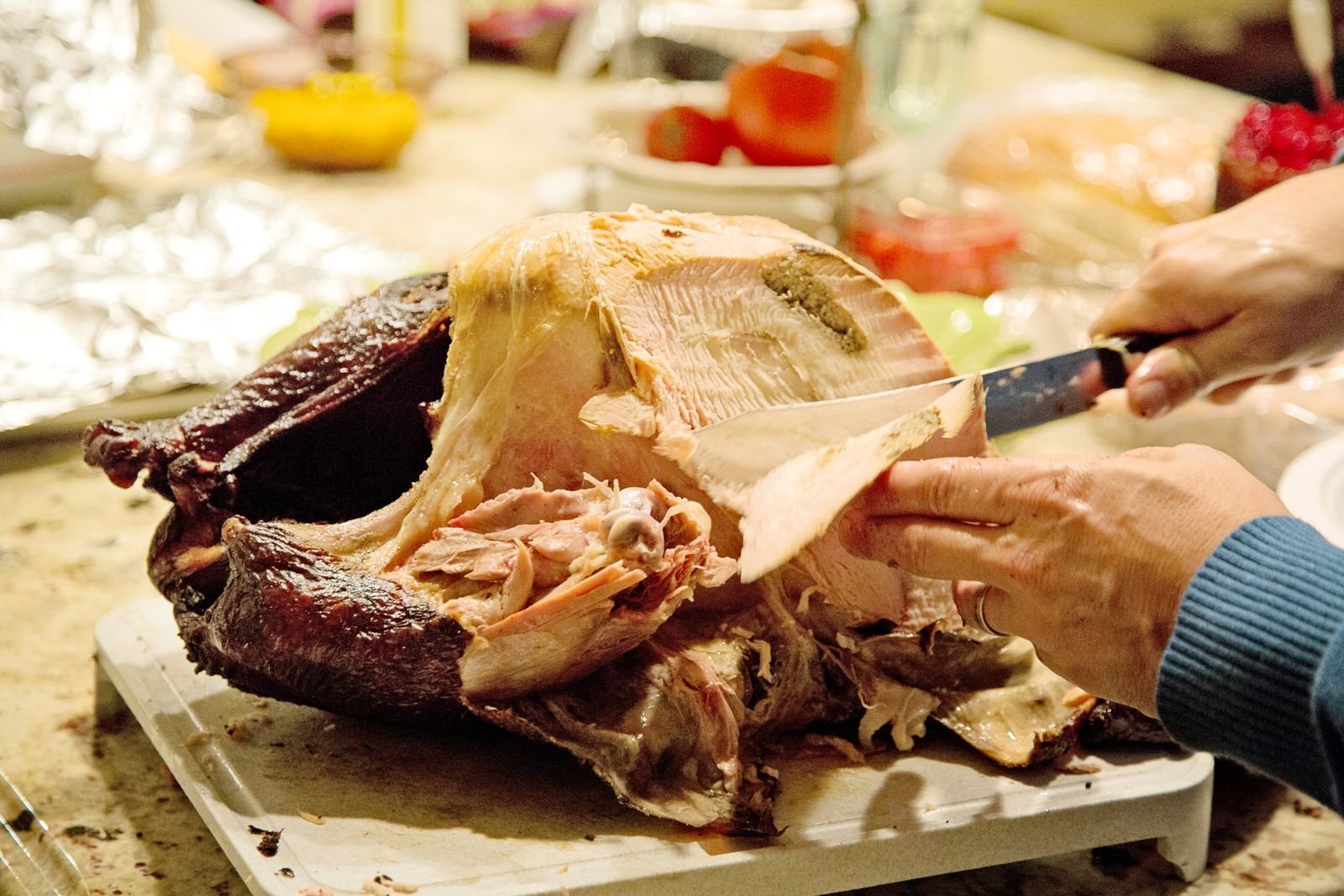
Blade length and the board that holds the roast
The blade has to be long enough to travel through the cut without the motor housing bumping the meat, and short enough to store in a drawer or a slim box. Manufacturers describe lengths differently, so measure the longest roast or bird you actually cook and compare that to the product’s stated blade length. A blade that is dramatic on a marketing page may not fit the board you can keep on an apartment counter.
The board matters as much as the knife. You need a stable surface large enough for the roast, with a groove or a rim if juices run, and enough landing space that the knife is not working at the edge of a tiny board. For boards that fit a small counter, see Best Cutting Boards for Small Kitchens: What Fits a Tiny Counter. Do not carve on a plate, a wobbly board, or the roasting pan if the pan can slide. If the roast is larger than any board you own, use the largest stable board you have and turn the meat as you go, rather than letting it hang off the edge.
Set the board on a dry, uncluttered stretch of counter before you plug anything in. If the only clear space is next to the sink or the stove, clear it first. How to Keep Small Kitchen Counters Clear is the everyday habit that makes this possible on a holiday.
Corded or cordless
Both types can work in a small kitchen. The trade-offs are practical, not a ranking.
- Corded: usually ready whenever you are, with no battery to charge, but you need an outlet that does not stretch a cord across a walkway or a wet sink. A short kitchen may have only one free outlet near the counter you want to use.
- Cordless: easier to maneuver around a large roast, and there is no cord to pull off the board, but you must charge it before the meal and live with a battery pack in the drawer. If the battery is not removable, the whole tool is larger to store.
Neither type is automatically “safer.” A cord can be a trip or a tug hazard; a cordless knife can still be left switched on. Look for a clear on/off control you can find with greasy fingers, and a design that is obvious when the blades are running. Skip a tool that feels flimsy at the blade lock, or that has no straightforward way to remove the blades for washing. A locking mechanism you cannot operate with one careful hand will be frustrating mid-meal, and a blade that will not come off will not be cleaned well in a small sink.

Storage, cleaning, and a crowded counter
In a small kitchen, storage is part of the buying decision. Measure the drawer or the cabinet gap before you shop. Blades should have a cover or a sleeve, and the body should not need a charging stand that colonizes the counter. When the meal is over, the knife should disappear. If the only way to store it is on the counter in a charging cradle, it is competing with the kettle and the board you still need. How to Store Small Appliances in a Small Kitchen covers the general habit; How to Store Knives Safely in a Small Kitchen is the safety-minded home for blades, covers, and keeping sharp edges away from a junk drawer.
Cleaning should be simple and should follow the manufacturer’s instructions. In general, unplug a corded knife, or turn off a cordless one, before you go near the blades. Many blades are designed to come apart for washing; the motor housing is usually a wipe-down piece, not something to immerse. Do not invent a sharpening method or take the tool apart beyond what the maker describes. If blades are damaged, dull beyond ordinary use, or no longer lock in place, replace them or stop using the knife.
Safety on a tight counter is mostly about space and attention:
- Carve on a stable board, with the roast fully on the board
- Keep the cord, if there is one, behind the work area, not in the path of the blade or a wet sink
- Do not reach under the blade to steady the meat; use a fork or tongs
- Wait until the knife has fully stopped before you set it down or change your grip
- Let other people know you are carving so a crowded kitchen does not become a surprise
This is ordinary kitchen caution, not a substitute for the tool’s own manual. If the housing is cracked, the cord is frayed, or the blades no longer lock, do not use the knife. Replace the damaged part or recycle the tool; do not improvise a repair.
How this tool fits the rest of the meal
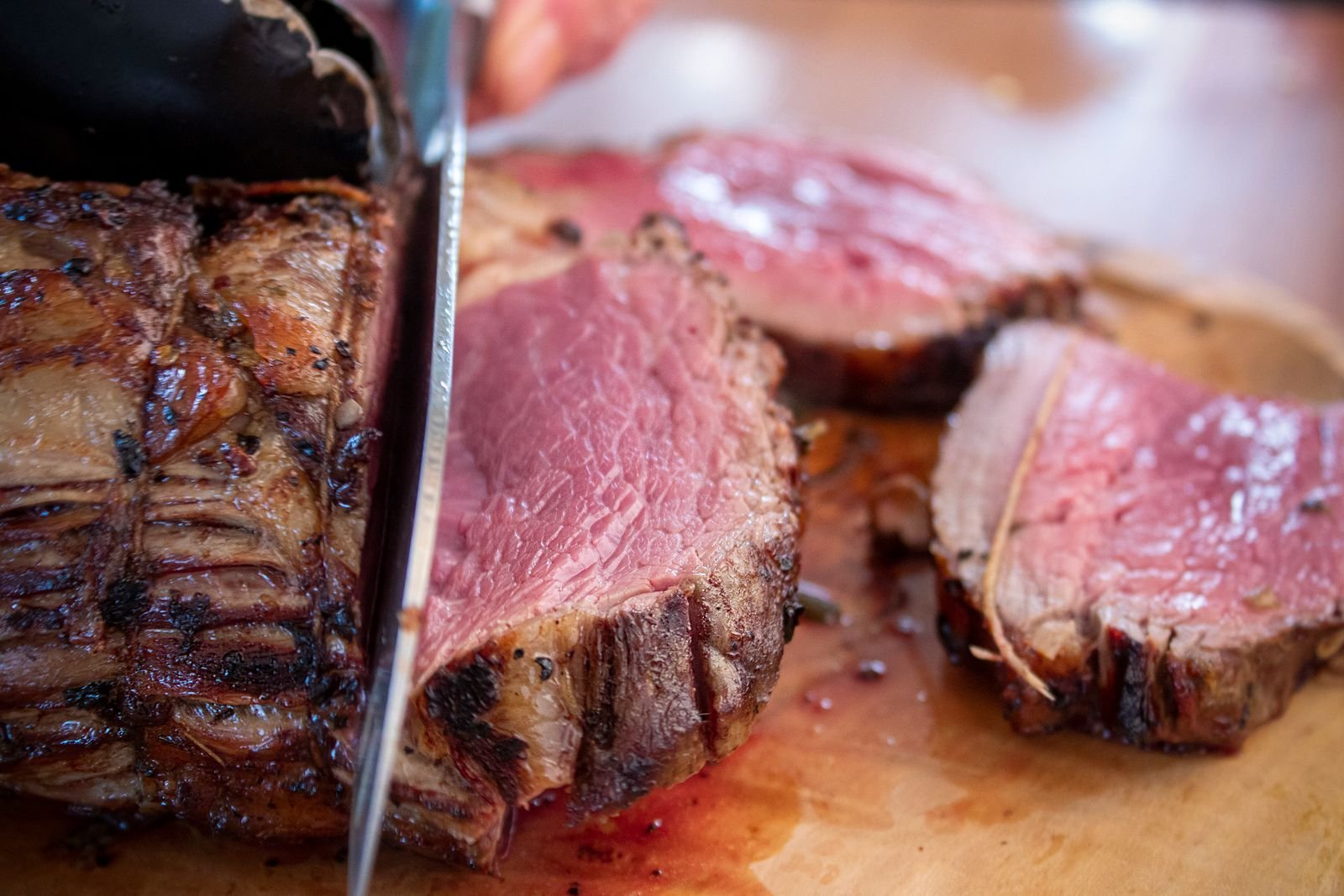
Slice the roast after it has had a short rest, on a board you can actually use, and move the meat to a platter or to plates. If you are serving from a counter rather than passing a platter at the table, the electric knife still needs that stable board; do not try to carve in a warming tray or on a slick platter that can slide.
Leftovers are a different step. Once the meat is sliced, storage and reheating are covered in How to Reheat and Serve Holiday Leftovers in a Small Kitchen. The carving knife does not need to stay on the counter for the rest of the weekend. Clean it, dry the blades, and put the covers back on the same day.
If you already know you prefer a manual knife, spend your limited storage on the board, a sharp carving knife, and a pan that fits your oven—not on a motor you will use twice. If you do buy an electric knife, buy one type that matches your outlet or your willingness to charge a battery, and one blade length that matches the roast you actually cook. You do not need two knives, a spare blade set you cannot store, or a model chosen because it looked impressive in a still life.
What good enough looks like
Good enough is even slices and a counter you can still use, or a clear decision that a regular knife is enough. It is not a restaurant carving station and it is not a gadget collection. If a compact electric knife earns a drawer, use it on a board that fits, unplug or switch it off before you clean it, and put it away when the meal is over. If it would only sit in the way, skip it.
The test is the first holiday meal, not the product photo. If you can slice the roast without crowding the sink, and if the tool goes back into a drawer without a fight, you chose well enough for a small kitchen. If the manual knife already does that job, you have your answer without adding another appliance.
FAQ
Do I need an electric carving knife in a small kitchen?
Not necessarily. A sharp manual carving knife and a short rest after cooking are enough for many holiday roasts. An electric knife is worth considering if you regularly slice a large cut and have a drawer for it; otherwise it can be unused clutter.
Is a cordless electric carving knife better than a corded one?
Neither type is automatically better. Cordless models are easier to maneuver and avoid a cord across a small counter, but they need charging and a place for the battery. Corded models are usually ready to use if you have a nearby outlet and can keep the cord out of the way.
How should I clean an electric carving knife?
Follow the manufacturer’s instructions. In general, switch the knife off and unplug a corded model before you handle the blades. Many blades can be removed for washing; the motor housing is typically wiped, not soaked. Do not force the tool apart or invent a sharpening method.
What size cutting board do I need for carving?
Use a stable board large enough for the whole roast, with space so the knife is not working at the edge. Measure your clear counter first. A board that fits the kitchen is safer than a larger board that hangs off the counter.
Can I carve the roast in the pan or on a warming tray?
Use a stable cutting board. A roasting pan or a slick platter can slide, and a warming tray is for holding food, not for carving. Move the roast to the board, slice, then transfer the meat to a serving platter or to plates.