How to Pack Leftovers for Guests to Take Home From a Small Kitchen
When the meal is over in a small kitchen, the leftover problem is not how you will store food for the week. It is how to pack leftovers for guests to take home from a small kitchen while coats are already coming off the hook and serving spoons are still on the board. That is a packing-and-handoff job at the messiest moment of the day. Your long-term leftover system can wait. The skill is getting a few sealed portions out the door without turning the only counter into a second buffet.
This is not a guide to storing leftovers in your own fridge, reheating them tomorrow, cutting food waste over a month, or serving the meal buffet-style. Those are separate jobs. What follows is a same-day send-home plan for a tight apartment kitchen: one packing zone, lids that close, a simple label, a tote by the door, and a short reminder not to leave perishable food out all afternoon.
Start with a packing zone, not a bigger clean-up
Before you start scooping, clear one small stretch of counter or a corner of the table that is not the carving board. In a galley or one-wall kitchen, that might be a wiped cutting board, a baking sheet used as a tray, or the far end of the dining table after plates have been stacked. Keep packing away from raw juices, gravy drips, and the pile of used knives.
The habits in How to Host a Dinner in a Small Apartment and How to Cook a Holiday Meal in a Small Apartment Kitchen get the meal onto the table. This step is what happens after people start saying goodbye. You do not need to reset the whole kitchen first. You need one clean, dry rectangle and a place for lids.
A packing zone also protects the sink. Once containers, lids, and bags land in the basin, you cannot rinse a spoon. Keep the packing kit—containers, lids, a marker, and bags—in a small bin you can carry to the zone, then put the bin back when the last guest leaves.
Decide what actually leaves, and in what portions
You do not need to send home every dish. Send the things that travel well and that guests want: a portion of the main, a side, maybe dessert. Keep tiny leftover amounts that will not fill a container, and keep anything that would leak through a bag. A nearly empty casserole can stay for your fridge; a generous, sliceable remainder is a better send-home.
Portion for the trip, not for a week of meals. A guest carrying food down a hallway does better with one or two modest containers than with a heavy pan and a loose lid. If you served from a crowded buffet, bring food back to the packing zone rather than packing over a serving line. How to Serve a Holiday Meal Buffet-Style in a Small Apartment is about how the meal is laid out, not about this handoff.
Leave yourself a little of what you will actually eat tomorrow. Sending every last bite home can feel generous and leave you with an empty fridge and a sink full of pans. The goal is a few useful portions leaving with people who want them, not a complete pack-out of the table.
Use lids that seal, and keep spare containers on purpose
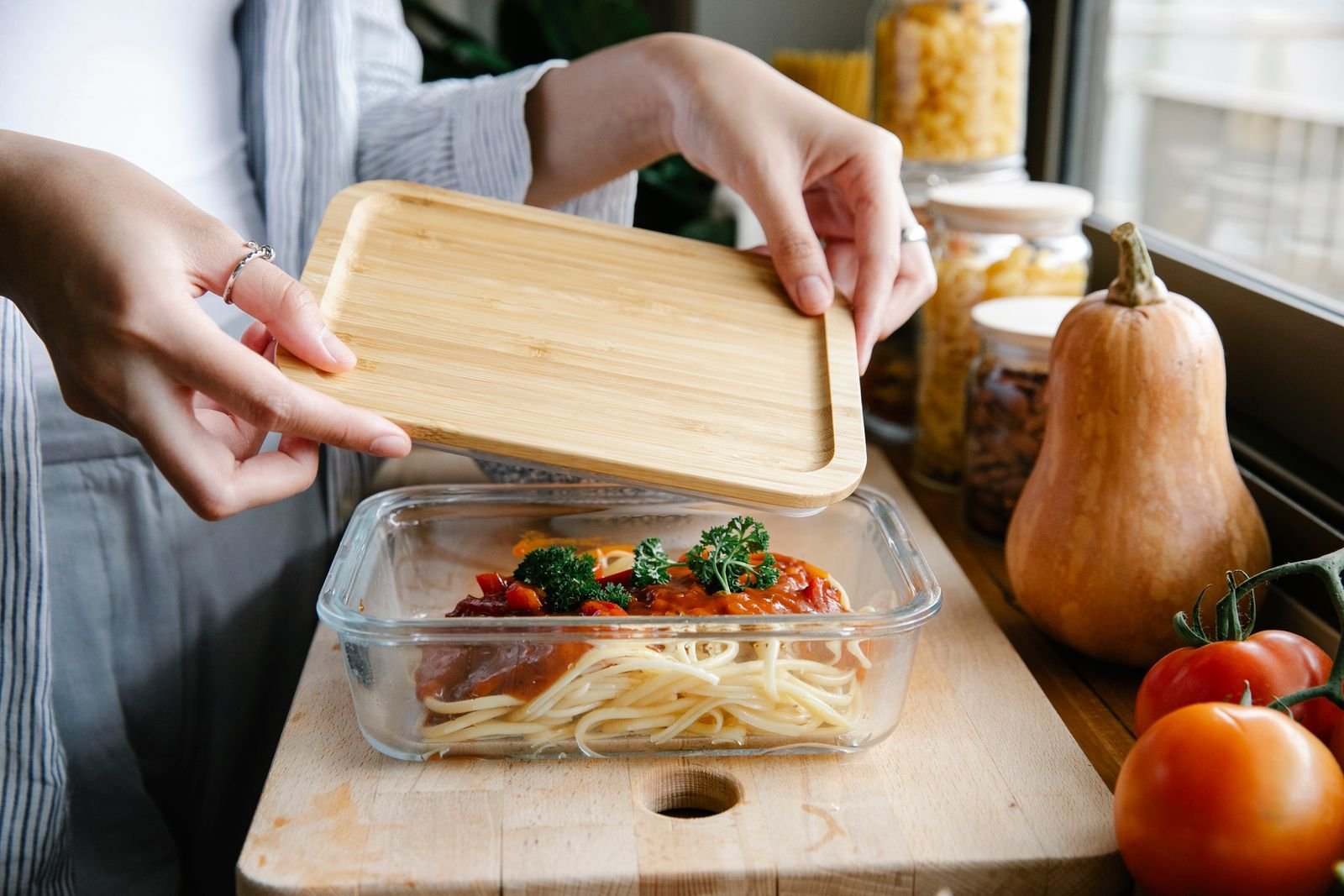
The container only works if the lid stays on in a tote. Before guests stand up, check the lids you plan to use. A warped lid, a glass dish with no lid, or a foil tent over a deep pan is a leak waiting to happen in a stairwell. If a lid only sits loosely on top, do not send that container out the door.
This is not the moment to redesign your container drawer. Grab the pairs that click and leave the rest for another day; How to Organize Food Storage Containers and Lids in a Small Kitchen is the later organizing job. For a holiday send-home, a short stack of inexpensive disposable or lightweight reusable containers is often kinder than lending out your only glass set. You will not be chasing dishes across town next week, and guests will not be balancing glass on a wet stoop.
If you buy a small spare stash, choose lids you can confirm at a glance and sizes that fit in a tote, not a huge matching system. Best Meal Prep Containers for Apartments: What to Buy for a Tiny Fridge can help you choose containers you will also use on ordinary weeks, but you do not need a full meal-prep set to send two sides home.

Fill containers most of the way, but leave a little headroom for soup, gravy, or anything that sloshes. Wipe the rim before the lid goes on. A clean rim is what actually seals. Then set each closed container on the packing tray, not back into the serving mess.
A simple label beats a speech
A scrap of tape and a marker is enough: the name of the dish, and the date. If a dish has a common allergen people already asked about at the table, you can add that in a word or two. You do not need printed labels. The label is for the guest who opens a bag at home.
If two containers look alike—mashed potatoes and a white dip, for example—label them before they go into the tote. Guests should not have to guess later.
Do not leave perishable food on the counter all afternoon
This does not need a lecture. Perishable leftover food should not sit out for hours after the meal. Official food-safety guidance in the United States is to refrigerate perishable food within about two hours, or within one hour if the room is very hot, above 90°F (32°C). That is ordinary holiday advice, not a rule to invent.
Practically, start packing when people begin to leave, not after a long stretch over open platters. If a dish has been sitting out a long time and you are unsure it is still safe to send, it is better to throw that portion away than to pack a doubtful container as a gift. HomeRivr will not invent extra hold times or “safe windows” for a car ride.
Once food is packed, the guest’s job is to get it into a refrigerator when they arrive home, not to leave the bag in a warm entry or a parked car. Your job is to hand over sealed, labeled portions promptly. How those leftovers get reheated tomorrow is a different article: How to Reheat and Serve Holiday Leftovers in a Small Kitchen. How you store what stays in your apartment is covered in How to Store Leftovers in a Small Kitchen.
If your own fridge is already packed, do not use packing time to rebuild the shelves. Send food with guests first, then deal with what remains. How to Organize a Small Apartment Fridge is the everyday system; tonight you only need space for the portions that are staying.
Put a bag or tote by the door
The last failure point is the walk out. An open container in one hand and a coat in the other is how gravy meets a stair rail. Stage a reusable tote or a paper grocery bag by the door, not on the stove. As each set of containers is closed and labeled, it goes into that bag.
If two households are leaving at once, pack two bags. Do not stack loose lids and a dessert in one overloaded tote. A flat-bottom bag is easier to set down in a hallway than a slippery sack. If a guest is walking or waiting for a ride, keep saucy containers upright.
Spare inexpensive containers help here too. You can let the container leave in the bag without waiting for a dish to be washed and returned, and you can still reach the sink.
What good enough looks like
You do not need a professional catering pack-out. Good enough is a few sealed, labeled portions leaving with the people who wanted them, a tote waiting at the door, and a sink you can still use. The carving board can stay dirty a little longer. How to Set a Small Dining Table for a Holiday Meal got the table ready; you do not have to fully unset it before leftovers leave.

If a guest declines, do not talk them into food they will not eat. Offering is the kind part; packing only what they accept keeps the counter from filling with unwanted containers. Sending a smaller amount that will actually get eaten is also a quieter way to How to Reduce Food Waste in a Small Kitchen without turning this handoff into a waste project.
When the last bag is out, put the lids back in the bin and wipe the packing zone. Full clean-up—dishes, counters, trash, the floor—is a separate pass, and How to Clean Up After a Holiday Meal in a Small Kitchen is the place for that sequence. Tonight, the win is simpler: food leaves in sealed containers, not in open pans, and guests can carry their share without juggling a lid.
A short send-home checklist
Before the first person reaches for a coat, confirm:
- One packing surface is clear, away from the carving mess.
- You have enough sealing lids, plus a few spare inexpensive containers if you do not want your glass to leave.
- A marker and tape are in the packing bin, not in a junk drawer.
- A tote or bag is waiting by the door, empty and upright.
- You know which dishes you are sending and which portions stay.
- Perishable food is not going to sit out all afternoon; packing starts as people begin to leave.
- Each outgoing container is closed, wiped, and labeled before it goes into a bag.
If you only manage those steps, you have packed leftovers for guests to take home from a small kitchen well enough. The room does not need to look finished. The food just needs to leave sealed and easy to carry.
FAQ
When should I start packing leftovers for guests to take home?
Start when people begin to leave, not after a long stretch of open platters. In a small kitchen it helps to clear a packing zone earlier, but the actual scooping should happen as goodbyes start so perishable food is not sitting out all afternoon.
What containers work best for sending leftovers home?
Use containers with lids that actually seal. A short stack of inexpensive disposable or lightweight reusable boxes is often better than lending your only glass dishes. Skip warped lids, uncovered pans, and anything that will leak in a stairwell.
Do I need to label leftovers I send with guests?
A simple label with the dish name and the date is enough. It helps the guest unpack at home and keeps similar-looking sides from getting mixed up. You do not need a formal labeling system for a same-day handoff.
How long can leftover food sit out before I pack it?
Follow ordinary official guidance: refrigerate perishable food within about two hours, or within one hour if the room is very hot, above 90°F (32°C). If a dish has been sitting out too long and you are unsure, do not send it home.
What if I do not want my own containers leaving the apartment?
Keep a small stash of inexpensive spare containers just for send-home packing. Let those leave in a tote by the door, and keep your everyday glass for food that stays in your fridge.