Best Instant-Read Meat Thermometers for Home Kitchens
A holiday roast is an expensive guess if you are cooking in a small or uneven apartment oven. Color, juices, and a remembered cooking time are not enough on their own. The “best instant-read meat thermometers for home kitchens” are not a ranked list of brands. They are fast probe thermometers that give you a readable number in a few seconds, so you can follow current official food-safety guidance instead of cutting the meat open and hoping.
There are no invented safe temperatures, hold times, prices, brand rankings, or test scores in this guide. “Best” means choosing a type that is actually instant-read, easy to read, long enough to reach the center of the cut, and practical to wash and store in a home kitchen. A leave-in probe that stays in the oven is a useful but different tool; this article is instant-read first.
Cooking the roast, and choosing a pan that fits a small oven, are separate jobs. See How to Cook a Holiday Meal in a Small Apartment Kitchen and Best Roasting Pans for Small Apartment Ovens. If a toaster oven is your main oven, that method is covered in How to Use a Toaster Oven as Your Main Oven in a Small Apartment and Best Toaster Ovens for Apartments: Compact Picks That Earn the Space. The thermometer is how you check doneness, not how you cook the meal. A compact oven can brown the outside of a roast while the center is still underdone, or dry the edges while you wait on a clock. The probe is the way to stop that guesswork without opening the door every few minutes.
What an instant-read thermometer is—and is not
An instant-read thermometer is a probe you insert into the thickest part of the meat, wait until the reading steadies, then remove. “Instant” still means a short wait, not a frozen number the moment the tip touches the surface. A slow dial thermometer can eventually get to a similar answer, but it is not the same tool if you want a quick check without leaving the oven door open.
A leave-in probe is different. It is designed to stay in the roast in the oven, often with a cable or a wireless display you can watch from the counter. That can be helpful in an oven that runs hot or cold, but it is a monitoring tool, not a quick check you can use on a second cut, a leftover, or a different dish. If you can only keep one thermometer in a small kitchen, an instant-read is usually the more flexible choice. A leave-in model can be a second tool later, not a substitute. You can use the same instant-read on a roast, on a second smaller cut, and on leftovers the next day, which is a better fit for a drawer than a dedicated cable you only use once a year.
An oven’s built-in thermostat, or a separate oven thermometer that hangs from a rack, tells you about the air in the oven. It does not tell you whether the roast itself is done. Use both kinds of information if you have them, but do not treat the oven dial as a meat thermometer. An inexpensive oven thermometer can tell you that your apartment oven runs hot or cold; the instant-read still has to go into the meat.
What actually matters when you buy one
Skip brand rankings and look at the job.
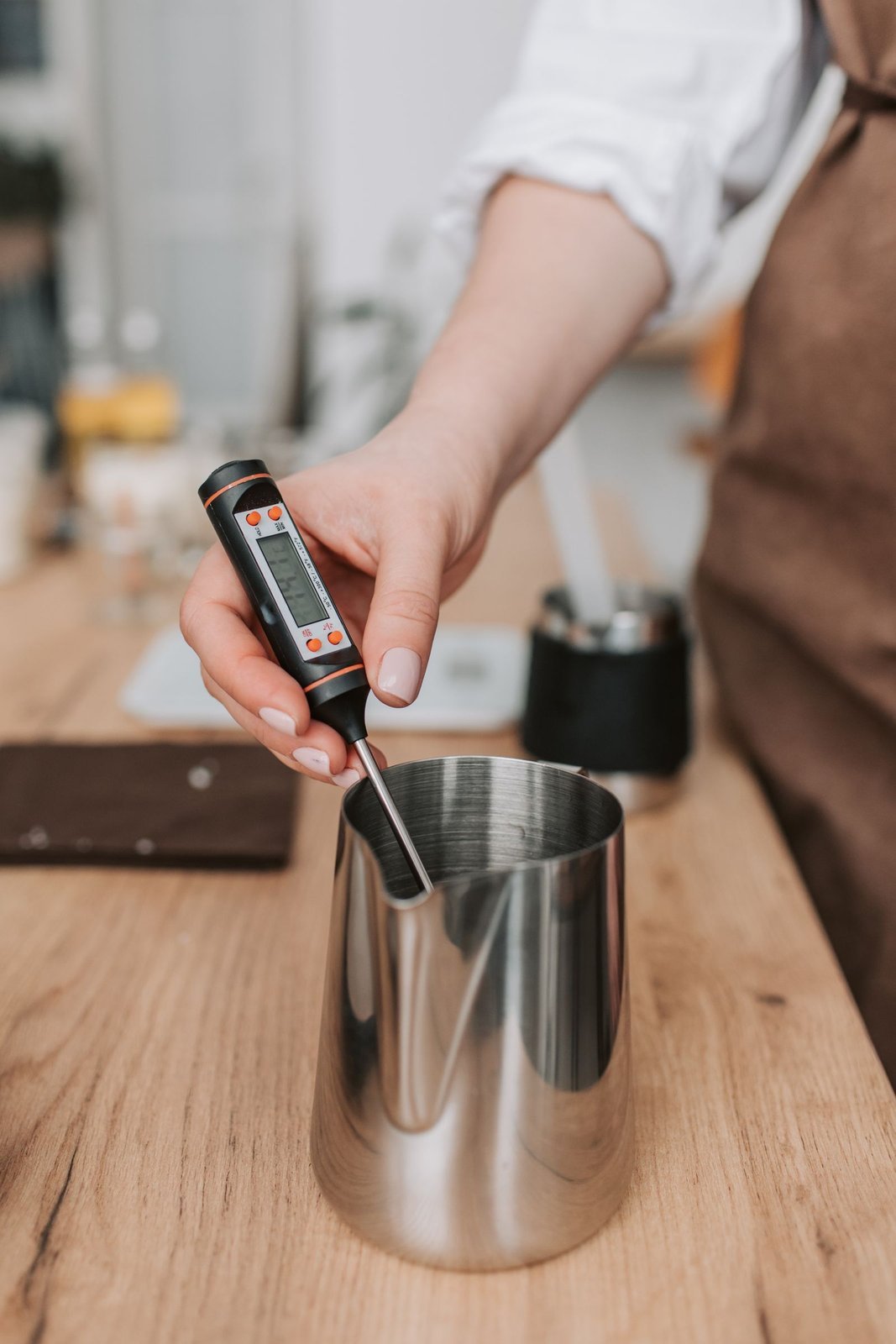
- Speed: a true instant-read should settle in a few seconds, not a long wait with the oven door open. Listings sometimes overstate “instant.” Read the description carefully, and prefer a tool meant for quick checks of cooked meat, not only for candy or deep-fry oil, unless it clearly does both well.
- A readable display: large, high-contrast numbers you can see in a dim apartment kitchen, preferably from a slight angle. A tiny screen you have to hover over is frustrating when your hands are full.
- Probe length: long enough to reach the center of the thickest part of the roast or bird you actually cook, without immersing the housing. A very short probe that only reads the outer layer will mislead you.
- A body you can wash: many home cooks want a probe and a housing that can be rinsed or wiped after raw meat. Look for the manufacturer’s cleaning guidance. “Waterproof” is a specific claim; do not assume a thermometer can go in the dishwasher unless the maker says so.
- Calibration: some instant-read thermometers can be checked and adjusted. A tool you can verify is easier to trust than one you cannot. Follow the maker’s method; do not invent a calibration ritual.
- Automatic shutoff and a simple hold feature: useful in a small kitchen where you may need a second to read the display or set the probe down safely.
You do not need a professional kit with a case full of spare probes. You need one reliable instant-read you will actually use. A backlight helps if you often roast in the evening in a dim kitchen, but it is a convenience, not a reason to buy a bulky model you will not store. Likewise, a folding probe is nice for a shallow drawer; it is not required if you have a simple cover and a hook or a sleeve. Store it in a drawer with the probe covered, not loose with knives and peelers. How to Store Small Appliances in a Small Kitchen and How to Keep Small Kitchen Counters Clear apply here too: a thermometer should not live on the counter all year, and it should not be buried so well you cannot find it on the holiday.
How to use it on a holiday roast
Use current official safe-temperature guidance for the type of meat you are cooking. Do not rely on a number you remember from a relative, a social post, or an old cookbook without checking whether the guidance is current. This article will not invent a temperature chart.
Practical habits that do not depend on a specific number:
- Check the thickest part of the cut, and on a bird, the thickest part of the breast and the innermost part of the thigh, avoiding bone, which can skew a reading
- Insert the probe deep enough to reach the center, then wait until the display stops changing
- If the reading is below current guidance, give the roast more time and check again, rather than raising the oven dramatically and hoping
- Let the roast rest after you take it out, and check again if the guidance you are following calls for a rest or a carryover period
- Clean the probe between checks if you are moving from a raw or underdone area to a finished one, and after you are done
Apartment ovens often run hot, cold, or uneven. That is exactly why a thermometer matters. A toaster oven or a compact range can cook the outside faster than the center. An instant-read check tells you about the meat, not about the setting on the dial. If two parts of a large bird or roast read differently, trust the lower, slower area and give it more time, rather than taking the whole cut out because one corner looks done.
If you are reheating leftovers the next day, the same tool is useful. Do not guess from the microwave’s clock. How to Reheat and Serve Holiday Leftovers in a Small Kitchen covers the leftovers plan; use your thermometer and current guidance there too.
How this tool fits a small kitchen
An instant-read thermometer is a small object, but it still has to earn a hook or a drawer. A slim probe with a cover is easier to keep than a bulky unit with a stand you never use. If you also own a leave-in probe, keep the two tools from getting tangled, and do not use a leave-in cable in a way the manufacturer warns against, such as closing an oven door on a cord that is not rated for it. Replace a cracked housing, a bent probe, or a display you can no longer read; a damaged thermometer is not a tool you should trust on a holiday roast.
The thermometer does not replace cookware. A pan that fits the oven still matters, and so does a cookware set you can actually use. See Best Cookware Sets for Small Kitchens for the pots and pans; this guide stays on the probe.
Electric carving knives, warming trays, and serving plans are also different jobs. A thermometer tells you the roast is ready. It does not slice it or hold it warm. Keep those tools in their own articles and their own storage. If counter space is already tight, the thermometer should come out for the check and go back into its sleeve, not sit in a puddle of juices beside the board for the rest of the afternoon.
What good enough looks like
Good enough is a thermometer you can insert, read in a few seconds, and trust well enough to follow current official food-safety guidance. It is not a restaurant kit, a drawer full of probes, or a guess based on color. If your apartment oven runs hot, cold, or uneven, the instant-read meat thermometer is still how you finally stop all that guessing.
The test is the first roast. If you can check the thickest part, get a stable number, and decide whether the meat needs more time, you have the right kind of tool for a home kitchen. That is a better standard than a gadget with extra modes you will never use, or a pretty dial that is too slow to keep the oven door from dumping heat into a small kitchen.
FAQ
What is the difference between an instant-read and a leave-in meat thermometer?
An instant-read is inserted to check a temperature and then removed. A leave-in probe stays in the roast in the oven and monitors it during cooking. This guide treats instant-read as the first, most flexible home tool; a leave-in model is a different, optional tool.
Should I use a thermometer in a small apartment oven?
Yes if you are cooking a roast, a bird, or another large cut. Compact and uneven ovens make time and color even less reliable. An instant-read thermometer checks the meat itself, not just the oven dial.
Do I need to memorize a temperature chart?
Use current official food-safety guidance for the meat you are cooking, rather than a remembered number. Guidance can differ by food and can be updated. This article does not invent a chart.
How should I clean an instant-read thermometer?
Follow the manufacturer’s instructions. Many probes can be washed; the housing may only be wiped. Do not assume the tool is dishwasher-safe or fully waterproof unless the maker says so. Clean it after raw meat and before you store it.
Can I use the same thermometer for leftovers and for the first roast?
Yes if you clean the probe properly and use current guidance for reheating or for the food you are checking. An instant-read is a check you can use more than once, which is one reason it is a practical first tool in a small kitchen.