Best Portable Washing Machines for Small Apartments
A portable washer only helps a small apartment when it solves a laundry problem you already have and still leaves the room walkable. The best portable washing machine for small apartments is not the largest compact tub you can find, and this guide will not rank brands or invent test scores. “Best” means the machine earns a spot: an unreliable building washer, a long walk to the laundry room, or a household that washes small loads often. Sometimes the shared laundry room, a laundromat, or a better laundry routine is the more honest fix.
How to use shared machines well is in Apartment Laundry Routine: A Simple System That Fits Shared Machines. Drying and de-wrinkling are separate tools, covered in Best Clothes Drying Racks for Small Apartments and Best Garment Steamers for Small Apartments. This article is whether a portable washer is worth the space, the water, and the hookup.
Check the lease and the building rules before you buy. Some buildings forbid in-unit machines, extra hookups, or any drain into a sink or a bathtub. Do not invent a hookup that could leak into a neighbor’s ceiling. Use a drain path that cannot overflow unattended, keep the machine level, and do not overload a bathroom circuit. A portable washer is not a substitute for treating mold, a sewage backup, or a broken in-unit machine. Call the building for those. Measure the closet, the bath, or the kitchen gap, and the path through the door, before you buy.
When a portable washer earns a spot — and when it does not
A portable or compact washer can make sense when the building machine is often out of service, when the laundry room is a long walk or a locked room with short hours, or when you regularly wash small loads you do not want to carry downstairs. It can also help if you need to wash a few items between building-machine trips, rather than saving up a full hallway load.
It is a weaker fit when the shared room works, when you already do laundry on a cadence you can keep, or when the only place you can put a machine is a walkway, a heater, or a bathroom that cannot take the water or the circuit. A laundromat may still be the calmer option for bulky items. Sheets and towels have their own wash rhythm in How Often to Wash Sheets and Towels: A Practical Laundry Schedule for Small Homes. A comforter, pillows, a winter coat, or curtains often belong in a larger building machine or a laundromat, as in How to Wash a Comforter in an Apartment Laundry Room, How to Wash Pillows in an Apartment Laundry Room, How to Wash a Winter Coat in an Apartment Laundry Room, and How to Wash Curtains in an Apartment Laundry Room. A portable tub is usually the wrong size for those jobs.
If your real problem is a pile of off-season clothes with nowhere to go, storage may be the fix, not a new machine. How to Store Off-Season Clothes in a Small Apartment is that plan.

Hookup, drain, and the limits of a rental
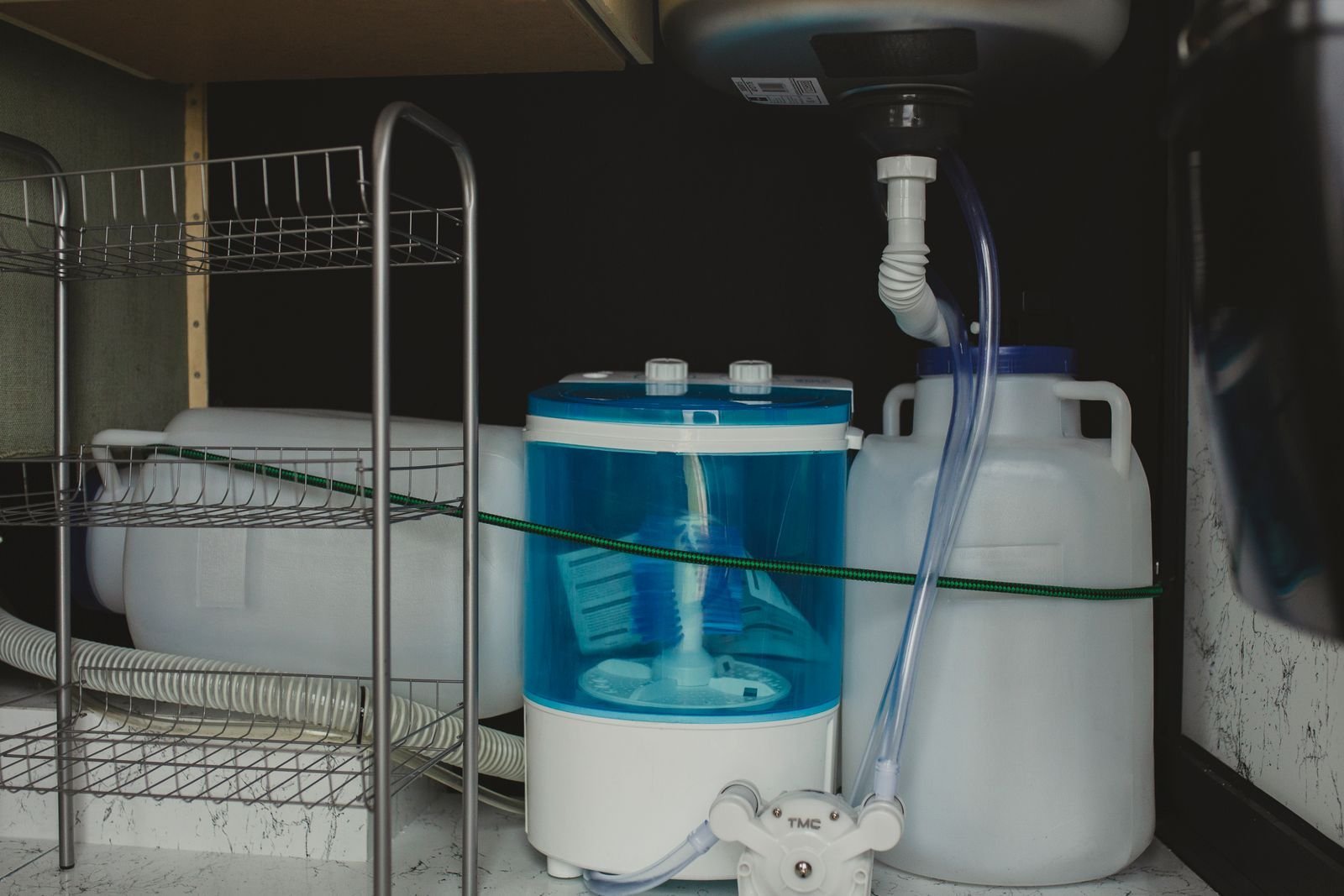
A portable washer still needs water in and water out. Many compact units fill from a faucet and drain through a hose into a sink, a tub, or a standpipe. That only works if the faucet can take the adapter, the hose stays on, and the drain can accept the water as fast as the machine sends it. A basin that already drains slowly is a poor destination for a wash cycle. Do not leave a machine draining unattended into a sink with a closed stopper, a tub that can overflow, or a hose that can slip out and empty onto the floor — or into the ceiling below.
A practical hookup check:
- Confirm the lease and any house rules allow the machine and the drain method you plan to use. Ask the manager if the posting is unclear, and do not install a permanent hookup you cannot reverse.
- Match the fill adapter to the faucet you actually have. A kitchen spout, a bath spout, and a laundry faucet are not the same fitting.
- Give the drain hose a path that stays in the basin, with enough slack that it cannot pull free, and a clamp or hook if the maker provides one.
- Keep the machine level. An unlevel portable washer can walk, leak, or shake hard enough to splash.
- Use a circuit that can take the load. A bathroom outlet shared with a heater or a hair dryer is a poor place to add a washer. Do not rely on a cheap extension cord as a permanent power path.
If the only drain you can invent would require drilling, a new standpipe, or a hose run under a door into a hallway, stop. That is not a renter fix, and it is how water finds a neighbor’s ceiling. If you see mold, smell sewage, or have a broken in-unit machine the building is responsible for, call the building rather than buying a portable washer to work around it.

Capacity versus the space the machine occupies
The number on the capacity label is not the same as the space the washer will take in the room. A compact unit can still be tall, deep, or wider than the closet you had in mind once you add hoses, a drain tub, and clearance to open a lid or a door. Measure the gap, then measure the machine, including the hoses and the space you need to stand in front of it. Also measure the path through the apartment door, the bathroom door, and any turn in the hall. A washer you cannot get through the door is not a solution.
A smaller tub means more frequent, smaller loads. That can be a benefit if you want to wash a few items often. It is a drawback if you were hoping to replace a full building-machine load at home. Be honest about load size: a portable washer that needs four cycles to do what the basement machine does in one may not save you time, even if it saves you a walk. Water use and drain time add up with each extra cycle, which is another reason to size the machine to the loads you will actually run.
Where the machine lives when it is not in use matters as much as where it runs. Some compact washers stay in a bathroom or a kitchen gap full time. Some can be rolled or lifted into a closet after the hoses come off, if you can store them dry and upright according to the maker. Do not store a machine full of standing water, and do not park it where it blocks an exit or a heater. If putting it away is so awkward that you will leave it in the walkway, choose a different home — or admit that the machine does not fit this apartment.
A fitted compact laundry closet, with a front-loader under a counter, is a different setup from a portable tub. It can be a good in-unit arrangement if the building already provides it, but it is not something you should assume you can add in a rental, and it is not what most portable washers look like.

A bathroom corner is not automatically a hookup
A tight bathroom can look like an obvious place for a compact machine, because there is already a drain and a faucet. It is only a good place if the floor stays dry, the circuit can take the load, the machine sits level, and you can still use the sink, the shower, and the door. A front-load washer parked beside a vanity, with towels on top, may be a compact in-unit machine, not a portable washer you can move. Describe the setup you actually have, and do not force a portable tub into a bathroom that cannot hold the splash or the hose.
If you do use the bath, stay in the room for fill and drain until you trust the hose, and never leave a draining machine while you go out. Wipe leaks immediately. A slow drip onto a rental floor is how a small problem becomes a downstairs call. Keep detergent and a shallow tray or mat only if they do not make the floor slick or block the door.

Practical takeaways
- I checked the lease and the building rules before I considered a portable washer, and I did not invent a hookup that could leak into a neighbor’s ceiling.
- A portable washer earns a spot when the building machine is unreliable, far away, or a poor fit for frequent small loads. The shared room, a laundromat, or a better routine is sometimes the more honest fix.
- I measured the closet, bath, or kitchen gap, and the path through the door, before I bought anything.
- The drain path cannot overflow unattended, the machine stays level, and I do not overload a bathroom circuit.
- A portable washer is not a substitute for treating mold, a sewage backup, or a broken in-unit machine. I call the building for those.
- This guide has no rankings, prices, model lists, or test scores.
How to choose the best portable washing machine for small apartments—and how to apply it
The calm way to choose the best portable washing machine for small apartments is to start with the problem, the lease, and the gap, not with a capacity number. If the shared laundry room or a laundromat already works, you may not need a machine at home. If a portable washer does earn a spot, give it a measured home, a drain path that cannot overflow unattended, a level stance, and a circuit that can take the load. A tight rental can host a compact washer; it cannot host a leak, a blocked door, or a workaround for a building problem you should report.
FAQ
What is the best portable washing machine for small apartments?
The one that fits a real laundry need, a measured gap, and the building’s rules, with a drain path that cannot overflow unattended. This guide does not rank brands or invent test scores.
Do I need a portable washer if my building has a laundry room?
Not always. If the shared machines are reliable and you can keep a routine, that is often enough. A portable washer is more useful when the building machines fail often, are far away, or do not suit frequent small loads.
Can I hook a portable washer up in a rental bathroom?
Only if the lease allows it, the faucet and drain can take the hoses, the machine sits level, and the circuit can handle the load. Do not leave a drain hose unattended, and do not invent a hookup that could leak into a neighbor’s ceiling.
Will a portable washer clean a comforter or a winter coat?
Usually not well, and often not safely for the machine. Those larger items are a better fit for a building machine or a laundromat. Use a portable washer for the smaller loads it was sized for.
Where should the machine live when I am not using it?
In a measured closet, bath, or kitchen gap that does not block a door or a heater, stored dry and upright if you move it. If putting it away is so hard that it stays in the walkway, it does not fit.