Best Electric Warming Trays and Buffet Servers for Small Apartments
The best electric warming trays and buffet servers for small apartments are the ones that hold already-cooked food for a short meal on a scarce counter, then go away. They are not a second oven, and they are not a slow cooker by another name. A slow cooker can cook and then hold one pot; that job is covered in Best Slow Cookers for Small Kitchens. An electric skillet or griddle is for cooking, not for a serving line; see Best Compact Electric Skillets for Small Kitchens and Best Compact Electric Griddles for Small Kitchens. A toaster oven can reheat or finish a pan, which is a different use, in Best Toaster Ovens for Apartments: Compact Picks That Earn the Space. This guide is only about short holding while people serve themselves.
“Best” here means fit, safety, and storage. It does not mean a ranked list of current SKUs, test scores, or prices. A useful appliance keeps one or two dishes reasonably warm during a meal. It is not an all-afternoon steam table, and it should not be left on unattended.
What the appliance is for—and what it is not
A warming tray is usually a shallow heated surface. You set a platter, a casserole, or a heat-safe dish on it. A buffet server is often a lidded unit with one, two, or three wells, sometimes with a tray underneath that also stays warm. Both are for food that is already cooked. They are not a safe way to bring cold food up to a serving temperature if you are guessing, and they are not a method for roasting a turkey. The cooking plan for a holiday meal belongs in How to Cook a Holiday Meal in a Small Apartment Kitchen. Leftovers the next day belong in How to Reheat and Serve Holiday Leftovers in a Small Kitchen.
Do not invent a precise “safe holding temperature” or a “safe for X hours” claim for a home tray. Manufacturers differ, and a small apartment buffet is a short service, not a cafeteria line. Put food out for the sitting you are actually serving, keep lids on when you can, and refrigerate what is left. If you are unsure whether a dish has been sitting too long, throw it out.
Drinks do not belong on the warming tray. A drinks station is a different surface, in How to Set Up a Drinks Station for Holiday Guests in a Small Kitchen. The tray is for hot food only, and only for the length of the meal.

Footprint, weight, and where it will live
Measure the counter or folding table before you shop. Many apartment kitchens have one spare rectangle once a cutting board, a sink, and a stove take their share. A wide three-well server can eat that entire rectangle and still leave a cord hanging into a walkway. A narrower tray, or a two-dish server with a lid, is usually the better fit. Include height with the lids open, because a lid that slams into a cabinet or a range hood is a daily annoyance.
Weight matters twice: once when you lift the unit onto a folding table, and again when you store it. A heavy server with ceramic inserts may hold heat well and still be a poor roommate if you have to hoist it onto a high closet shelf. Think about the empty weight and the filled weight. If the only parking spot is a low cart or a cabinet you can reach without standing on a chair, choose a size that matches that path.
Storage is part of “best.” If the appliance will live on the counter all year, you probably do not want it unless you host often. How to Keep Small Kitchen Counters Clear and How to Store Small Appliances in a Small Kitchen are the everyday storage rules: if it cannot go away, it has to earn the space. Removable wells that nest, a cord that wraps, and a lid that stays put in a cabinet are practical details. A unit that only fits on top of the fridge will not get used carefully.

Heat, lids, cords, and a real outlet
Look for a simple hold setting you can understand, not a cluster of unexplained numbers. You need a stable, low hold, a way to turn the unit fully off, and indicator lights you can see across a small room. A spill rim or a lip around the tray helps when someone serves from a slightly overfilled dish. Lids matter more than shine: they keep heat in, keep hands out, and reduce how long food sits uncovered.
The cord should reach a real wall outlet or a properly installed, heavy-duty receptacle without stretching across a doorway. Do not daisy-chain cheap power strips or run a warming tray from a thin extension cord under a rug. If you do not have a spare outlet near the serving surface, the appliance is the wrong tool for that room. Unplug it when the meal is over. The surface stays hot after you switch it off, so give it time to cool before you move it or wipe it, and keep cloths, paper decorations, and bag handles away from the tray while it is on.
Treat it as a hot appliance, not as furniture. Do not leave it running in an empty apartment. Do not set it on a soft plastic tablecloth. Use a stable, heat-tolerant surface, and keep it away from a dangling curtain or a low cabinet front that could trap heat. If something smells like scorching, turn the unit off and unplug it. This is restrained safety, not a lecture: hot surfaces, cords, and leftover heat are the real risks in a tight rental kitchen.
Cleaning should be obvious. Removable wells you can wash in a sink are easier than a tray with welded corners that trap sauce. If inserts are dishwasher-safe, the manufacturer will say so; if they are not, do not guess. A smooth tray with a wipeable surface is enough if you usually hold food in your own casserole dish rather than in the unit’s pans.
When another tool is enough—and when to skip
You may not need a warming tray at all. A heavy pot with a lid, an insulated casserole, or a slow cooker on a hold setting can keep one dish warm. A low oven can hold a covered pan if you have the space and you are still in the kitchen. Those options use tools you may already own, and they do not add another cord to the counter. For a two-person meal, they are almost always enough.
Skip a warming tray or buffet server if you have no spare outlet, if the only place to put it is the stove itself, or if you expect the tray to replace an oven or to hold food all afternoon. Skip it if you have no place to store it. Hosting a larger dinner, as in How to Host a Dinner in a Small Apartment, still does not require a catering line. One compact unit for the main, plus a covered pot for a second dish, is a realistic apartment setup.
If you already own a slow cooker, an electric skillet, or a toaster oven, try those first for a single hot dish. Buy a warming tray only when you regularly need a shallow hold for platters or for two dishes at once, and when you have measured a home for it.
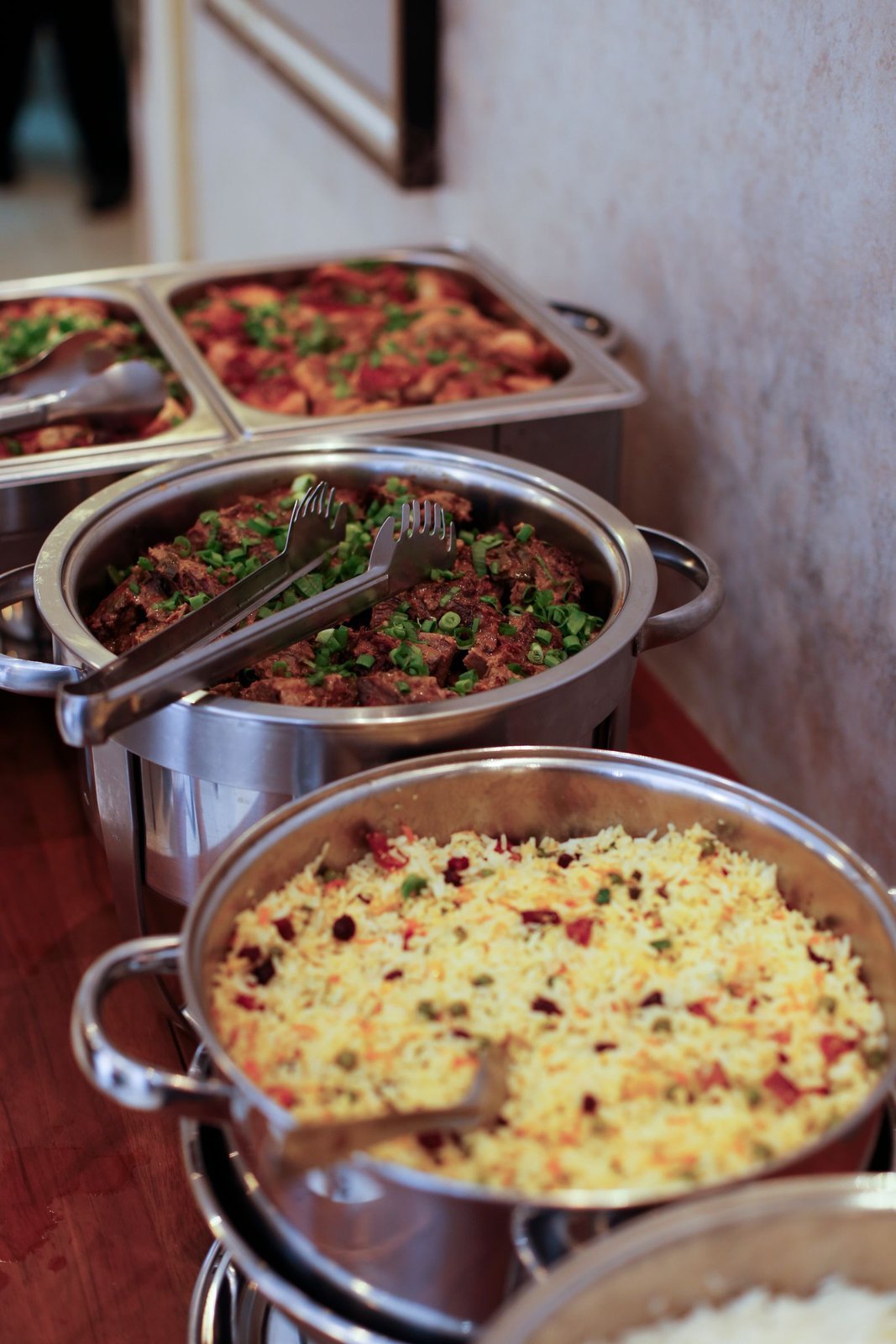
A fuel-can chafing dish is a different product and a poor fit for most rentals. Open flame, Sterno-style fuel, and a long metal frame belong at a catered event, not on a small apartment table near curtains, bags, or a hallway. If a photo or a product listing shows a burner under a pan, look instead for a plug-in electric tray or an electric server with a clear off switch. The holding job can be the same; the heat source should not be a can of fuel in a living room.
Size the unit to the meal you actually host. A couple who occasionally have four guests rarely need three deep wells. A shallow tray that holds one casserole, plus a lidded pot for a second dish, often uses less space and less storage than a full server set. If you host a larger group a few times a year, a compact two-well server with lids can be worth the cabinet slot—provided the cord and the outlet are real, and provided you will put the appliance away when dinner is over. Write the folded or stored dimensions on a note inside the cabinet so you do not buy a second unit later because the first one never quite fit.
A practical buying checklist
Before you buy, confirm:
- I measured the serving surface, including height with lids open.
- The unit is for short holding of already-cooked food, not for cooking a roast.
- I have a real outlet that the cord can reach without a cheap strip.
- Lids or a cover, plus a spill rim, are part of the design.
- The empty weight is something I can lift and store.
- Wells or the tray can be cleaned in a normal apartment sink.
- I know where the appliance will live the rest of the year.
- I would skip the purchase if a lidded pot or a slow cooker already covers my meals.
How to choose—and how to apply it
Choose a compact warming tray or a small lidded buffet server only if you have the counter, the outlet, and the storage. Favor a simple hold setting, lids, a spill rim, and a cord that reaches a real outlet. Use it for a short meal, keep the surface clear of linens and bags, and unplug it when people have been served. If a tool you already own can hold one dish, you may not need this appliance at all.

FAQ
Do I need an electric warming tray for a small-apartment holiday meal?
Not always. A lidded pot, a slow cooker on a hold setting, or a low oven can keep one dish warm. A tray or server is useful when you need a shallow hold for one or two already-cooked dishes and you have a spare outlet.
Can I leave a buffet server on all afternoon?
No. These appliances are for short holding during a meal, not an all-afternoon display. Keep lids on, refrigerate leftovers when the sitting is over, and unplug the unit. If you are unsure about food that has been sitting out, throw it out.
Is a warming tray the same as a slow cooker or an electric skillet?
No. A warming tray or buffet server holds food that is already cooked. A slow cooker can cook and then hold one pot. An electric skillet or griddle is for cooking. Pick the tool that matches the job.
What should I look for in a small kitchen?
A footprint that fits your serving surface, a cord that reaches a real outlet, lids or a cover, a spill rim, a weight you can store, and parts you can clean in the sink. Skip anything that only works if you daisy-chain a cheap power strip.
Where should I put it during the meal?
On a stable, heat-tolerant surface that is not the stove aisle and not a soft tablecloth, with the cord out of the walkway. Give the unit time to cool before you move it or store it.