How to Set a Small Dining Table for a Holiday Meal
A holiday meal asks more of a table than a Tuesday supper. Extra plates, glasses, a platter, and a bowl of sides all try to land on a surface that may already be tight in a studio or one-bedroom. To set a small dining table for a holiday meal is not to recreate a magazine spread. It is to leave each person a real place for a plate and a glass, and to park the overflow somewhere else so elbows can still move.
This is a place-setting and tabletop plan for four to six people at a compact dining table or a folding table. If you would rather let guests serve themselves from a counter or a cart, that is a different job, covered in How to Serve a Holiday Meal Buffet-Style in a Small Apartment. The cooking itself belongs in How to Cook a Holiday Meal in a Small Apartment Kitchen. Here, the meal is already coming to the table. The question is whether the table can actually hold it.
Measure the table before you set anything
Do this with a tape measure, not with the memory of a larger table in a previous home.
- Length and width, or diameter: the true top, not including a leaf you may not use.
- Clear edge: how much of the top will be lost to a tablecloth overhang, a runner, or placemats.
- Chair swing: the space behind each chair so someone can sit down without hitting a wall, a radiator, or a sofa.
- Walk gap: a path from the kitchen to at least one side of the table, even if it is narrow.
Aim for roughly 24 inches (about 60 cm) of table edge per person, and enough depth for a dinner plate plus a glass. Many apartment tables seat four comfortably and six only if you are honest about crowding. If the table is simply too small for the guest list, look at Small Kitchen Dining Table Ideas That Actually Fit for shapes that use a nook well, or at Best Folding Dining Tables for Small Apartments if a fold-out top is the better tool for this one meal. Do not buy a new table for this one dinner if the one you have can be set more simply.
Give each person a stable place
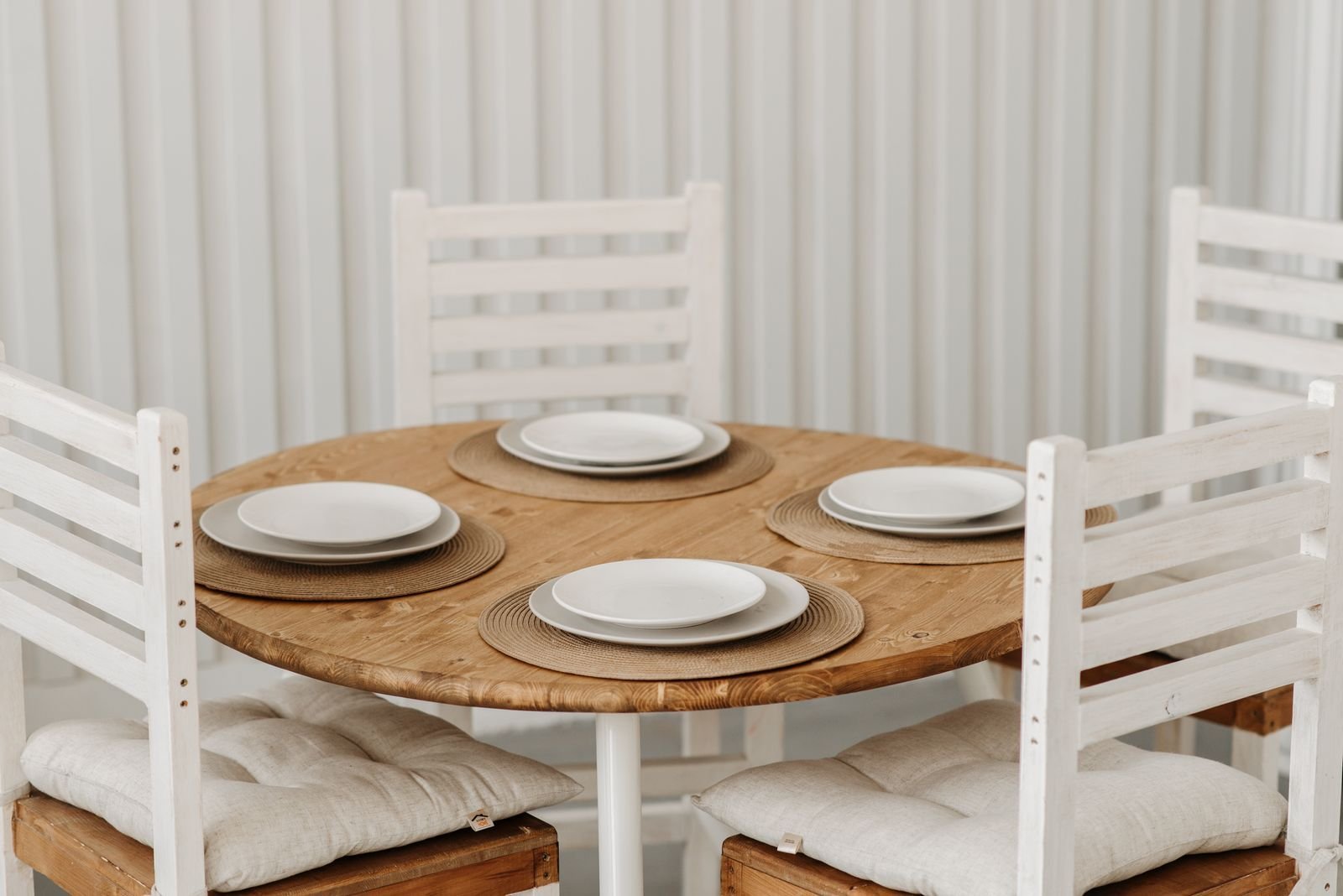
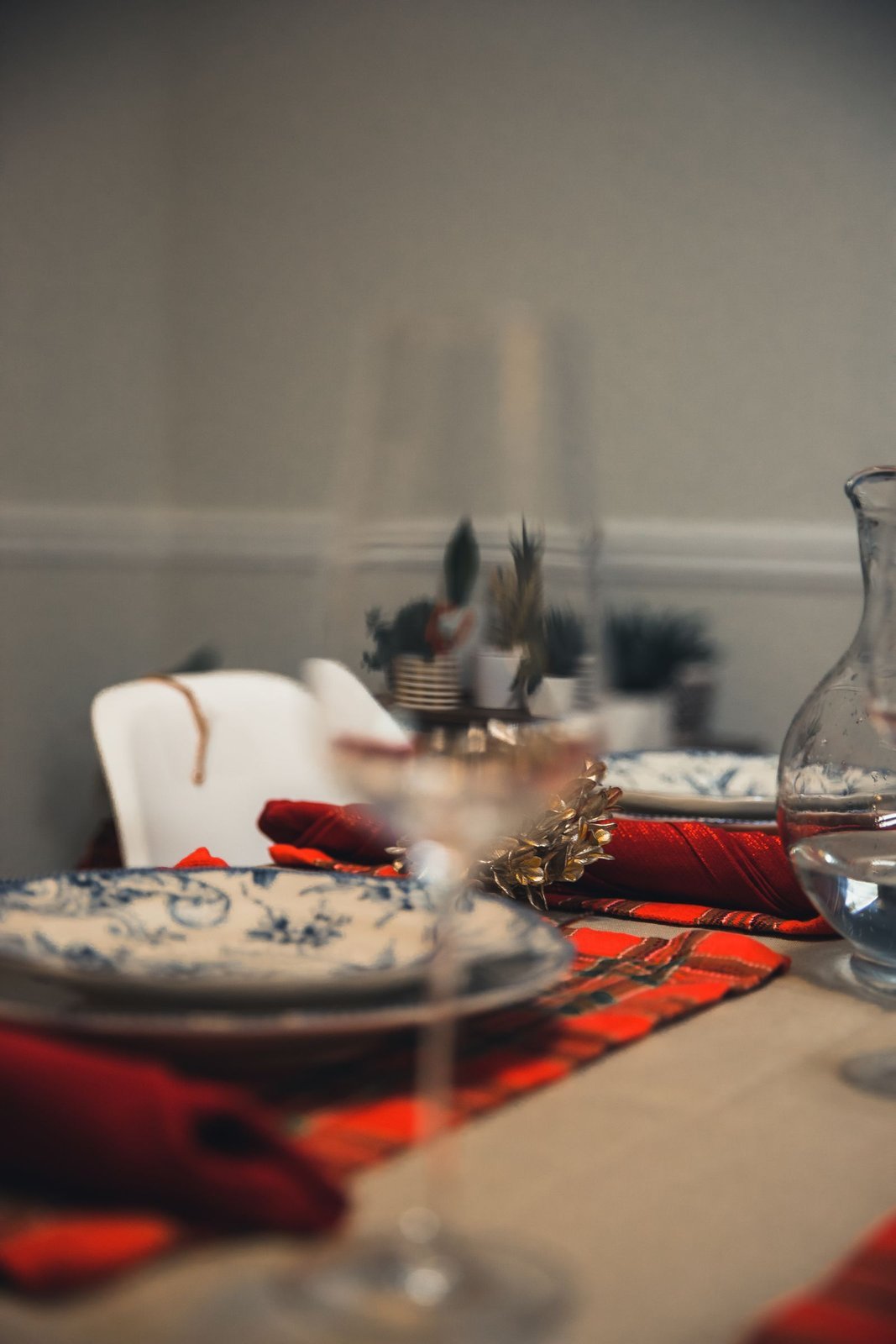
A complete place does not need a charger, a salad plate, a bread plate, and three glasses. On a small table, that stack steals room. Start with what guests will actually use at the same time:
- One dinner plate, fully on the table, not hanging over the edge
- A fork and a knife (a spoon only if the menu needs it)
- One glass, slightly above the knife, with enough clearance that a sleeve will not knock it
- A napkin, on the plate or to the left of the fork, not in a tall fold that fights the centerpiece
Everyday plates are usually the right size. If your holiday china has a wider rim, measure a plate on the table before you commit to it. Guidance on a compact everyday set—without buying a formal service you cannot store—is in How to Choose Everyday Dinnerware for a Small Kitchen (Without Overbuying).
Chairs matter as much as plates. A bulky armchair can make a four-top feel cramped. A slimmer dining chair, or a folding chair at the end seats, may be enough. Compare options in Best Dining Chairs for Small Apartments and Best Folding Chairs and Extra Seating for Small-Apartment Guests rather than squeezing six heavy chairs around a table built for four.
Use fewer, larger platters instead of many small dishes
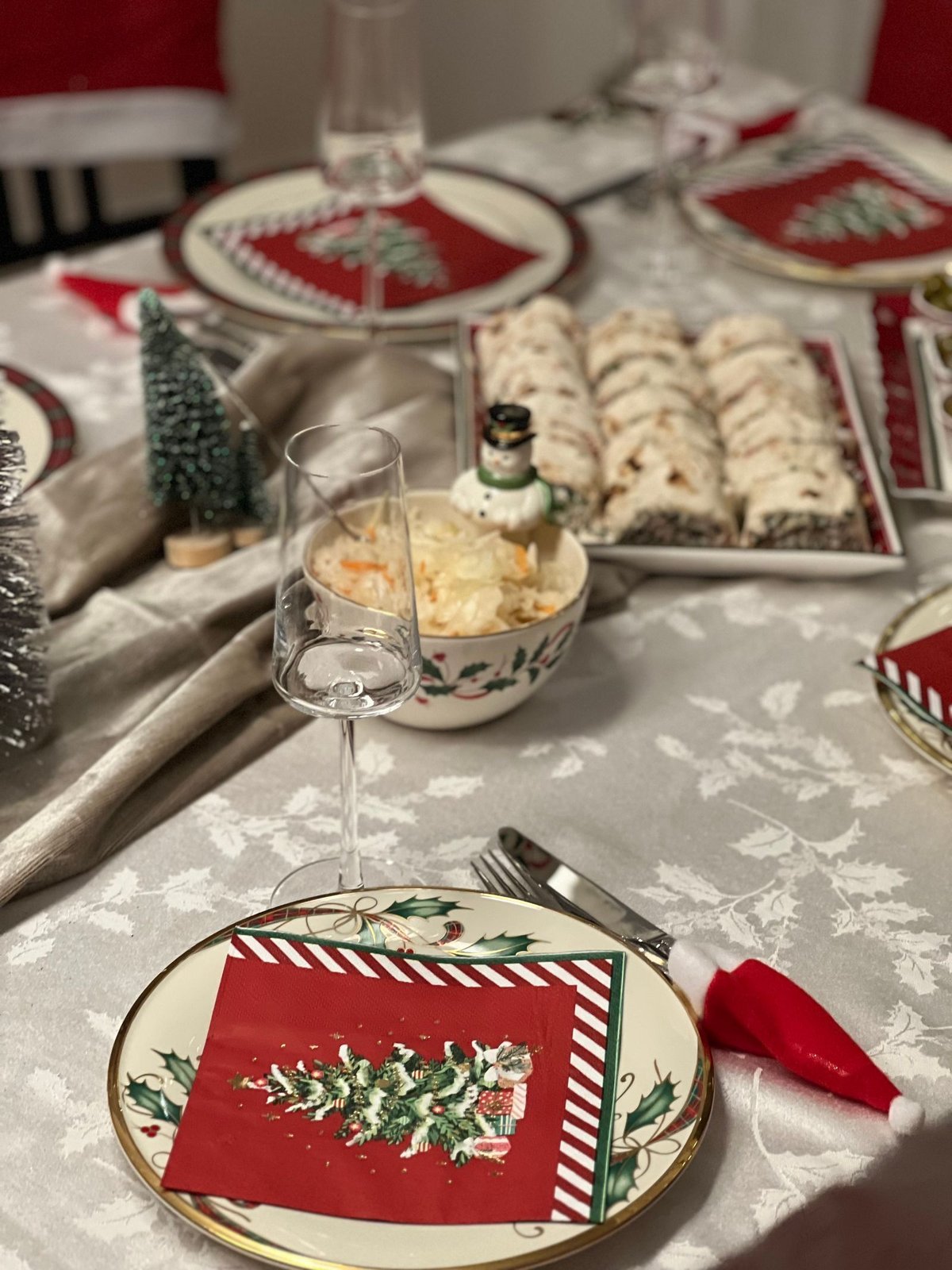
The table fails when every side dish gets its own bowl. A small surface can usually hold two or three serving pieces, not seven. Combine foods that belong together: roasted vegetables on the same board as the meat, rolls in one basket, sauce in one pitcher.
Put the largest platter down first, in a spot people can reach without standing on a chair, and then see what space is left. If a dish will not fit without covering someone’s plate, it does not belong on the table. Park it on a counter, a cart, or a second surface and pass it when needed. Guests would rather wait thirty seconds for the cranberry sauce than eat with a serving bowl in their lap.
Avoid tall stacks of small ramekins and a separate plate for every garnish. Those pieces clutter a 40-inch table.
Keep the centerpiece low or skip it
A floral arrangement, a ring of candles, or a cluster of ornaments can use the only clear rectangle in the middle of the table. If you want something festive, keep it low—below eye level when people are seated—and narrow enough that platters can still land. A short sprig of greenery, a single low bowl of fruit, or nothing at all is a better choice than a tall candle garden.
Skip anything guests have to peek around to talk, and skip open flames if the table is already full of sleeves and napkins. A runner can add color without the height of a centerpiece, but a wide runner plus placemats can shrink the top. Choose one unless the table is genuinely large enough.
Park overflow off the table
The skill that saves a small table is not a tighter place setting. It is deciding, in advance, what will never sit on the tabletop.
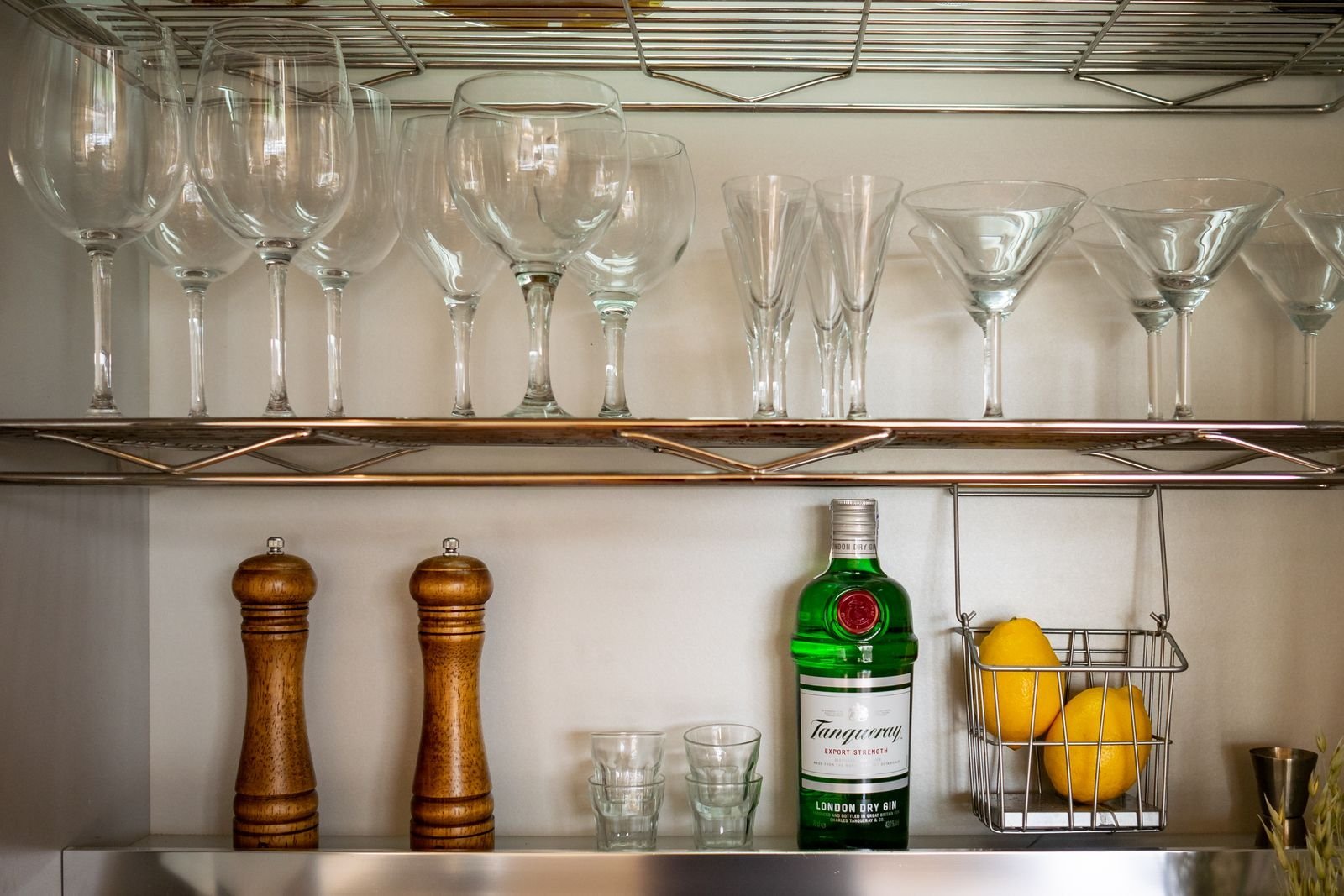
- Bottles and a water pitcher: a tray on a nearby counter, a sideboard, or the kitchen island
- Extra glasses and dessert plates: the same tray, or a shelf guests can reach without walking through the cook’s workspace
- Drinks that are not part of the meal service: a separate station so the dining table is not also the bar
- Serving backups: a second platter, extra napkins, and salt, close at hand but not in the middle of the setting
A kitchen cart is often the most useful overflow surface because it can live in a closet until the meal, then roll beside the table. See Best Kitchen Carts for Small Apartments if you need a surface that moves. If drinks are a large part of the gathering, set them up as their own stop with How to Set Up a Drinks Station for Holiday Guests in a Small Kitchen instead of lining bottles down the center of the table.
When the only table you have sits in the living room, treat the room as two zones for the meal: dining, and a landing spot for bags and overflow dishes. How to Split a Small Living Room into Dining and Lounge Zones is the layout version of the same idea—keep the tabletop for eating, and give everything else a temporary home a few steps away.
Use a leaf or a second surface if you have one
If your table has a folding leaf, open it early, not after the cloth is already on, and check that the extra length still leaves a walk path. A leaf that gains two seats but blocks the kitchen door is not a gain. After the meal, the leaf and any extra chairs need a place to go; that storage problem is covered in How to Store a Folding Table and Extra Dining Chairs in a Small Apartment, not here.
A second surface can be a cleared counter, a desk, or a folding table used only for platters and dessert. The dining table then holds place settings and one or two main dishes. If you do not have a dining table at all, do not force a coffee table to pretend to be one for six people. How to Serve and Eat Dinner in a Small Apartment Without a Dining Table is the guide for that situation.
A simple setting order that fits a tight top
Work in this order so you do not decorate first and then run out of room for plates.
- Place the chairs and sit in one of them. If your knees hit a table leg or a wall, move the table now.
- Put down a cloth or placemats only if they still leave a full plate-width at each seat. A cloth should not puddle into someone’s lap or drag on the floor where chairs will catch it. When the meal is over, washing those linens in a shared machine is a separate task; see How to Wash Tablecloths, Cloth Napkins, and Placemats in an Apartment Laundry.
- Set each place: plate, flatware, napkin, one glass.
- Add only the serving pieces that still leave a clear path for arms.
- Move everything else to the overflow surface before guests sit down.
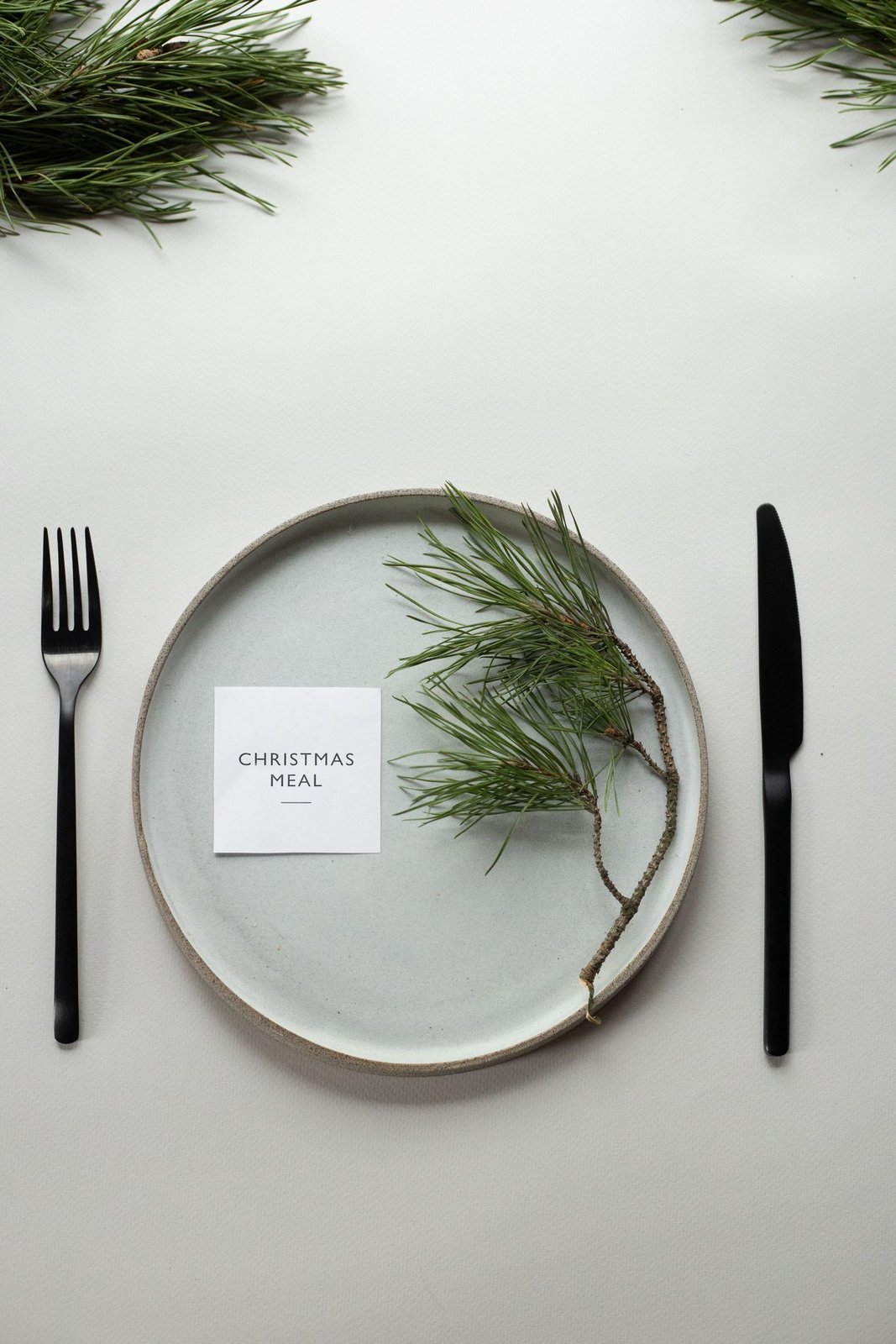
A folded napkin and a simple place card use almost no space. Skip charger plates, stacked bowls, and a different glass for every drink unless you have measured that they fit.
What good enough looks like
Good enough is not a matching seasonal tablescape. It is a table where four or six people can set a plate down, lift a glass without bumping a candle, and pass one platter without standing up in a tight rotation. The roast can look handsome on a single board. The extra glasses can wait on a cart. The centerpiece can be a low bowl, or it can be absent.
How to Host a Dinner in a Small Apartment covers the broader evening: timing, coats, and how to keep a small home from feeling like a corridor of plates. This article stays narrower. If you measure the table, set a simple place for each person, use fewer serving dishes, and send the overflow elsewhere, you have already set a small dining table for a holiday meal as well as the room allows.
The test is the first ten minutes after people sit down. If no one is holding a plate in the air, and no glass is perched on a windowsill, the setting worked. Aim for that—not a photograph, just a table that lets the meal happen.
FAQ
How many people can sit at a small apartment dining table for a holiday meal?
Many compact tables seat four comfortably and six only if each person has about 24 inches of edge and a full plate-width of depth. Measure before you invite a sixth or seventh guest, and use a leaf, a folding table, or a second surface for platters if the top is already full.
Should I use a tablecloth on a small holiday table?
Only if the cloth lies flat and still leaves room for plates and glasses. A heavy cloth plus a runner plus placemats can shrink a small top. A simple cloth or a set of placemats is enough; skip the stack of layers.
Where should serving dishes go if they do not fit on the table?
Park them on a cart, a sideboard, a cleared kitchen counter, or a second folding table, and pass them as needed. Two or three serving pieces on the dining table is usually the limit in a small apartment.
Do I need a centerpiece for a holiday meal?
No. A low, narrow object can add a festive note, but a tall arrangement steals space and blocks conversation. Skipping the centerpiece is a reasonable choice when the table is already tight.
What if I do not have a dining table at all?
Do not try to seat a full holiday meal on a coffee table. Use a folding table if you have one, or serve the meal in a way that does not depend on a formal dining top. A seated place-setting plan assumes you have a real table, even a small one.