
How to Store a Folding Table and Extra Dining Chairs in a Small Apartment
A folding table and a couple of extra dining chairs earn their keep a few nights a year, then they have to live somewhere else for the rest of the calendar. Learning how to store a folding table and extra dining chairs in a small apartment is that year-round parking plan, plus a short take-down routine so the pieces actually go away after guests leave. It is not a buying guide. If you are still choosing the table, start with Best Folding Dining Tables for Small Apartments. If you are still choosing the chairs, use Best Folding Chairs and Extra Seating for Small-Apartment Guests or, for everyday seats, Best Dining Chairs for Small Apartments. This article assumes you already have the extra furniture and need a place that does not steal the hallway.
In a studio or one-bedroom, a table leaned in a walkway or a chair stack on the only closet floor becomes a daily trip hazard. Good enough looks like this: after the meal, the extra table and chairs disappear, and you can still open the closet. It does not look like a dining suite stored in the walkway.
Measure the folded footprint first
Do this with a tape measure, not with the memory of how slim the table looked in the store. Fold the table the way you will actually store it—legs in, top panels together if it is a bifold, leaves down if it is a drop-leaf that you treat as a folding piece—and measure height, width, and depth. Measure each chair folded and also in a short stack, because a stack is often how they will live.
Write the numbers down and compare them to the real gaps in your home: the tall slot beside a closet wall, the clearance under the bed, the void behind a sofa, and the floor of a hall closet after the vacuum and the coats have their share. Under-bed height is often less than people think; Under-Bed Storage Ideas for Small Apartments explains that gap, but only a slim table belongs there, and only if it will not scrape the slats or block the bed from being made.
If the folded table is thicker than the under-bed gap or taller than the closet, do not force it. Choose a different home, or accept that this particular table is a poor fit for the apartment you have. Everyday table ideas for a small kitchen, in Small Kitchen Dining Table Ideas That Actually Fit, are a separate question from parking a guest table you only open a few times a year.
Choose one home, and only one
The furniture needs a single labeled home. If the table sometimes leans in the bedroom and sometimes stands in the entry, it will end up in the walkway. Pick one place and make it obvious.
A vertical slot in a closet is the best first choice for many apartments. Stand the folded table on its long edge, not on the legs, so it takes a thin rectangle of floor. Leave enough room to open the closet door without the table tipping forward. If you have a hall closet, this zone has to stay separate from coats and bags; How to Organize a Hall Closet in a Small Apartment is the closet system, and How to Set Up Temporary Guest Storage for Coats and Bags in a Small Apartment is for the night-of coat pile. Do not park the table where guests will throw jackets.
Behind a sofa can work if the table is truly flat when folded and the sofa can still be pulled out a little for cleaning. Pad the wall and the sofa back so the table does not mark either one. The entry is a weaker home: a table in the entryway fights daily shoes and packages, and Entryway Storage for Small Apartments: A Calm Setup That Actually Fits is already doing other work. Luggage has its own parking plan in How to Store Luggage in a Small Apartment; do not bury a folding table under suitcases or bury suitcases under chairs.
In a studio, the furniture has to respect the same zones you use for daily life. Studio Apartment Furniture Layout: Make a One-Room Home Feel Bigger and How to Split a Small Living Room into Dining and Lounge Zones can help you pick a dead corner that is not the walk path. A “guest furniture” label on a closet shelf or a hook—written on a tag, not carved into a wall—keeps the zone from turning into a junk pile.

Build a chair stack that will not fall
Chairs fail storage when they are left open, leaned in a loose pile, or stacked so high that the top one slides. Fold each chair fully. Stack the same kind together, seat to seat or according to the way the frame is designed to nest, and stop at a height you can lift without twisting. Two or three extra dining chairs are enough for most apartments; a tower of six is a hazard in a closet.
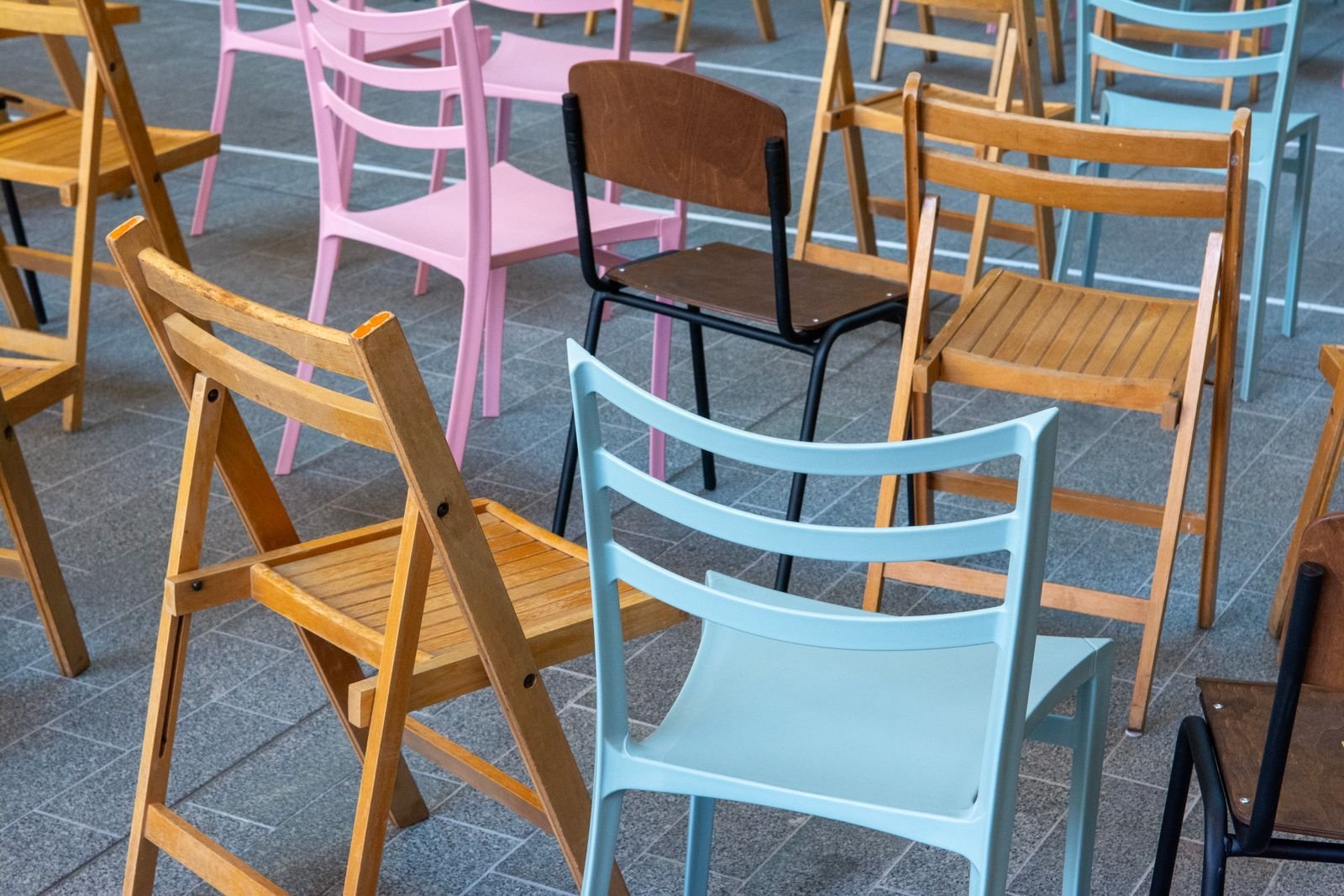
If the chairs are folding, store them folded, not open. An open chair in a closet wastes the whole floor and catches on coats. If they are stacking side chairs rather than folding frames, a low stack against a wall, with a felt pad or a folded towel at the floor, is cleaner than a leaning row. Do not hang a heavy chair from a hook unless the hook is already rated for that weight and is already installed in a way your lease allows. This is a parking plan, not a new built-in.
Keep the chair stack in the same zone as the table so you are not hunting in two closets when guests are at the door. If the closet floor is already full, a slim vertical rack or a wide strap around a short stack can keep legs from splaying. Test the stack by nudging it once with a foot. If it rocks, lower it or move it to a corner where two walls support it.

Protect walls, floors, and the furniture itself
Renter-friendly padding is part of storage, not an optional extra. Folded table legs and chair feet can scuff painted walls, wood floors, and closet doors. Use felt pads, a folded blanket, or a thin yoga mat offcut against the wall where the table leans. Wrap sharp corners if the table will slide in and out of a tight slot. Do not nail a French cleat or drill a closet wall unless your lease clearly allows it; a strap around the table and a shelf, or a simple tension of pads, is enough for most homes.
Wipe the table top before you fold it. Crumbs stored in a closet attract problems and make the next set-up slower. Let a damp top dry before it goes into a closed slot so you are not trapping moisture against wood or veneer. The same wipe-down belongs on chair seats, especially after a holiday meal.
A five-minute put-away after guests leave
The storage plan fails when the table stays up as a clutter shelf “for a day.” Build a short routine into the end of the meal, the same way you would fold a guest bed. In How to Host a Dinner in a Small Apartment, the dinner is the event; this is the close-out.
Clear dishes first, then fold the table, then fold or stack the chairs, then walk them to the labeled home, then add pads if the wall needs them. Five minutes is plenty if the home is already chosen. Do it the same night, or first thing the next morning, before the table collects mail, laundry, and bags. If you leave it up, you have not stored anything; you have added a permanent obstacle.
If a piece will not go back into its slot, do not leave it in the hall “for now.” Take something else out of the closet, or find a better home, rather than blocking the path.
A small kit makes the routine faster: a felt pad or two, a short strap, and a dry cloth, kept in the same closet zone. You should not have to hunt for padding at midnight. If you share the apartment, agree on the home out loud so a roommate does not “temporarily” lean the table in the bedroom door. The next morning is already too late if someone has to leave for work around a blocked path.
Before a holiday, do a dry run. Take the table and chairs out, open them in the room where you will actually use them, and time how long the fold-and-park steps take. If the closet is too tight with winter coats in it, that is useful information in October, not at ten o’clock after dinner. You may need a different slot for the season, or you may need to move a vacuum or a spare fan so the guest furniture still has a clear rectangle.

What not to do
Do not install a built-in you cannot take with you. Do not leave the table up as a second desk if that was not already its daily job. Do not turn this into a ranked list of table brands. And do not store the only chairs you have for everyday meals in a closet so deep you never get them out; extra guest chairs are the ones that should disappear. Everyday seating stays where you eat.
How to apply it
To store a folding table and extra dining chairs in a small apartment, measure the folded footprint, pick one home that is not the hallway, and pad the contact points so the furniture does not mark the walls or floor. Keep chairs in a short, stable stack, label the zone, and put everything away the night of the meal. If a piece does not fit the gap you have, change the home—or the furniture—rather than leaving a dining suite in the walkway. When the closet still opens and the path is clear, the storage plan has done its job.

FAQ
Where is the best place to store a folding table in a studio?
A vertical closet slot is usually calmer than a hallway lean or an entry pile. Under the bed works only if you have measured the height and the table is truly slim. Behind a sofa can work if the path and the wall are protected.
How should I stack extra dining chairs so they do not fall?
Fold them fully, stack the same style together, and keep the stack short enough to lift safely. Park the stack in a corner or a closet, not in a walkway, and add a pad at the floor if the feet might scuff.
Can I leave the folding table up between holidays?
Only if it already earns a daily job as your regular table. Otherwise it becomes a clutter shelf. Put it away the night of the meal, or the next morning, so the room returns to normal.
Is it safe to lean a folded table against a rental wall?
Yes if you pad the contact points and the table is stable. Do not drill a closet or hang a heavy frame unless your lease allows it. A padded vertical slot is enough for most tables.
Should the table and chairs be stored in the same place?
Yes if you can. One labeled “guest furniture” zone makes the five-minute put-away realistic and keeps chairs from drifting into the coat pile or the luggage stack.


